The Wildlife Most Likely To Ruin Your State Park Trip
Most people head to state parks hoping to see wildlife. They just don't expect it to steal their lunch, shut down their favorite swimming beach, force a trail closure, or send them to the emergency room. Every year, state park visitors across the United States encounter animals that do far more than create memorable photo opportunities. Some damage campsites. Others spread disease, attack when startled, or become aggressive during breeding season.
The animals below aren't ranked in any particular order, partly because there isn't a national database tracking wildlife encounters across America's thousands of state parks. Most states don't even publish park-by-park population figures for individual species. Instead, using documented incidents, state park and wildlife agency guidance, national population data where available, and recent reports, these are some of the animals most capable of derailing an otherwise perfect state park trip.
Blacklegged Ticks

The smallest animal on this list is responsible for far more ruined outdoor trips than any bear or rattlesnake. The blacklegged tick (Ixodes scapularis), also called the deer tick, is one of the most dangerous animals found in national parks, and the same is true for state parks. They are the primary carrier of Lyme disease in the eastern and upper Midwestern United States. The CDC estimates that approximately 476,000 Americans are diagnosed and treated for Lyme disease every year, while more than 89,000 confirmed and probable cases were reported in 2023 alone. Ticks can also transmit anaplasmosis, babesiosis, and Powassan virus. According to the CDC, an estimated 31 million people are bitten by a tick every year.
Parks such as Letchworth State Park in New York and Devil's Lake State Park in Wisconsin remind hikers to perform tick checks after every hike, particularly from May through July, when tiny nymph-stage ticks are most active and hardest to spot. The danger isn't usually the hike itself. Instead, it's discovering an attached tick after you've already driven home. As of 2026, the CDC also warned that emergency department visits for tick bites were running at their highest levels since 2017 across much of the eastern United States.
Black Bears
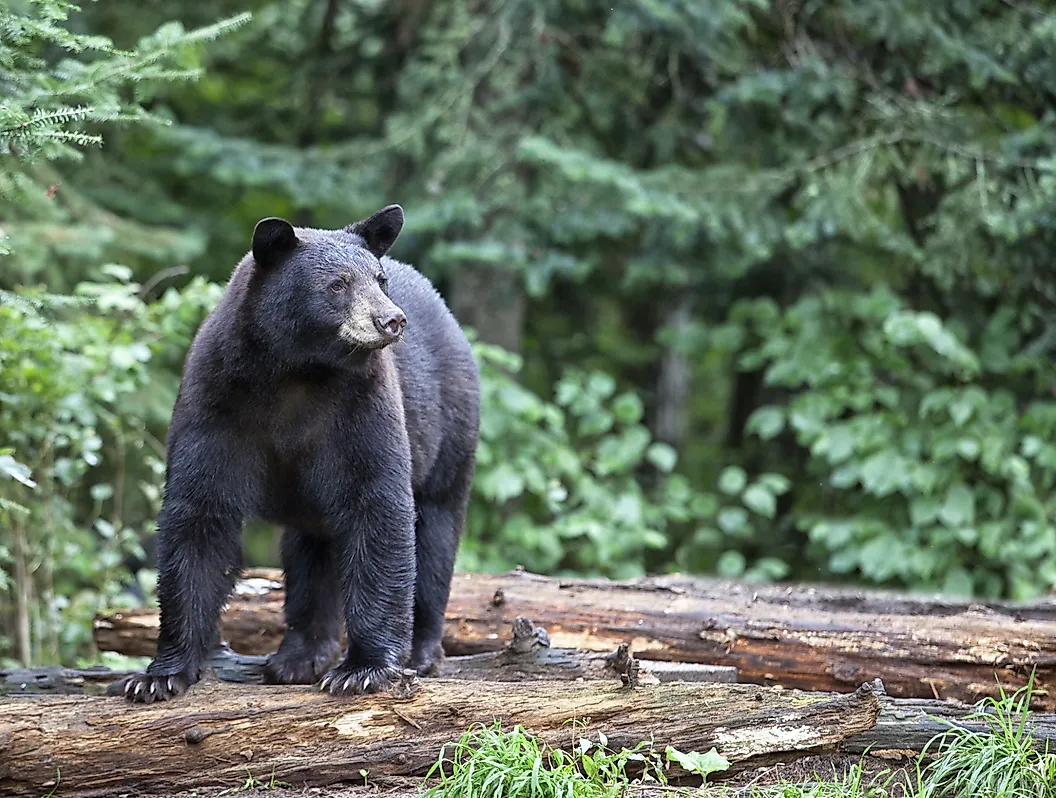
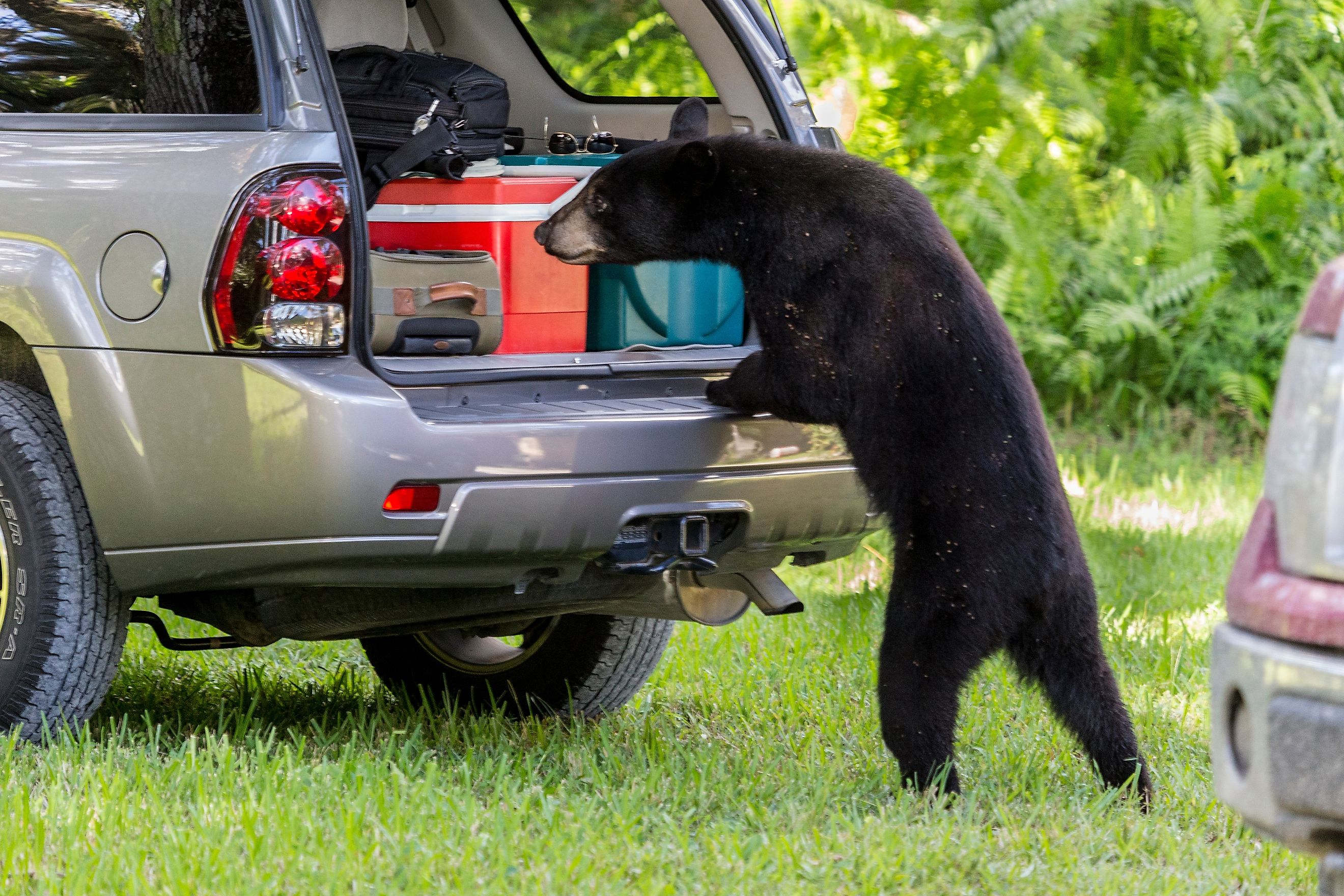
Most black bears (Ursus americanus)aren't interested in you. They're interested in the sandwich you left on the picnic table, the dog food sitting beside your tent, or the cooler you forgot to lock in the car. That's exactly why they're so effective at ruining state park camping trips. Across bear country, one food-conditioned bear can trigger campground closures, force wildlife officers to intervene, and send dozens of campers home early.
California State Parks, for example, reported increased bear activity around campgrounds during 2026, including repeated visits to areas where bears had historically been uncommon. Rangers regularly remind visitors that improperly stored food both attracts bears and teaches them to return, creating a cycle that often ends with campsites closing or the bear being euthanized. There are many state parks where bear encounters are frequent. Unlike the NPS, state parks don't publish reliable data about their population. But given that black bears are residents of around 40 states, many of the country's most prominent state parks are likely to have them.
American Alligators

You don't have to see an alligator for it to ruin your day. Sometimes all it takes is a warning sign, a closed swimming area, or the realization that the "floating log" beside the boat ramp has started moving. American alligators (Alligator mississippiensis) are found in state parks across the Southeast, from Myakka River State Park in Florida to Hunting Island State Park in South Carolina, where they routinely bask along shorelines, freshwater lakes, rivers, and marshes. While the range of the alligator can stop at certain state park lines, they make their home in numerous states. And with an estimated population of around 5 million in the U.S., visitors are likely to come across them. Especially in spots like Brazos Bend State Park in Texas and Georgia's Stephen C. Foster State Park, where there are around 15,000 of them.
Serious attacks on humans remain rare, but they do happen, particularly when people swim outside designated areas, feed alligators, or let pets wander too close to the water. Florida officials continue reminding visitors that alligators can be active year-round, even if they're most visible during warmer months. If you see one, enjoy it from a distance and never assume it will stay where it is. A startled alligator can cross land much faster than most people expect.
Mosquitoes

No campground quiet hour has ever defeated a mosquito (family Culicidae) hatch. After periods of heavy rain, millions of mosquitoes can emerge from wetlands and shallow pools in a matter of days, turning an evening campfire into a retreat inside the tent. That's a familiar summer reality at parks such as Itasca State Park in Minnesota and Jonathan Dickinson State Park in Florida, where abundant lakes, marshes, and floodplains provide the ideal breeding habitat.
While most bites are simply an itchy nuisance, mosquitoes remain the primary vectors of West Nile virus in the United States, and state health agencies monitor mosquito populations every year. Fortunately, mosquitoes are incredibly predictable. Activity peaks around sunrise and sunset, drops on breezy afternoons, and is usually far less intense outside the warmest months. A lightweight long-sleeved shirt and an EPA-approved insect repellent are often enough to save an entire weekend of camping. No state park is 100% mosquito-free. However, they are less likely in arid deserts found in state parks like Dead Horse Point in Utah or Arizona's Lost Dutchman State Park.
Rattlesnakes

Most rattlesnakes (genus Crotalus) would rather disappear than bite you. The problem is that hikers don't always see them until they've stepped within striking distance. From Anza-Borrego Desert State Park in California to Dead Horse Point State Park in Utah, rattlesnakes are a normal part of the landscape during the warmer months, especially along rocky trails where they bask in morning or evening sun. There are more than 20 species of rattlesnake native to the U.S., and the CDC tracks between 7,000 and 8,000 bites per year, although this is not limited to state parks. While the country has rattlesnake hotspots, they can be found in 45 different states.
2026 brought an unusually active snake season across parts of the western United States, with several states reporting higher-than-normal bite numbers after a warm winter prompted snakes to emerge earlier than usual. Fortunately, bites remain uncommon compared with the millions of annual park visits, and most occur when people attempt to handle, photograph, or move a snake rather than simply walking past it. The easiest way to avoid ruining your trip is to stay on established trails, watch where you place your hands and feet, and give every rattlesnake plenty of room to leave on its own.
Bison

Bison (Bison bison) have injured numerous visitors in national parks, but serious encounters aren't limited to federal lands. State parks with free-ranging herds put visitors on the same roads and trails as animals that can become particularly unpredictable during the July and August rut, when bulls compete for mates. Attacks remain rare, but getting too close to a bison can end a state park trip very quickly.
While the National Park Service says about 360,000 plains bison are privately owned as domestic livestock, two of America's most impressive public herds belong to state parks. South Dakota's Custer State Park has nearly 1,400 free-roaming bison, while Utah's Antelope Island State Park generally carries 500 to 700, depending on the season. In fall 2026, Antelope Island expects to round up nearly 800 animals before reducing the herd toward the roughly 550 the habitat can support.
That's spectacular until one decides your trail, road, or picnic area belongs to it. Antelope Island says bison are commonly encountered along roads, trails, and fields, and recorded five visitor-bison incidents among roughly four million park visits over a ten-year period. Bulls can weigh up to 2,000 pounds, and bison can run around 35 mph, making walking closer for a photograph an especially terrible way to derail a vacation.
Raccoons

The campsite thief wearing a mask has earned the stereotype. Raccoons (Procyon lotor) are nocturnal, extraordinarily comfortable around people, and while there's no database tracking raccoons in every single state park, it's safe to assume they are present in the majority of them. They are found in 48 states, the exceptions being Alaska and Hawaii, and are known for raiding campsites and garbage cans.
When it comes to raccoons, a "ruined" trip isn't usually about an attack. Instead, it's waking up to garbage scattered across your campsite and discovering that something got into dinner while you slept. There is a more serious reason not to approach one, though. Raccoons are among the wildlife capable of carrying rabies, and animals that behave strangely or lose their normal fear of people warrant plenty of space. California State Parks, for example, prohibits feeding wildlife altogether and requires secure food storage where posted.
White-Tailed Deer
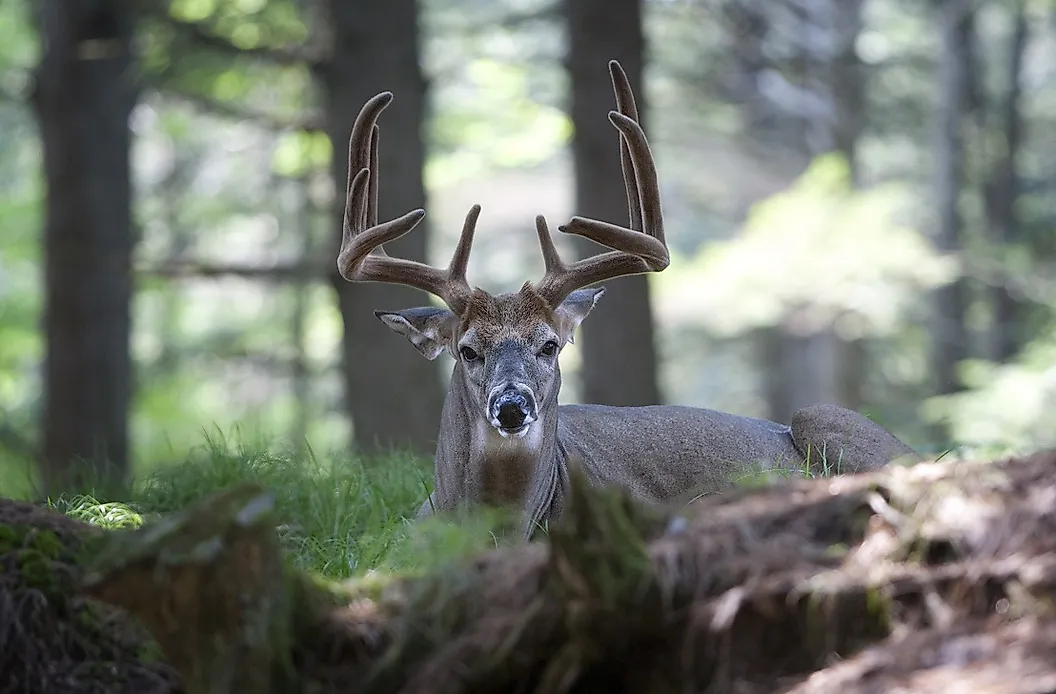
A white-tailed deer (Odocoileus virginianus) doesn't need antlers pointed at you to destroy a state park trip. Sometimes it only needs to step onto the road. Minnesota's management plan for Cascade River State Park specifically identifies increasing deer-vehicle collisions in the vicinity of the park and a nearby deer wintering area as a public-safety concern. That's a much more realistic danger than imagining deer attacking hikers.
National crash data show why it's worth taking seriously. In 2024, 210 people died in U.S. crashes involving collisions with animals, according to federal data analyzed by the Insurance Institute for Highway Safety. Federal fatal-crash records don't identify the species involved, but an IIHS study of 147 fatal animal crashes in nine states from 2000 through 2002 found that 77% of the animals struck were deer. That study also found fatal animal crashes occurred primarily during evening or nighttime hours. For state park visitors, that makes the drive in and out part of the wildlife experience, especially after the sun goes down.
Feral Hogs

Leave a cooler unattended at Garner State Park in Texas, and the animal raiding it might weigh considerably more than a raccoon. The park's current visitor guidance explicitly warns about feral hogs (Sus scrofa) and tells guests not to leave food unattended because the hogs "will get into coolers and ice chests."
Texas Parks and Wildlife also say that wild pigs tear up soil and vegetation by rooting and wallowing, damage parks and other recreational areas, and can cause serious vehicle collisions. One estimate put U.S. wild-pig collision damage alone at $36 million annually. Texas state parks have dealt with aggressive animals, too. In one 2003 incident at Fairfield Lake State Park, staff had to put down a feral hog that was endangering campers. That park has since closed, but the incident illustrates why feeding or habituating a 100-plus-pound invasive omnivore is very different from losing a sandwich to a squirrel. More than 6 million feral swine are estimated to live across the United States, and USDA says established populations now occur in at least 35 states.
Moose

The largest animal in many northern state parks is also one of the least predictable. Adult bull moose (Alces alces) can weigh well over 1,000 pounds, yet they're capable of sprinting at speeds approaching 35 mph. Unlike bears, which often avoid people, moose frequently stand their ground when they feel cornered, particularly during the autumn rut or when cows are protecting calves in late spring. That's why wildlife agencies consistently rank moose among the most dangerous large mammals in North America despite the fact that they're herbivores.
State parks across Minnesota, New Hampshire, and Maine remind visitors that moose should never be approached for photographs. A moose laying its ears back, raising the hair along its hump, or walking directly toward you is warning you to leave. If that happens, the safest response is to retreat behind a large tree or other obstacle rather than trying to outrun it across open ground.
Elk
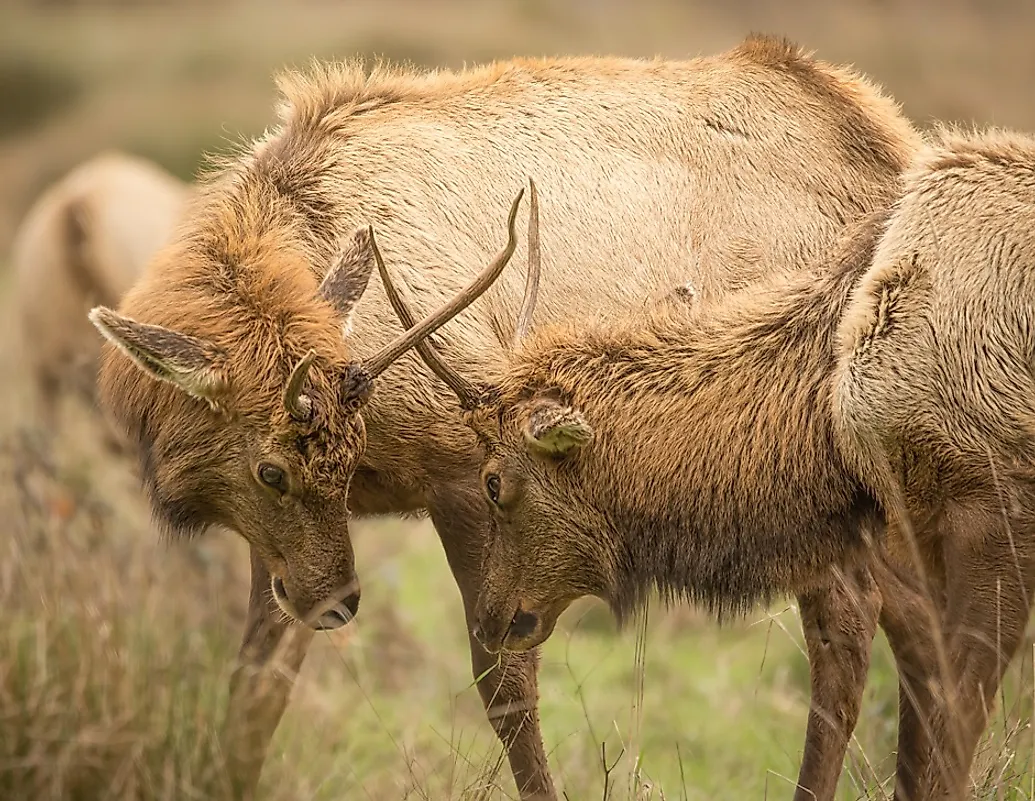
For most of the year, elk (Cervus canadensis) are among the easiest large mammals to watch in a state park. Then autumn arrives, and everything changes. During the rut, which generally runs from September through October, bull elk stop eating regularly, defend harems of females, and become dramatically more aggressive. But even outside of the rut, elk can be unpredictable.
Visitors who unknowingly wander too close can be charged by an elk without warning. Parks such as Custer State Park in South Dakota even host guided elk-bugling programs each fall, but they also remind visitors to stay well back from rutting bulls and never position themselves between a male and his herd. A bugling elk might make for an unforgettable photograph, but it's also one of the few times of year when an animal that normally ignores people may actively confront them. During the rut, a 700-pound bull can sprint at 40 mph, making distance your best form of protection.
Keeping Your Distance
A 2,000-pound bison running 35 mph is hard to ignore. A tick attached behind your knee, a raccoon investigating the campsite, or a feral hog nosing into your cooler may be another story. From Antelope Island's free-roaming bison to Brazos Bend's hundreds of large alligators, state parks put visitors remarkably close to wild animals. Usually, keeping the trip intact comes down to giving them that same distance in return.