9 Most Walkable Town Centers In South Australia
South Australia's many wonders take different forms, and some of them are best discovered on foot in the heart of its nine walkable town centers. Hahndorf's German heritage can be discovered at the Hahndorf Academy on Main Street while its St. Michael's Lutheran Church is home to the country's oldest surviving Lutheran congregation. A massive sinkhole sits in the heart of Mount Gambier, a reminder of the town's volcanic past. In Victor Harbor, the town center opens onto the waterfront where a historic horse-drawn tramway crosses the causeway towards Granite Island. These pedestrian-friendly town centers provide a uniquely intimate way to experience South Australia, one street, landmark, and local stop at a time.
Hahndorf

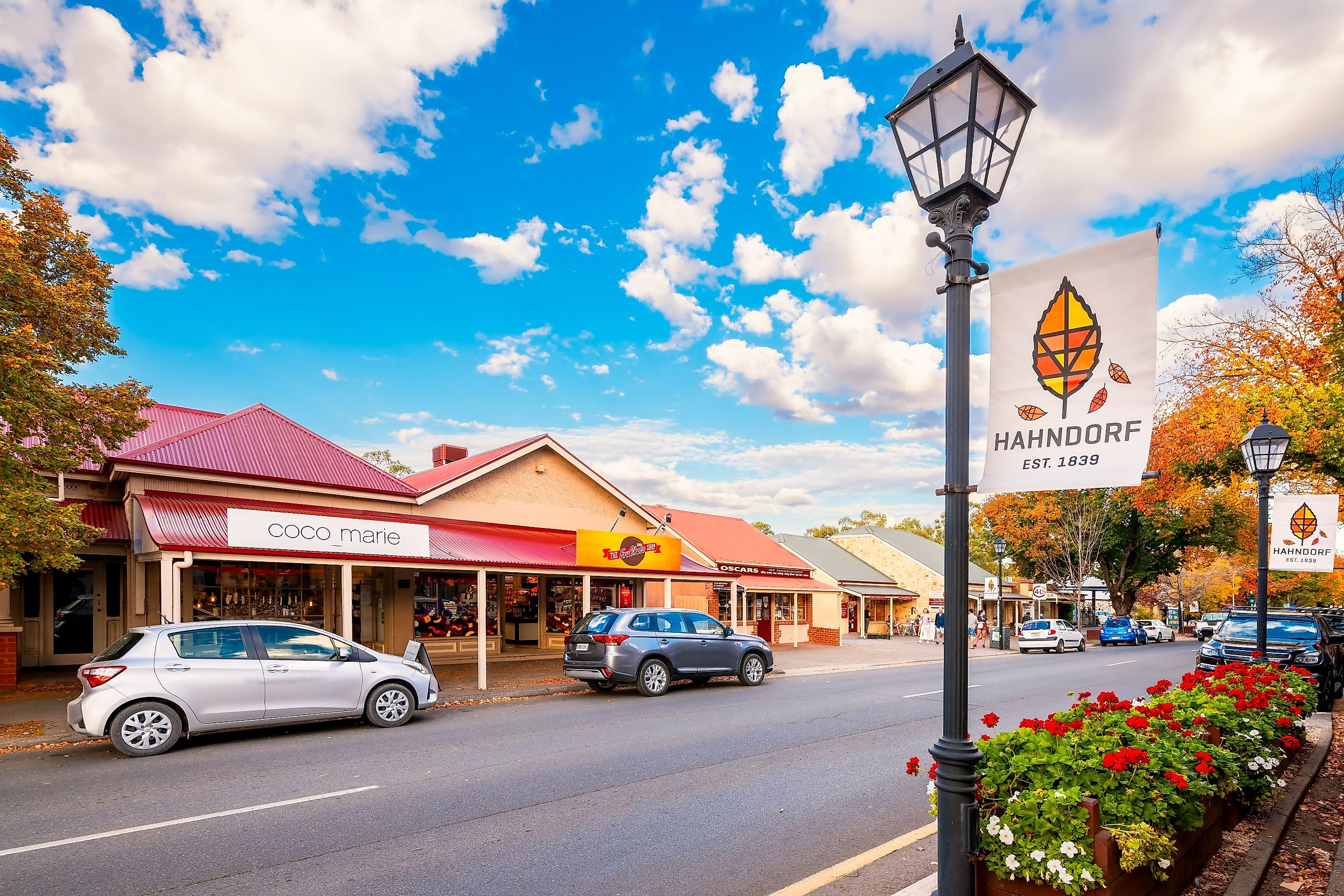
Much of Hahndorf's character is localized along Main Street, where you can begin at Hahndorf Academy, a cultural center combining a heritage museum, retail and art galleries, and workshops to receive a comprehensive overview of the city's German heritage. Afterwards, stroll past the bakeries and German-style pubs to continue towards St. Michael's Lutheran Church, the oldest surviving Lutheran congregation in all of Australia with roots tracing back to Prussian Lutherans of the early 19th century. From there, Ambleside Road leads to The Cedars, the former home and studio for esteemed landscape artist Sir Hans Heysen. Hahndorf's extensive history is not confined to one sole museum or town attraction, but instead remains an integral part of everyday life through local cultural practices and its townscape, making the entire thing feel like walking directly through a well-preserved glimpse into a German-Australian crossover.
Mount Gambier

Mount Gambier contains a town center shaped by an ancient volcanic landscape rather than a single street, and this is evident in both its attractions and its overall structure. Cave Garden is the obvious place to start, showcasing an enormous sinkhole sitting right in the heart of town and dropping beneath the surrounding streets.

A few blocks over, the Riddoch Arts and Cultural Centre provides a completely different perspective on the area, with exhibits displaying regional art, history, and culture, while the nearby Engelbrecht Cave allows visitors to descend into the limestone and explore the world under the city's streets. Mount Gambier's volcanic history becomes even more pronounced at Blue Lake/Warwar, located roughly 30 minutes from the town center on foot, where a path follows the rim of a vast crater.
Victor Harbor

In Victor Harbor the ocean is never too far away, and that is one of many things that makes discovering the town on foot so enjoyable. Here, the town center spills naturally towards the waterfront where the historic horse-drawn tramway makes its way along the causeway to Granite Island, but on the mainland, the heritage streets surrounding the center are definitely worth a wander. South Australian Whale Centre provides an insight into the region's long connection with the ocean, and if following the coastal path west towards Encounter Bay, The Bluff offers a longer walk and sweeping views across the coastline. Apart from the mainland, the foreshore leads directly from the town center to the causeway, which can be crossed on foot before joining the Kaiki Walking Trail around the island to witness its granite boulders, coastal views, and resident penguins. Victor Harbor works particularly well on foot because the town and its scenery never truly separate, and the waterfront ties almost everything together.
Burra

Burra feels less like a town with a historic quarter and more like a historic town that just so happens to still be actively lived in. Its streets are lined with stone cottages, old churches, and structural remnants of the copper-mining boom that briefly made Burra one of South Australia's most important settlements during the 19th century. Much of the town's center is easily covered on foot, beginning around Market Square before heading towards the neat row of cottages on Paxton Square and continuing to Redruth Gaol, where the town's mining-era history takes a darker turn through the building's history as a regional prison with a reputation for overcrowding and poor conditions that ultimately led to its closure in the late 1800s. Nearby, the Burra Regional Art Gallery occupies a handsome longstanding building, adding a contemporary creative pulse to the town's center. Along the way, the heritage streets reveal pubs, workshops, and places of worship, while the Burra Creek Gorge and Monster Mine are posted further out. The real pleasure of Burra, however, is simply wandering between the buildings and observing how much of its original composition has survived. Rather than placing its history behind glass, Burra itself remains the main historic attraction.
Goolwa

Unlike the nearby Victor Harbor where the coastline is the star of the show, Goolwa's identity is based in its position on the Murray River and its extensive history as a river port. This town's most interesting sights are clustered around the historic wharf, making a car completely optional for exploration. From its main street the walk down to Goolwa Wharf, which happens to be listed on the South Australian Heritage Register, passes through the old town before opening onto the river. Here, the PS Oscar W, Signal Point Gallery, and the town's former railway precinct tell the story of Goolwa's history as an integral transport link between the Murray and the sea. Riverside paths are available for further exploration around the wharf before leading back to the center, where heritage buildings, cafes, and local shops give the town a distinctly relaxing facade. The SteamRanger railway station adds another layer of character, reminiscent of the days when paddle steamers and trains worked in tandem to move goods along the Murray. Although the ocean is close by, Goolwa feels fundamentally different from other coastal towns.
Tanunda

Although Tanunda's identity is closely tied to the Barossa, one of Australia's best-known wine regions, there is so much more to this small town than vineyards and cellar doors. Tanunda has deep German roots that can still be observed in its architecture and street names. Much of the center can be explored along the town's heritage trail, which winds through Murray Street past the Barossa Museum where travelers can learn more about the region's German settlers and winemaking history. The trail continues towards Goat Square, one of the earliest German settlement areas in the region, before leading back towards the center and Chateau Tanunda, whose grand stone buildings offer even further glimpses into the locality's winemaking tradition. The cafes, local shops, and bakeries scattered along the way provide multiple opportunities to stop and simply absorb the destination's unique atmosphere.
Robe

This old town initially emerged around a port that once handled a remarkable amount of trade. That heritage is still scattered throughout the center, from the former Customs House around Victoria Street to the old gaol and stone buildings encapsulating the main streets. A walk down to Lake Butler brings the locale's maritime story into focus, with fishing boats now occupying a harbor once heavily utilized by trading vessels, while the Chinese Monument located nearby recalls the thousands of Chinese migrants who landed at Robe during their journey to the Victorian goldfields. The town eventually gives way to the coast at Cape Dombey, where the Robe Obelisk sits above the cliffs with Long Beach stretching just beyond it. Robe manages to weave its laid-back coastal atmosphere together with a remarkably layered history, where traces of trade, migration, and maritime life remain integrated into its streets and shoreline. Walking from the historic center to the harbor and onward to the cliffs offers a chance to experience those distinct chapters within a single, leisurely outing.
Quorn

There are few places in South Australia where the landscape makes such an immediate impression as Quorn. This small town sits at the southern edge of the Flinders Ranges, an extensive stretch of rugged mountains, red-rock gorges, and outback country that extends for hundreds of miles north of Adelaide. Its dramatic setting, however, is only a piece of Quorn's character. Railway Terrace runs through the heart of the locale, where the historic railway station remains from its time as a crucial link between Adelaide and the interior, while still remaining the departure point for the Heritage Pichi Richi Railway. Apart from its tracks the town is mostly quiet and more residential, with Powell Gardens offering a pleasant local green space and the Pithi Kawi Bush Food Garden offering a short walking trail alongside Pinkerton Creek surrounded by native plants and vegetation. The streets themselves are easy to navigate without a car, but it is the view beyond these streets that adds to the experience of the town itself. With rugged ranges rising behind its streetscape while the countryside stretches out towards the plains in the opposite direction, Quorn feels like a place where the beginning of the Australian outback can be thoroughly enjoyed without ever having to leave the town center.
Willunga

Long before McLaren Vale became synonymous with wine tourism, Willunga was a small agricultural settlement with a character all of its own. Today, the old main street still has more of a village-feel to it than that of the typical regional center. Much of Willunga's history is tied to the local slate industry, making the Willunga Courthouse and Slate Museum worthwhile starting points before wandering past the cottages and stone buildings that line the historic center. Every Saturday morning, the area takes on a completely different atmosphere when the local Willunga Farmers Market fills the grounds of Willunga High School with fresh produce, baked goods, and artisanry from across the region. The town also establishes a good base for walking beyond its historic core, with the Willunga Basin Trail leading out through farmland and vineyards towards surrounding hills. Its combination of old architecture, functional farmland, and strong regional food/wine culture gives Willunga an aura that feels distinctly rural, even with the famous wineries of McLaren Vale located only a few minutes away.
Final Thoughts
Perhaps the greatest appeal of these localities is not how much there is to see, but how naturally a visit can unfold. Without the pressure of traffic or the need to formulate an itinerary based on how to get from one stop to the next, there is so much room that presents itself that can instead be used to notice the smaller details in a place that can easily be overlooked. In these instances, the surroundings begin to become part of the experience rather than just a backdrop to it. Thus, walking can offer more than just a practical way to get around South Australia; sometimes it can create the opportunity to encounter a new community and enjoy a thorough exploration without any unnecessary pressure.