American Towns Built to Look Like a European Village
It is no surprise that the United States is dotted with little pieces of Europe. Waves of German, Danish, Dutch, and Swiss immigrants carried their architecture across the Atlantic, and a handful of towns leaned all the way into it. Some had the real roots: Danish immigrants founded Solvang back in 1911. Others just decided to become European, and Helen, Georgia, went Bavarian in 1969 and rebuilt its storefronts to match. The payoff is Alpine balconies in Wisconsin and a Dutch canal in Iowa. Pella went further still: its windmill was built in the Netherlands, taken apart, and shipped across the Atlantic to be rebuilt on the prairie.
Leavenworth, Washington

Front Street's Bavarian facades stand beneath the Cascade Mountains, giving Leavenworth a setting that helped sell its ambitious 1960s makeover. Town leaders rebuilt the commercial center to attract visitors after decades of economic decline. Decorative timberwork and balconies now extend along streets where the main business was once supplying a railroad and logging town.
Start near the blue-and-white maypole on Front Street, opposite the Leavenworth Nutcracker Museum. Its collection reaches well beyond painted wooden soldiers, with historical tools and elaborate carved figures. Nearby München Haus serves grilled sausages in an outdoor beer garden, with specialty mustards and apple-cider sauerkraut. After lunch, walk down to Waterfront Park beside the Wenatchee River. Paths continue around Blackbird Island, putting a riverside walk within reach of the downtown shops.
Helen, Georgia

A tube ride through downtown gives Helen an unusually good second viewing angle. In summer, outfitters send visitors down the Chattahoochee River past the riverfront businesses, below the streets lined with Bavarian-style buildings.
The transformation began with merchants looking for a way to revive the town. Kollock's sketches gave builders a plan, and the renovations started in January 1969. The Alpine storefronts turned a former lumber town in northeastern Georgia into a destination with German restaurants and an annual Oktoberfest.
On Main Street, Hofer's of Helen Bakery and Cafe makes a useful breakfast stop just north of the square. Continue to Hansel and Gretel Candy Kitchen for sweets, then visit the Helen Arts & Heritage Center for local artwork. The center's heritage displays explain Helen's logging past and the decision to change its appearance.
Vail, Colorado

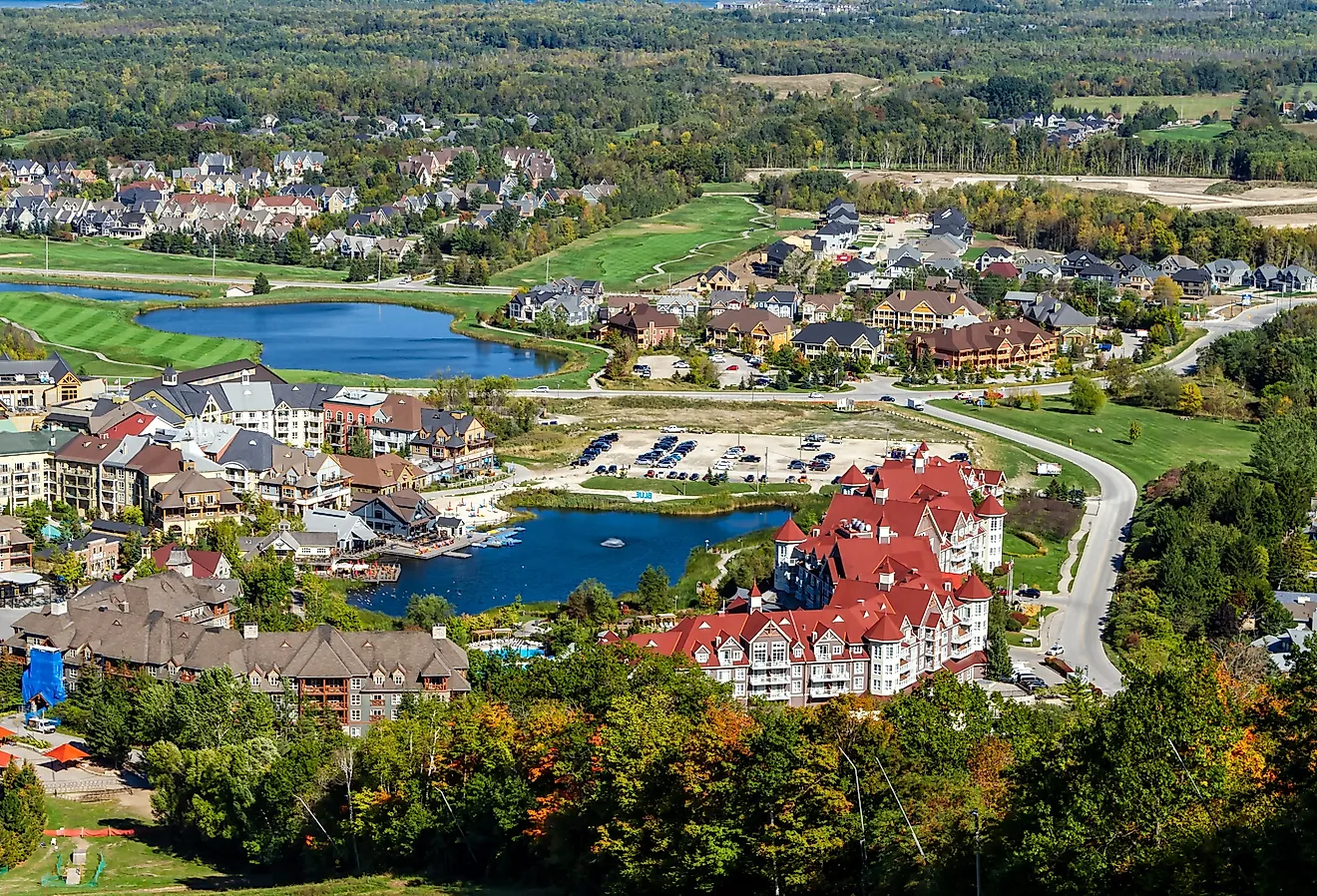
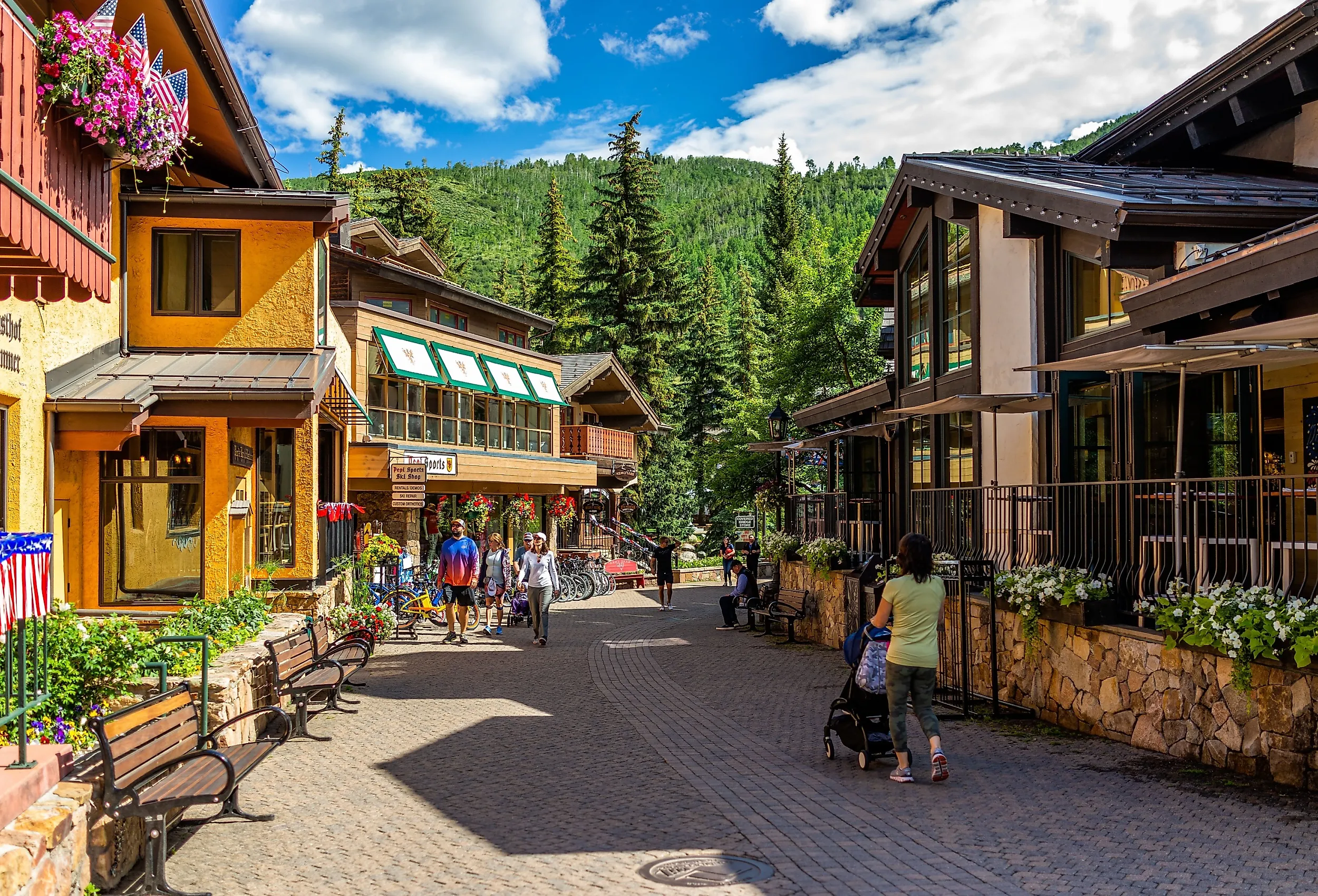
Vail built its Alpine village alongside a new ski resort, a different undertaking from Helen and Leavenworth's downtown makeovers. Construction began in 1962, and the town incorporated four years later. The pedestrian streets of Vail Village were developed with European mountain architecture, placing lodging and restaurants together beneath the ski slopes. Austrian ski racer Pepi Gramshammer and his wife, Sheika, added Gasthof Gramshammer in 1964. Its Austrian styling helped influence other buildings in the village. Walk across the covered bridge over Gore Creek and follow Bridge Street toward the mountain to see the compact center on foot. The Colorado Snowsports Museum, beside the village parking structure, has free admission and exhibits on Colorado skiing and snowboarding. For a longer outing, follow the creekside route toward Lionshead, another of Vail's main villages. Free in-town buses connect the village areas when you want a ride back.
Solvang, California

Solvang's Danish roots preceded its architectural makeover. Immigrants established the California community in the Santa Ynez Valley in 1911. The familiar streetscape came later, with plans to remake existing facades and establish a Danish style for new buildings advancing in 1946. Windmills and half-timbered fronts now stand among restaurants and wine-tasting rooms.
Walk Copenhagen Drive and the surrounding blocks, looking for ornamental storks perched on rooftops. In Danish tradition, the birds symbolize good luck. Stop at Solvang Restaurant for aebleskiver, round Danish pancakes served with raspberry jam and powdered sugar. The nearby Little Mermaid fountain reproduces another familiar Danish symbol on a smaller scale. Continue to the Elverhøj Museum of History & Art for exhibits about the settlement and Danish-American life. Inside, period rooms display Danish furnishings.
Pella, Iowa

Pella built a Dutch-style canal into its downtown. At Molengracht Plaza, brick walkways border the water in a complex designed to resemble a Dutch square. You can follow the canal before heading over to the Vermeer Windmill, a working grain mill assembled in Pella in 2002.
The mill was designed and built in the Netherlands, then taken apart for shipment to Iowa. Guided visits include the mill and a miniature Dutch village, with the adjoining Historical Village available for further exploring. Back around the downtown square, Jaarsma Bakery sells Dutch letters, S-shaped pastries filled with almond paste. Carry one toward Central Park, where the Tulip Toren rises above the grounds. The tower was built for downtown entertainment. In spring, tulips fill the surrounding park's flower beds.
Frankenmuth, Michigan

Frankenmuth's Bavarian Inn helped change the appearance of the surrounding town. In 1958 and 1959, the Zehnder family remodeled the former Fischer Hotel in an Alpine style. More businesses adopted the look during the following years, adding a coordinated streetscape to a community founded by German settlers in 1845.
Outside the restaurant, the Glockenspiel's moving figures perform the story of the Pied Piper of Hamelin beneath a 35-bell carillon. The show is free to watch. Stay for a family-style chicken dinner, then continue toward the Cass River and the Holz Brücke covered bridge. The bridge dates to 1980, another relatively recent addition to the town's old-European appearance. A seasonal cruise aboard the Bavarian Belle follows the Cass River, with narration about local history.
New Glarus, Wisconsin

New Glarus puts Swiss chalet buildings among southern Wisconsin's rolling hills. Swiss immigrants established the community in 1845, and its recognizable chalet architecture expanded during the following century. Downtown businesses added Swiss-style details to their facades, making the village's origins visible along its shopping streets.
The Chalet of the Golden Fleece provides a particularly close architectural connection to Switzerland. Architect Jacob Rieder designed the house with features traditional to the canton of Bern. Seasonal tours lead through rooms containing painted furniture and objects collected by its owner, Edwin Barlow.
Continue downtown to Puempel's Olde Tavern, where murals painted in 1913 depict scenes from Swiss, Austrian, and American history. New Glarus Bakery supplies pastries nearby. The former railroad depot serves as the trailhead for the Sugar River State Trail. Follow it out of the village into the surrounding countryside.
The Older Towns Behind the Facades
New Glarus's streets still contain buildings that predate the chalet facades. Its historic walking tour includes an 1859 Greek Revival building that once housed a tinsmith's shop. The route also passes the former Citizens Bank, built in 1910 in the Richardsonian Romanesque style. Looking beyond the decorated storefronts in Leavenworth leads to an earlier landscape, too. The Greater Leavenworth Museum offers guided walks along the historic railroad route and past sawmill remnants. You can spend the morning among Bavarian balconies, then explore the industrial sites that supported the town before tourism. In New Glarus, trains used the line to Brodhead until 1972; the depot now serves trail users.