The State Parks That Feel Like Zion
Zion National Park's colorful sandstone cliffs, canyons, natural arches, and narrow pathways draw in some of the biggest crowds of any national park in the Western US. In 2025, it was the second most visited national park with close to 5 million visitors. The park gets its name from early Mormon settlers who named it after Mount Zion, a hill in the city of Jerusalem.
However, with so many visitors coming to Zion, park entrances can get crowded quickly. Thankfully, there are many state parks spread throughout the Western US, and one in Kentucky, which feel like Zion with impressive arches, natural bridges, and red stone.
Snow Canyon State Park, Utah

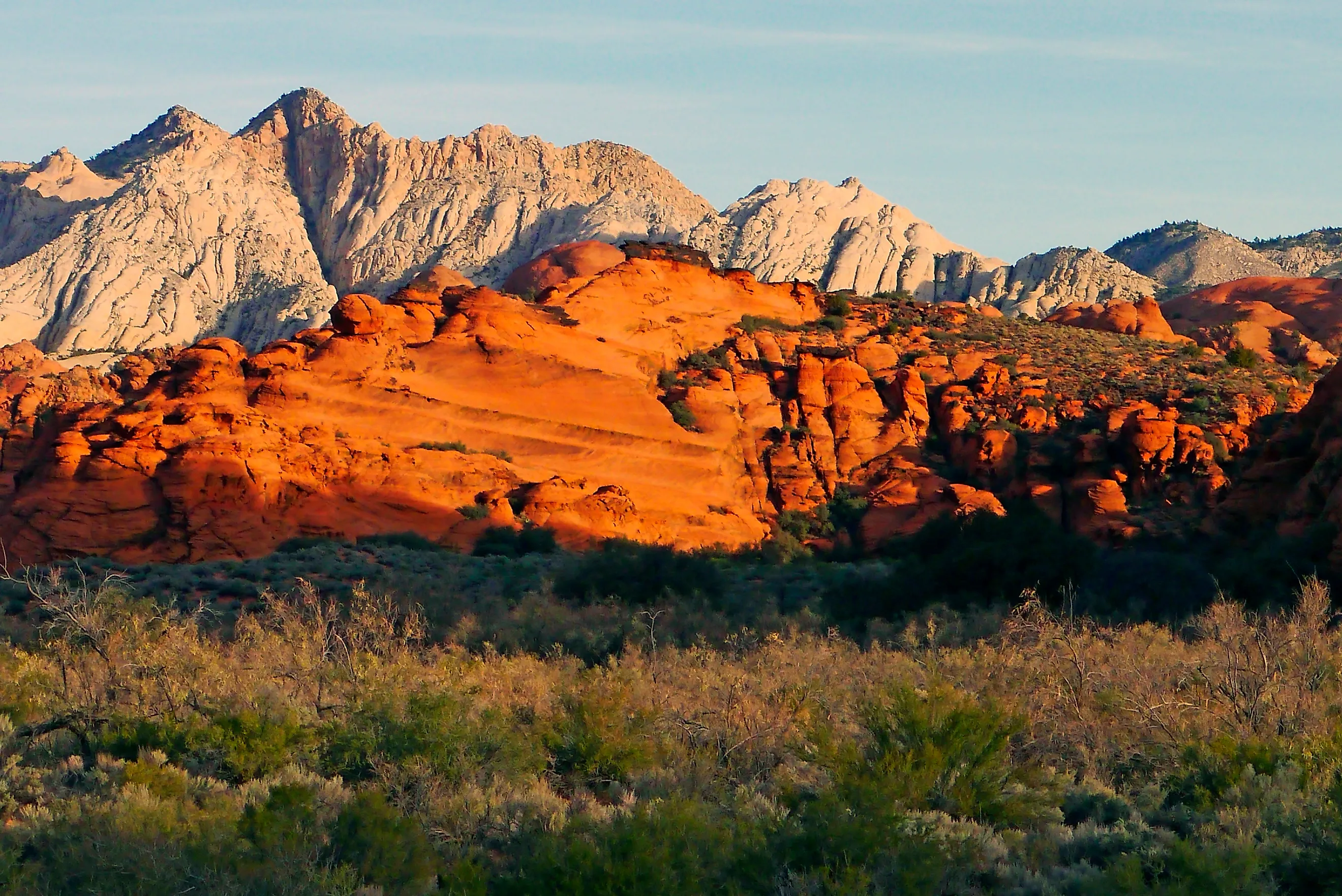
Snow Canyon State Park is under an hour's drive away from Zion National Park in southern Utah. This 7,400-acre state park has served as the backdrop for several films and TV shows such as "Jeremiah Johnson" and "Butch Cassidy and the Sundance Kid" due to its dramatic dunes and red Navajo sandstone cliffs.
What makes this park stand out is how many different landscapes it combines in its smaller acreage, including sandstone cliffs of red and white, ancient lava flows, and petrified sand dunes. Petrified dunes like these also appear in Zion National Park, and they formed when ancient sand dunes were buried, hardened into stone, and later exposed by erosion.
It is situated within the larger 62,000-acre Red Cliffs Desert Reserve, which was set aside to protect desert tortoise habitats. Across the park are more than 38 miles of hiking trails, such as the 2.5-mile Lava Flow Trail, which passes lava tubes and black lava flows, the Petrified Dunes Trail, and the Johnson Canyon Trail.
Red Rock Canyon State Park, California

Located to the southwest of Death Valley National Park, Red Rock Canyon State Park is filled with color in its eroded badland environment. The badlands here are noted for many different colors, including white, red, and brown.
Some of these colors come from iron oxide left behind, such as in its 300-foot-tall sandstone columns in the Red Cliffs section of the park. It is situated at the very edge of the Sierra Nevada, where it joins up with the El Paso Range. The cliffs also contain artistic treasures left behind by the Kawaiisu people, who carved petroglyphs into the surface. There are short hikes one can take to see these formations, such as the 1.2-mile Hagen Canyon Nature Trail. Along the way are fluted cliffs with small caves.
Although it's an arid desert here, Joshua trees can be found in this state park. This hardy plant can survive in extreme climates such as cold desert nights, hot summer days, and very low precipitation. After spring rains, wildflowers such as the Red Rock poppy can bloom here briefly.
Red Rock State Park, Arizona

Red Rock State Park offers close-up views of the red rock formations that made Sedona, Arizona, famous. These rock formations were laid down over hundreds of millions of years. The lowest layer of these formations was laid 330 million years ago by limestone deposited on a tropical ocean floor.
These rocks were formed by other geological factors as well, such as the uplifting of the Colorado Plateau and the depositing of sediments carried by ancient rivers, some of it eroded from mountains as far away as the Appalachians. Today, some of these rocks have formed mesas and spires, and they are still eroding.
Red Rock State Park sits just southwest of Sedona, enabling hikers to view the Schnebly Hill Formation and see juniper trees, green meadows, and Oak Creek. It's only 286 acres, enabling residents of Sedona to easily escape into nature for an afternoon.
Coral Pink Sand Dunes State Park, Utah

This state park is constantly changing due to the wind. Located near Kanab, Utah, to the southeast of Zion National Park, it pairs colorful red rock formations with coral pink sand.
Coral Pink Sand Dunes State Park gets its name from the pinkish red sand structures, which can move by as much as 50 feet a year due to wind. The color comes from the eroding red Navajo sandstone cliffs nearby, which add their sediments to the sand. One of the most popular activities in this park is sledding, sliding, or hiking up the sand dunes while enjoying the views from 6,000 feet up. Just watch out for off-road vehicles shredding up and down the dunes.
Natural Bridge State Resort Park, Kentucky

This state park is unlike all the others listed, as it is east of the Mississippi in the state of Kentucky. Natural Bridge State Resort Park is similar to Zion and Arches National Parks for its sandstone arches, including one that hikers can walk across.
The sandstone arch stands 65 feet high and 75 feet in length. By walking up a narrow stairway, one can stroll across this bridge, or simply take a Sky Lift to the top. Once up there, one can get a view of the wider Red River Gorge Geological Area.
This gorge was shaped by the Red River, creating a series of sandstone cliffs and caves, making this the most popular climbing spot in the entire state of Kentucky. There are more than 4,000 mapped climbing routes on the cliffs. Other than climbing, hiking trails will take one to the Natural Bridge Cave or to several lakes such as Mill Creek Lake, featuring black crappie, bass, sunfish, rainbow trout, and other fish species.
These State Parks All Offer A Piece Of Zion
Although none of these state parks can replace Zion, they all offer pieces of it, enabling one to experience the feeling of Zion without dealing with the crowds. Beyond that, they offer their own landmarks that can't be found at Zion, such as red sand dunes, a natural bridge accessible on foot, and black basalt trails shaped by ancient lava flows. These state parks don't just feel like Zion. They also create a feeling of wonder and discovery that one can enjoy without having to pass through crowded gates.