The Most Dangerous Animals In US National Parks
Despite the headlines, wildlife is not the leading cause of death in America's national parks. But that doesn't mean wildlife isn't dangerous. Certain species can gore or bite or transmit diseases capable of causing lifelong illness or death. This is especially true when visitors get too close or underestimate them. This list focuses only on animals found within the 63 official U.S. national parks and not the hundreds of other sites such as national seashores or monuments. That means it excludes such species as polar bears. From Yellowstone's bisons tossing selfie-takers into the air to Everglades National Park's alligators stalking in the marshes, these are the most dangerous animals found in U.S. national parks.
Blacklegged Tick

A blacklegged tick (Ixodes scapularis) weighs less than a sunflower seed, yet it arguably poses a greater health risk to national park visitors than any bear or mountain lion. Unlike predators that rely on force, these tiny arachnids can quietly transmit Lyme disease, along with anaplasmosis, babesiosis, and Powassan virus, often without the victim noticing the bite until hours later. The CDC estimates roughly 476,000 Lyme disease infections are diagnosed and treated each year in the United States, making it by far the country's most common vector-borne disease.
Infection usually requires the tick to remain attached for many hours, which is why the Park Service recommends performing a full-body tick check immediately after hiking and removing attached ticks as soon as possible. The National Park Service warns that blacklegged ticks are especially common in forested parks across the Northeast and Mid-Atlantic, including Acadia, Shenandoah, and Great Smoky Mountains.
American Bison
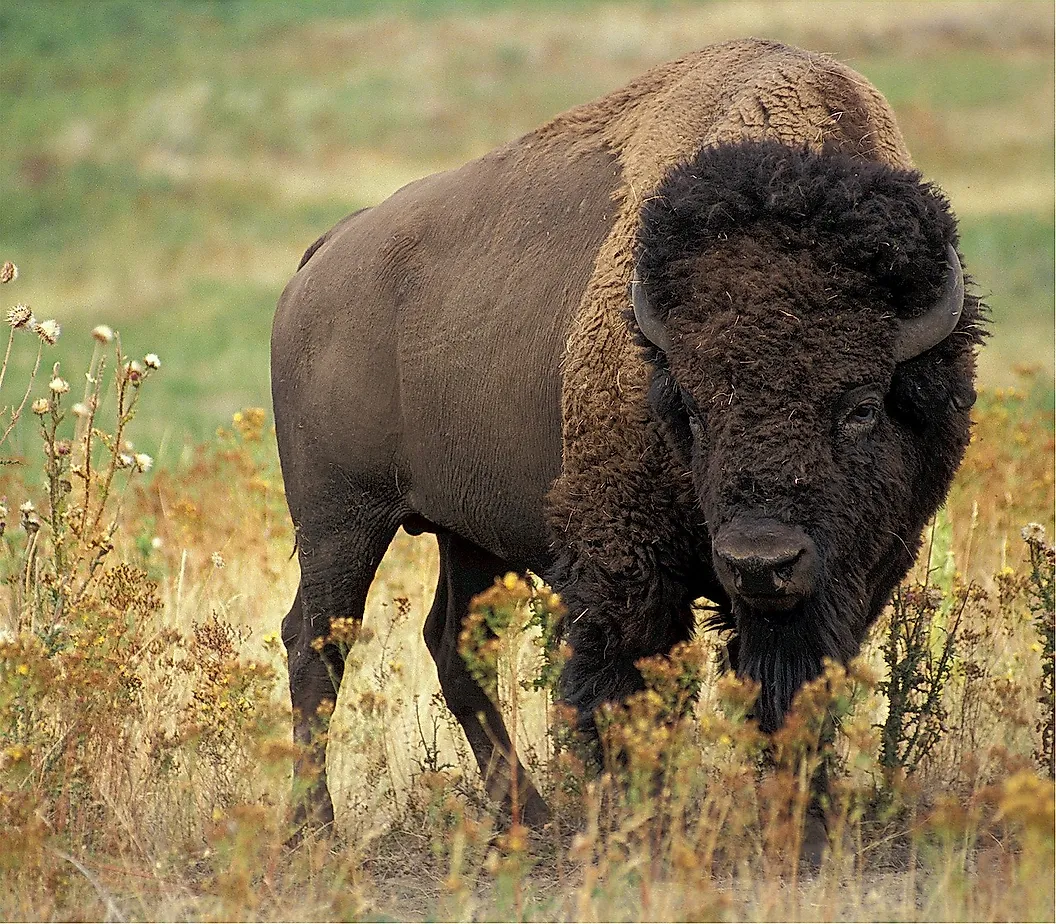
Standing more than six feet tall at the shoulder and weighing up to 2,000 pounds, the American bison (Bison bison) has fooled countless visitors into thinking it's slow and harmless. It isn't. Yellowstone National Park warns that bison can sprint at speeds of 35 mph, pivot quickly, and charge without warning when threatened. Despite this, visitors continue to approach them for photographs, often ignoring the park's requirement to remain at least 25 yards away.
Since 1980, bison have injured more people in Yellowstone National Park than any other wild animal. A CDC review of incidents between 2000 and 2015 found that 80% of injured visitors had intentionally approached the animal, and every victim was within about six feet before the encounter. Yellowstone has continued reporting bison injuries in recent years, including one in July 2026, reinforcing one of the park's most repeated safety messages: these are wild animals that require distance.
Brown Bear/Grizzly Bear

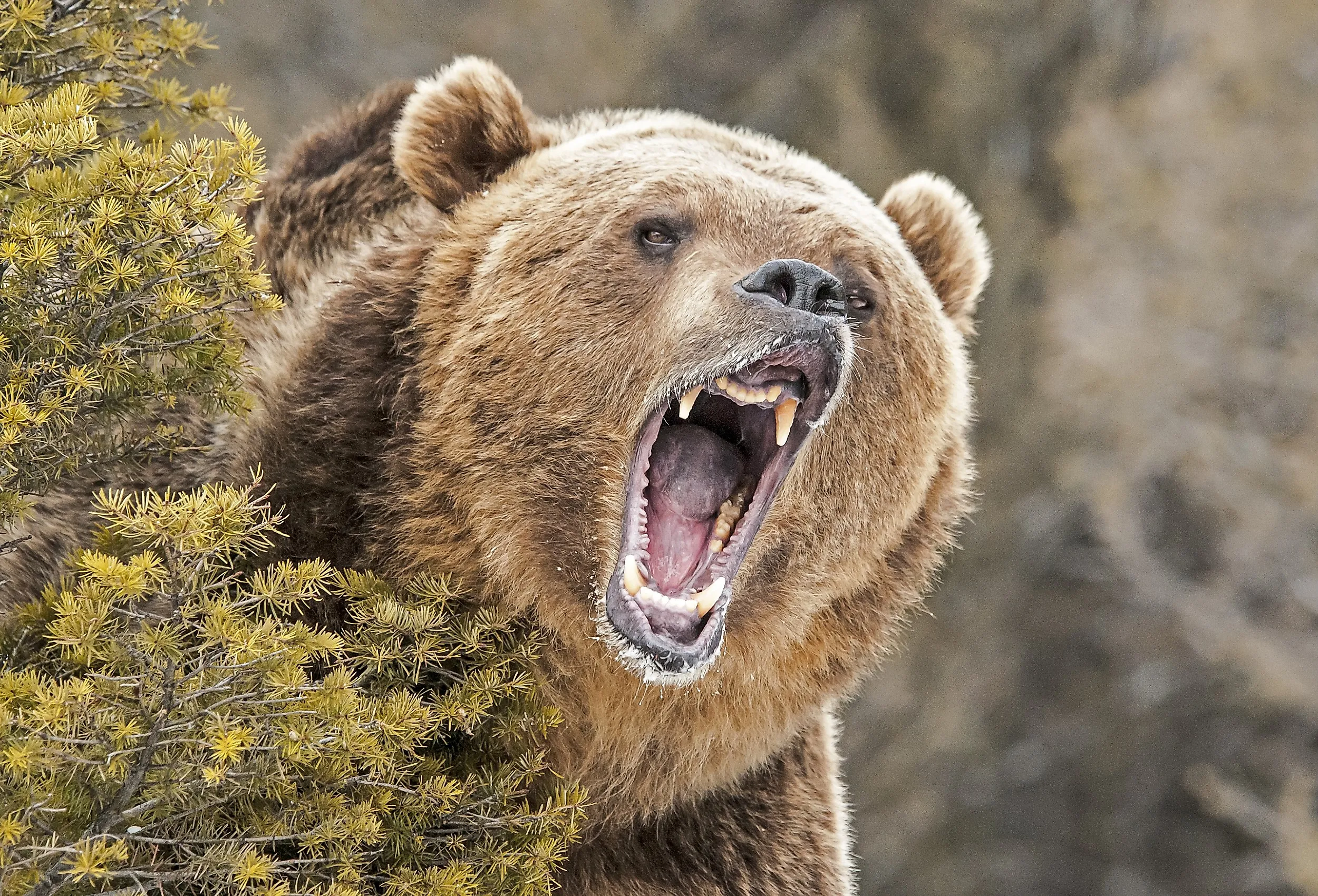
Brown bears and the inland grizzly (Ursus arctos horribilis) belong to the same species and are often called "brown bears" interchangeably. However, "brown bear" is commonly used for large coastal populations. The Alaska Department of Fish and Game estimates roughly 30,000 brown bears (Ursus arctos) in the state. The Katmai National Park and Preserve supports approximately 2,200 of them across 4.2 million acres, making it one of the best national parks for bear sightings. Here, salmon concentrate in large numbers around rivers such as Brooks River, putting visitors unusually close to animals that can weigh more than 1,000 pounds. Bear attacks on humans in Katmai National Park are exceedingly rare, according to the NPS.
An adult male at Katmai commonly weighs 600-900 pounds in midsummer, while large males can exceed 1,000 pounds by autumn. At Brooks Camp in Katmai, bears regularly use the same trails and riverbanks as visitors. While no fatal attacks have been recorded here, there have been multiple incidents when visitors have been in harm's way. Grizzlies are generally smaller than the salmon-fed coastal brown bears but remain extremely powerful. They can be found in multiple national parks across the northwest, including in Washington's North Cascades National Park, Grand Teton National Park, and Glacier National Park in Montana. In May 2026, an adult female with cubs injured two hikers near Old Faithful in Yellowstone National Park. Since 1980, Yellowstone has recorded around 40 grizzly-caused injuries.
Rattlesnakes

You're far more likely to walk past a rattlesnake (Crotalus and Sistrurus species) than be bitten by one. Their camouflage is exceptionally effective, and most bites occur after someone accidentally steps too close or deliberately attempts to handle the snake. However, rattlesnakes are responsible for the majority of the 7,000-8,000 venomous snakebites that occur in the U.S. annually.
In part, this is due to their presence on and around popular hiking trails, including in national parks. Big Bend National Park alone is home to over 30 snake species, including four species of rattlesnake. Grand Canyon National Park has multiple confirmed rattlesnake species, including the Grand Canyon rattlesnake, Great Basin rattlesnake, black-tailed rattlesnake, prairie rattlesnake, and speckled rattlesnake. They can also be found in Zion National Park in Utah, California's Yosemite National Park, and Saguaro National Park in Arizona. Although modern antivenom has made fatalities uncommon, untreated rattlesnake bites remain medical emergencies that can cause severe tissue damage and permanent injury.
Alligators

Everglades National Park is one of the easiest places in North America to observe wild American alligators (Alligator mississippiensis). During the dry season, hundreds gather around shrinking freshwater pools, often appearing remarkably calm as visitors pass nearby. However, that calm is misleading. Adult males can exceed 13 feet in length, explode out of the water with surprising speed, and deliver one of the strongest bite forces of any North American animal.
The state of Florida averages about eight unprovoked alligator bites requiring medical attention each year, however, attacks within either Everglades National Park or Biscayne National Park are rare. The National Park Service advises visitors to keep a safe distance, never feed alligators, and keep pets well away from shorelines, where most dangerous encounters occur.
American Black Bear
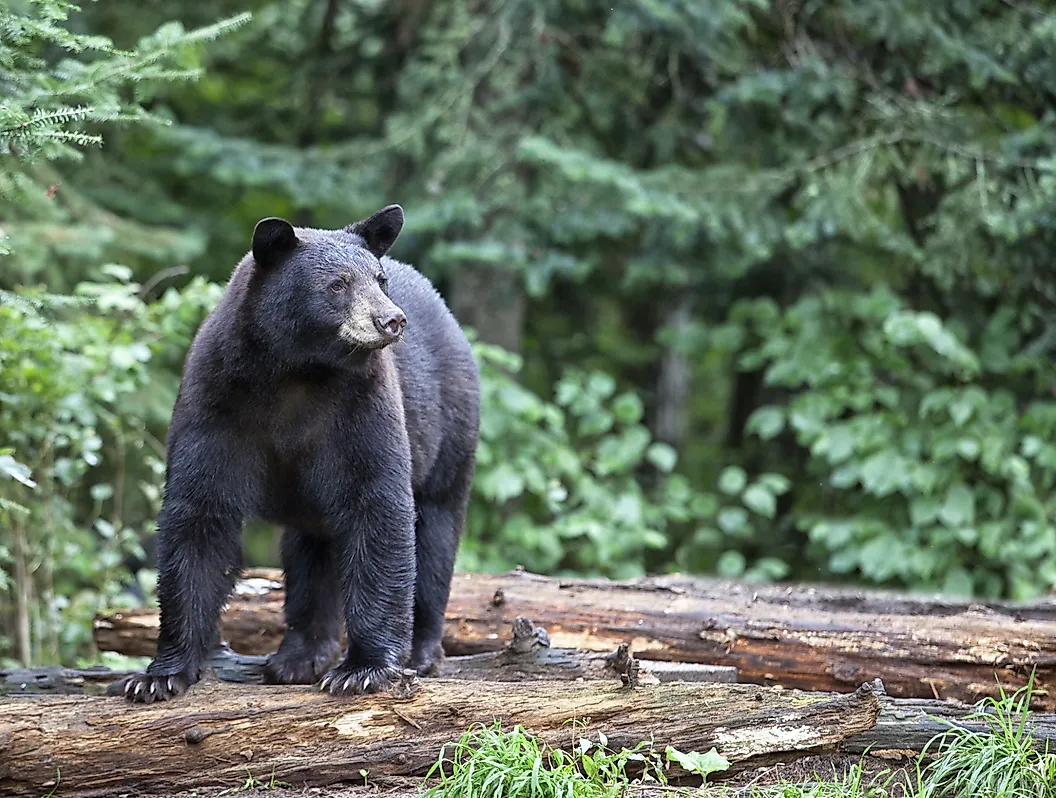
Great Smoky Mountains National Park, which crosses the border of Tennessee and North Carolina, contains an estimated 1,900 American black bears (Ursus americanus), approximately two per square mile. Black bears are smaller than grizzlies and usually retreat from people, but they become particularly dangerous after learning that campsites, vehicles, or backpacks contain food.
Yosemite National Park defines a "bear incident" as an event involving property damage, food acquisition, or, less commonly, human injury. By July 4, 2026, the park had already recorded 34 such incidents since January, including bears repeatedly obtaining improperly stored food. Black bears can also be found in Big Bend National Park and Shenandoah National Park, among others. According to the U.S. Fish and Wildlife Service, there are approximately 400,000 black bears across the country.
Mountain Lion
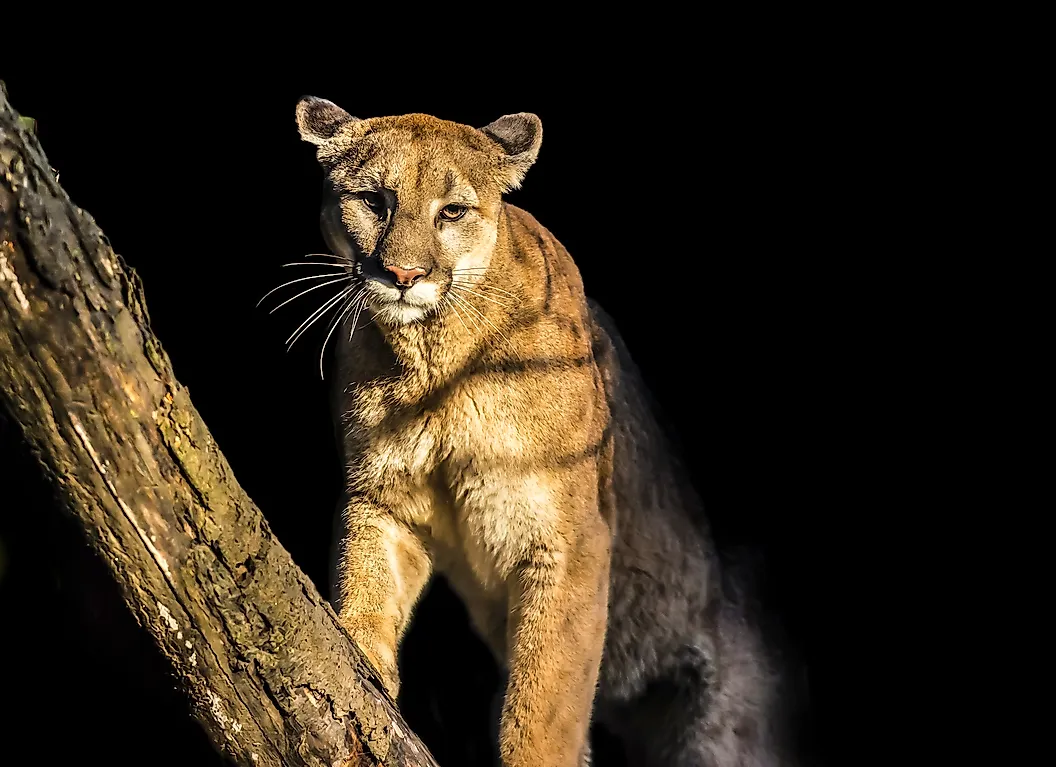
Big Bend National Park receives more than 150 reported mountain lion (Puma concolor) sightings each year, and several encounters there have resulted in attacks since 1984. This includes a notable incident in 2012 when a father successfully saved his six-year-old son who was being mauled. Similarly, a four-year-old was injured by a mountain lion in 2025 on Hurricane Ridge in Olympic National Park.
Mountain lions are among North America's most effective ambush predators. Unlike bears, which often defend cubs or food, a mountain lion's danger comes from its ability to stalk prey silently before launching a short, explosive attack. Powerful hind legs allow the cat to leap more than 20 feet in a single bound, while its preferred hunting technique is a bite to the neck or skull. Although attacks on people remain exceptionally rare, they have occurred in several national parks.
Elk
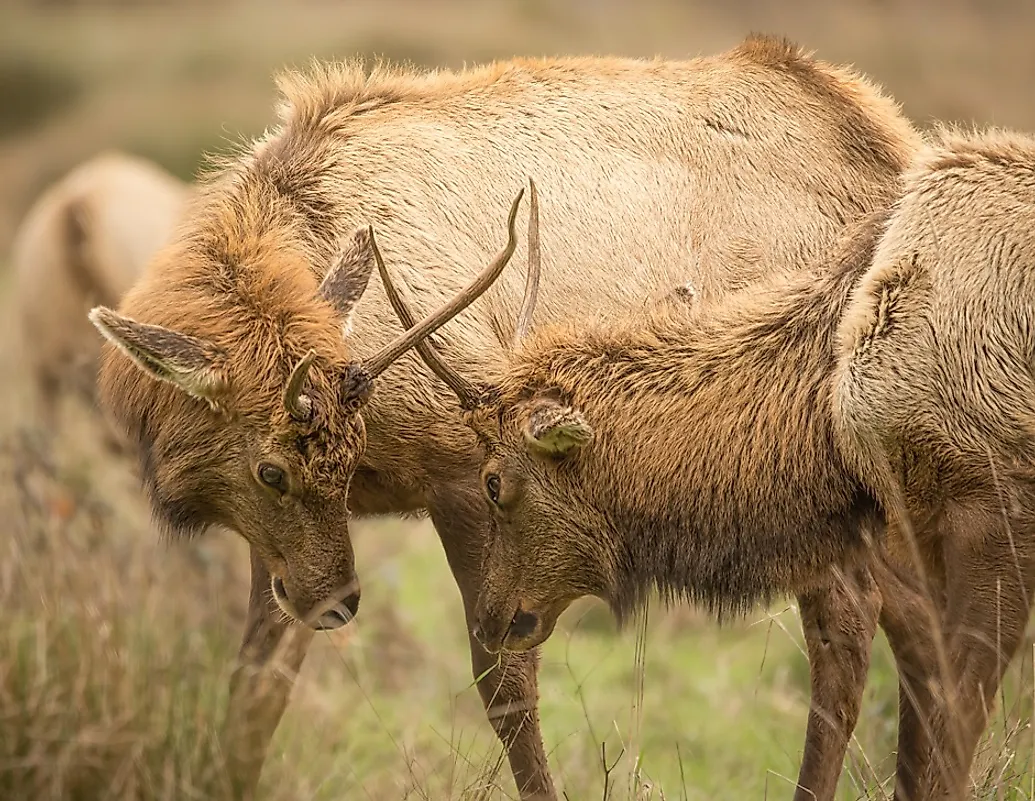
Like the bison, elk (Cervus canadensis) routinely send visitors to the hospital after being approached too closely. During the fall rut, bulls become highly territorial, while females aggressively defend newborn calves in late spring. Yellowstone and Rocky Mountain National Parks occasionally close trails or issue wildlife warnings when elk become especially defensive.
Despite weighing up to 1,100 pounds, elk can sprint at speeds of up to 40 mph and strike with sharp hooves capable of causing severe injuries. In July 2025, a bull elk took over a campsite in Grand Teton National Park, aggressively confronting numerous hikers and campers. About a year later, tourists were charged by a 600-pound elk in Grand Canyon National Park, adding to a handful of reported incidents.
Bull Shark

Bull sharks (Carcharhinus leucas) are unusually well suited to the same coastal environments used by swimmers, paddlers, and anglers. Unlike most sharks, they can regulate the salt concentration within their bodies and move between saltwater, estuaries, and freshwater rivers. Biscayne National Park and Everglades National Park list bull sharks among the species documented in their waters.
The danger comes from the bull shark's large body, heavily serrated teeth, preference for shallow and sometimes murky water, and ability to inflict catastrophic injuries with a single bite. Bull sharks are one of the three species most consistently implicated in serious unprovoked attacks worldwide. However, the National Park Service describes shark attacks in Biscayne as uncommon.
Gray Wolf

Wild gray wolves (Canis lupus) ordinarily avoid people, making them much less likely to attack than their size, teeth, and pack-hunting ability might suggest. The danger increases when wolves obtain food from campsites and stop treating people as something to avoid. That precise thing has created unusually serious problems at Isle Royale in the state of Michigan. In July 2026, the park temporarily closed parts of Three Mile Campground after a wolf entered a tent, pawed at other tents, and dragged away backpacks.
Denali National Park and Preserve, Yellowstone, and Voyageurs National Park also have notable populations of gray wolves. However, adverse encounters with humans are far less common than with large herbivores such as bison, elk, and moose.
Moose

As mentioned, humans are far more likely to have a negative encounter with a moose (Alces alces) than they are with a wolf in U.S. national parks. Moose are dangerous not because they hunt people but because an agitated animal weighing half a ton or more can charge, kick, trample, or strike with its antlers. Female moose (cows) become especially defensive around calves during late spring and early summer, while bulls can become aggressive during the autumn rut. Deep snow, dogs, blocked escape routes, and visitors approaching for photographs can also provoke defensive behavior.
According to the Alaska Department of Fish and Game, moose pose a more serious threat to humans than grizzlies do. Aside from defending their young, moose also have caused serious car accidents, such as on August 1, 2025, when a vehicle struck a moose just south of the Denali Park Road entrance.
Black Widow Spider

Black widows (Latrodectus) do not pursue people. Bites usually happen when someone reaches into a web, handles firewood, puts on stored clothing, or presses the spider against the skin. Zion National Park reports western black widows throughout the park, frequently around buildings, while Joshua Tree National Park warns that they occur across the park alongside rattlesnakes and scorpions. The spider's venom attacks the nervous system. Pain may begin around two small puncture marks before spreading into the back, chest, or abdomen, sometimes producing severe muscle cramping, sweating, nausea, and elevated blood pressure.
Arizona Bark Scorpion

The Arizona bark scorpion (Centruroides sculpturatus) is the most medically significant scorpion in the United States and the most commonly encountered scorpion inside Grand Canyon National Park. Its small tan body blends into sand, rock, bark, clothing, and bedding, while its nocturnal behavior makes accidental contact more likely around campsites after dark. The Grand Canyon states that scorpion stings occur regularly, although most cause intense pain rather than life-threatening illness. Unlike aggressive animal attacks, nearly every sting is defensive and tends to happen after the scorpion is stepped on, trapped, or touched.
Whether hiking through Yellowstone, paddling Biscayne, exploring the Everglades, or camping beneath Denali's mountains, every national park has wildlife that could pose harm to visitors. From a tick no larger than a sunflower seed to a 2,000-pound bison capable of sprinting 35 mph, America's national parks reward visitors who respect wild animals rather than underestimate them. Keeping your distance, storing food properly, and staying alert help keep these remarkable landscapes memorable for all the right reasons.