The Largest Marine Sanctuary In America
Every summer, tiger sharks gather in the shallows of French Frigate Shoals, an atoll in the Northwestern Hawaiian Islands. They're there to catch young seabirds on their first flights in this corner of the vast Papahānaumokuākea National Marine Sanctuary. If that sounds like something out of a David Attenborough documentary, well, it is.
The British naturalist narrated a similar hunt, filmed near Laysan, another island in the sanctuary, for the Netflix series Our Planet II in 2023. At 582,570 square miles, the sanctuary is the largest of the 18 sites in America's National Marine Sanctuary System: that's twice the size of Texas. Here's what it protects, and why it took more than a century to get this big.
America's Biggest Marine Sanctuary

First, let's define what we mean by "largest." We're referring to the area that the National Oceanic and Atmospheric Administration (NOAA) publishes for each site designated under the National Marine Sanctuaries Act, the law passed in 1972 that created the system. Using this measure, Papahānaumokuākea has no rival, its 582,570 square miles accounting for more than 90 percent of 620,000 plus square miles in the system. That's an area larger than all of the country's national parks combined.
The sanctuary covers the ocean around the Northwestern Hawaiian Islands, a 1,350-mile line of islands, atolls, and reefs running northwest from Nihoa to Kure Atoll, well past Kauai and the other main islands of Hawaii. Its boundary starts at the shoreline and extends as far as 200 nautical miles out to sea, which is 230 miles, the limit of U.S. waters. The dry land is not part of it. The islands themselves belong to the Hawaiian Islands National Wildlife Refuge and Midway Atoll National Wildlife Refuge, administered by the U.S. Fish and Wildlife Service.
The same stretch of ocean has two titles. Papahānaumokuākea Marine National Monument was created by presidential proclamation in 2006, and NOAA added the national marine sanctuary in 2025. The difference is simple enough. The monument, at 582,578 square miles, includes the islands as well as the sea, while the sanctuary covers only the water. Sanctuary status also brought its own regulations, a permit system, and an advisory council.
NOAA manages the sanctuary with the State of Hawaii, in partnership with the Fish and Wildlife Service and the Office of Hawaiian Affairs, a state agency that represents Native Hawaiians. Most of the sanctuary's water is deep. NOAA describes abyssal plains 16,400 feet down, along with seamounts, submerged banks, and more than 3,687 square miles of shallow coral reef.
From Bird Reserve To Sanctuary

Federal protection in Papahānaumokuākea started with birds, not fish. On February 3, 1909, President Theodore Roosevelt created the Hawaiian Islands Reservation to protect nesting seabirds, and the reservation later became the Hawaiian Islands National Wildlife Refuge.
In December 2000, President Bill Clinton signed an executive order creating the Northwestern Hawaiian Islands Coral Reef Ecosystem Reserve and directed the Commerce Department to start turning it into a sanctuary. In June 2006, with that process still underway, President George W. Bush used the Antiquities Act to declare a marine national monument of 139,797 square miles. The monument received its Hawaiian name of Papahānaumokuākea in 2007, combining Papahānaumoku (the earth mother) with Wākea (the sky father), whose union created the islands in Hawaiian tradition.
President Barack Obama expanded the monument by 442,781 square miles in 2016, pushing most of its boundary out to the 200-nautical-mile limit and bringing the total to 582,578 square miles. NOAA published the final rule designating the sanctuary on January 16, 2025. It took effect on March 3, 2025, making Papahānaumokuākea the 18th national marine sanctuary. The sanctuary adds to the monument, not replacing it.
Sharks, Seals, And Old Birds

On most coral reefs, big predators are scarce. In Papahānaumokuākea, they dominate. Apex predators like giant trevally, a large jack that Hawaiians call ulua, and sharks, including those tiger sharks on French Frigate Shoals, make up more than 54 percent of the fish biomass on these reefs.
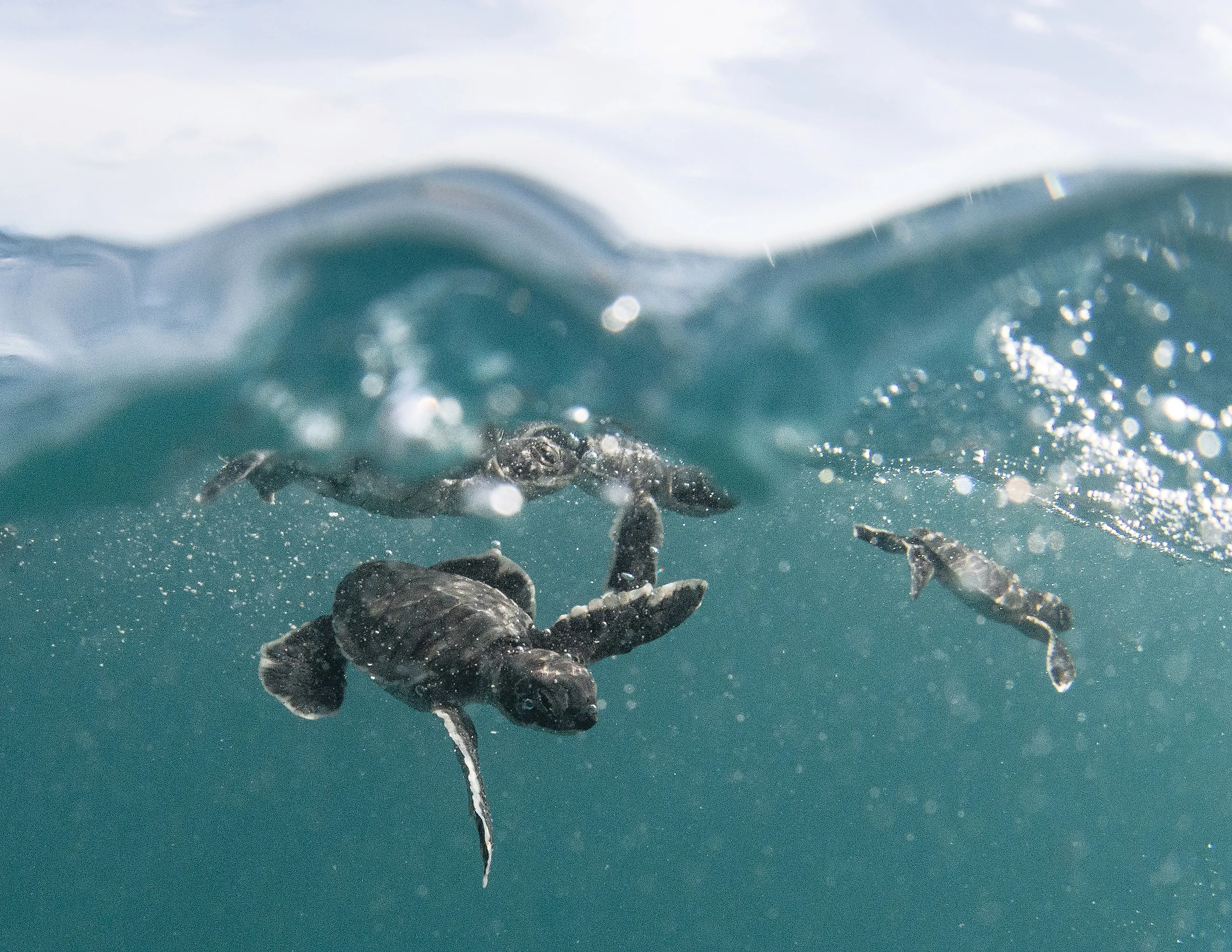
The sanctuary is also the main refuge of the Hawaiian monk seal, an endangered species found only in Hawaii. More than 90 percent of Hawaii's green sea turtles, or honu, nest at French Frigate Shoals; with most of them on the East Island, an 11-acre strip of sand. Hurricane Walaka, a Category 3 storm, washed most of the East island away in October 2018, but it has since recovered to over half its former size.
Above the water, 14 million seabirds from 22 species use the islands, including the world's largest albatross colony on Midway Atoll. The colony's best-known resident, Wisdom, is the world's oldest known wild bird. A Laysan albatross banded on Midway in 1956, she hatched a chick in January 2025 at an age of at least 74.
NOAA expeditions to the deep water have added finds of their own. In 2015, a remotely operated vehicle filmed a sponge the size of a minivan, 11.5 feet long, at a depth of 7,000 feet. And in February 2016, cameras northeast of Mokumanamana, also called Necker Island, recorded a pale, finless octopus on the abyssal seafloor at 14,075 feet. It was nicknamed Casper. A black coral species found here at depths of 1,000 to 1,600 feet can live more than 4,000 years.
The Next Largest Sanctuaries

Before 2025, the largest site in the marine sanctuary system was the National Marine Sanctuary of American Samoa, at 13,581 square miles. It started off in 1986 as Fagatele Bay, a quarter of a square mile of reef, and was expanded in 2012. Papahānaumokuākea is more than 40 times its size.
Third is Monterey Bay National Marine Sanctuary in California. Designated in 1992, it covers 6,094 square miles. Fourth is Chumash Heritage National Marine Sanctuary, also in California. Established in 2024, it covers 4,543 square miles and was the first sanctuary nominated by a tribe. Florida Keys National Marine Sanctuary is a close fifth at 4,539 square miles under its recent expansion.
The Largest Sanctuary Few Will Ever Enter
By NOAA's published figures, Papahānaumokuākea National Marine Sanctuary is by far the largest marine sanctuary in America. And the gap's a wide one: 582,570 square miles versus 13,581 for the runner-up in American Samoa. It took 116 years, from a bird reservation in 1909 to the final rule in 2025, to get there. And although the sanctuary remains closed to casual travel, all you need to do to see it is tune in to David Attenborough.