The US Lakes Where Alligator Gar Have Been Caught
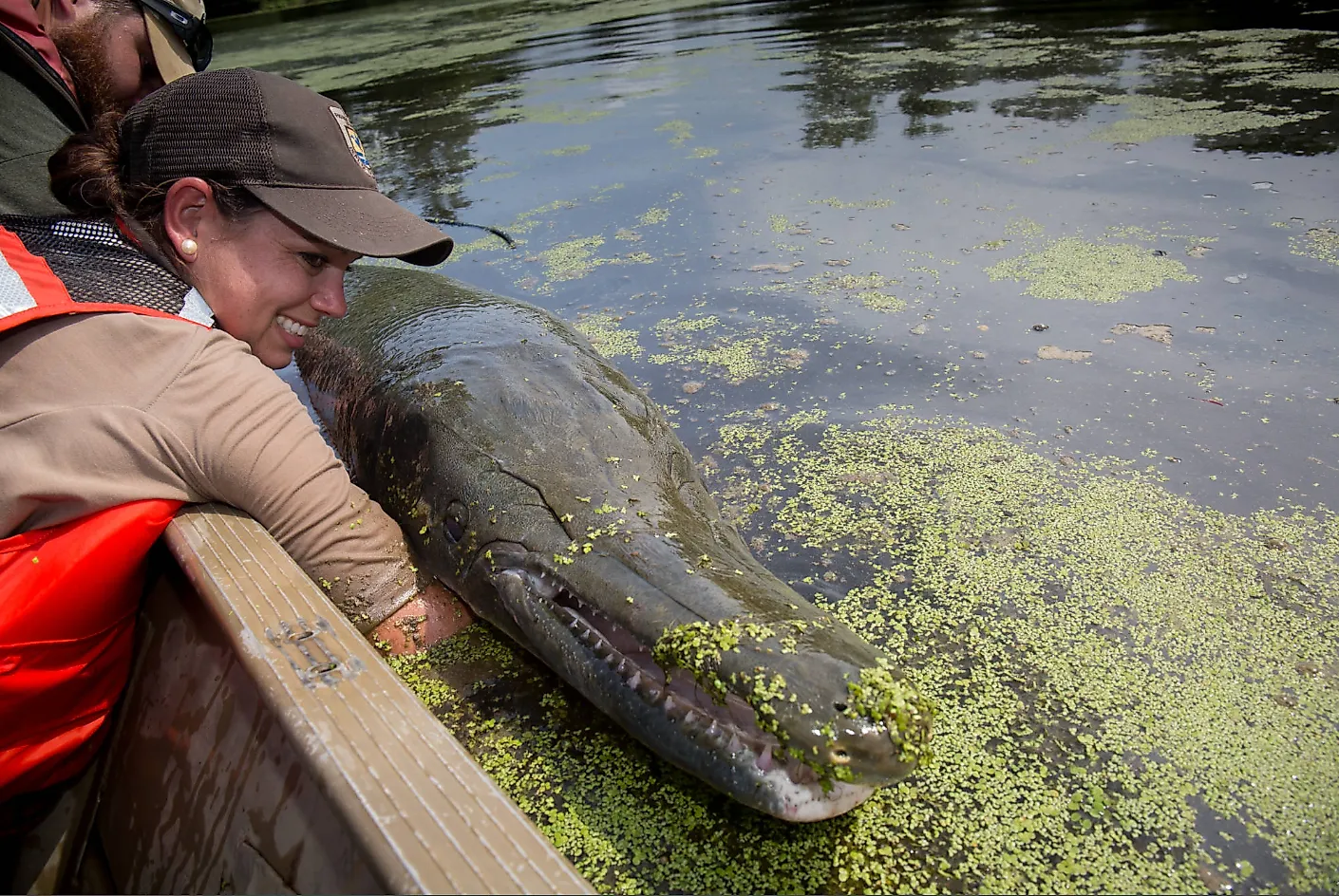
Picture a fish that can weigh more than a grizzly bear and has a jaw full of teeth. It is real, and it lives in American lakes. In 2011, a 327-pound alligator gar came out of Lake Chotard in Mississippi. It stretched more than eight feet long. It now sits in a natural history museum.
This is one of the biggest fish in American fresh water. Plenty of others have passed 200 pounds. An angler landed a 283-pound one in a Texas reservoir in 2023, a world record. Another topped 250 pounds in Lake Texoma, the Oklahoma record. Alligator gar swim in the same lakes where people cast for bass and catfish. Anglers have pulled giants out of every lake on this list.
Lake Chotard, Mississippi

Kenny Williams was fishing for buffalo on Valentine's Day in 2011 when his net snagged something far bigger. The fish he hauled from Lake Chotard weighed 327 pounds. It was an alligator gar, eight feet and five inches long, with a body nearly four feet around. Mississippi wildlife officials confirmed the measurements, and Williams donated his catch to the Mississippi Museum of Natural Science. The fish was taken in a commercial net, so its extraordinary size does not displace the separate world record for rod-and-reel fishing.
Chotard is a 1,123-acre oxbow of the Mississippi River about 25 miles north of Vicksburg. A narrow chute still connects it to the river when water is high enough. High river stages create a direct passage between the Mississippi and the old river bend.
For anglers pursuing crappie, the local fishing advice often involves cypress trees and submerged treetops. Gar can use oxbow lakes like Chotard alongside the broad river channels in which they are better known.
Sam Rayburn Reservoir, Texas

Art Weston spent two hours and 45 minutes fighting a fish that weighed nearly 50 times as much as the strength rating on his line. On September 2, 2023, he and guide Kirk Kirkland landed a 283-pound alligator gar on six-pound-test tackle at Sam Rayburn Reservoir. They weighed it on a certified scale and released it alive. The International Game Fish Association accepted the catch as the all-tackle angling world record, ending a run of nearly 72 years for the previous mark.
Sam Rayburn is a huge Angelina River impoundment north of Jasper, with flooded timber and submerged vegetation familiar to East Texas bass anglers. The lake's reputation for largemouth bass has never meant those fish are alone. Alligator gar eat mainly other fish, including buffalo and shad, and can remain in the same waterways for decades. Weston and Kirkland returned in April 2024 and landed another 188-pound gar, this time on four-pound-class line. That fish established another IGFA line-class record.
Lake Texoma, Texas and Oklahoma

The Red River crosses the Texas-Oklahoma border into Lake Texoma, and somewhere in those waters an alligator gar grew heavy enough to smash Oklahoma's state record. Paul Easley landed it on April 23, 2015. The fish weighed 254 pounds, 12 ounces and measured nearly eight feet, two inches. Texoma is famous for striped bass, including a naturally reproducing landlocked population, but Oklahoma wildlife officials also confirm that alligator gar breed here. The ancient-looking fish can reproduce in flooded shallows connected to the river system, although successful spawning requires particular water conditions and does not necessarily occur every year. One detail matters for anglers sharing this lake: roughly two-thirds lies in Oklahoma, and license requirements depend on which state's waters they fish. Texas records also document a 127.8-pound alligator gar taken by bowfishing on its side in August 2020. Oklahoma's 2015 fish remains far heavier than the Texas-side bowfishing record.
Toledo Bend Reservoir, Texas and Louisiana

Most fishing stories about Toledo Bend involve bass. Joshua Noble's catch in September 2017 took a very different turn: he brought in an 181-pound alligator gar measuring seven feet, two inches, using cut shad, and released it alive. A larger specimen entered the Texas records in June 2022 when Jesse Fuller took a 276.1-pound gar by bowfishing.
The reservoir follows the Sabine River along the Texas-Louisiana line, spreading across about 181,600 acres. Its upper portion has flooded trees and old creek channels, while aquatic vegetation dominates parts of the lower lake. Many anglers seek largemouth bass in that cover. Gar are native predators in the same watershed, and Texas wildlife managers report that buffalo, carp, and shad form much of their diet. Large gar do sometimes eat bass and crappie, but those sport fish are relatively uncommon prey. The 2017 catch was photographed by Texas Parks and Wildlife as a live release, with Noble beside a fish nearly as long as a small boat.
Lake Pontchartrain, Louisiana

An 84-inch alligator gar turned up in an angler's report from Lake Pontchartrain in 2022. The Louisiana Sportsman submission describes a seven-foot fish caught with carp bait and a braided leader, then released. The report is a firsthand fishing account, without an officially certified weight.
The setting is striking. Pontchartrain stretches along New Orleans and receives freshwater through the rivers draining Louisiana's north shore. It also connects to the Gulf of Mexico. Salt mixes with river water in this shallow estuary, which means a gar can share a vast lake with fish more often associated with coastal waters. Alligator gar tolerate brackish conditions and have been recorded across Gulf Coast estuaries.
Nearby Lake Maurepas contributes freshwater into the same basin. During major Mississippi River diversions through the Bonnet Carré Spillway, Pontchartrain can temporarily become much fresher. Those openings can lower salinity for months, changing the water inhabited by both estuarine and freshwater fish.
Falcon International Reservoir, Texas and Mexico

Falcon Reservoir can fall by more than 40 feet when the Rio Grande runs low and water is needed for irrigation. That is an enormous change for a fishing lake, exposing stretches that were once underwater. It has also produced a 249-pound alligator gar: Virgilio Lopez took the 94-inch fish by bowfishing on October 28, 2014.
Falcon lies near Zapata, with Texas on one side and Mexico on the other. Bass anglers know it for trophy fishing, but gar belong to the Rio Grande's native fish community. When the reservoir fills after a dry period, previously exposed vegetation can become fish habitat again. The international boundary also makes its fishing rules unusual. Texas allows a different alligator gar daily limit at Falcon than in most other waters, and people fishing the Mexican side need to check Mexican requirements. In June 2026, Audrina Garza added a 90.2-pound rod-and-reel gar to Falcon's Texas records.
Lake Corpus Christi, Texas

Lake Corpus Christi has produced a 220.8-pound alligator gar by bowfishing, taken by Matt Davis in May 2026. A very different catch in March 2023 came from Gunnar Wiatrek, who landed a 108.15-pound gar with cut mullet on a rod and reel. That same month, Manuel Vargas Jr. caught and released another measuring 89 inches. All three catches came from a reservoir close enough to Corpus Christi to be a familiar weekend fishing destination.
The lake holds water from the Nueces River northwest of the city. Its brushy shallows and stained upper channel support fish that have adapted to murky, slow-moving water. Texas Parks and Wildlife says catches of alligator gar exceeding six feet occur frequently here. At the surface, one of these broad-headed fish may appear to gulp the air. It can: gar have a modified swim bladder that lets them breathe atmospheric oxygen. Their ability to do that is useful in waters where dissolved oxygen is limited.
Choke Canyon Reservoir, Texas

Anglers sometimes catch alligator gar longer than six feet at Choke Canyon, a Frio River reservoir west of Three Rivers. Texas Parks and Wildlife describes those trophy encounters as frequent even though gar are not particularly abundant there. One bowfishing catch weighed 211 pounds in May 2009. Another fish, caught by Leo Flores on rod and reel in March 2011, measured 80 inches and briefly held the Texas state catch-and-release record.
Choke Canyon's submerged timber and brushy flats are a difficult place to fish, and the water level fluctuates substantially. Gar can be hard to hook because large adults may take a bait cautiously and spit it out if they feel resistance. Yet the reservoir also draws anglers for largemouth bass and catfish, with Choke Canyon State Park providing access to its shoreline. Those fisheries share space with a fish whose females may survive for more than half a century.
Lake Livingston, Texas

Lake Livingston's connection to the Trinity River makes alligator gar an especially serious presence here. The Trinity is one of Texas's best-known giant-gar waterways, and a 207-pound fish taken by bowfishing in September 2018 appears in Livingston's water-body records. An earlier rod-and-reel catch weighed 159 pounds. Livingston lies about 50 miles north of Houston and has broad expanses of often-turbid water, with a dam across the Trinity in Polk and San Jacinto counties. Its familiar catfish fishery occupies the same reservoir as these huge native predators. State rules restrict alligator gar retention in designated Trinity waters, including Livingston, to fish shorter than 48 inches. Female gar can live for decades, and successful spawning depends on occasional floods that give adults access to shallow grassy areas. Removing one large adult can mean losing a fish that survived several of those rare spawning opportunities.
Richland-Chambers Reservoir, Texas

Alligator gar occupied the Richland-Chambers drainage before crews finished the reservoir southeast of Corsicana in 1987. Texas wildlife officials say remnant gar populations still exist in off-channel reservoirs like this one. Some survived the transformation of creek valleys into open water.
Its fishery is known for crappie and catfish, and anglers work submerged timber along the upper creek arms. The old Trinity River levee still makes a crescent-shaped feature beneath the water near the meeting of Richland and Chambers creeks. Yet the lake's recorded catches include John Alford III's 160.16-pound rod-and-reel alligator gar in April 2015, followed by Clovis Call's 208.5-pound bowfishing fish a year later. White bass and catfish anglers regularly fish the same two creek arms where the reservoir began.
Amistad Reservoir, Texas and Mexico

Amistad has yielded a 235-pound alligator gar caught with a speargun, according to Texas's all-tackle records. Darren Carr took the 95-inch fish in August 2018. The reservoir also has a 222.5-pound bowfishing catch in its records, taken the following month. Those are extraordinary fish for a lake that is widely promoted for bass fishing and boating.
Near Del Rio, Amistad occupies a stretch of the Rio Grande on the US-Mexico border. Its rocky, deep reservoir basin can reach more than 200 feet, and changing irrigation needs can move the shoreline dramatically. Alligator gar also inhabit the broader Rio Grande drainage, so their presence is part of the river's native wildlife. Carr's 2018 gar measured seven feet, 11 inches long, with its catch recorded in the state's all-tackle category rather than the rod-and-reel division.
Lake Chotard's 327-pound gar and Sam Rayburn's 283-pound rod-and-reel record point to two different kinds of extraordinary catch. One ended in a commercial net in a Mississippi oxbow. The other took nearly three hours to land on light fishing line and was released. Across these lakes, alligator gar occupy the same waters where people fish for bass and catfish, sometimes without realizing how large the older fish can become. Their size also makes replacing them difficult: female gar may live more than 50 years, and successful spawning in much of Texas depends on occasional spring or summer floods. A record fish can represent decades of survival through very particular conditions. In many lakes, the next generation may wait years for the right flood.