The US Dams Still Generating Power After More Than 100 Years
The electricity in your home tonight may be coming, in part, from a machine older than the power grid it feeds. Across the United States, a handful of hydroelectric plants that went to work before the First World War have never been shut down for good. One has been generating beside the Mississippi at Keokuk, Iowa, for more than a century, and it is far from the only one still running on century-old machinery. These plants carry real load today, rebuilt from the inside out, one aging unit at a time, and most of the people who depend on them have no idea they are there. Here are the American dams still generating a century on, and what it takes to keep them running.
Keokuk Dam, Iowa And Illinois

The Mississippi spreads between Keokuk, Iowa, and Hamilton, Illinois, where the Keokuk dam and powerhouse began operating in 1913. The generating station stands beside the navigation lock at Lock and Dam 19, putting electricity production alongside the river's commercial navigation route. Water passing through the powerhouse turns 15 main turbine-generator units.
Much of the work that extended the plant's life happened inside. A long modernization program upgraded all 15 units, with the last returning to commercial operation in March 2022. New turbine runners, the rotating components pushed by water, improved the machinery's efficiency. Other major parts were refurbished and reused. Ameren also introduced automation during the 1980s and 1990s, changing how the old plant is controlled.
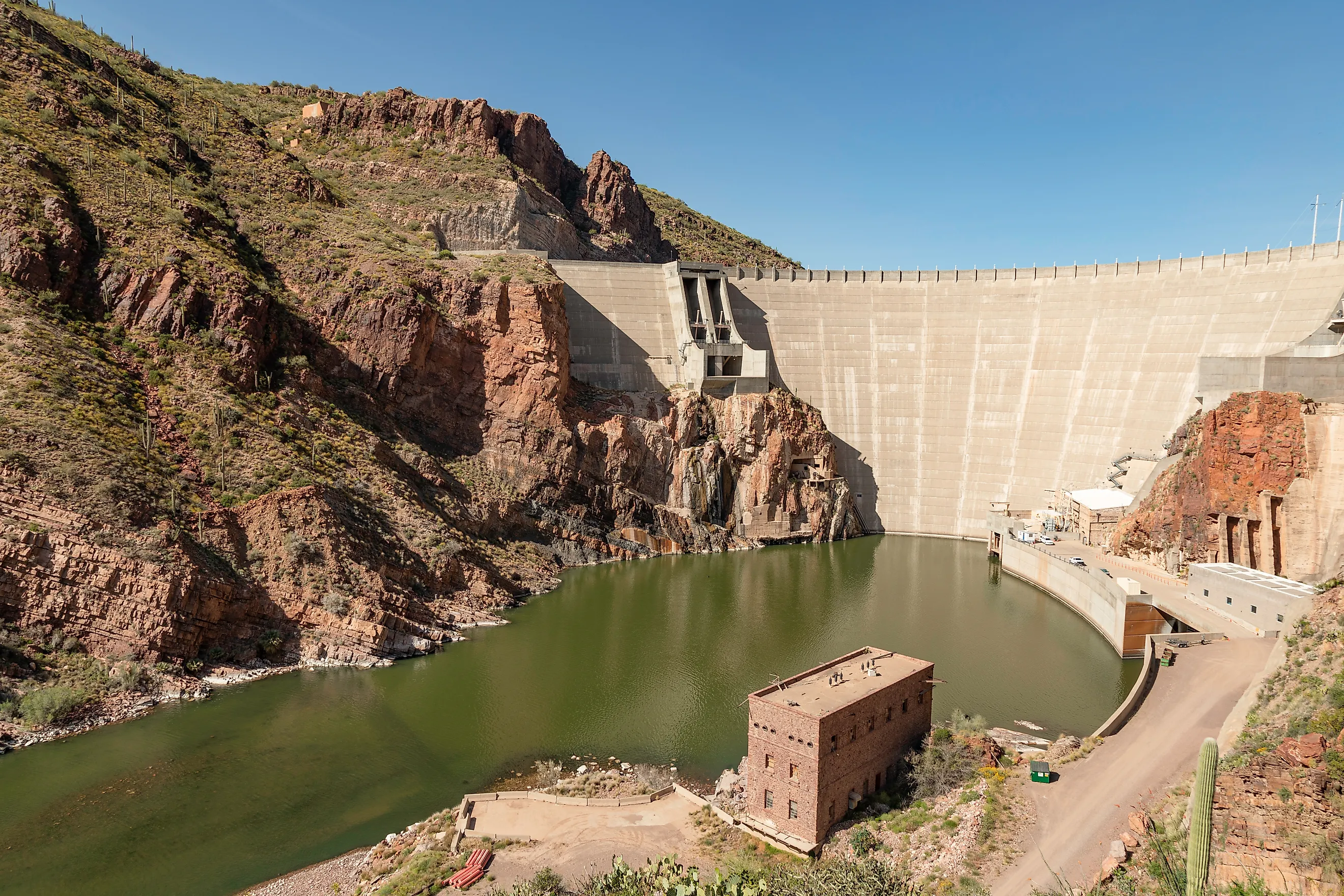
Theodore Roosevelt Dam, Arizona

Electricity helped build Theodore Roosevelt Dam before the finished structure began regulating the Salt River. A temporary hydroelectric plant supplied construction machinery, and the permanent Roosevelt Powerplant entered service in 1909. The dam followed in 1911, storing water for farms in the Salt River Valley. Its powerhouse sits against the canyon wall immediately below the dam.
During a major modification completed in 1996, workers enclosed the original masonry in concrete and raised the dam to 357 feet. The project expanded the lake's water conservation storage by 20 percent. Roosevelt now has 36 megawatts of generating capacity while remaining part of the water system serving the Phoenix area.
Downstream, additional dams on the Salt River allow water to generate electricity again as it descends toward the valley. The stored water can subsequently be delivered for use through the canal system.
Long Lake Dam, Washington

Long Lake Dam occupies a constricted reach of the Spokane River downstream from Spokane. Completed in 1915, the project takes advantage of a substantial drop at a site enclosed by steep rock walls. Its powerhouse remains part of Avista's generating system.
A generator modernization contract announced in 2022 targeted four units installed in the late 1970s. In 2016, Avista installed deflectors on the lower dam face to make spilling water skim across the pool below instead of plunging deeply into it. Deep plunges can force excessive air into the water, creating dissolved-gas conditions harmful to fish. Workers also altered the plunge pool and removed part of a nearby rock outcrop. Early monitoring found that the changes reduced dissolved gas downstream.
Croton Dam, Michigan

Croton's builders used the Muskegon River to move the earth for its dam. In 1907, engineer William Fargo's crews pumped river water up to a bluff, then sprayed it into the soil. The resulting mixture flowed through metal troughs to the embankment, where the water drained away and the fill compacted. While the embankment rose, the river passed through the already completed powerhouse waterways and spillway.
The hydroelectric plant began operating that year and continues generating on the Muskegon River, with a capacity of about 8.9 megawatts. Its early transmission system carried electricity toward Grand Rapids, connecting a rural river site with a growing city's demand. The earth embankments extend on either side of the concrete generating and spillway structures, with buried concrete walls helping control seepage.
Holtwood Dam, Pennsylvania

Holtwood began commercial operation on the Susquehanna River in 1910. Its broad overflow dam stretches more than 2,300 feet across the river, backing up Lake Aldred between Lancaster and York counties. The powerhouses occupy the Lancaster County bank, where water is directed through generating units before returning to the river.
In 2013, a second powerhouse added new generating equipment beside the older plant. The expansion also involved excavating downstream channels, reducing the back pressure that restricts water leaving the turbines. Piney Island, a long, narrow island below the dam, helps divide the channels through this part of the Susquehanna.
A required minimum flow into Piney Channel supports resident fish habitat, while the area below the plant includes fishing access. Brookfield also provides a whitewater boating feature, with operating information published for paddlers planning to use it.
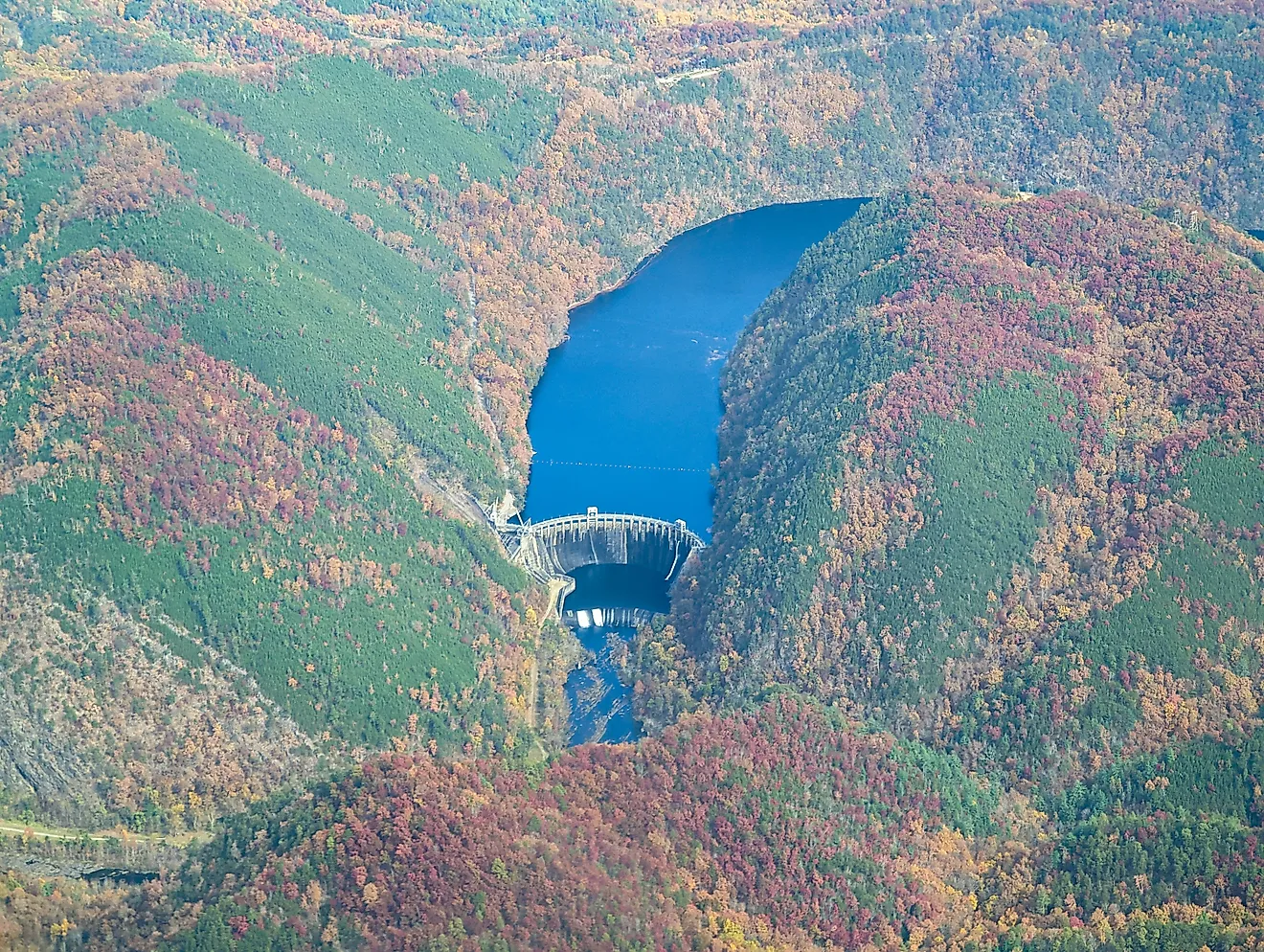
Ocoee Dam No. 1, Tennessee

Parksville Reservoir fills a wooded basin in southeast Tennessee, with Forest Service campgrounds along the water in Cherokee National Forest. At its outlet, Ocoee Dam No. 1 has been generating power since 1912, following completion of the dam in 1911. The concrete structure rises 135 feet and carries a powerhouse with five generating units. TVA lists their summer net dependable capacity at 24 megawatts.
This is the lowest of TVA's three dams on the Ocoee River, downstream from the better-known whitewater reaches. Parksville Reservoir covers about 1,930 acres. Its level also changes with the seasons, fluctuating about nine feet between summer and winter. TVA acquired the dam in 1939, bringing an existing private power project into its expanding regional system.
Tallulah Falls Dam, Georgia

At Tallulah Falls, the dam and the generating station are separated by a tunnel through the rock. Water diverted from the reservoir travels roughly 1.25 miles underground before descending through large pipes to the powerhouse. The approximately 608-foot drop allows the plant to use the steep terrain around Tallulah Gorge.
The first generating unit entered service in 1913, sending electricity toward Atlanta. Additional units followed, and Georgia Power now lists the plant's capacity at 72 megawatts. Further modernization investments received approval in 2025. The tunnel route diverts water that would otherwise pass through the gorge, making dam operations part of what visitors experience in Tallulah Gorge State Park. Scheduled releases put additional water back through the falls for recreation.
Wilson Dam, Alabama

Wilson Dam began generating electricity in 1925, making it more than a century old in 2026. Across the Tennessee River near Florence, its 4,541-foot length gives it a scale far beyond the smaller mountain projects. The dam was started during World War I to supply power for nitrate production, but the war ended before it entered service.
TVA took over in 1933 and eventually added 13 generating units to the original eight. Wilson now has 21 units and a summer net dependable capacity of 663 megawatts, the largest of TVA's conventional hydroelectric facilities. Its reservoir also forms part of the navigable waterway across the former Muscle Shoals.
Another rebuilding program is underway. TVA began work on Unit 3 in 2022 and, in its 2025 centennial update, projected completion in 2028. The work includes a new turbine and controls, with similar upgrades planned for three other units.
Keokuk completed its long modernization in 2022, after more than two decades of work on its 15 main units. Wilson began another major rebuild that same year. Keeping these power stations operating involves taking individual machines apart and replacing components inside buildings erected generations earlier. Commercial navigation continues beside both power plants. At Keokuk, a separate lock 1,200 feet long allows vessels to pass the Mississippi River dam. Wilson's main lock can lift boats as much as 100 feet. The Tennessee River reservoir above it covers part of the shoals that once obstructed travel, maintaining a navigable route through the same reach that supplies the turbines.