The Rogue Waves That Have Hit American Ships
A rogue wave can rise above the surrounding sea like a moving wall, strike a ship with little warning, and disappear as quickly as it appeared. American vessels have encountered exceptionally large waves in the Pacific Ocean, the Gulf of Alaska, and the storm-prone waters of the Atlantic. Some encounters ended with damaged ships returning to port, while others resulted in deadly sinkings. Historical accounts involving American troops aboard a British ocean liner also demonstrate the dangers these waves pose to even the largest ships.
Scientists generally define a rogue wave as one whose height exceeds twice the significant wave height, a measure based on the highest one-third of waves in the surrounding sea. Crossing wave systems, ocean currents, and storms can contribute to unusually large waves, although predicting individual events remains difficult. The following six maritime incidents include documented encounters with extreme waves and cases in which witnesses or investigators suspected rogue waves. Some reported heights were calculated from shipboard observations, while others remain eyewitness estimates without independent measurements.
The USS Ramapo Encountered a 112-Foot Wave in the Pacific

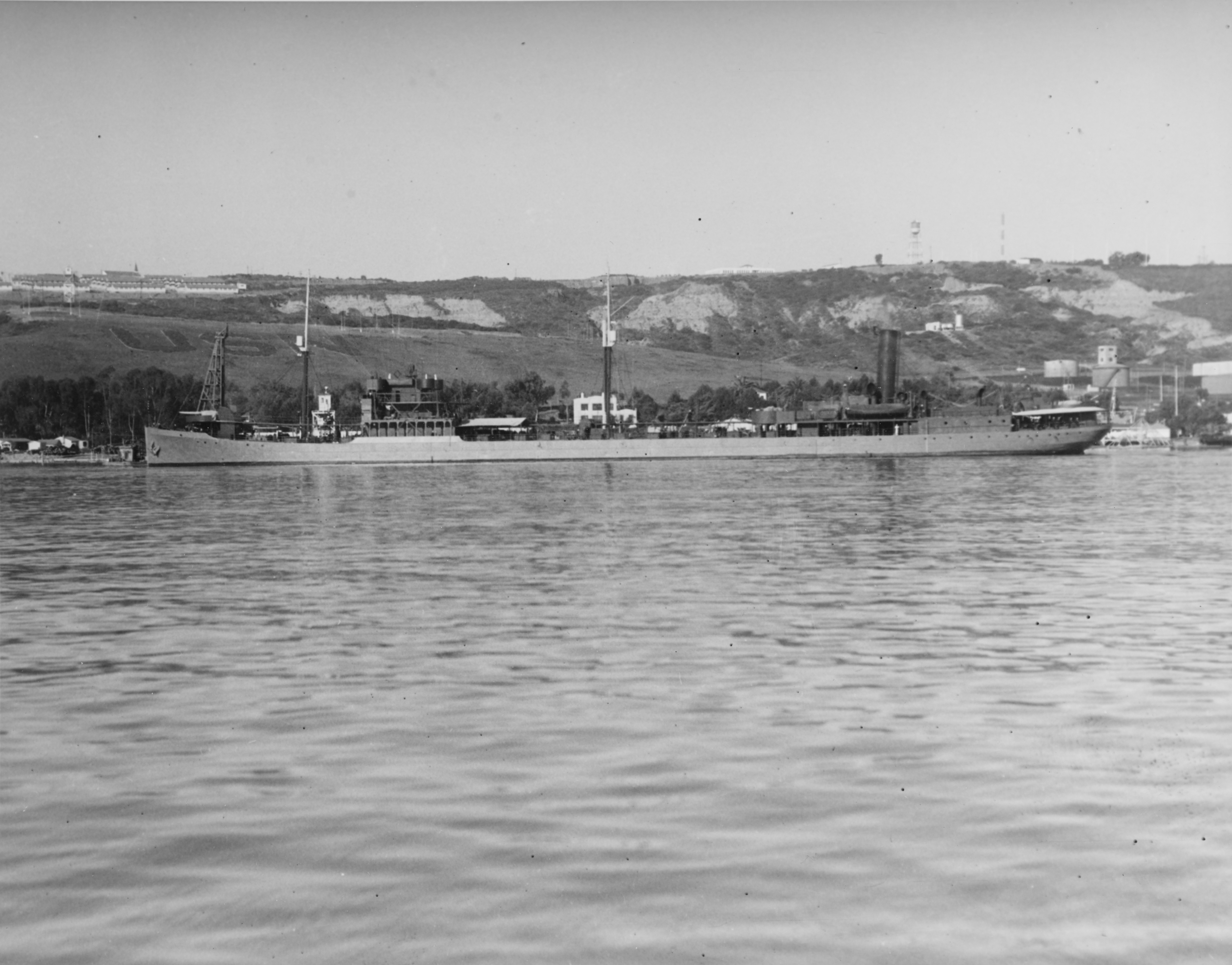
On February 7, 1933, the US Navy tanker USS Ramapo encountered a huge wave while crossing the North Pacific on a voyage from Manila to San Diego. The ship's officers calculated its height at 112 feet, producing one of the best-known early accounts of a giant ocean wave. At the time, the report challenged prevailing assumptions about how high waves could grow in the open sea. The measurement was more rigorous than a simple visual estimate. Officers used observations from aboard the vessel and its known dimensions to calculate the wave's height. Other observers produced estimates ranging from 82 to 119 feet. Although the 112-foot figure was not recorded electronically, it was supported by documented calculations.

The tanker survived the encounter. The estimated wavelength was approximately 1,100 feet, considerably longer than the vessel's roughly 480-foot hull. This may have helped the ship ride through the wave without experiencing the structural stresses that can arise when a vessel is inadequately supported by the surrounding water.
The Ramapo encounter is an important historical example of an outsized wave observed at sea. Its survival also illustrates why wave height alone does not determine whether a ship will withstand an encounter. Wave steepness, wavelength, and the vessel's orientation can all influence the outcome. However, the original observations do not independently establish whether the wave met the modern statistical definition of a rogue wave.
USCGC Jackson and USCGC Bedloe Sank in the Same Hurricane

On September 14, 1944, the Coast Guard cutters USCGC Jackson and USCGC Bedloe were caught in the Great Atlantic Hurricane off North Carolina. Both vessels had been assigned to assist the merchant ship SS George Ade, which had been torpedoed and was under tow near Cape Hatteras. The cutters encountered rapidly deteriorating conditions, with seas reportedly reaching 50 to 100 feet and winds exceeding 100 miles per hour.
The 125-foot Jackson was struck by several enormous waves. A survivor described one of the final waves as pyramid-shaped, with a large curling crest, and estimated its height at 125 feet. The cutter was carried upward before being thrown down into a deep trough, where it failed to recover and sank. Of the 41 crew members aboard, 20 survived, and 21 died. The unusually large waves that struck Jackson were likely rogue waves, although their heights were based on eyewitness accounts rather than direct instrument measurements.
The Bedloe capsized in the same hurricane at approximately 1 p.m. Its crew escaped into life rafts but faced hours of dangerous seas, repeated raft overturnings, and prolonged exposure. A US Navy minesweeper rescued the surviving crew members approximately 51 hours after the sinking. Only 12 of the 38 people aboard survived, with 26 losing their lives.
The two sinkings rank among the deadliest Coast Guard losses associated with the Great Atlantic Hurricane of 1944. They show how massive waves, strong winds, and prolonged exposure can combine to overwhelm relatively small patrol vessels. Although individual rogue waves were never instrumentally confirmed, the disaster is a well-documented example of the destructive potential of extreme storm seas.
The Fishing Vessel Copacetic Sank off Alaska
On July 6, 2011, the 56-foot wooden fishing vessel Copacetic sank off Cape Puget in the Gulf of Alaska. The U.S. Coast Guard reported that the vessel apparently sank because of a rogue wave. Unlike the wartime Coast Guard disasters, this incident involved a much smaller commercial fishing boat. Its crew was rescued safely, although the vessel was lost.
The sinking occurred at approximately 4 p.m., around 43 miles east of Seward, Alaska. The vessel reportedly went down in approximately 160 feet of water, and the National Oceanic and Atmospheric Administration (NOAA) identified about 2,200 gallons of diesel fuel aboard as potentially at risk of release. Authorities evaluated the possibility of a fuel spill, but the agency ultimately closed the case without further response action.
One notable detail is that locally generated wind waves were reported to be only about two feet high, in addition to the prevailing swell. This does not establish that the sea was calm, since swell can carry considerable energy even when local wind waves are small. The height of the wave reportedly responsible for the sinking was never documented, and its cause is suspected rather than independently confirmed.
The Copacetic incident underlines the vulnerability of small fishing vessels to unexpectedly dangerous sea conditions. Even experienced crews may have limited time to respond when a steep wave strikes a boat. The case also shows why a reported rogue-wave sinking must be distinguished from one supported by direct wave measurements.
The Fishing Vessel Carol Capsized off California
On September 8, 2000, the fishing vessel Carol capsized approximately two nautical miles off Pacifica, California. One crew member attributed the capsizing to a rogue wave. The vessel sank the following day, although the height of the reported wave was never established. The cause of the capsizing has not been independently confirmed.
The sinking also raised environmental concerns. NOAA identified approximately 2,000 gallons of marine diesel as potentially at risk of spilling from the vessel. On September 9, responders observed a visible oil sheen extending roughly one nautical mile from the vicinity of the sinking toward shore. The incident shows that a fishing vessel can encounter potentially devastating conditions relatively close to the coastline and pose environmental risks if it sinks. The Carol case remains a suspected rogue-wave incident based on a crew member's report. Without a direct wave measurement or a more detailed investigation establishing the cause, it cannot be classified as a scientifically confirmed rogue-wave event.
The Lady Alice Survived an Enormous Wave on the Grand Banks
On September 6, 1980, the American fishing vessel Lady Alice was returning from the Grand Banks, off Newfoundland, with a load of swordfish when a towering wave struck during a severe storm. Winds had reportedly reached 100 knots, while the surrounding seas were approximately 16 to 23 feet high. Captain Skip Gallimore spotted an approaching wall of water from the wheelhouse but could not see its top.
The wave struck the 95-foot, steel-hulled vessel with tremendous force, driving it temporarily underwater. It smashed the wheelhouse windows, tore away radio and radar antennas, and damaged the steel structure above the windows. Gallimore was thrown backward against a chart table, while another crew member suffered two fractured vertebrae. Seawater disabled most of the vessel's instruments, although the engines continued running. After several seconds underwater, Lady Alice resurfaced.
The precise height of the wave was never measured. Estimates suggest that a wave of at least 40 feet would have been needed to explain the damage, while a rogue wave under the reported sea conditions could have exceeded 44 feet. These are estimates based on the damage and surrounding conditions, rather than direct measurements. Gallimore believed the vessel had been struck by a rogue wave, with the Labrador Current potentially contributing to its development.
Lady Alice survived despite heavy damage and the temporary loss of essential equipment. The encounter illustrates how a wave substantially larger than the surrounding seas can endanger a working vessel, even when its crew has prepared for an approaching storm. It also highlights the difficulty of determining the precise dimensions of extreme waves from eyewitness accounts alone.
The Queen Mary Nearly Capsized While Carrying American Troops

In December 1942, the British ocean liner RMS Queen Mary was crossing the North Atlantic while transporting American troops to Britain when an enormous wave struck during a fierce storm. The encounter occurred during the ship's wartime service as a troop transport. The liner reportedly rolled so severely that water reached upper decks normally 59 feet above the waterline. Crew members feared the ship might capsize.
Historical accounts describe Queen Mary rolling to approximately 52 degrees, close to a reported critical angle of 55 degrees. The vessel eventually recovered and continued its voyage. Estimates of the number of people aboard differ between historical accounts, but the ship was carrying thousands of American service members. The incident made clear that even a large ocean liner could be endangered by an exceptionally powerful wave.
Queen Mary survived World War II and returned to civilian passenger service. The liner continued operating until its retirement in 1967, when it made its final voyage to Long Beach, California. It remains there as a historic attraction and hotel. Its 1942 encounter is one of the best-known historical accounts of an extreme wave threatening a large passenger vessel, although the wave's height was not directly measured.
Understanding the Dangers of Rogue Waves
The experiences of the USS Ramapo, the Coast Guard cutters Jackson and Bedloe, and the fishing vessels Copacetic, Carol, and Lady Alice reflect the dangers posed by very large ocean waves. Queen Mary's wartime encounter further reveals how even a major ocean liner can be threatened. Some of these incidents are supported by detailed historical observations, while others remain suspected rogue-wave encounters without independent measurements.
Scientists continue studying how strong currents and intersecting wave systems can produce abnormally large waves. Modern instruments and improved forecasting have advanced our understanding, although predicting individual rogue waves is still difficult. These maritime encounters underscore the importance of vessel preparedness, accurate weather information, and awareness of the hazards that can arise even in seemingly manageable sea conditions.