Sea Turtle
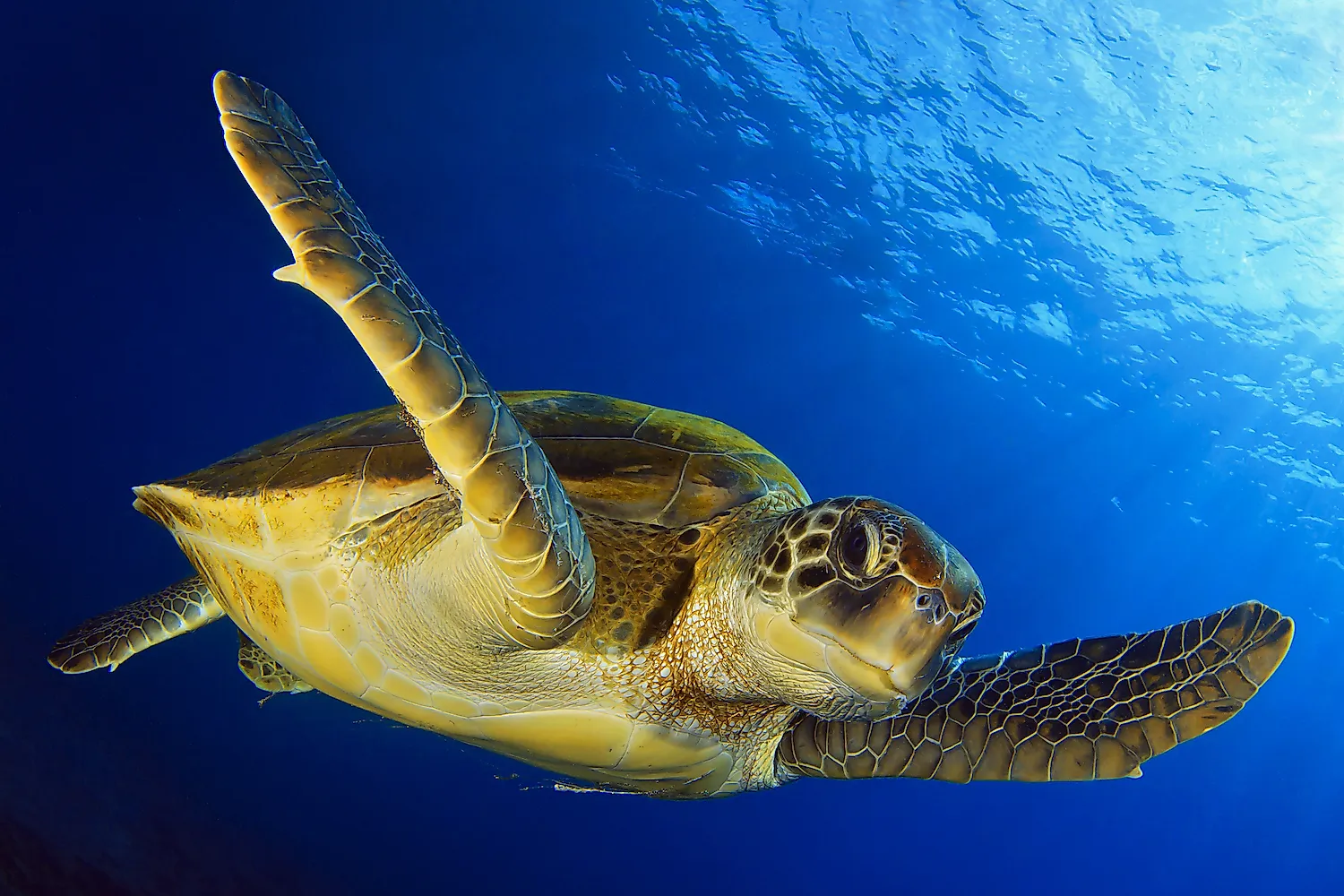
Sea turtles are unique marine reptiles found throughout the world’s oceans. There are seven recognized species: leatherback, loggerhead, green, hawksbill, Kemp’s ridley, olive ridley, and flatback. As air-breathing reptiles, sea turtles must surface to breathe, but they can remain underwater for extended periods by slowing their heart rate and efficiently storing oxygen in their blood and muscles.
Sea turtles are also long-lived animals. While exact lifespans are difficult to measure in the wild, many species are estimated to live 50-80 years or more, and some may approach or exceed 100 years. They have existed for over 100 million years, meaning their ancestors lived alongside dinosaurs, making them one of the oldest surviving groups of vertebrates.
Six of the seven species (all except the flatback) occur in US waters, and all six are listed as threatened or endangered under the US Endangered Species Act, largely due to human-related threats such as habitat loss, bycatch, pollution, and climate change. By understanding sea turtles’ diets, habitats, behaviors, threats, and ecological roles, we can better support conservation efforts and help protect these species in a rapidly changing world.
Physical Description
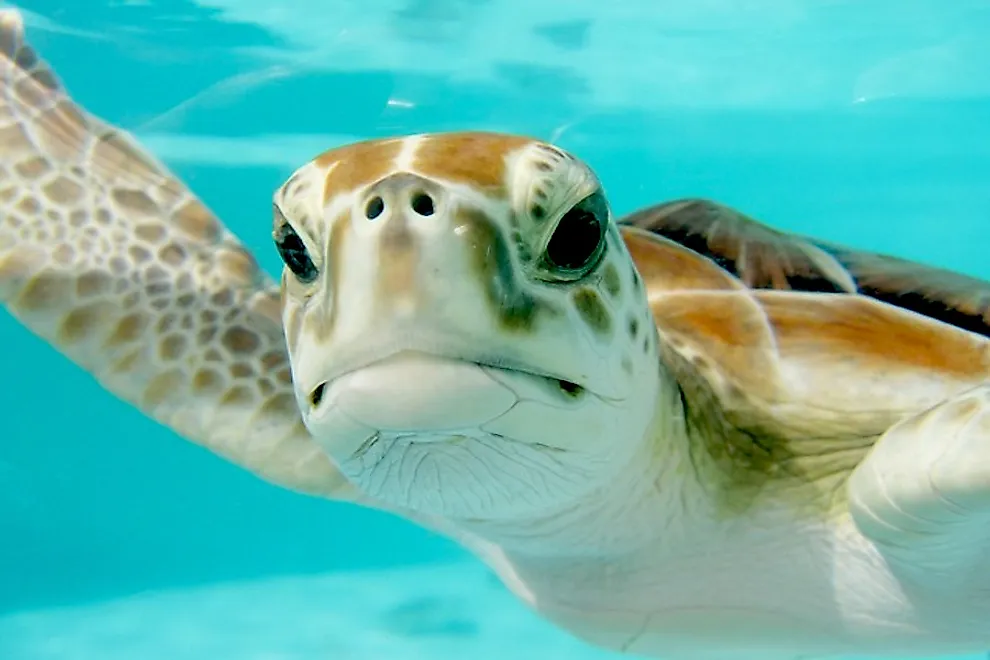
The seven species of sea turtles are often distinguished by their large, streamlined shells and non-retractable heads and limbs. Major differences between species often include their sizes, with the Kemp's ridley being the smallest and the leatherback being the largest. Depending on the species, they also often range in color from olive-green, yellow, and greenish-brown to reddish-brown or black, and shell shapes vary, including oval, such as green turtles, and heart-shaped. Scientists can identify sea turtle species by the number and pattern of scutes, non-brittle plates that cover their shells. The hard-shelled species, such as green turtles and loggerheads, have vertebral scutes that run down their midline as well as pairs of lateral, costal scutes. The leatherback is unique, with a leathery shell featuring five distinct ridges, lacking the hard scutes that can be found on the other types of sea turtles.
Behavior

We still have much to learn about the behavior of sea turtles, but there are some common traits among and between the species. Hawksbill sea turtles enjoy spending time resting or sleeping wedged into coral or rock ledges, while olive ridleys are often seen basking on beaches. Leatherback turtles dive in patterns that follow the daily movement of plankton and jellyfish, and they tend to feed near the surface at night and dive deeper during the day, away from the sunlight.

Regardless of species, most female sea turtles come ashore on sandy beaches to nest several weeks after mating, typically during the warmer months, although timing varies by species and location. Leatherback turtles, for example, can nest year-round in some regions but often peak during cooler seasons such as fall and winter. Most sea turtles nest at night and usually emerge alone, though exceptions occur, particularly in olive ridley and Kemp’s ridley turtles, which may nest in large daytime groups called arribadas. Nesting often coincides with higher tides, which help females reach suitable nesting areas.

After emerging, the female uses her front flippers to dig a body pit and then uses her hind flippers to carefully excavate an egg chamber, where she deposits her eggs. Clutch sizes vary by species: green turtles, olive ridleys, and Kemp’s ridleys typically lay around 100-110 eggs per clutch; hawksbills average about 130 eggs; loggerheads lay around 100-120 eggs; flatbacks lay fewer, averaging about 50 eggs; and leatherbacks generally lay between 50 and 100 eggs, including some smaller, yolkless eggs.

Once the eggs are laid, the female uses her hind flippers to cover the nest with sand. This helps conceal the nest from predators, maintain moisture, and regulate temperature, factors that are critical for successful incubation. Researchers can often identify the species of sea turtle by examining the distinctive flipper tracks and nest patterns left behind in the sand.
Food
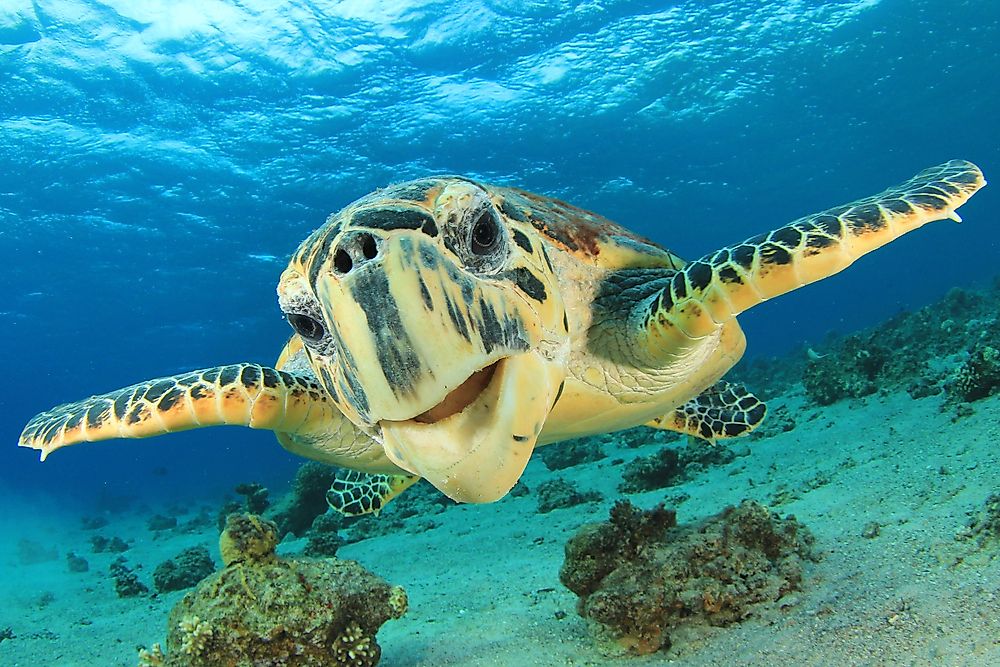
Sea turtles have varied diets depending on their species and life stage, ranging from herbivory to carnivory and omnivory. They commonly consume jellyfish, sponges, crustaceans, mollusks, seagrass, and algae. Green sea turtles are primarily herbivorous as adults, feeding mainly on seagrass and algae, while leatherbacks specialize in eating jellyfish. Loggerhead, Kemp’s ridley, olive ridley, and flatback sea turtles are generally carnivorous, preferring hard-shelled invertebrates such as crabs and mollusks, along with other prey like jellyfish. Hawksbill sea turtles primarily feed on sponges and can consume large quantities, sometimes as much as 1,200 pounds per year.
Importance

As a keystone species, sea turtles are a vital part of the environment and influence other species around them, playing a crucial role in maintaining healthy ecosystems. Leatherbacks help control jellyfish populations, while hawksbills support coral reef health by consuming sponges that compete for space. Nesting sea turtles also benefit coastal ecosystems, as eggs that do not hatch provide nutrients for beach vegetation, while hatchlings serve as an important food source for birds, fish, and other land animals such as raccoons. Sea turtles also contribute to biodiversity by transporting organisms such as barnacles, algae, and small crustaceans across long distances as they cling to the top of the sea turtles' shells.
Beyond their ecological importance, sea turtles hold cultural significance in many coastal communities and are a major attraction for ecotourism. They stand as symbols of longevity, fertility, and protection, and appear in many Indigenous mythologies, represented as guiding spirits and wisdom. Due to sea turtles' ancient lineage and their slow, deliberate movements, they also often symbolize patience, perseverance, grace, and resilience.
Habitats

Sea turtles inhabit a wide range of environments, including tropical and subtropical beaches, coral reefs, and warmer areas of the Atlantic, Pacific, and Indian Oceans. While most species prefer warm waters, leatherback turtles are capable of foraging in colder, temperate regions due to their unique physiology. Many sea turtles undertake long-distance migrations, often spanning thousands of miles, between feeding grounds and nesting beaches, although routes can vary by species, life stage, and environmental conditions.

Green sea turtles typically migrate along coastal areas between seagrass foraging sites and nesting beaches. Leatherbacks are the most wide-ranging, completing transoceanic migrations. Kemp’s ridleys are largely concentrated in the Gulf of Mexico, though some extend into the Atlantic. Olive ridleys are widely distributed across the Pacific and Indian Oceans, hawksbill turtles are closely associated with coral reef habitats and generally migrate shorter distances, and flatback turtles have the most restricted range, remaining primarily in the coastal waters around northern Australia.
Many beaches around the world now have protected nesting areas and beach habitats for the sea turtles. One example is Kiawah Island, South Carolina, where volunteers help monitor and protect vital nesting sites primarily for loggerhead sea turtles during the months of May to October.
Protection of Sea Turtles

Sea turtle populations are increasingly threatened by coastal development, artificial lighting, plastic pollution, climate change, overharvesting, and entanglement in fishing gear, with human activity being the leading cause of these threats. As human populations grow, coastal habitats shrink and become inhospitable, impacting nesting areas and food sources with boat traffic and shoreline development, further disrupting the sea turtles' natural environment.
Sea turtles are also very vulnerable to ingesting marine debris such as plastic bags and balloons, which they often mistake for jellyfish. When consumed, the debris blocks their digestive systems and can lead to death. Simple actions like cleaning up beaches, reducing plastic use, and supporting conservation efforts can make a significant difference.
Sea turtles are truly fascinating creatures that play an essential role in maintaining healthy ocean ecosystems. Despite their importance, they face serious threats due to human activity. By protecting their habitats, reducing pollution, and supporting conservation efforts, we can help ensure that future generations will continue to experience the beauty and significance of these incredible animals, and that future generations of sea turtles will continue to thrive.