The National Parks That Were Once Private Land
The 33,000 acres at the heart of Acadia came to the public as a gift, bought parcel by parcel by wealthy summer residents and handed to the federal government. That is one origin story among many. Much of the land inside America's national parks was privately owned first, held by homesteaders, logging syndicates, apple growers, and resort operators long before the United States set any of it aside. Turning those patchwork holdings into public preserves took decades of negotiation, outright purchase, and, in some places, the courts and eminent domain. The parks below each trace back to a different route out of private hands, and together they reshaped how Americans thought about conservation.
Acadia National Park

Acadia National Park in Maine was the first national park that was created from private lands gifted to the public. In the late 1800s, Maine's Mount Desert Island was colonized, broken up by luxury summer residences, commercial timber operations, and small homesteads. Philanthropists George B. Dorr and John D. Rockefeller, Jr. along with the Hancock County Trustees for Public Reservations and the Village Improvement Associations bought up private lands by parcel. The wealthiest members banded together and bought over 33,000 acres of private land, then donated them to the U.S. government.

These lands were called Sieur de Monts National Monument in 1916. It then changed its name to Lafayette National Park in 1919, and, finally, became Acadia National Park in 1929. It was the first national park built entirely from private gifts, as well as the first national park east of the Mississippi River, and spans roughly 50,000 acres today.
Shenandoah National Park

The Blue Ridge Mountains area in Virginia was home to about 450 mountain families, small family farms, logging companies, commercial apple orchards, and private resort owners in the early 1900s. In 1923, the director of the National Park Service, Stephen Mather, wanted to establish a national park in the southern Appalachian Mountains. In 1928, the Commonwealth of Virginia passed the Virginia Public Park Condemnation Act, condemning the mountain properties and giving the federal government eminent domain to acquire 200,000 acres of private mountain land.
The state physically displaced hundreds of families from their private homesteads to collect the land for the federal government. The park was then pieced together from over 3,000 distinct private parcels of land. In 1935, Shenandoah National Park was formally created. Today, around 40% of the park's almost 200,000 acres is designated wilderness.
Great Smoky Mountains National Park

During the 1920s, the landscape of the Great Smoky Mountains of North Carolina and Tennessee was divided among some large lumber syndicates, like the Champion Fibre Company, and over 1,200 small-trade farmers and mountain families. Citizens and legislators were alarmed by the destruction of the forests and wildlife of the area, and, in 1926, began raising millions of dollars to buy out private lands. The Laura Spelman Rockefeller Memorial Fund donated $5 million in matching funds to get the process started, allowing both states to use eminent domain to condemn and seize all remaining private property. Over 6,000 individual tracts of private land, totaling 450,000 acres, were combined to form the park, completely erasing many mountain communities in the process. The Civilian Conservation Corps (CCC) worked through the 1930s to build roads, bridges, trails, and campgrounds for the park. In 1940, President Franklin D. Roosevelt dedicated Great Smoky Mountains National Park. It covers more than 520,000 acres between North Carolina and Tennessee today.
Congaree National Park

Land around the 50-mile-long Congaree River in central South Carolina was being unsuccessfully farmed through the 1800s, due to the nature of the floodplain. Private lumber companies including the Santee River Cypress Lumber Company began buying up this forest land along the Congaree and Santee Rivers in 1905. When logging operations intensified in the late 1960s, the Sierra Club and local conservationists started a grassroots campaign to force a federal buyout of the private timber land, worrying that logging operations were threatening the floodplain. The federal government purchased 15,000 acres of private timberland and created a protected federal monument in 1976, Congaree Swamp National Monument, saving the most extensive last remaining tract of old-growth bottomland hardwood forest in the eastern U.S. The name was changed to Congaree National Park in 2003. The park has been designated a Natural National Landmark, International Biosphere Reserve, Wilderness, and Globally Important Bird Area. Congaree National Park covers about 26,000 acres of old-growth floodplain forest, with over 80% of that area federally designated wilderness, today.
Everglades National Park

During the late 1800s and early 1900s, the wetlands of the Everglades in Florida were drained for farmland and towns. Hundreds of miles of canals were dug to control floods and clear land for real estate and farming. Draining this land, however, cut off the natural flow of water from Lake Okeechobee, drying out parts of the marsh and causing peat fires. A movement to create the park in the late 1920s came from private land grants and advocacy by private landowners, women's club leaders, and conservationists such as Ernest Coe, who fought to protect privately held tracts from being completely drained for real estate development or agriculture. The land was acquired through the Florida Everglades National Park Commission, which spent years buying up private agricultural tracts, oil leases, and land from canal companies. Everglades National Park was dedicated by President Harry S. Truman in 1947 and is the first national park created for its biodiversity. It protects 1.5 million acres of forest, marine, and wetland habitats for plants and animals, and provides a source of drinking water for local residents. In 1979, it was named a UNESCO World Heritage Site to protect endangered species like the Florida panther.
Grand Teton National Park

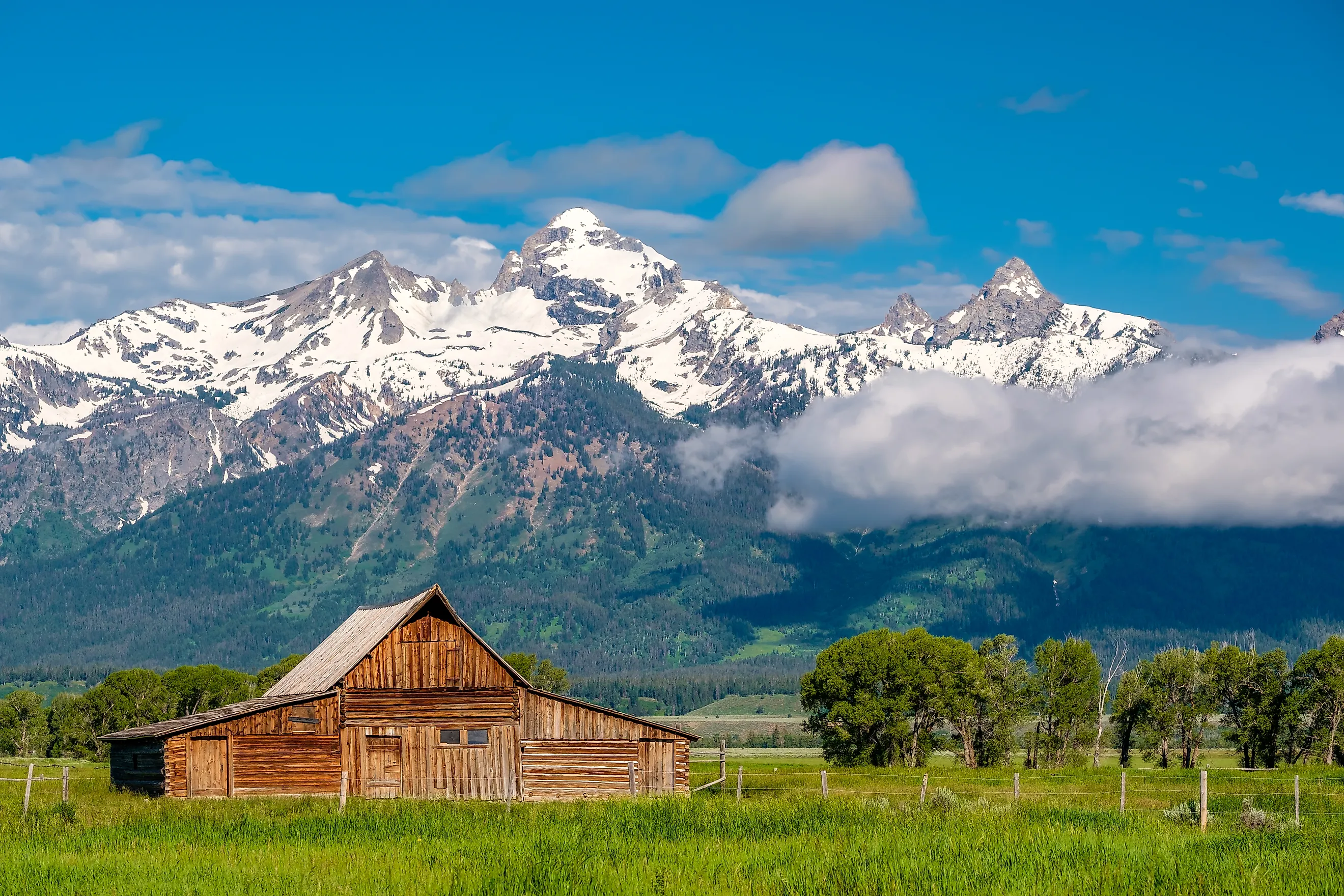
Homesteaders began arriving to the Grand Teton area of Wyoming in the 1880s. Then wealthy East Coast residents began visiting Jackson Hole in the 1920s, seeking a dude ranching, cowboy travel experience. Building spread across the area, and in 1929, Congress protected the major peaks of the Teton Range and six glacial lakes as federal land. The valley floor of Jackson Hole was still privately owned by cattle ranchers and homesteaders, threatening the ecosystem with commercial sprawl.

John D. Rockefeller, Jr. secretly created the Snake River Land Company in the 1920s and 30s and started buying up private ranches inside Jackson Hole, without driving up land prices. He purchased and held 35,000 acres of private valley floor, eventually forcing its inclusion into the park system by threatening to sell it off if the government refused his donation. Rockefeller eventually donated the land to create Jackson Hole National Monument in 1943, which was later merged into Grand Teton National Park in 1950. Today, Grand Teton National Park covers about 310,000 acres of protected wilderness in northwestern Wyoming.
Redwood National Park

After the Gold Rush subsided, industrial logging started taking place in the redwood forests of California. Of the estimated two million original acres of redwoods, 95% was clear-cut over a century. Around 1918, a movement called Save the Redwoods League began, and, by the 1920s, three state parks were created: Prairie Creek, Del Norte Coast, and Jedediah Smith. Many old-growth redwoods surrounding these parks were still privately owned by active commercial logging corporations such as Arcata, Miller-Rellim, and Simpson. Environmental groups like the Sierra Club began pressuring the federal government to save the redwoods. In 1968, President Lyndon B. Johnson established Redwood National Park, protecting 58,000 acres. Timber operations continued upstream, threatening the protected areas below. In 1978, President Jimmy Carter expanded the park by 48,000 acres protecting the Redwood Creek watershed upstream. Redwood National Park spans about 133,000 acres along the coast of northwestern California today, under a unique partnership combining federal and state lands into a single ecological reserve.
Voyageurs National Park

Concern over logging, commercial fishing, and industrial damage of land along the Minnesota-Ontario border prompted residents to petition for a national park in 1891. It took more than 80 years of debate for Voyageurs National Park to be created. Acquiring the private lakefront cabins, resorts, and timber tracts took decades of negotiations after the park was authorized. A federal decree authorizing the park in 1971 said that the National Park Service must acquire all private property within the boundaries of the park, which included buying out resorts, logging holding companies, and private properties. Finally, in 1975, Voyageurs National Park was officially established, today covering 218,000 acres of lakes, forests, and streams in northern Minnesota.
Cuyahoga Valley National Park

The Ohio & Erie Canal opened the region to industry in Ohio, and a patchwork of thousands of private farms, homes, and commercial properties laid between Cleveland and Akron. The Valley Railway connected these two areas, and the valley became a getaway from the city for people who wanted to enjoy nature. In the 1960s, residents and leaders fought to stop suburban development from threatening the valley. After a fire on the Cuyahoga River in 1969, the need for a national park became critical. The federal government had to buy out private landowners to stitch the valley together into a public green space to create parklands. In 1974, President Gerald Ford authorized Cuyahoga Valley as a National Recreation Area. It was redesignated by Congress at Cuyahoga Valley National Park in 2000, elevating its conservation status and giving it higher levels of federal funding. Today, Cuyahoga Valley National Park protects about 33,000 acres along the banks of the Cuyahoga River between Cleveland and Akron. The NPS owns about 19,000 federal acres, and the remaining 13,000 of the park's area are made up of non-federal public parks such as metropolitan districts, private property, and institutional land.
Yosemite National Park

Yosemite National Park grew out of federal protection, through the 1864 Yosemite Grant signed by President Abraham Lincoln after commercial exploitation of the area started in the 1800s. That grant gave the State of California Yosemite Valley and the Mariposa Grove to be preserved for public use and recreation. This protected the valley floor, but not the high country mountains. Critical access routes, such as the Tioga Mining Road, were privately owned toll roads bought out by Stephen Mather to make the park accessible. Early on, private timber and mining claims were dotted throughout the region. Philanthropists like Mather personally bought up private strips like Tioga Road and cleared out private mining and timber claims to consolidate the park. In the late 1800s, naturalist John Muir lobbied Congress to protect the entire watershed. In 1890, they created Yosemite National Park as the third national park in the U.S. It also spurred on the creation of the National Park Service in 1916, ensuring that lands like Yosemite would remain protected for future generations. Today, Yosemite National Park covers almost 748,000 acres across the Sierra Nevada Mountain Range.
Once Private, Now Public, Protected Land
The creation of the National Park Service is a story of human determination, land acquisition, and natural preservation. Behind the scenic landscapes and protected ecosystems of these ten parks lies a complex history of private sacrifice, grassroots lobbying, and multimillion-dollar philanthropy from figures like John D. Rockefeller, Jr. Whether through the quiet gifting of New England estates, the controversial federal usage of eminent domain in the Blue Ridge Mountains, or the grassroots campaigns to save southern floodplains and western redwood forests, these parks exist today only because individuals and communities fought to rescue them from private lands. Together, they form a uniquely American legacy, proving that protecting the nation's natural heritage often required changing who the land truly belonged to.