The Lakes Being Deliberately Refilled In The American West
Los Angeles drained Owens Lake about a century ago. Today, pipes flood parts of the old lakebed on purpose. Along the Colorado River, farmers get paid to leave water in Lake Mead. In Nevada, a conservancy buys water rights so more of the Walker River reaches Walker Lake. People across the West are putting water back, lake by lake.
Great Salt Lake, Utah

Some of the water reaching Great Salt Lake now arrives with paperwork attached. The Great Salt Lake Watershed Enhancement Trust works with farmers, cities, companies, and other water-right holders to keep flows moving toward the lake. In 2025, the Trust facilitated transactions covering about 72,485 acre-feet on a diversion basis, its largest annual total yet. That followed approximately 64,000 acre-feet in 2023 and 69,000 in 2024. Many of those transactions involved water that owners donated or partially donated instead of diverting it for another use.
That extra flow enters a lake with no outlet to the sea. Water escapes largely through evaporation, leaving salts behind, so a wet year can produce a visible rise without solving the long-term shortage. The Trust entered 2026 with roughly 59,000 acre-feet as its baseline for water transactions. Its work also extends to wetlands around the shoreline, where projects improve how incoming water reaches habitat. The result is a restoration effort measured not only by the lake's elevation, but by how much water can make the entire journey through a heavily used watershed without being diverted first.
Walker Lake, Nevada

Walker Lake once supported Lahontan cutthroat trout. Then its freshwater supply dwindled. Farms upstream diverted increasing amounts from the Walker River, and because the Nevada lake has no outlet, evaporation steadily concentrated the minerals left behind. The Walker Basin Conservancy says the rising concentration of total dissolved solids eventually became too high for fish to survive.
The solution has taken an unusual form: buy water rights. The Conservancy purchases rights from willing sellers and changes their use so the water can remain in the Walker River and travel to the lake. It reports having secured 59% of the water needed to restore Walker Lake's fishery. Its long-term calculations call for about 50,000 acre-feet of reliable annual water to bring average dissolved solids into the range of roughly 10,000 to 12,000 milligrams per liter.
That makes every protected river flow part of a giant dilution experiment. More freshwater increases the lake's volume while lowering the concentration of salts accumulated during its decline. The water still follows its old route down the Walker River. What has changed is what happens upstream: some of it now carries a legal guarantee that it can keep going.
Mono Lake, California

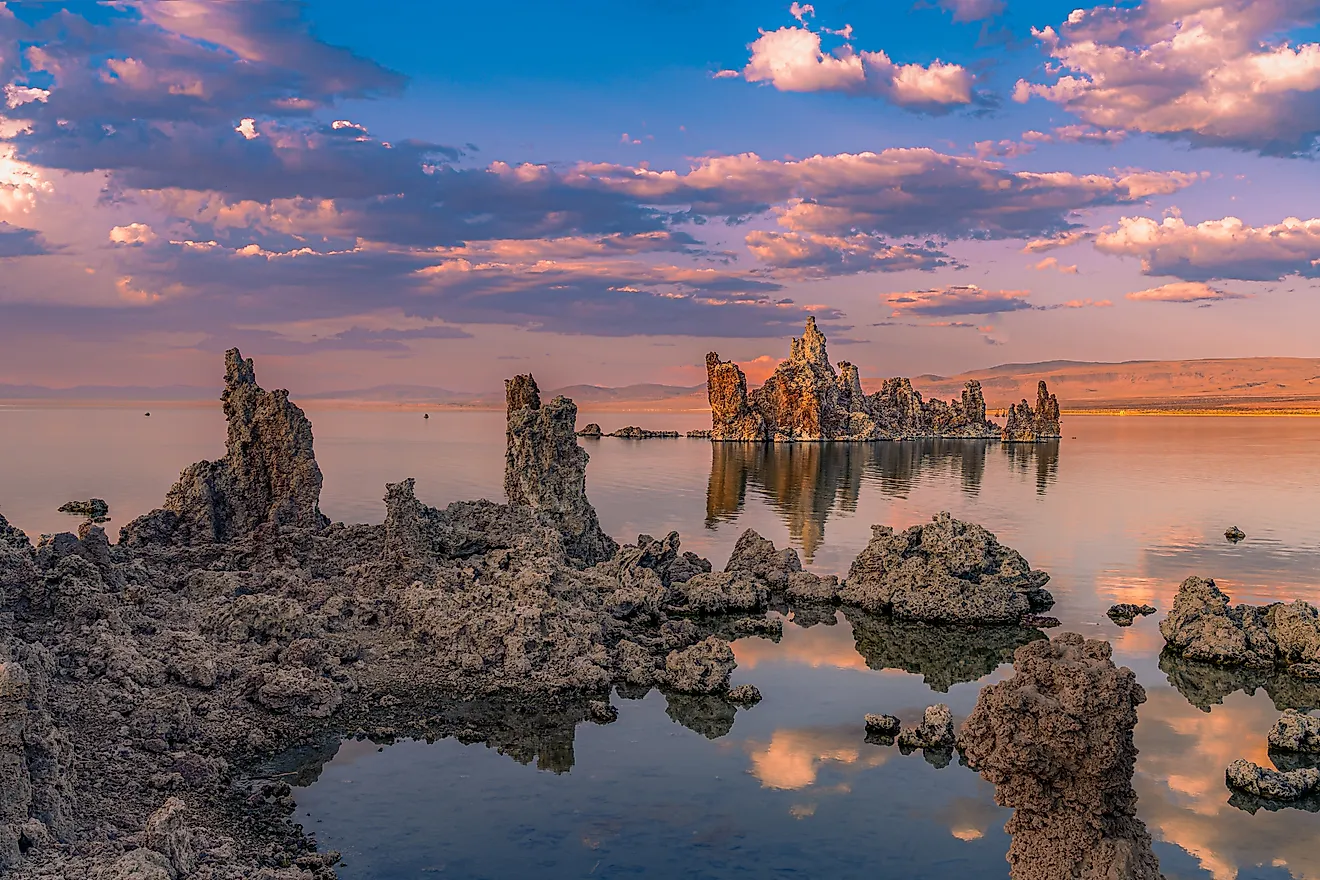
There is no fleet of pumps refilling Mono Lake. Snow still melts in the Sierra Nevada, streams still carry it downhill, and the lake still loses water to the dry Eastern California air. The human intervention happens before that runoff disappears into an aqueduct. Los Angeles began diverting water from Mono Basin streams in 1941, and the lake subsequently fell about 45 feet by 1982. California's State Water Resources Control Board stepped in with its landmark 1994 Decision 1631, restricting diversions and setting 6,392 feet as the long-term management elevation. The rules become tighter as the lake falls. Under the current framework, LADWP can divert up to 16,000 acre-feet annually when Mono Lake sits between 6,380 and 6,391 feet, with diversions prohibited below 6,377 feet. More than three decades after the decision, the finish line remains distant. The State Water Board was still holding public workshops on Mono Lake management in 2026, examining salinity and the condition of the lake's brine shrimp, alkali flies, and migratory birds.
Lake Mead, Arizona and Nevada

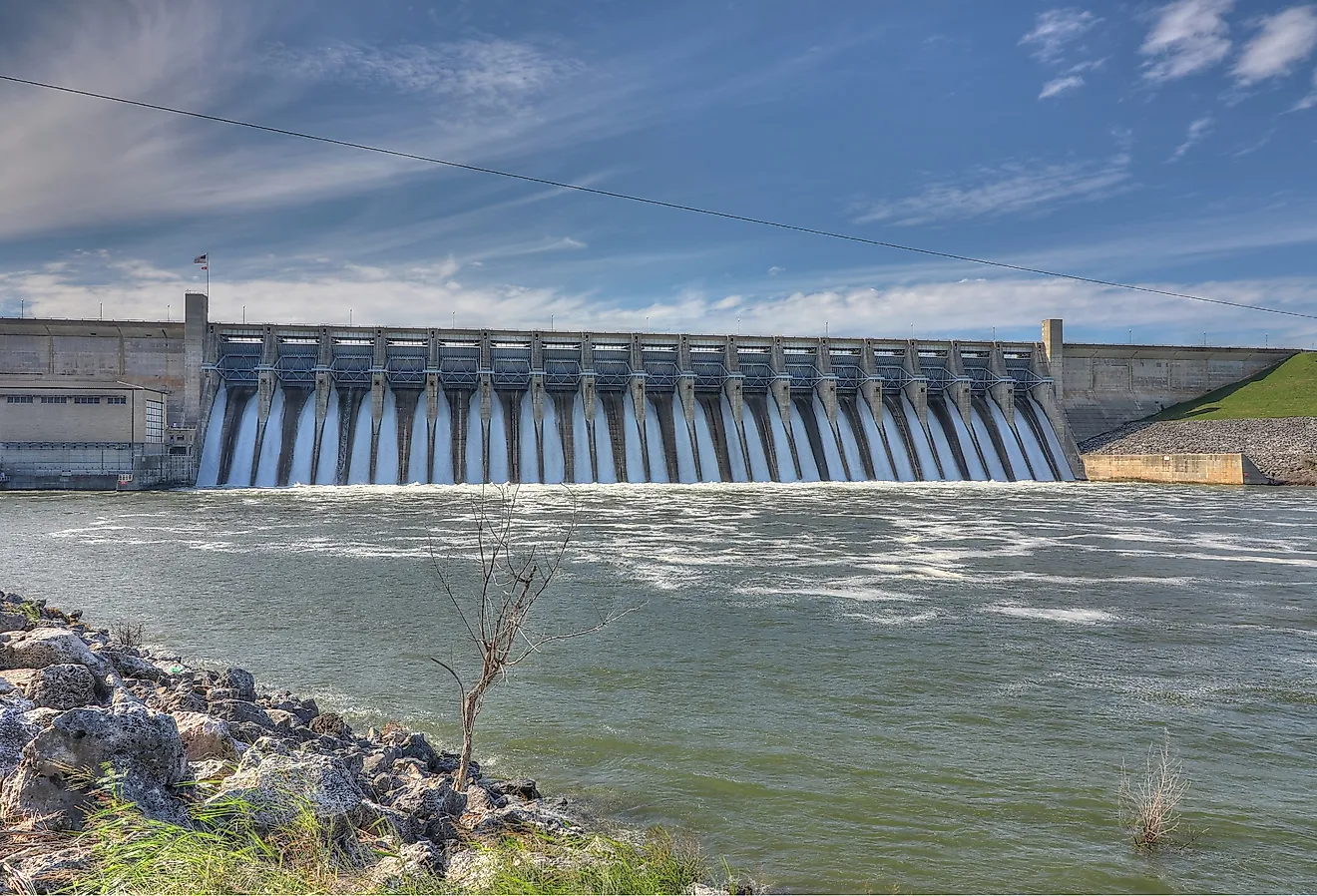
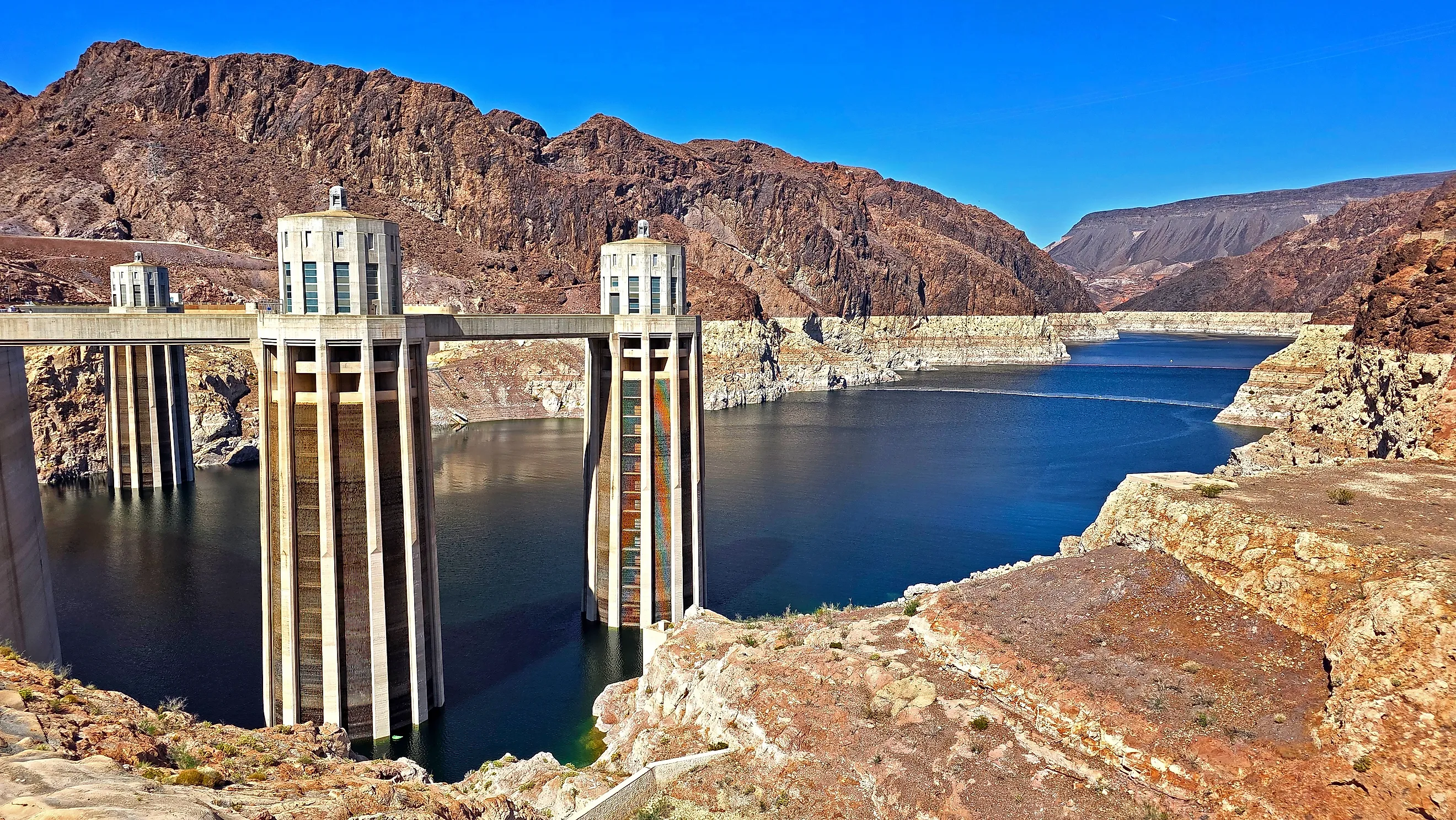
One of the biggest attempts to hold water in a western lake is happening in plain sight at Hoover Dam. In May 2025, the Bureau of Reclamation announced extensions to 18 conservation agreements with agricultural, municipal, and Tribal water users in Arizona and California. Those extensions are expected to leave another 321,000 acre-feet in Lake Mead through 2026. Reclamation calculated that quantity as roughly five feet of reservoir elevation.
Earlier agreements were larger still. Eighteen Arizona deals carried commitments of up to 984,429 acre-feet through 2026, while three California agreements announced in 2024 covered as much as 399,153 acre-feet. Participants conserve water they otherwise could have used, allowing that volume to remain in the Colorado River system. Mead can still fall when river inflow is poor or withdrawals exceed additions, so the conservation figures should not be mistaken for an equivalent rise in the reservoir. They measure water saved from leaving it. At a reservoir whose pale bathtub ring records years of declining storage, five feet of retained elevation is anything but an abstract accounting exercise.
Salton Sea, California

Fresh open water is appearing beside the shrinking Salton Sea, but it does not look like the old shoreline returning. At the southern end of the lake, California's Species Conservation Habitat project has divided exposed playa into engineered ponds. The state's project tracker reports that construction has been completed on 4,910 acres of ponds. Two covering 2,010 acres have already been filled with water drawn from the Salton Sea and New River.
The two sources are mixed because the water chemistry matters. Salton Sea water is highly saline, while New River water is fresher. Managing the combination allows the ponds to support aquatic habitat on ground that would otherwise become exposed as the main lake retreats. California plans approximately 10,000 acres for the expanded project, with habitat for fish and birds among its central purposes.
There is an air-quality payoff beneath the water too. Dry playa around the Salton Sea can become a source of airborne dust, while flooded ground keeps those sediments covered. The project therefore produces something quite different from a conventional lake restoration. Instead of chasing the Sea's former shoreline across an enormous desert basin, engineers are turning selected stretches of newly exposed ground back into shallow aquatic habitat.
Owens Lake, California

Drive through Owens Valley and water can once again be found spread across parts of a lake that Los Angeles largely drained more than a century ago. The Owens River had historically fed Owens Lake, but diversions into the Los Angeles Aqueduct left much of its bed exposed by the late 1920s. Wind sweeping over the playa then picked up fine particles, producing a severe PM10 dust problem. LADWP's response now includes one of the world's largest shallow-flooding systems. Computer-controlled pipes and outfalls distribute water across roughly 30 square miles of the old lakebed, and shallow flooding accounts for about 60% of the department's dust-control measures there. During the dust season, 72% to 75% of treated shallow-flooding surfaces must remain wet or saturated. LADWP reports that its broader Owens Lake program has reduced dust emissions by 99.4%. The shallow water also created habitat used by shorebirds, putting patches of glinting water back onto a playa where the original objective was simply to stop the ground from blowing away.