8 Best Natural Wonders To Visit In South Australia This Year
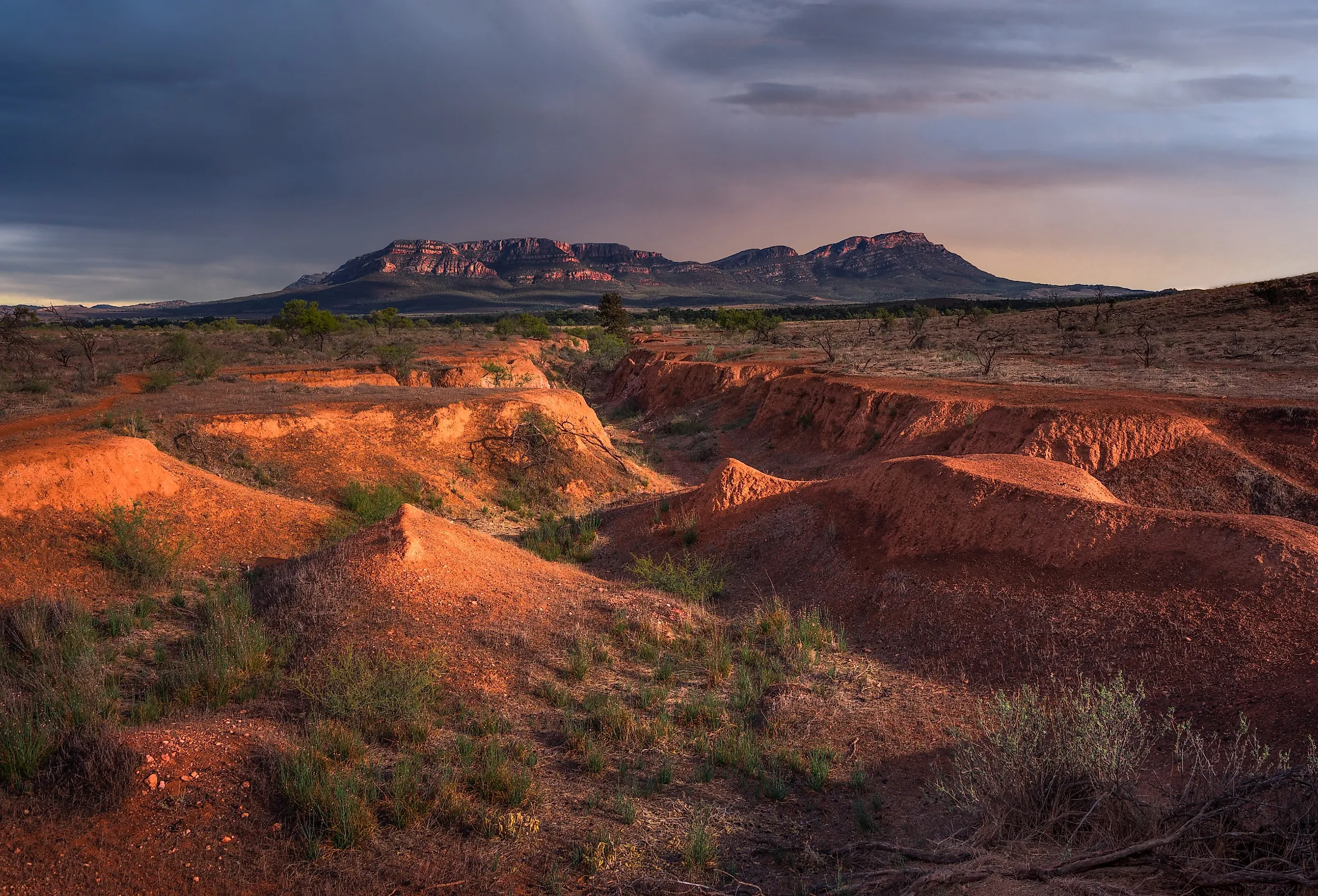
The Flinders Ranges, the biggest mountain range in South Australia, features the fabled Wilpena Pound. Known as Ikara to the Adnyamathanha people, Wilpena Pound is a natural amphitheater formed from an eroded syncline and enclosed by mountain ridges. It is one of the state's most visited natural wonders, alongside places like Coffin Bay National Park and the Remarkable Rocks. Many of South Australia's natural landmarks are protected through national parks, wilderness protection areas, and marine parks that allow regulated visitor access. Those who want the best of both will find plenty to write home about in this part of the world.
Wilpena Pound

Ikara's geological history began more than 800 million years ago, although the folding that formed the Flinders Ranges occurred about 500 million years ago. It lies in the central Flinders Ranges and covers roughly 8,000 to 9,000 hectares within its enclosing ridges. Visitors to Ikara-Flinders Ranges National Park will find that the Pound is its best-known attraction, with views available from walking trails and scenic flights. Wilpena Pound Resort is the park's main serviced lodging complex, while several NPWS campgrounds provide additional overnight options elsewhere in the park. There is also an airstrip here for those who want to fly over the 'bowl'. When not gaping at the Pound, visitors can keep an eye out for wildlife such as western grey kangaroos and wallaroos. Since the area is arid, there are also dragon lizards and emus to see. Bushwalkers can follow the route toward Ngarri Mudlanha, but the Adnyamathanha people ask visitors to stop at Tanderra Saddle rather than climb the culturally significant summit. Nearby, visitors can see the Cazneaux Tree, a river red gum made famous by Harold Cazneaux's 1937 photographs titled The Spirit of Endurance. The best time to visit the park and the Pound is from autumn through spring, when temperatures are still mild, which is ideal for hiking and exploring.
Umpherston Sinkhole

From up top to down below, the sunken garden known as the Umpherston Sinkhole is, in a word, 'other-worldly.' Home to possums and featuring hanging vines and a steep stone staircase, this place looks like something you would see on Skull Island or in Jurassic Park. The sinkhole formed when a subterranean cave collapsed, and the garden took shape after James Umpherston started planting inside the cavern. There is a public park today that people can visit, along with tons of flowers and water fountains at the bottom of the sinkhole. The possums come out to play when the floodlights are switched on after dark, and make their way across the terraces and along the paths. Visitors are allowed to feed them fruit or vegetables. The garden changes with the seasons, while possums are most commonly seen after dusk.
Coffin Bay National Park

For some travelers, natural wonder experiences start at the sea. And, in South Australia, one of the best places to start is Coffin Bay National Park. The views alone are reason enough to visit, not to mention the wildflowers and animals. One of the first stops inside the park is the Templetonia lookout, which offers panoramic views of the area from all sides. Some people have reported seeing emus and kangaroos from the lookout. From here, most people drive to Point Avoid, which looks over Avoid Bay. The views are incredible here and at Golden Island, which is just a few kilometers away. From the Golden Island lookout, one can see the remains of an isthmus that is now surrounded by water. Those who want to hike can take the Yangie Bay Loop Trail from Yangie Bay. The trail takes around 45 minutes to hike and offers views of the Yangie Bay Marine Sanctuary. Yangie Bay Campground offers space for various types of vehicles, including caravans. Late spring and summer are a great time to visit the park, especially for those who want to swim. Hikers tend to prefer winter to early spring for milder temperatures and the chance to see southern right whales on their migration journey.
Lake Eyre

Kati Thanda-Lake Eyre is an endorheic lake in the Far North region of South Australia. Kati Thanda is culturally and spiritually significant to the Arabana people, the lake's recognized Traditional Owners. At its full extent, the ephemeral lake covers about 9,500 square kilometers and comprises Lake Eyre North and Lake Eyre South. Its deep blue waters make the lake an irresistible attraction for nature lovers. It flows inside Kati Thanda-Lake Eyre National Park and is also the country's largest salt lake. When the lake is dry, its white salt crust can be viewed from designated areas, but visitors are not permitted to enter the lake's surface. When it fills, it draws not only people, but also birds and insects. 2026 has seen water levels rise to nearly their highest in 50 years. Many access points and tracks into the park close in the summer due to extreme temperatures. The best time to experience the park and the lake is during peak season, between April and October, when it is cooler.
Bunda Cliffs

The Bunda Cliffs form part of Australia's Nullarbor, the largest limestone plain in the world. The Nullarbor starts in Western Australia and ends in South Australia, covering around 270,000 square kilometers. The cliffs sit along the coastline of the Great Australian Bight and provide one of the country's most dramatic sights. Signs guide the way to three official lookouts where it is safe for people to look out over the water. During whale season, between July and August, more than a hundred whales often linger below the surface. Visitors can book a campsite at Koonalda campground near the historic homestead in the Nullarbor Wilderness Protection Area. It is not possible to camp along the cliffs as they are unstable. Most people head to the cliff area in the winter months to make the most of the milder temperatures.
Remarkable Rocks and Admirals Arch

Those who love seeing natural rock formations and boulders will find an exceptional natural wonder in the Remarkable Rocks in Flinders Chase National Park. These rocks were created by erosion over 500 million years and today form an incredible backdrop on Kangaroo Island. A wooden boardwalk leads to the rocks, allowing visitors to see them up close. In the distance, the Casuarina Islets can also be seen from the rocks. After exploring the boulders, visitors can head to Admirals Arch, about 4 kilometers away. A scenic boardwalk leads to the rock bridge, which is thousands of years old. During the summer, seals breed in the area, and visitors can see the seal pups frolicking on the rocks. Between May and October, it is also possible to see whales migrating, while dolphins are seen throughout the year.
Murray River

More than a century ago, the Murray River enabled paddle steamers to travel its waters while transporting agricultural products. In 2026, the river, one of the longest in the world, features red gum trees and sandy beaches along its shores and meets Lake Alexandrina in South Australia. Visitors can experience what it is like to see the water from a classic paddle steamer or go paddleboarding. Koalas, kangaroos, and abundant birdlife may be seen along the South Australian Murray, but platypuses are not reliably found in the river there. The best time for a river cruise is during the fall to see the golden trees or in the spring when the wildflowers bloom. In winter, passengers can watch the birds from heated cabins on the Murray Princess. Australia's summer runs from December to February, creating a great opportunity for a festive cruise.
The Painted Desert

While there is no river water in the Painted Desert, the colors are no less dazzling. In bright sunlight, the desert hills shine in colors of brown, red, yellow, white, and black. The desert, an ancient inland seabed, was formed more than 80 million years ago and is the result of weathering and erosion. Many people choose to view the colors in the early morning or late afternoon, when the colors are mellow, and they can see the outline of the Mirackina Range. Those who want to see this natural wonder in the Outback region should note that camping is not allowed here. There are a couple of cabins at the nearby Arckaringa Homestead to choose from. It is also very hot during the summer, so the best time to explore the desert hills is between April and September.
Explore the Best Of South Australia
South Australia's natural wonders range from remote protected landscapes to carefully managed parks and gardens. You can get back to nature in the best way possible as you watch whales swim far below ocean cliffs or take in the colors that only seem to exist in the Outback. There are trails everywhere and waters to cruise, creating an escape that is true to Australia.