9 Best Places To Retire In Alberta
As a retiree or, perhaps, soon-to-be retiree, there are Alberta communities worth considering for this exciting chapter of your life. This list narrows them down to nine, each supporting a different kind of retirement. Maybe you picture mornings by a lake, mountain trails close to home, regular theater and community events, or summers that feel like a beach vacation followed by quiet and tranquil winters. These picks pair those lifestyles with amenities and housing prices that compare favourably with Alberta's larger cities, stretching from northern river valleys to the Badlands and southern prairies.
Peace River

Our first recommendation is Peace River, situated in the northwest where the Peace, Smoky, and Heart rivers meet. Home to around 6,600, this town is small without being too small, and larger-city amenities are just over two hours away in Grande Prairie. But Peace River also serves as a regional hub, providing services to surrounding communities and helping connect the north to the rest of the province. As of September 2026, single-family homes on Zillow have a median listing price of about $300,000, well below Alberta's average home price of roughly $515,000.
The town sits within the Peace River Valley, with hills and riverbanks rising around it, creating impressive viewpoints above town. There are also more than 10 miles of paved trails running through town, including a suspended pedestrian bridge beneath Highway 2.
For a fantastic view, check out the Twelve Foot Davis Gravesite, marked in honor of trader Henry Fuller Davis, and overlooking the river valley. If you live on the east side of Peace River, it could make for a great daily walking spot. And not too far from there is the Sagitawa Lookout, which gives you a clearer view of the Peace and Smoky rivers meeting. Another quiet walking spot is the Normand Boucher Community Arboretum, home to a large variety of tree species.
To learn about the local history here, visit the Peace River Museum, Archives & Mackenzie Centre, where exhibits include archaeological finds from Fort Fork, along with fur-trade artifacts and displays on the area's Indigenous history.
Slave Lake
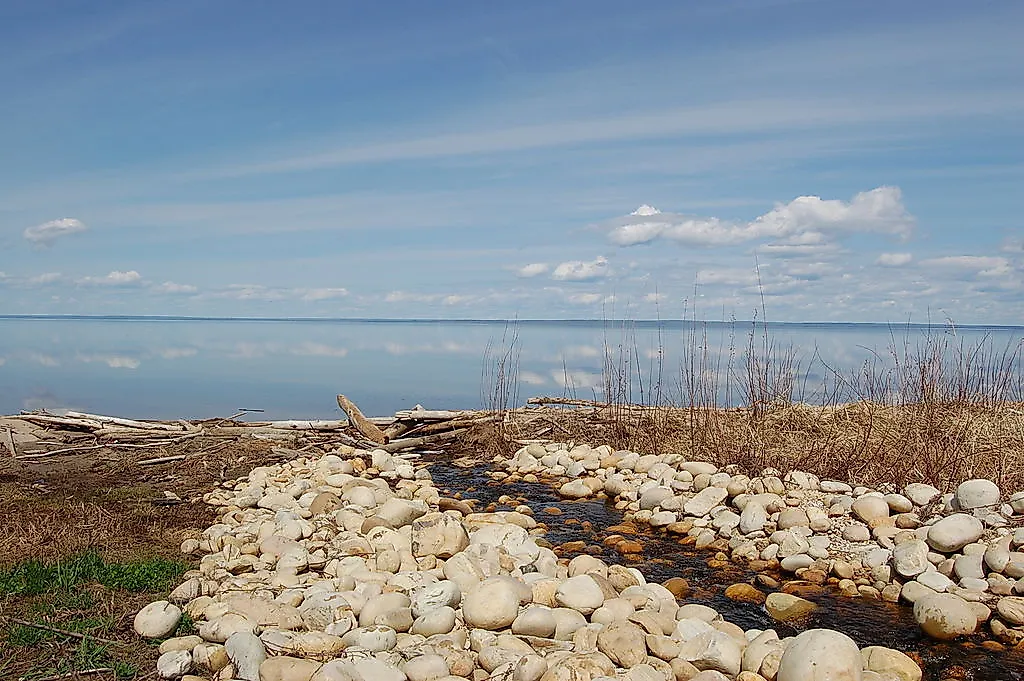
Our next pick, Slave Lake, is about two and a half hours from Peace River, on the southeast shore of Lesser Slave Lake.
Home to about 6,800 people, you might know Slave Lake best as a summer vacation destination thanks to Lesser Slave Lake Provincial Park, with its extensive beaches, over 21 miles of trails, and the Lesser Slave Lake Bird Observatory, one of a handful of boreal bird observatories in the world. But the town's appeal extends past the warmer season. Winter brings less tourist traffic, groomed cross-country ski and snowshoeing trails, and walks along a quieter Devonshire Beach.
Housing here is relatively affordable, too, with a median listing price of $466,000. Slave Lake has an 18-hole golf course in town and impressive indoor recreation for a town of its size. The Multi-Rec Centre has two arenas, two fieldhouses, a racquet center, and an indoor walking track. And the Northern Lights Aquatic Centre has a swimming pool and hot tub. Both offer discounted senior rates, plus seniors get free access to the walking track October through March and can join a free winter walking club.
And speaking of staying social, the Slave Lake Curling Association is another easy way to meet people, whether you join a team or sign up as a spare. Community spirit is also a priority here, with many events throughout the year. Over Labour Day weekend, the nearby Smith-Hondo Fall Fair & Rodeo brings the region together for a parade, rodeo events, and a big dance party.
Cold Lake

Continuing about four hours east, just 20 minutes from the Saskatchewan border, Cold Lake is one of the larger communities on our list, with about 15,700 residents. Its size makes it an ideal spot for those looking to leave behind Edmonton or Calgary without giving up too many everyday amenities. Housing is easier on the budget too, with a median price of about $455,000.
As the name suggests, the lake is a major part of life here, with the city spread along its southern shore. Just a few minutes to the east, Cold Lake Provincial Park protects stretches of beach, marshland, and forest with about five and a half miles of hiking and mountain biking trails and six miles of groomed cross-country skiing trails. It is also great for birdwatching with more than 200 species recorded here, including one of Alberta's largest nesting colonies of western grebes. Because the lake often stays ice-free until mid-December, the birding season is quite long.
In town, there is Kinosoo Beach, named one of Canada's Top 25 Beaches with volleyball and basketball courts, floating docks, a zipline, walking paths, and a splash pad, making it a great place to enjoy time with visiting grandchildren. Further down the waterfront is the Cold Lake Marina, offering a convenient launching point for fishing, waterskiing, or a relaxing afternoon on the boat.
There are also plenty of annual community events to keep things lively, including a Bull-A-Rama Spring Series and a Summer Rodeo.
Hinton

Next up is Hinton, nestled in the Athabasca River Valley in the foothills of the Rockies, almost six hours west of Cold Lake.
Just 15 minutes from both Jasper National Park and William A. Switzer Provincial Park, Hinton is an ideal home base for outdoor enthusiasts. Jasper National Park spans about 4,200 square miles and offers year-round recreation, including 745 miles of hiking trails, the scenic Icefields Parkway, golfing, horseback riding, the Miette Hot Springs, whitewater rafting, watersports and swimming in Pyramid, Edith and Annette Lakes, and world-class skiing at Marmot Basin.
William A. Switzer Provincial Park is considerably less crowded and protects 24 square miles of forests surrounding five lakes. There are canoe and kayak rentals available on Jarvis and Gregg Lakes. In winter, you can ice fish and skate on any of the lakes. Within the park is the Hinton Nordic Centre, with miles of trails for hiking, biking, snowshoeing, and cross-country skiing, plus a toboggan hill.
There is also the 209-acre Wildhorse Lake Provincial Recreation Area, just 20 minutes from town and known as a quiet fishing spot.
Back in town, you can access the free, 37-acre Hinton Bike Park, suited to experience levels, and the Beaver Boardwalk, the world's longest freshwater boardwalk. In February, Hinton hosts the two-week Winter Magic Festival, with seasonal events celebrating winter sports, arts, culture, and community, including the signature Fat Bike Endurance Race.
To top it all off, housing here remains relatively affordable, with detached homes currently sitting at a median price of around $470,000.
Rocky Mountain House

Three and a half hours to the southeast is Rocky Mountain House, home to about 6,800 people and approximately one hour from Red Deer.
This town is very well-known for the Rocky Mountain House National Historic Site, which preserves archaeological remains associated with four fur-trade forts established between 1799 and 1875. Here, you can immerse yourself in the stories of Indigenous Peoples and explorers, taking part in interactive exhibits, enjoying cycling and walking trails, viewing bison, and more.
Rocky Mountain House is also a great hub for outdoor activity, with several close by natural areas. Crimson Lake Provincial Park is about 15 minutes north of town and spans nearly 8,000 acres. Also nearby are Cow Lake Natural Area, ideal for trout fishing, and Jackfish Lake Provincial Recreation Area, with a thriving population of northern pike (aka Jackfish).
About an hour away are Crescent Falls, which you can get a fantastic view of from the Bighorn Canyon Lookout, and Siffleur Falls, nestled in the Kootenay Plains Ecological Reserve. At the ecological reserve, you can hike along the river and cross the Topham Suspension Bridge to reach the falls and a gorge. Between the two falls is the 20-mile Abraham Lake, a reservoir that is a great swimming spot in summer, but is especially popular in winter for the magnificent ice bubbles that form on the lake, making it resemble a frozen lava lamp.
Housing here is below the provincial average, with the median listing price sitting at $390,000.
Camrose

Camrose is our next recommendation, located about two hours northeast of Rocky Mountain House and about an hour south of Edmonton.
Camrose is a community built around the needs of its full-time residents, rather than tourism, although it does host several popular annual events. Each February, Camrose hosts the Nordlys Film and Arts Festival, featuring a combination of world-class films from Canada and around the world. The festival takes place at the Bailey Theatre, the oldest live performance venue in Alberta, which brings entertainment year-round with live music, comedy, Shakespeare, opera, and films. There is also the Big Valley Jamboree, a four-day music festival over the August long weekend featuring some of the top recording artists in country music.
In terms of building a daily routine here, the Mayer Aquatic Centre is a fantastic facility, with a 25m, eight-lane pool, a shallow pool, lazy river, hot tub, steam room, and lots of exercise classes. For outdoor recreation, Mirror Lake is located right in the heart of the city, with a 1.9-mile paved walking trail that goes around its perimeter. There is also Stoney Creek Park, a primary access point for cycling and walking trails year-round and cross-country ski trails in winter. The town also hosts a number of markets, including a year-round farmers' market on Saturdays, a seasonal outdoor market on Tuesdays, and a seasonal Main Street market on Thursdays.
And the local housing market remains accessible, with a median listing price of $410,000.
Drumheller

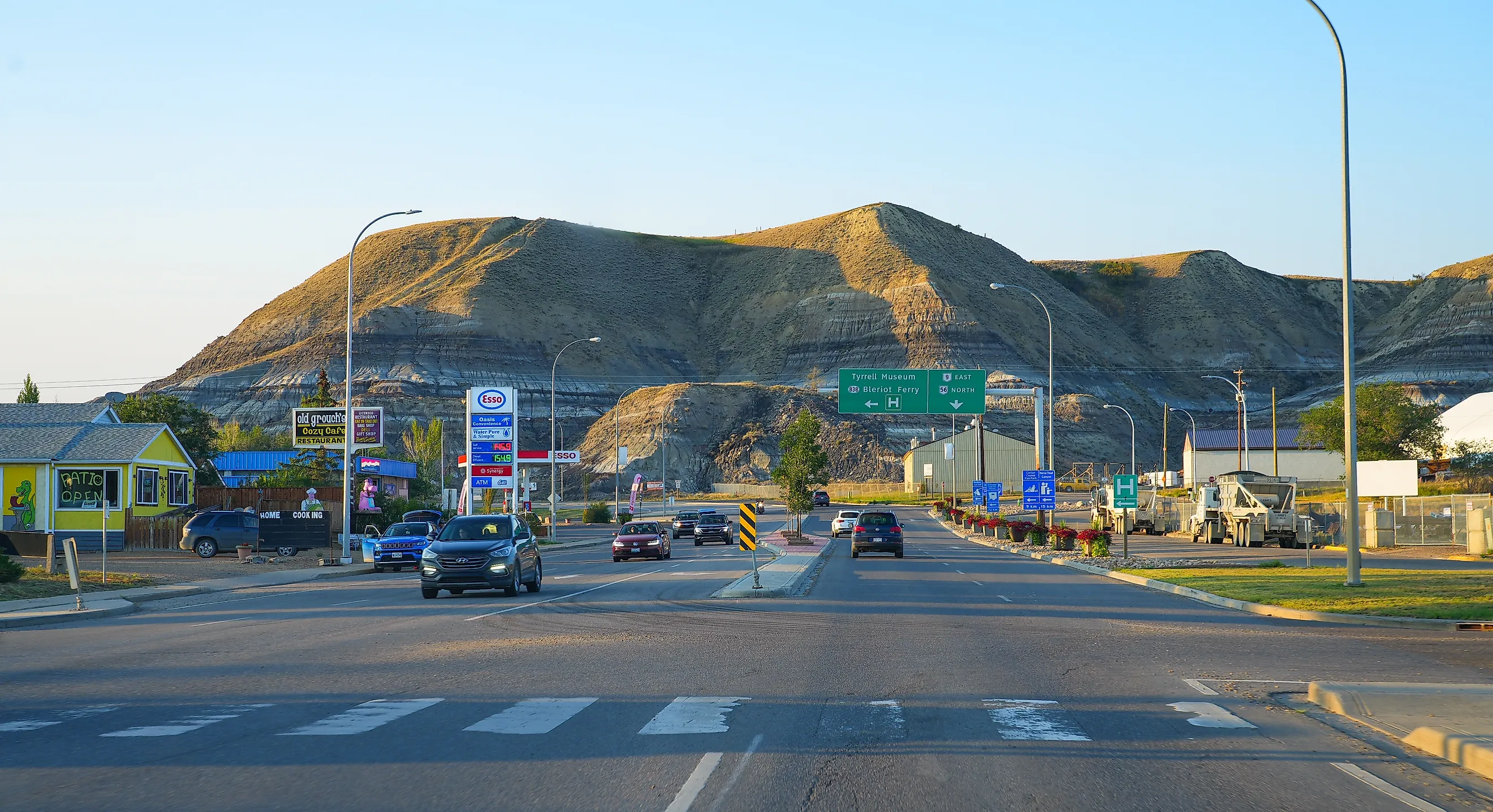
Moving closer to Calgary, Drumheller is about two hours south of Camrose. Sitting in Alberta's Canadian Badlands, Drumheller is truly a prehistoric playground with no shortage of things to see and do. Plus, it is an ideal spot for those looking to stretch their retirement budget, with a median price of $385,000.
Just four miles from town is the Royal Tyrrell Museum of Palaeontology, Canada's only museum dedicated solely to the study of prehistoric life. More than 800 fossils are on permanent display here, as well as over 30 dinosaur specimens. In town, you can take a self-guided Dinosaur Walk to see some of more than 30 dinosaur statues placed across Drumheller, including the World's Largest Dinosaur, where you can climb 106 stairs inside it to look out over the valley from its open mouth.
An otherworldly spot for a walk is just 15 minutes from Drumheller among the Willow Creek Hoodoos, large sandstone pillars formed over millions of years. Admission is free and you can follow designated walking paths to see the Hoodoos up close. Heading in the other direction from Drumheller, about 20 minutes away is another terrific natural site: Horsethief Canyon, where outlaws hid stolen livestock more than 100 years ago.
For arts and culture, you can catch live theatre shows, concerts, opera, fireworks, and outdoor movies at the 2500-seat Badlands Amphitheatre, located just a few minutes outside town. The Amp is located on 400 acres of land and also hosts guided hikes.
Brooks
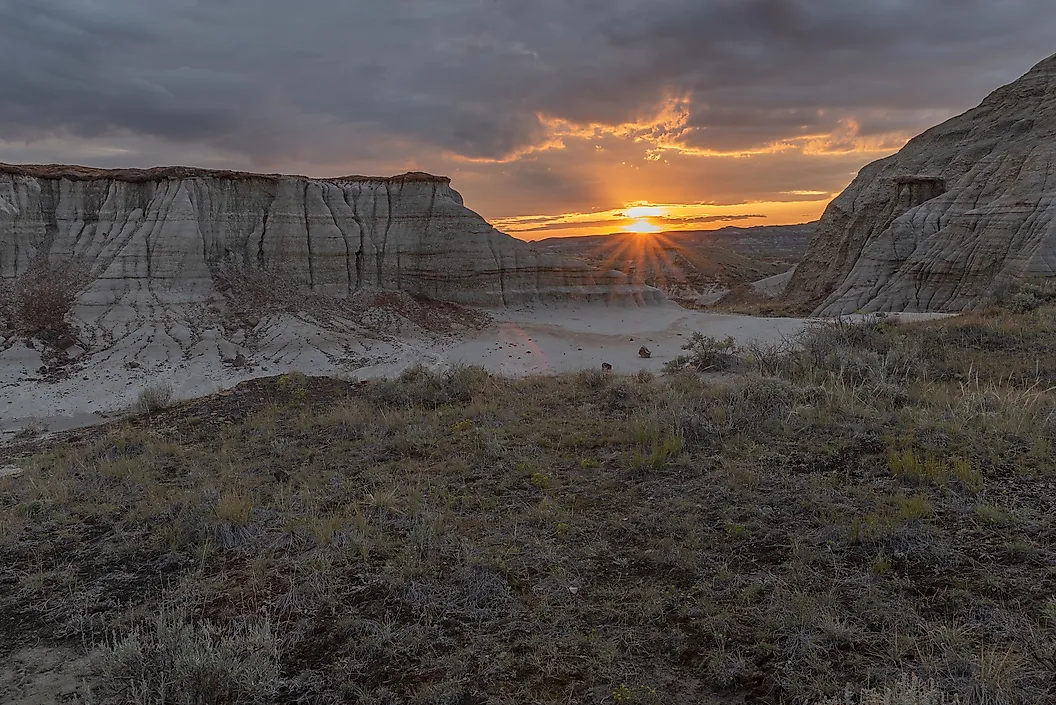
If Drumheller's paleontological attractions caught your attention, our next pick, Brooks, is located an hour and a half to the southeast and just over 30 minutes from Dinosaur Provincial Park, one of the world's richest fossil sites. The park is renowned for the sheer number and diversity of fossils discovered here, representing more than 44 dinosaur species from 34 genera and 10 families that lived between 75 and 77 million years ago. On select dates, you can also visit the park at night for Stars and Stories, where park interpreters tell ancient legends and you can peer through a telescope for views of constellations, planets, and the Milky Way.
Even closer to Brooks are two other provincial parks: Tillebrook and Kinbrook Island. Just an eight-minute drive from town, Tillebrook is small but is a great venue for birding, with over 150 different bird species. It also has a handful of hiking trails and a disc golf course. Kinbrook, on the other hand, is almost four times larger than Tillebrook, and sits on Lake Newell, one of southern Alberta's largest and warmest man-made lakes. Just a 12-minute drive away, Kinbrook is also a great place for birding, as well as paddling, boating, fishing, and swimming. And right in Brooks is Stafford Lake Park, with a wide, paved recreation pathway that is wheelchair-friendly and ideal for walking, jogging, cycling, or rollerblading.
And Brooks provides good value for homebuyers, with the median listing price sitting around the $395,000 mark.
Fort Macleod

Our final highlight is Fort Macleod, about two hours southwest of Brooks and about an hour and a half from the British Columbia border. Here, the median listing price is $498,000.
If you enjoy a wander through history, you may be drawn to the Fort Museum, which highlights the area's connections to the North-West Mounted Police, local Indigenous People, and early settlers. The museum also hosts a number of events throughout the year, including the Musical Ride, a choreographed horseback performance in which riders demonstrate the precision drills and horsemanship skills once used by the North-West Mounted Police. The show runs four times daily in July and August.
For more history, just outside town is the world-renowned Head-Smashed-In Buffalo Jump Interpretive Centre. This UNESCO World Heritage Site tells the story of more than 6,000 years of Indigenous Plains Peoples' connection to the buffalo through exhibits, archaeological discoveries, and one of the world's best-preserved buffalo hunting sites.
Flowing just north of town is the Oldman River and the River Valley Wilderness Area sits on the opposite banks of the river, home to a host of different wildlife and a network of recreation trails. The river itself is renowned for fly fishing and excellent for non-motorized watersports. On the south side of the river is the Old Fort Trail, a one-and-a-half-mile, paved pathway that follows along the waterfront.
Retirement can be a chance to redraw the map of your everyday life, and these nine communities each point in a different direction. You might trade city traffic for mornings on Lesser Slave Lake, keep Jasper close by relocating to Hinton, fill your calendar with theater shows in Camrose, or spend weekends among Drumheller's Hoodoos and fossil sites. Add in approachable housing costs, strong recreation, and community activities through every season, and each place gives you a practical reason to picture settling into a new corner of Alberta.