The National Parks Where Salmon Still Spawn
In order to find spawning salmon in national parks, one is limited to the western US and Alaska, as Atlantic salmon can only be found in Maine, and they are not found in Maine's only national park, Acadia National Park.
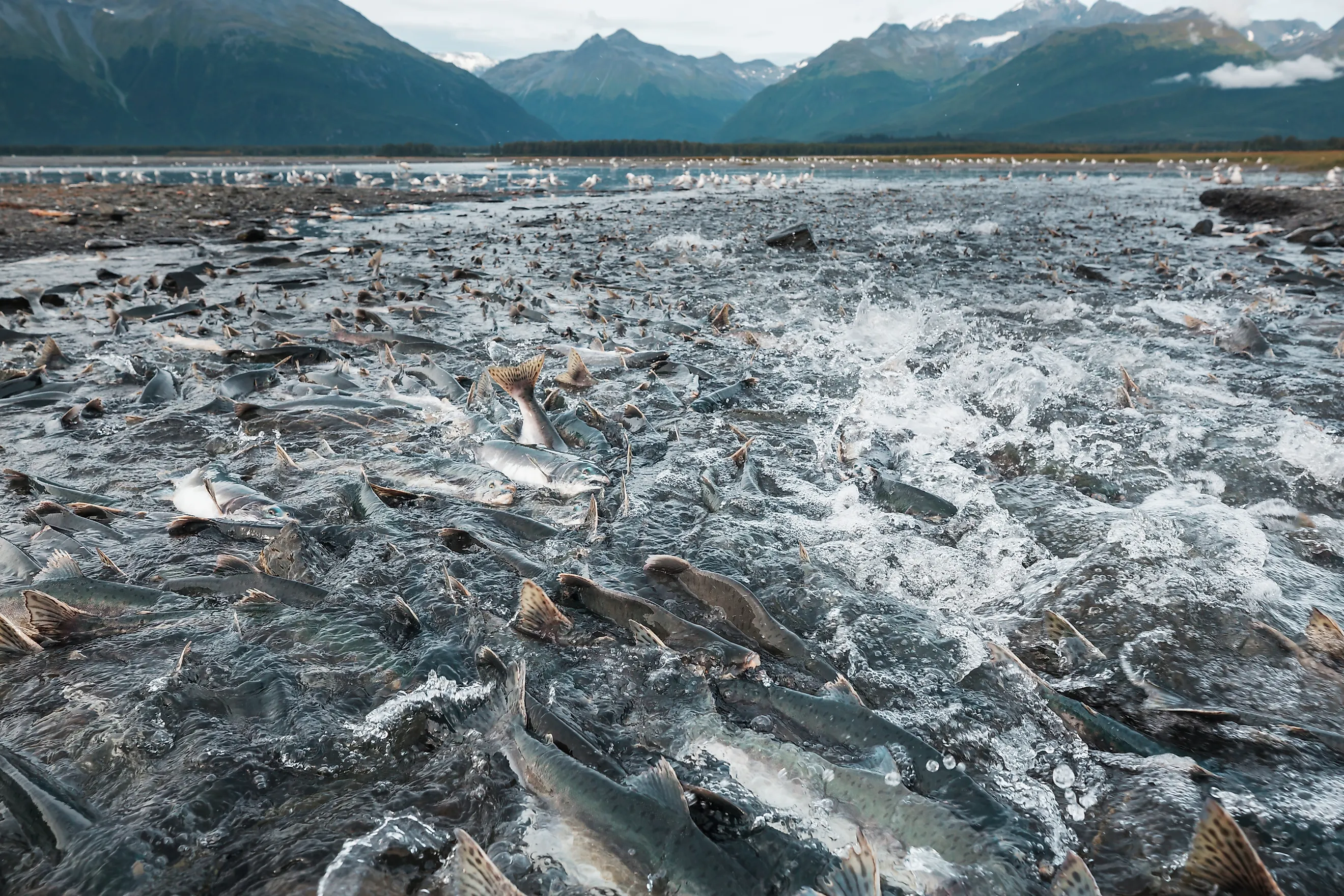
But for those who can find Pacific salmon in these national parks, especially during spawning season, they will be in for a dazzling display as brightly colored fish compete for space to lay eggs and fertilize them, creating the new generation of salmon to grow up in freshwater before swimming back to the ocean and repeating the process.
Not all salmon, of course, follow this process. Some have become landlocked and seek out smaller tributaries on lakes or ponds to spawn. In these five national parks, one can still discover both landlocked and oceangoing salmon that spawn.
Olympic National Park

Olympic National Park could be three separate parks based on its sheer diversity of environments, ranging from mountain trails to rainforests and a Pacific coastline. It also contains extensive river systems, from which sockeye salmon have major spawning runs, although their numbers have decreased significantly over the years and they are no longer found in the Elwha River in the park due to hydroelectric dams preventing them from spawning.
They are primarily found in the Quinault and Ozette River systems. The Quinault River sees major spawning both within the river and in creeks in November and December, especially at Big Creek. Ozette sockeye, meanwhile, spawn in tributaries of Ozette Lake during the winter season.
Other landlocked salmon varieties can be found in Lake Ozette and Lake Crescent, or more commonly known as kokanee salmon. Fishing is not allowed during the spawning season of sockeye salmon.
Redwood National Park

Redwood National Park is well known for its giant sequoia trees, but it also has large numbers of salmon, which can rely on various rivers, creeks, ponds, and lagoons that are fed by 60 to 80 inches of rain a year. There are two species of salmon that live here: coho salmon and Chinook salmon.
They typically live in the ocean, but they return from November through February to spawn at several spots in the park, such as Redwood Creek, Smith River, Mill Creek, Lost Man Creek, and Prairie Creek. Coho salmon are easy to spot while spawning due to the bright red backs on male cohos.
Chinook salmon are far bigger, growing up to 58 inches and weighing anywhere from 10 all the way to 100 pounds for prize fish. They begin returning from the ocean into Redwood Creek during the fall, where they spawn and pass away in the winter. Unfortunately, these prize salmon are considered a threatened species due to habitat degradation and decreased water depths. In order to protect the populations of salmon, fishing is only allowed on the Smith and Klamath Rivers.
Kenai Fjords National Park

Alaska is one of the prime states for salmon, with the Bristol Bay commercial fleet alone catching 20 million sockeye salmon annually. Further to the west, the Kenai Fjords National Park is home to all five varieties of Pacific salmon, which include chum, coho, pink, chinook, and sockeye salmon.
Part of what is driving this growth is climate change, as melting glaciers reveal freshwater streams and lakes that are then rapidly populated by wild salmon, including Delight, Desire, and Delusion Lakes. Of the 150 lakes in Kenai Fjords National Park, the salmon populations use the interconnected smaller streams from them to spawn in the winter. There has been no survey done on how many salmon live in the waters, but they are legal to fish for as long as one has the proper fishing license from the Alaska Department of Fish and Game. Commercial fishing companies operate in several fjords and lagoons in the park's borders.
Lake Clark National Park and Preserve

Lake Clark National Park & Preserve would not exist if not for salmon. The park was first established in December 1980 within 4 million acres of southwestern Alaska to protect the fish in the lake and the subsistence fishing practices of the Dena'ina Athabascan people, who still live in villages within the park.
Annually, the lake sees an average of 372,000 sockeye salmon that go from the Newhalen River to Lake Clark National Park and Preserve for a dazzling spawning display. There are 32 spawning grounds in the park, with 5 seeing the vast majority of adult sockeye. Sockeye salmon in the hot spots tend to have larger snouts, as they use these snouts for protection and competition amid other adult sockeye salmon. Although sockeye salmon are the most common, the other four species of salmon can also be found in the park.
These salmon runs typically occur in July and August, making it the peak season for fishing both for visitors and the native tribes that live around the park.
Katmai National Park and Preserve
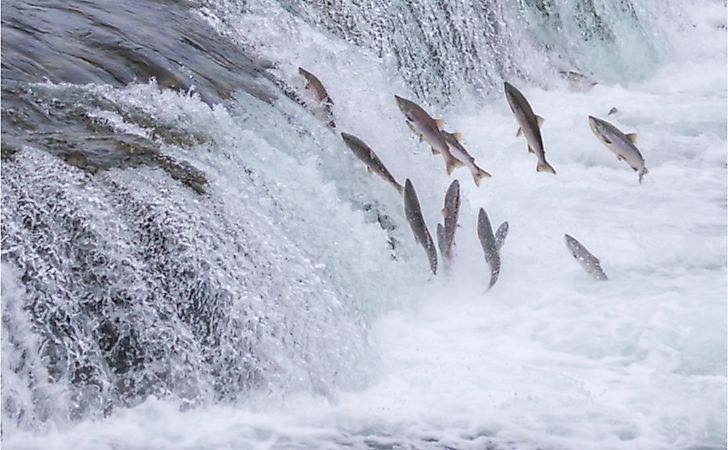
Katmai National Park and Preserve rests over a zone that was created through a devastating volcanic eruption. In 1912, Novarupta emerged and erupted, creating a caldera and a plain known as the Valley of Ten Thousand Smokes. The region was declared a national monument in 1918 and a national park in 1980, both to preserve the newly formed volcanic environment and the salmon-rich waters.
The NPS notes that sockeye salmon see a big "eruption" in population as they travel from the Pacific Ocean into Bristol Bay and then through the Naknek water system into Katmai National Park and Preserve. They begin to arrive from August through October for their spawning runs. By the time they enter freshwater, their weight is set, as they stop feeding, and they gain the distinct red color and elongated jaw.
As the spawning salmon die, they often attract large numbers of bears, especially around Brooks River, who can easily snatch up the dead or dying fish. Spawning fish are very difficult to catch for anglers, as they do not feed when entering fresh water.
In order for sockeye salmon eggs to grow, they must be placed in loose gravel. Once they hatch, they stay in lakes throughout the park for at least two years before journeying out to the Pacific Ocean.
A fascinating life cycle
Salmon have a life cycle unlike many other fish. By being able to withstand both salt and fresh water, they travel great distances in their early lives as fry, growing in freshwater, before going out to the ocean to feed and grow larger and returning to finish their life cycle. For landlocked salmon, they follow a shorter version of this process, but still remember their evolutionary past. This is why some lakes have stocked salmon, but cannot support population growth without places for the fish to spawn. Although they are far more prevalent in Alaska, dedicated watchers and fishers can still see large spawning salmon coming back to the freshwaters of Redwood National Park and Olympic National Park.