Congaree National Park’s Firefly Synchrony Lights Up America’s Tallest Forest
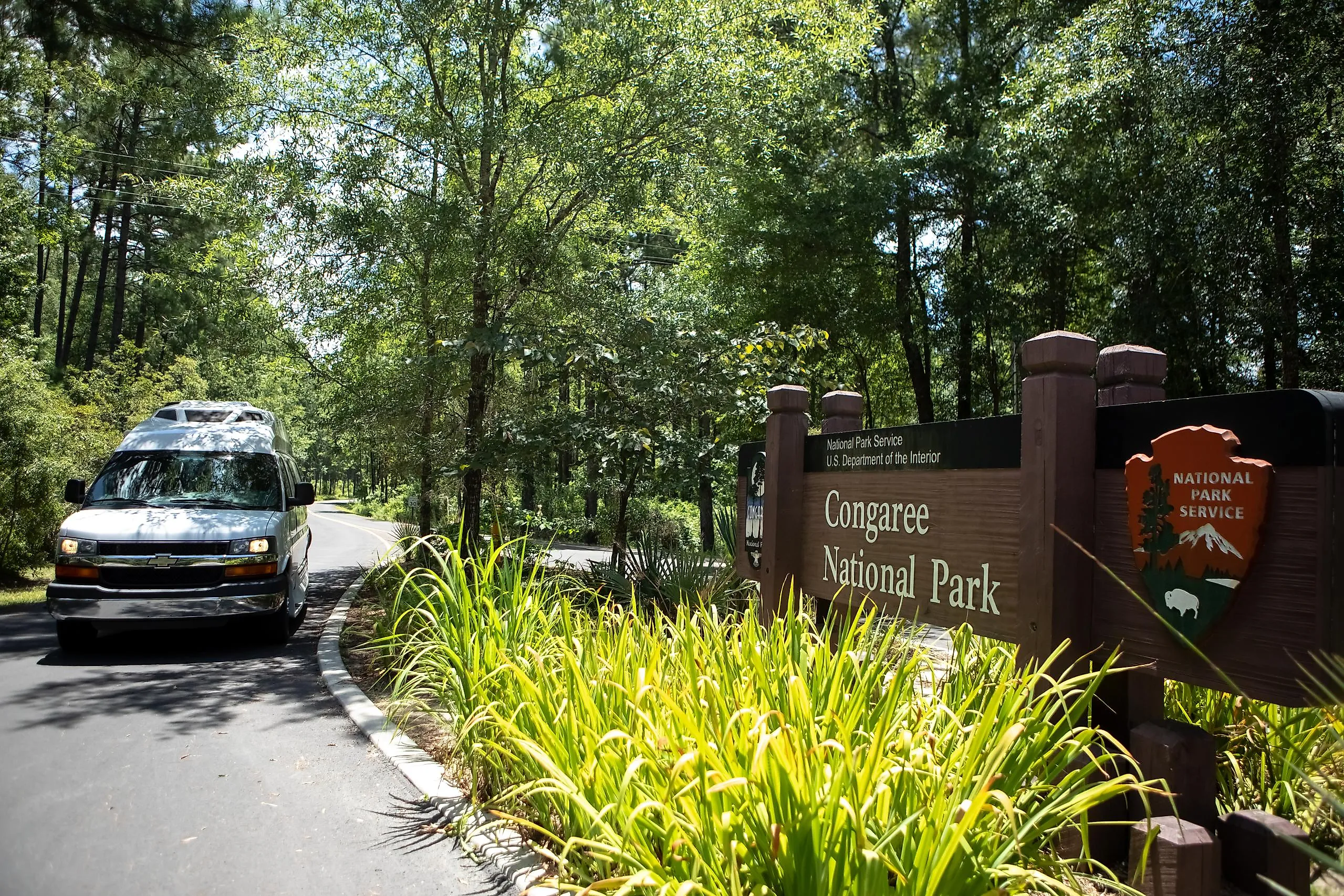
Thirty minutes from downtown Columbia sits a forest that does two things almost nowhere else can. It grows some of the tallest trees in the eastern United States, and for about two weeks each spring, its fireflies blink in unison. Congaree National Park is one of the most biologically diverse parks in the country, and a magnet for paddlers, hikers, researchers, and anyone who just wants to stand under a very big tree in South Carolina. Here is what to see, and how to time a visit.
The History and Land of Congaree National Park

Congaree protects the largest remaining tract of old-growth bottomland hardwood forest in the United States, a rarity on flat, flood-prone ground. The Congaree River spills across the floodplain about ten times a year, and that is the whole trick: each flood leaves behind nutrient-rich soil that pushes bald cypress, loblolly pine, and water tupelo to some of the tallest heights of their kind in the eastern United States.
People have worked this land for a long time. For centuries it was home to Indigenous peoples, including the Congaree tribe the park is named for. Loggers cut into it through the 18th and 19th centuries as European and then American settlement expanded, yet a pocket of the old forest came through largely untouched.
That pocket is why the park exists. A 20th-century conservation campaign led by local activists and naturalists won it protection as Congaree Swamp National Monument in 1976. Full national park status followed in 2003, and the park now draws around a quarter of a million visitors a year.
See one of the Largest Congregations of Fireflies on Earth

Once a year, the forest puts on a light show. For about two weeks beginning in mid-May, thousands of Photuris frontalis fireflies flash in unison during their mating ritual, bursts of coordinated light pulsing across the forest floor in near-perfect rhythm. Most fireflies blink whenever they please. These ones keep time.
The synchrony has a purpose. Researchers think the coordinated flashing helps the brightest males stand out to females, and may make it harder for predators to pick off any single bug. To pull it off, the fireflies need Congaree's exact recipe: damp soil, dense cover, and a dark, relatively undisturbed forest. It is a rare trick, found in only a few places on Earth.
It is also wildly popular. The display draws thousands of hopefuls each spring, so many that the National Park Service now runs a lottery for a limited number of passes. During the roughly two-week window in mid-to-late May, the park closes every evening at 4:30 p.m. to everyone but the winners.
What else is there to do in Congaree?

Catching the fireflies at their peak is hard, and winning a pass is harder. The good news is that the park rewards a visit any week of the year. Here is what else fills the days.
Hiking

The park keeps more than 25 miles of trails, and the place to start is the Boardwalk Loop, a 2.4-mile elevated walkway that carries you through old-growth forest and swamp without muddying your boots. Interpretive signs along the way cover the park's biodiversity, hydrology, and human history.
Want to go deeper? The nearly 11-mile River Trail and the longer Oakridge Trail push into the backcountry, where barred owls, deer, and feral hogs turn up. Both can be muddy or underwater when the river runs high, so check conditions and pack accordingly before you set out.
The upside to a floodplain is flat ground. Most trails stay level and manageable across a wide range of fitness levels, whether you want a short stroll or a full-day trek through a rare and thriving forest that feels a world away from the nearest city.
Paddling

The best way to see Congaree may be from the water. Paddling its slow creeks and channels drops you right under the canopy, where bald cypress and tupelo rise straight out of the water and their roots break the surface in spires and knees.
Cedar Creek is the main route, a roughly 15-mile run through the heart of the park. The water sits calm and tea-black from plant tannins, friendly to most skill levels, though that dark surface hides debris and shifting water can throw up obstacles, so check with park staff first.
Watch the banks for wading birds, snakes, turtles, river otters, and the occasional alligator. Guided tours run seasonally, and private trips are allowed year-round with a free backcountry permit.
Camping

Two campgrounds sit inside the park. Longleaf, near the Harry Hampton Visitor Center, has a parking area and room for tents for individuals and groups; Bluff is tent-only and takes a short hike to reach, which buys you a taste of the backcountry. Both come with picnic tables and fire rings but no power and no running water, and only Longleaf has vault toilets, so pack in what you need.
For real solitude, go backcountry. A free permit lets you hike or paddle deep into the forest and set up camp under Leave No Trace rules, staying at least 100 feet from most water.
It is humid and buggy most of the year, so come prepared. The payoff arrives after dark: barred owls calling through the trees, fog lifting off the water, nocturnal wildlife on the move, and on a clear night, a sky full of stars.
Where to Stay Outside the Park?
Most visitors bunk in Columbia, about half an hour away, where the hotels, restaurants, and shopping are. The city has its own draws, too, like the Columbia Museum of Art and, for a greener outing, the Columbia Canal and Riverfront Park or Sesquicentennial State Park just northeast of town.
Prefer something quieter? Orangeburg sits a similar distance to the south, and Sumter lies to the east, both mid-sized towns with a solid spread of places to eat and sleep.