The National Forests With The Most Deer
In 2007, a Forest Service survey counted 65 white-tailed deer on a single square mile of the Ouachita National Forest. A handful of national forests reach numbers like that, and most of them sit in the South, where pine stands, hardwood bottoms, and regular fire produce the mix of cover and fresh browse that deer favor. Some have held high densities across nearly two decades of surveys. The records keep naming the same forests.
Ouachita National Forest, Arkansas And Oklahoma

Few national forests have such a long published record of high deer densities as Ouachita National Forest. Forest Service spotlight surveys conducted between 1990 and 2007 produced estimates ranging from 29 deer per square mile in 2001 to 65 in 2007. Across the entire monitoring period, the forest averaged 46 deer per square mile. The figures are historical rather than a current population estimate, but repeated surveys across nearly two decades make Ouachita one of the better-documented examples of a national forest supporting large numbers of white-tailed deer.
The forest's shortleaf pine and hardwood landscape contains both mature stands and areas opened by management. Forest Service habitat assessments emphasize the importance of early-stage vegetation for deer, since grasses, broad-leaved plants, and woody browse become more abundant when sunlight reaches the ground. Prescribed fire and timber thinning can maintain these feeding areas, while oak stands contribute acorns during fall. That changing patchwork gave deer access to productive feeding habitat during the years covered by the surveys.
Chattahoochee-Oconee National Forests, Georgia

White-tailed deer have historically reached particularly high densities in the Piedmont portions of the Chattahoochee-Oconee National Forests. A Forest Service environmental review, drawing on population estimates from around 2000, reported roughly 20 to 60 deer per square mile in the Piedmont and 15 to 30 in the mountains. Those numbers should not be treated as a present-day census, but they show how productive the Georgia forests can be for deer. The contrast between the two regions also reflects differences in habitat. Deer in the mountains are more affected by fluctuating acorn crops, while lower-elevation forests can produce abundant browse. Forest management has included thinning, prescribed burning, and maintained wildlife openings, all of which can allow more low-growing vegetation to develop where the canopy has been opened.
De Soto National Forest, Mississippi
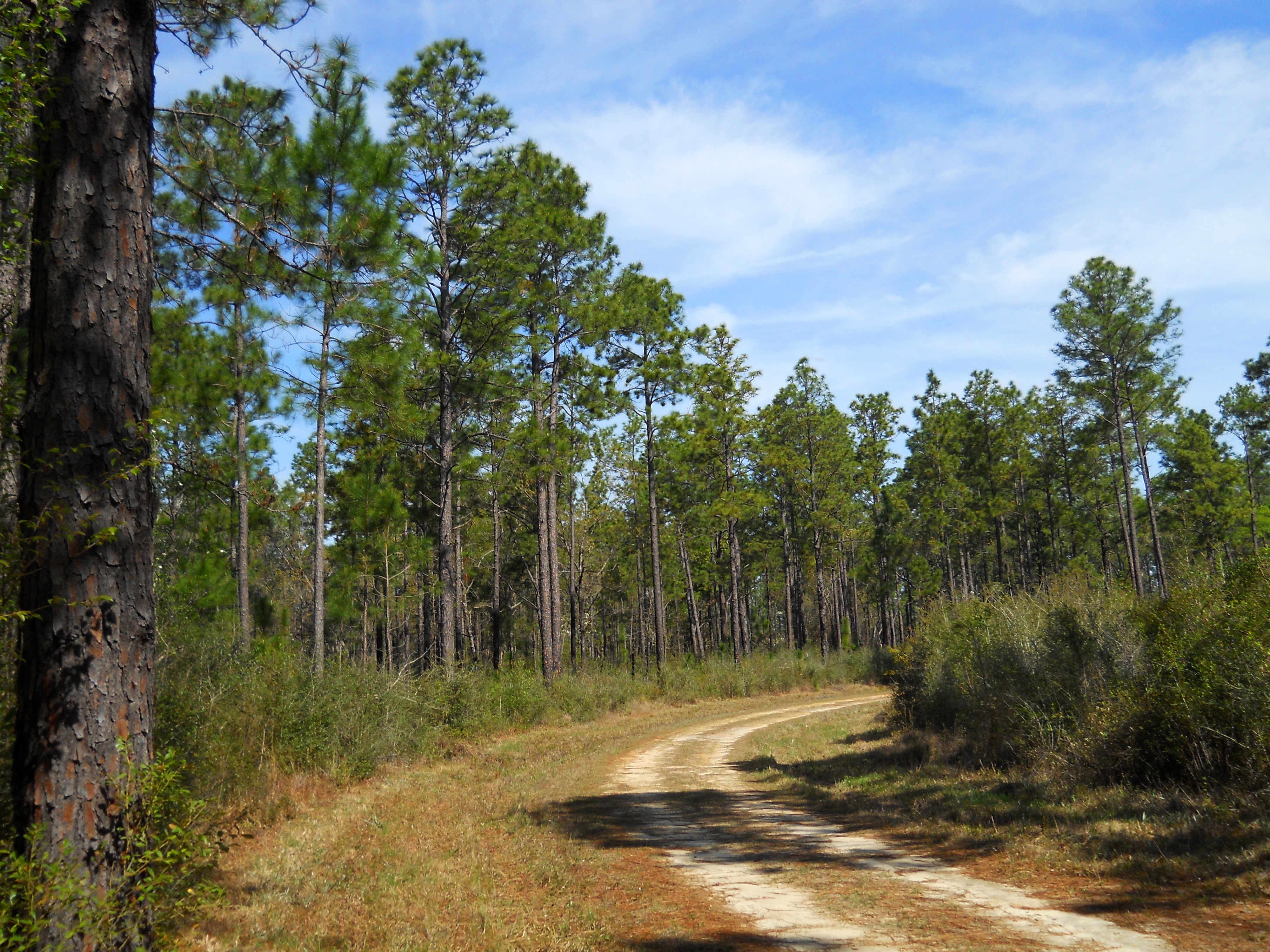
Forest Service monitoring provides unusually specific numbers for De Soto National Forest. Its comparable survey baseline lists an estimated 33.1 deer per square mile in the northern portion of the forest and 27.7 in the south. The northern figure is higher than the corresponding estimates for Bienville, Delta, Holly Springs, and the other Mississippi national forest units covered by the same monitoring program.
De Soto also occupies one of the South's major longleaf pine landscapes. Forest restoration here has involved prescribed burning, thinning, and work to restore longleaf pine communities. Fire prevents parts of the understory from becoming densely overgrown and encourages fresh ground-level vegetation. For deer, that can mean more accessible browse within a much larger forested landscape. The density figures come with an important qualification: Mississippi's later spotlight counts were inconsistent from 2019 through 2022, and the Forest Service changed to thermal detection in 2023. The older comparable figures remain useful as a baseline, but they should not be presented as a 2023 or 2026 census.
Bienville National Forest, Mississippi

The same Forest Service monitoring baseline estimates 31.2 white-tailed deer per square mile in Bienville National Forest. Because Bienville was surveyed within the same Mississippi monitoring program as De Soto and Delta, its figure is more directly comparable than estimates gathered under unrelated methods elsewhere in the country. The forest's pine-dominated landscape also contains openings and younger vegetation where deer can find low-growing forage. When timber harvests, thinning, or fire allow more sunlight onto the forest floor, grasses, broad-leaved plants, shrubs, and fresh woody growth can increase. Those food-rich patches sit alongside older forest that deer can use for cover, giving Bienville the mixture of forest stages that white-tailed deer frequently exploit.
Delta National Forest, Mississippi

Delta National Forest's comparable monitoring estimate is 27.9 deer per square mile. Its setting is very different from Mississippi's pine forests. Delta is the only national forest composed entirely of bottomland hardwood habitat, with seasonally flooded woods and small sloughs spread through the Yazoo Basin. The result is a low, wet forest where conditions can change considerably over short distances.
White-tailed deer make use of the drier portions of this landscape as water levels shift. Hardwood trees provide seasonal mast, while openings and disturbed ground can produce browse closer to the forest floor. Flooding also helps shape where vegetation develops and where deer can move at different times of year. Delta's 27.9-deer estimate places it below Bienville and northern De Soto in the Forest Service's comparable Mississippi data, but it remains one of the stronger documented densities in the state's national forests.
Holly Springs National Forest, Mississippi

Holly Springs National Forest rounds out the Mississippi forests with a substantial documented deer population. The Forest Service's comparable monitoring baseline lists 20.9 deer per square mile for the forest's main unit. Holly Springs covers roughly 155,000 acres of north-central Mississippi and contains pine forest, upland hardwoods, and bottomland habitat rather than one continuous forest type. That variety gives deer access to different foods as conditions change through the year. Hardwood areas can produce acorns, while sunnier openings support the softer vegetation deer browse. Its recorded density does not reach the levels reported for northern De Soto or Bienville, but the Forest Service data place Holly Springs firmly among the Mississippi national forest units with sizeable deer concentrations.
High deer density is not simply a product of having more acres of trees. White-tailed deer often do well where younger growth occurs beside mature forest, giving them feeding areas without removing nearby cover. Acorn crops, hunting pressure, weather, disease, and changes in vegetation can still push local populations up or down. Survey methods matter too, which is why figures collected in different forests and different years cannot form a precise national leaderboard. What the monitoring records do show is that several national forests have supported deer at densities measured in the dozens per square mile, sometimes for many years.