The State Parks With The Most Bobcats
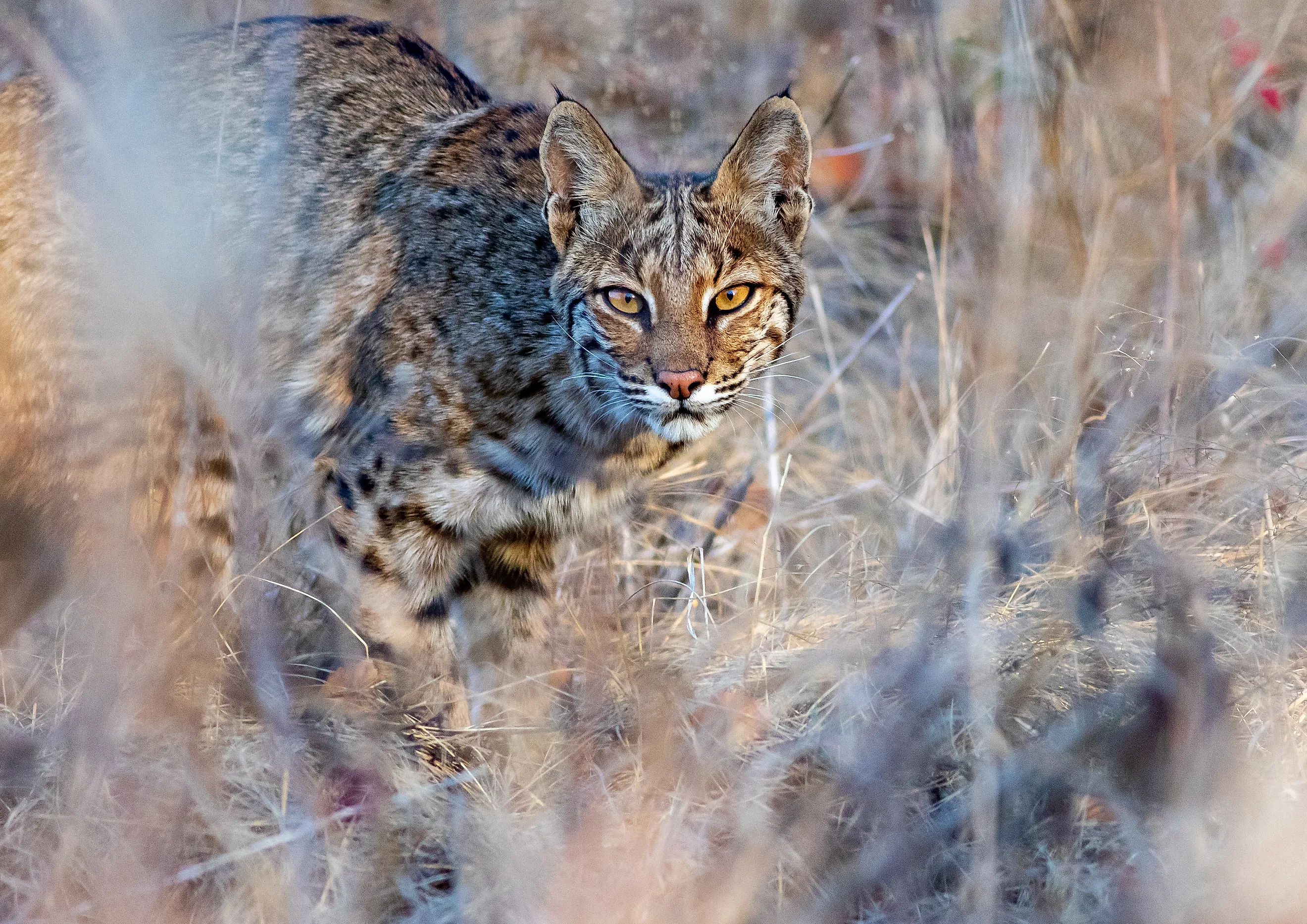
Bobcats are found all over the United States. They call 47 out of 50 states home, with an estimated 1.5 to 3.5 million scattered throughout the country. Even with numbers that high, there are particular state parks where they tend to gather more than others. These state parks have the right combination of natural factors that make bobcats happy residents.
They have access to an abundance of prey, including rabbits, hares, and mice. The trees, bushes, and grasslands give them room to roam and hunt. The rocky cliffs and caves let them hide from their human neighbors. Counting bobcats in state parks can be tricky. These cats live alone, blend into their surroundings, and roam across large territories. State wildlife departments often need years of costly research using trail cameras, GPS collars, and DNA from droppings just to get a rough estimate. Many states have no official bobcat count at all. Still, these five state parks have the right environment for bobcats, and locals claim they have seen them in the wild once in a blue moon.
Myakka River State Park, Florida

On the western side of the state, in Sarasota County, is a state park with quite a few bobcats prowling around. Myakka River State Park is 37,000 acres of pine flatwoods, wetlands, and prairies that give its local bobcat population ample places to eat, hide, and play. According to Florida State Parks, bobcats are among the many animals a park-goer may encounter at Myakka, alongside otters, alligators, and more than 100 bird species.
Bobcats are fond of this state park because the Myakka River, feeding the Upper and Lower Myakka lakes, puts reptiles and birds on the menu, and dense patches of saw palmetto give them good cover for resting and staying out of sight. There is no published population estimate for bobcats living specifically within Myakka River State Park, though there are an estimated 300,000 statewide. Many local guides claim to have seen bobcats here. Dawn and dusk are the best times to try, when bobcats are often most active, and the cats will likely spot an observer long before anyone spots them.
Crystal Cove State Park, California

Crystal Cove State Park stretches along Southern California's rugged coastline. The state park protects about 3.2 miles of beaches and about 2,400 acres of backcountry wilderness. Sandy beaches, rocky headlands, coastal sage scrub, and backcountry make it an ideal home for bobcats, and its brush-covered slopes and secluded ravines give them cover to rest, travel, and stalk prey.
Bobcats are native to Orange County, where Crystal Cove State Park is located, and are known to live up to 15 years. They are hard to spot in the wild, but their tracks turn up on the sandy banks and in wet soil. Unlike many other state parks, Crystal Cove has locally reported estimates of its bobcat population. According to the Crystal Cove Conservancy, about a dozen bobcats have been reported roaming the area, a figure drawn from wildlife research, cameras, and field reports throughout the park. Statewide, a 2026 survey by the California Department of Fish and Wildlife estimated about 62,000 bobcats making their rounds from the northern part of the state to the south.
Lake Somerville State Park, Texas

Between Austin and Houston is a state park with a hidden but native bobcat population. Lake Somerville State Park is home to the Texas bobcat (Lynx rufus texensis). Texas bobcats are, as the name suggests, native to the state and found throughout, including in central Texas. Texas has two species of bobcats, though. The desert bobcat (Lynx rufus baileyi) lives in the western and northwestern parts of the state and in nearby state parks.
Texas bobcats in Lake Somerville State Park tend to roam between Birch Creek and Nails Creek, occupying the dense woodlands and thickets around the water. Sightings are unlikely, but claw scratches on trees throughout the park give them away. Official numbers are not known, but every now and again a staffer spots one. State park officials rejoiced in January 2024 after spotting not one, but two bobcats roaming around in the bushes. The state of Texas has an estimated 200,000 bobcats.
Potato Creek State Park, Indiana

North-central Indiana's thick brush and fields hide a state park with a native population of bobcats. Potato Creek State Park is about 12 miles southwest of the city of South Bend and has a 327-acre lake surrounded by woods, prairies, and wetlands, an almost made-to-order environment for bobcats. These wildcats frequent Potato Creek State Park for its abundance of food like muskrats, mice, and deer, and the quieter edges of the park let them hunt without running into a human.
There is no official number of bobcats in Potato Creek State Park, but there are occasional documented sightings. Park-goers managed to snap a shot of one on the park's Friends Wetland Trail in July 2018. Locals claim more bobcats are finding their way into the park as native vegetation returns to the way it was before European settlement, giving bobcats a more natural and hospitable landscape. Today, there are an estimated 1,000 bobcats throughout the state of Indiana, including Potato Creek State Park.
Buescher State Park, Texas

East of Austin, Texas, is a state park considered one of the family-friendliest wildlife viewing parks in Texas. Buescher State Park spans 1,017 acres near Smithville, Texas, and is home to the Texas bobcat. This reddish-brown and gray bobcat has a short, bobbed tail and weighs between 20 and 30 pounds. It hides in the Post Oak Savannah and Lost Pines areas of Buescher State Park, holed up in the bushes and woods along the creek.
There is no official record of bobcat populations in this state park, but the Texas Parks and Wildlife Department has confirmed that bobcats are among the many mammals living in Buescher State Park, alongside white-tailed deer, raccoons, armadillos, rabbits, and squirrels. Those smaller animals are why bobcats like roaming here, and the wooded creek corridors give them room to hide and hunt. An estimated 200,000 bobcats live throughout Texas.
Bobcats Are All Over These State Parks
Spotting a bobcat might be on many bucket lists, but seeing one in the wild is rare. These quiet felines usually notice people first and run for the hills, bushes, and woods. A stop at one of these state parks improves the odds. Texas has nearly 200,000 bobcats wandering the state, hiding in the woods and bushes of its state parks. Farther north, one might turn up along the water at Potato Creek State Park in Indiana.
Florida has one of the highest population of bobcats, living in the preserves and flatlands of Myakka River State Park. Anyone lucky enough to spot one should keep their distance. Bobcats are not a threat to humans under normal circumstances, but they do like to live and hunt out of sight and out of mind.