The US Counties With No Grocery Store
Imagine discovering a missing ingredient for dinner and the nearest grocery store is 30 miles away, in another county. These US counties have no conventional, full-service supermarkets where shoppers can find fresh produce, meat, dairy products, and other necessities. Some have small general stores or convenience shops that sell a limited selection of neccessities, but none has a supermarket where locals can do all their regular grocery shopping.
These rural counties share a similar history. Many reached their highest populations during the late 1800s and early 1900s, when railroad towns, ranching communities, and oil boomtowns supported grocery stores and other businesses. Loving County, Texas, once had multiple grocery stores during its oil boom, and Tryon, Nebraska, had one operating out of a sod building in 1903. The Great Depression, changing rural economies, and decades of population decline contributed to the loss of many businesses. Today, residents travel to neighboring counties for groceries and everyday necessities.
Loving County, Texas

With an estimated 52 residents in 2025, Loving County is the least populated county in the contiguous United States. Located in the oil-producing Permian Basin of West Texas, near the New Mexico border, the county consists of vast stretches of arid ranchland and oil fields. Mentone, its lone community, has no conventional grocery store, although it once had a number of places to buy groceries as well as hotels, restaurants, and gas stations.
The discovery of oil in the 1920s brought workers and their families to Mentone, a town that grew to about 600 residents by 1933. As the oil boom subsided, the town's population declined, and Loving County reported a population of 285 in 1940. By the 1970s, fewer than 50 remained, and Mentone reportedly had no operating businesses between 1972 and 1984.
Oil production continues to bring workers into Loving County, though few live there permanently. Businesses in the county employed 663 workers in 2023, more than ten times its estimated population in 2025, yet the county had no conventional grocery store. Residents looking to stock their kitchens need to drive nearly 30 miles to Pecos, in neighboring Reeves County, where Walmart and United Supermarkets sell groceries. Online shopping is an option for shelf-stable foods, but fresh vegetables, meat, and refrigerated items can still require a trip outside the county.
McPherson County, Nebraska

A grocery store in Tryon, the county seat of McPherson County, Nebraska, operated out of a sod building measuring 14 by 24 feet in 1903, and it had a sleeping loft. More than a century later, McPherson County has no conventional grocery store at all. The county lies in Nebraska's Sandhills, a vast landscape of rolling, grass-covered dunes across north-central Nebraska, where cattle ranches cover much of the land. Covering about 859 square miles, McPherson County had an estimated population of 369 in 2025. Residents looking for fresh produce and groceries have to travel about 35 miles to North Platte.
The original sod store belonged to Michael David, a Syrian immigrant who settled in Tryon and established a general merchandise business in 1903. He replaced it with a larger wooden building in 1916. The business, later known as the Ranch Store, sold groceries and clothing and served as a gathering place for the surrounding ranching community. McPherson's population peaked at 2,470 in 1910, as homesteaders settled into the region following the passage of the Kinkaid Act of 1904. Drought, economic hardship, and the consolidation of ranches eventually led families to move out of the area.
Slope County, North Dakota

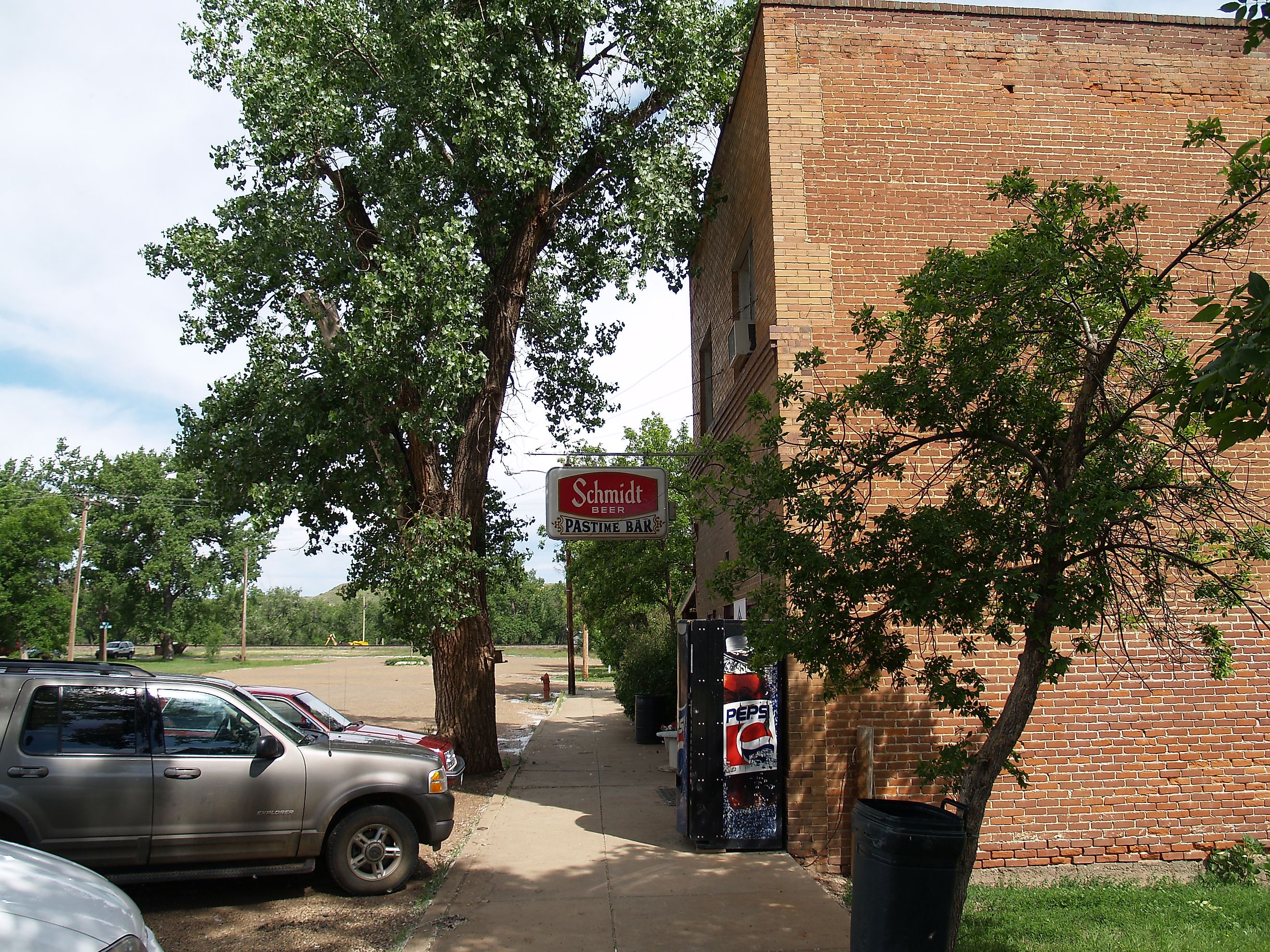
Slope County, in southwestern North Dakota, covers more than 1,200 square miles but has an estimated population of 628. Its county seat, Amidon, is so small that a 2021 KFYR television report counted 20 residents and confirmed that the community had neither a grocery store nor a gas station. The county stretches across rolling prairie, cattle ranches, and the rugged terrain of the Little Missouri Badlands.
Marmarth has a small convenience store for snacks and a few essentials, but a full grocery shopping trip requires a drive to larger communities such as Bowman, North Dakota, or Baker, Montana. The situation is a sharp reversal for Marmarth, the county's largest town. After the railroad arrived in 1907, Marmarth grew into a busy commercial center with banks, hotels, a hospital, a theater, and a grocery store. Its population exceeded 1,300 in 1920. By the 2020 Census, 101 remained.
Treasure County, Montana

When Treasure County, Montana, was established in 1919, homesteaders had already started farms and ranches across the prairie, and the railroad had brought businesses to Hysham, the county seat. The county had about 2,000 residents in 1920, but its population had fallen to 762 by 2020. Today, Treasure County has no conventional grocery store, although Hysham has small businesses that sell some food and household necessities. For a wider selection of fresh food and supplies, shoppers need to travel to Forsyth, in neighboring Rosebud County.
Located along the Yellowstone River in southeastern Montana, Treasure County is cattle and farm country. Hysham developed near a Northern Pacific Railway stop. The federal government reduced the size of the Crow Reservation in 1906, moving its boundary westward and opening land in what is now Treasure County to non-Native homesteaders. As the population declined over the following decades, the county lost many of the businesses that once served its communities.
Clark County, Idaho
At the Kilgore General Store in eastern Idaho, shoppers can pick up ice cream, soda, and a few pantry staples, but they cannot fill a grocery cart. Clark County, extending north to the Montana border, has no conventional grocery store. Its county seat, Dubois, has a gas station and convenience shopping, and Kilgore's small general store serves locals and travelers. Clark County, with 790 residents in the 2020 Census, is one of Idaho's least populated counties. Its landscape includes broad valleys, open ranchland, and the Centennial Mountains.
A century ago, the county had more than twice as many residents. Unusually heavy rainfall in 1916 and high grain prices during World War I attracted farmers who established homes and planted crops across the county. By 1920, its population had reached 1,886, and 398 farms operated within its borders. However, the agricultural boom collapsed in the early 1920s. By 1930, 124 farms remained, and the county had lost more than 40% of its residents. Rural schools closed as families moved away, and some settlements nearly disappeared. Ranching and agriculture remain important to Clark County, but its small population limits its retail options. Residents looking for fresh produce, meat, and a full selection of groceries have to travel south to St. Anthony or Rexburg, where there are conventional supermarkets.
When Grocery Shopping Means Leaving the County
Grocery shopping in these five counties takes more planning and time than a quick trip to the store. A forgotten ingredient might mean doing without it until the next shopping trip, or driving 30 miles or more to buy it. Small general stores and convenience shops help fill some of the gaps, but they cannot replace the selection of a large, full-service supermarket. Although railroad towns, oil booms, and farming settlements that once supported local grocery stores have changed a great deal, ranchers, oil workers, and longtime families still call these sparsely populated counties home. For them, a long trip to the grocery store is part of living in rural America.