The National Forests With The Most Pygmy Rattlesnakes
In Ocala National Forest, a rattlesnake can be barely a foot long, with a warning buzz quiet enough to mistake for an insect. The dusky pygmy rattlesnake lives here among the scrub and wetlands, sharing the forest with the much larger eastern diamondback. Florida's national forests protect extensive stretches of its habitat, including the wet savannas of Apalachicola and the swamp margins of Osceola. Across the state, pygmies are among the most frequently encountered venomous snakes, and populations can be locally abundant. Low pine woods give way to ponds and marshes, with ground cover where a small snake can remain concealed. Even an adult usually measures only 12 to 24 inches.
Ocala National Forest, Florida

Ocala's sand pine scrub grows on deep, sandy ground between the Ocklawaha and St. Johns rivers. Several hundred lakes interrupt the forest, and wetland vegetation occupies lower ground among the dry uplands. Pygmy rattlesnakes occur in both scrub and pine flatwoods, so their habitat extends beyond the swampy corners of this central Florida forest. Ocala's wildlife guide identifies the dusky pygmy as one of its resident venomous snakes. Dense scrub oaks grow beneath sand pines, while longleaf pine occupies neighboring sandhills. The Florida Trail passes along prairie and pond edges within the forest.
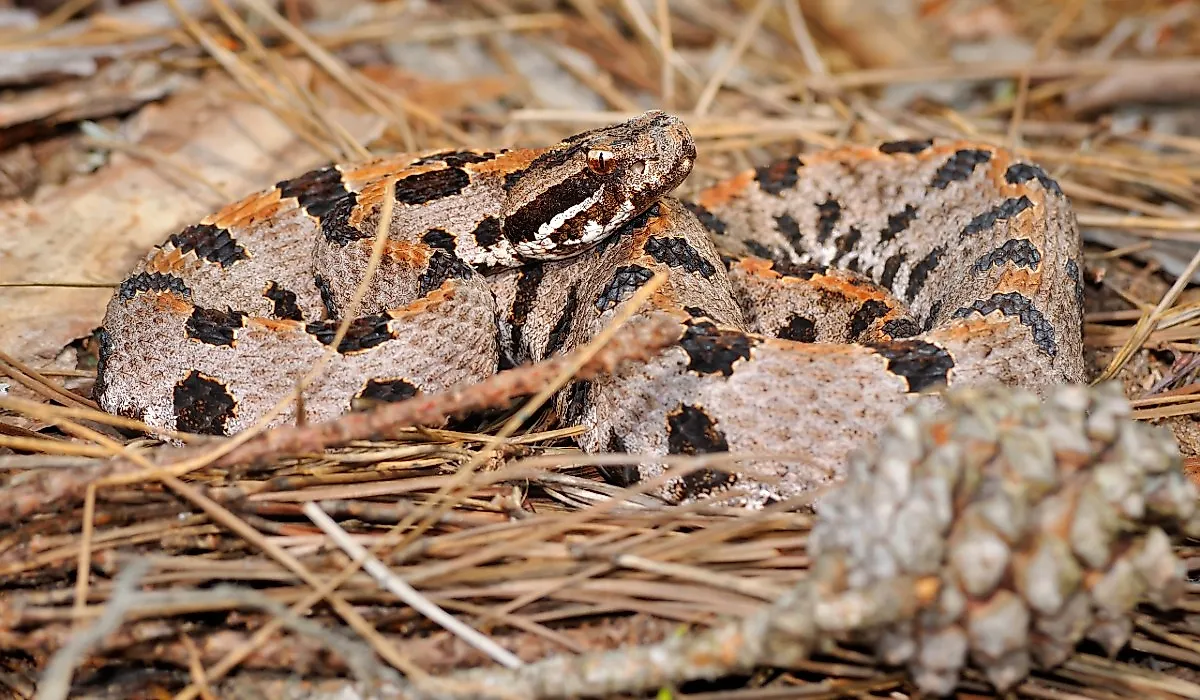
At ground level, the pygmy's gray body carries dark blotches and a reddish-brown stripe. It often stays still when frightened, relying on camouflage.
Apalachicola National Forest, Florida

Some of Apalachicola's pygmy rattlesnake habitat has very little overhead shade. In the western part of this Florida Panhandle forest, wet savannas support pitcher plants and low grasses, with pine flatwoods around them. The ground can be saturated even without an obvious stretch of standing water. Florida Natural Areas Inventory identifies pygmy rattlesnakes among the characteristic animals of these regional savannas, and field research has documented the species within the national forest.
Small, temporary ponds scattered through the pinelands dry out, keeping predatory fish from establishing permanent populations. Frogs breed in these ponds, and their young move onto surrounding land after developing beyond the tadpole stage. Frogs are among the prey eaten by pygmy rattlesnakes, which usually hunt by waiting for an animal to come within reach.
Fires every two to four years help prevent shrubs from overtaking these grassy savannas.
Osceola National Forest, Florida

A slight rise in the ground can change the woods in Osceola. Within its research natural area northeast of Lake City, longleaf pine gives way to slash pine and then pond pine in wetter flatwoods. Cypress swamp surrounds patches of mixed hardwood swamp, while intermittent streams cross the pine woods. These small changes in drainage create adjoining wet and drier habitat across otherwise nearly level ground.
A Florida Museum specimen collected in Osceola National Forest dates to October 1976. The forest contains the lowland pine flatwoods and cypress-swamp margins this snake commonly occupies in Florida. Much of the swamp in the research natural area stays flooded for the greater part of the year. Beneath parts of the neighboring pine canopy, saw palmetto grows above a ground layer of wiregrass.
Along a pond margin in Ocala or a grassy opening in Apalachicola, a pygmy rattlesnake's small size changes how people encounter it. Its rattle offers little warning at a distance, and a snake that remains still may escape notice altogether. Concealment also helps it hunt. Young pygmies wiggle bright yellow tail tips to attract prey within striking distance. Give any snake room and keep hands out of vegetation that blocks a clear view of the ground. Disturbing a pygmy rattlesnake or accidentally stepping on one accounts for most bites described by the Florida Museum. If a bite occurs, seek immediate medical attention and do not try to capture the snake.