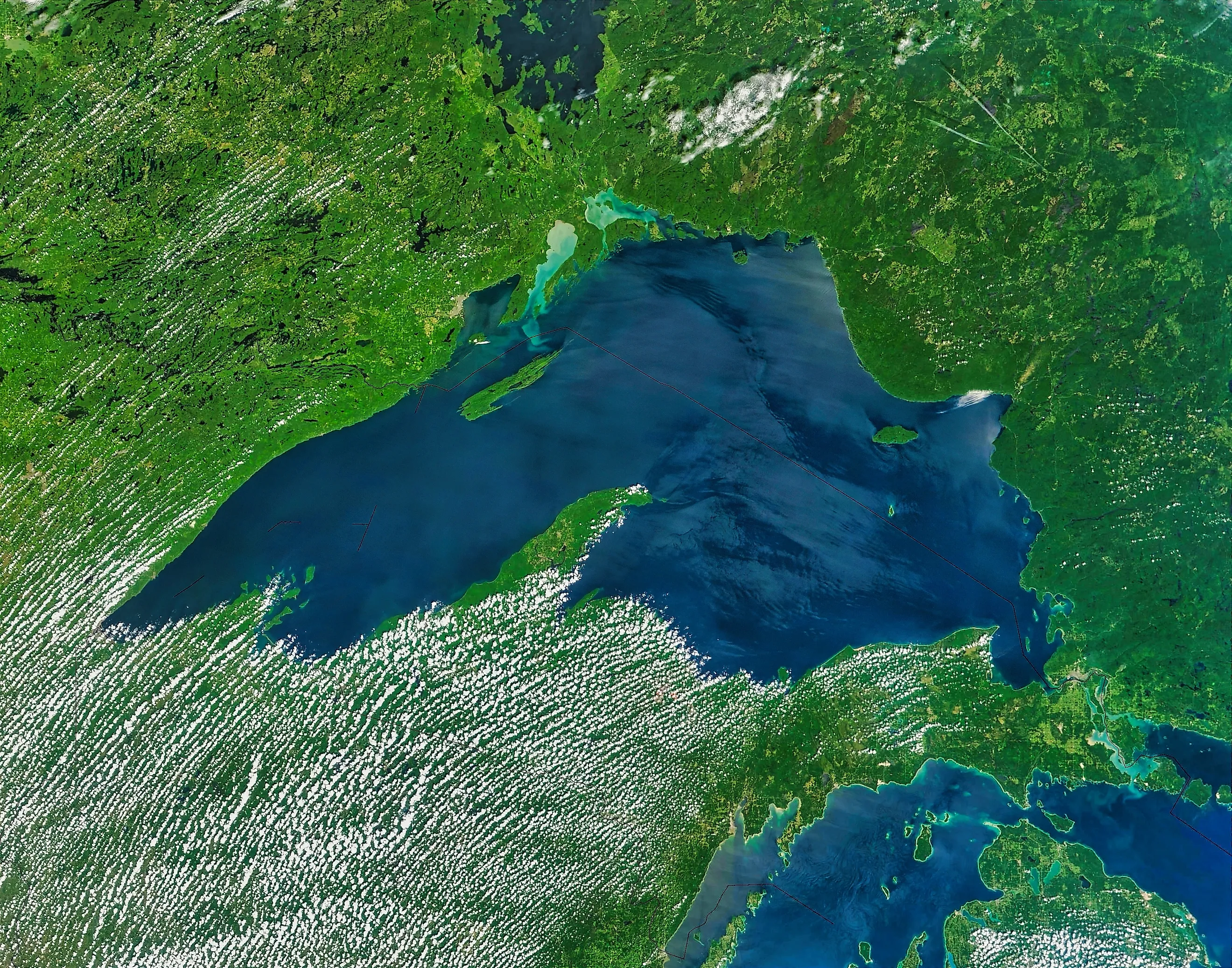
The Countries That Would Fit Inside Lake Superior
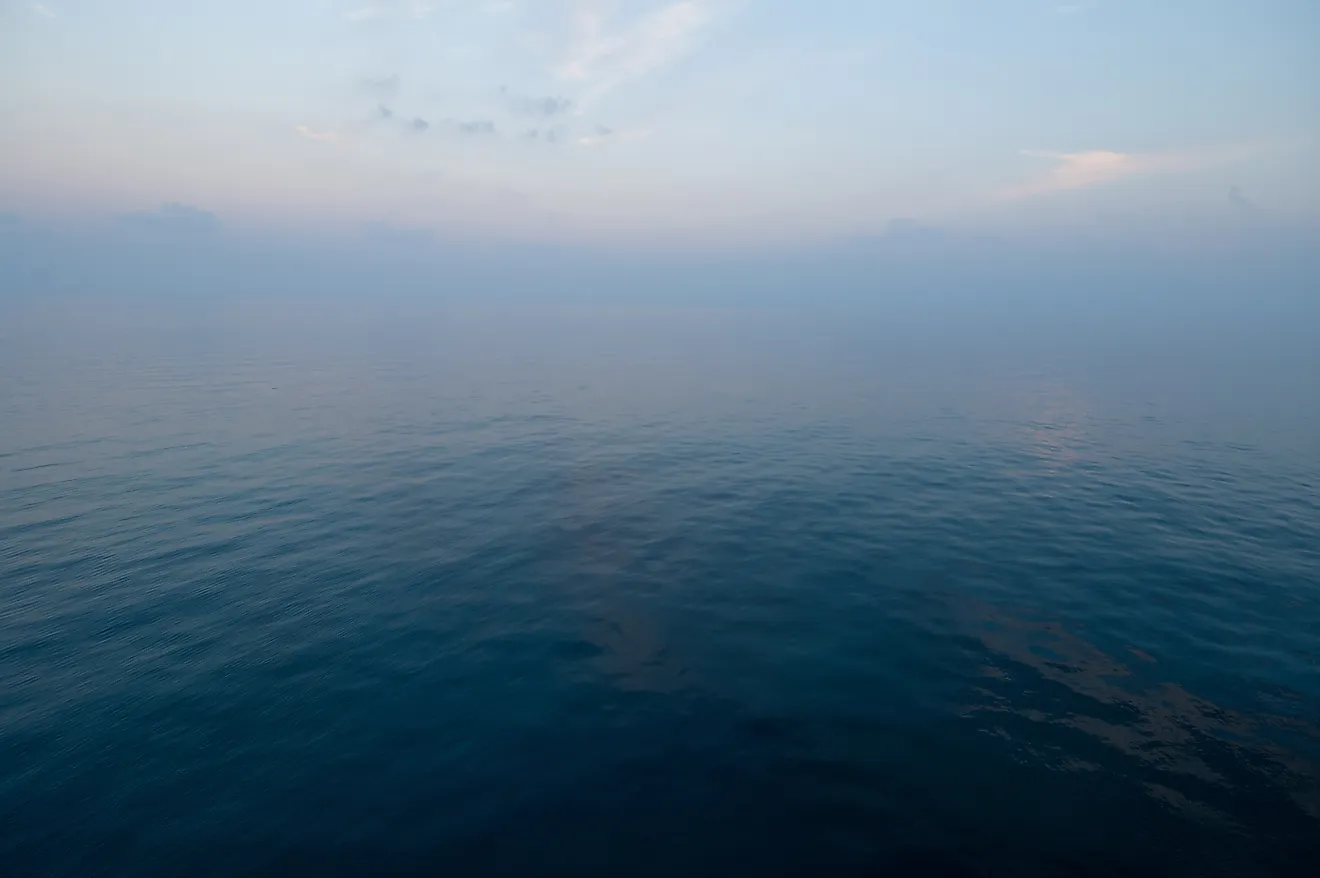
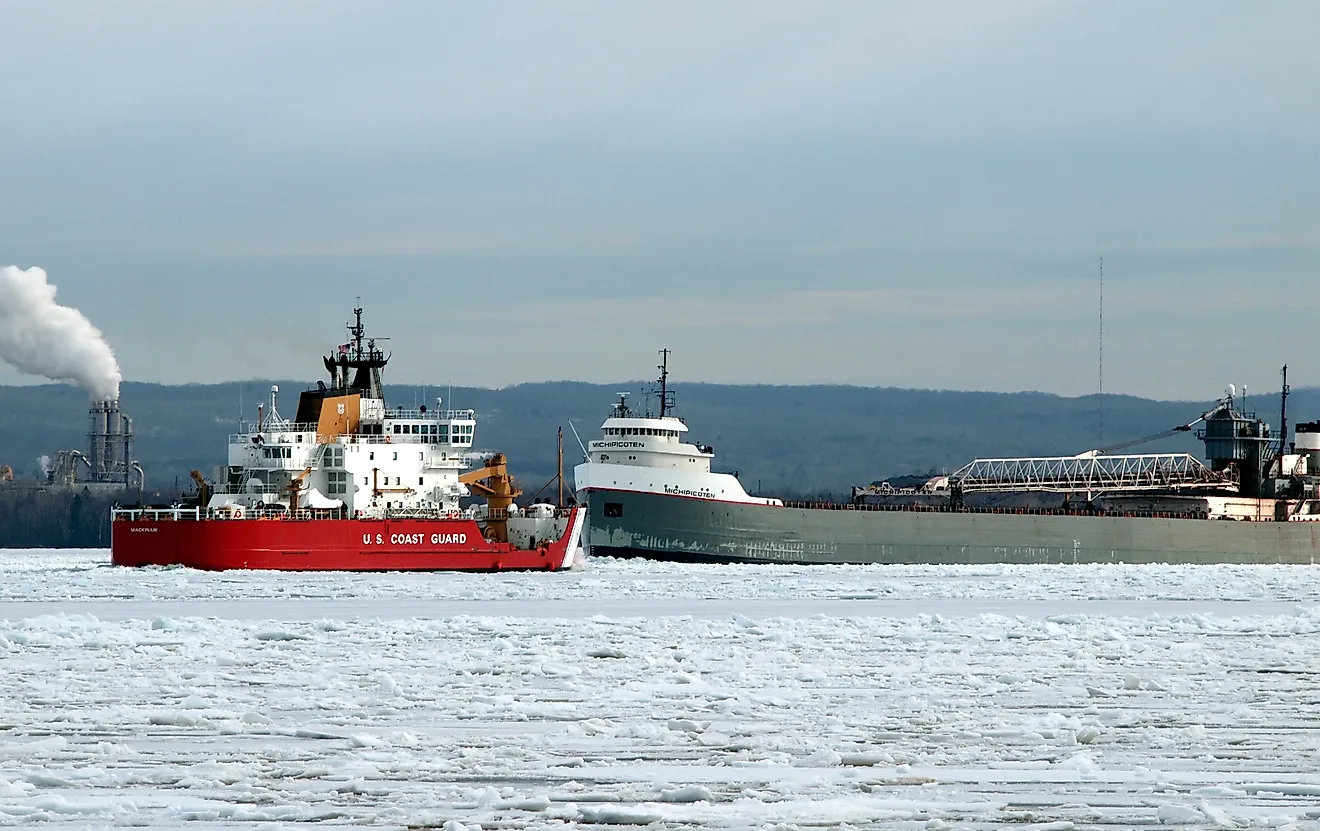
Lake Superior is the largest freshwater lake in the world by surface area, with a footprint covering 31,700 square miles and a shoreline stretching 2,726 miles. It contains 2,900 cubic miles of freshwater, more than all the other Great Lakes combined with three additional Lake Eries. If theoretically emptied out, it would cover all North America and South America in water one foot deep. And while its impressive boundary is natural and mostly unchanging, the world's geopolitical borders are man-made and always changing, providing an interesting contrast. While the two countries that Lake Superior straddles, Canada and the United States, are themselves massive, there are numerous notable countries that can fit into the footprint of Lake Superior. These are the seven largest.
Czechia (30,452 square miles)

Ironically, the largest country that can fit inside Lake Superior's footprint is Czechia, a land-locked European country with a distinct lack of natural lakes. In fact, most of Czechia's lakes aren't really lakes, they're artificially formed reservoirs. It does have several famous rivers, though, including the Elbe, Vltava, and Morava. Czechia is more known for its hilly plateaus and mountains, including the Carpathian, Ore, and Sudetic ranges.
Panama (29,037 square miles)

Panama is famous for one water body, but it's not a lake. Like Czechia, most of Panama's lakes are man-made reservoirs. The 48-mile Panama Canal is also man-made, cutting through the isthmus and linking the Pacific and Atlantic oceans for global shipping. Because of its unique S-shaped geography, Panama is one of the few countries where you can watch the sun rise over the Pacific Ocean and set over the Atlantic Ocean.
Ireland (27,133 square miles)

Ireland is home to more than 12,000 beautiful natural lakes, carved by glaciers during the last Ice Age and filled with meltwater. It is also home to the largest natural lake by surface area in the British Isles, Lough Neagh, covering 150 square miles, which would fit inside Lake Superior's Batchawana Bay. Lough Corrib is the largest natural lake completely within the Republic of Ireland. The country is also home to turloughs, seasonal disappearing lakes entirely unique to the limestone karst ecosystems of western Ireland. Without any permanent inlets or outlets, these lakes are controlled by the rise and fall of the underground water table.
Sri Lanka (25,332 square miles)

An island nation in South Asia, just south of the Indian subcontinent, Sri Lanka has three dominant regions, the Central Highlands, the Plains, and the Coastal Belt. While numerous rivers like the Mahaweli Ganga, Kelani Ganga, Aruvi Aru, and Kalu Ganga course through the geography of Sri Lanka, there are no true freshwater lakes. However, the country is famous for thousands of man-made water bodies called "tanks" and large reservoirs built over two thousand years for irrigation and farming.
Lithuania (25,200 square miles)

The largest and most populous of the Baltic nations, Lithuania is mostly flat lowlands, smoothed by glaciers during the last Ice Age. Small lakes and bogs cover most of the east and southeast part of the country, along with the dramatic rolling hills of the Baltic Highlands. The country's most notable rivers are the Neman, Neris, and Venta.
Costa Rica (19,730 square miles)

Despite its tiny footprint in Central America, Costa Rica contains more than five percent of the world's plant and animal species. Many of these species rely on the country's numerous freshwater lakes, which include volcanic crater lakes, glacial tarns in its high mountains, and tectonic lakes formed similar to Lake Superior. The largest natural lake in the country is Lake Cote, a serene freshwater crater located in Costa Rica's Northern Highlands.
Switzerland (15,940 square miles)

Switzerland is famous for its dramatic mountains, hanging valleys, and idyllic towns, and it is also famous for its lakes. Switzerland's footprint is tiny, and two of them can fit into Lake Superior. It holds more than 1,500 lakes, ranging between large, deep pools and clear blue alpine lakes high in the mountains. Its most famous lake is Lake Geneva, the largest Alpine lake in Europe, which it shares with France. With lakes and rivers covering four percent of Switzerland's surface area, it holds six percent of Europe's freshwater reserves, and the Rhone, Rhine, and Inn rivers all have their headwaters in Switzerland.
Conclusion
There are numerous other countries whose footprint would fit into Lake Superior, including Serbia, Belgium, Israel, Denmark, and the Netherlands to name a few. In fact, there are 31 countries around the globe whose footprint would easily fit inside Lake Superior, not to mention city-states like The Vatican, Monaco, and Singapore. Austria, at 32,388 square miles, could theoretically fit if Lake Superior's islands were removed, but you'd need extremely strong fingers to tuck in the corners.