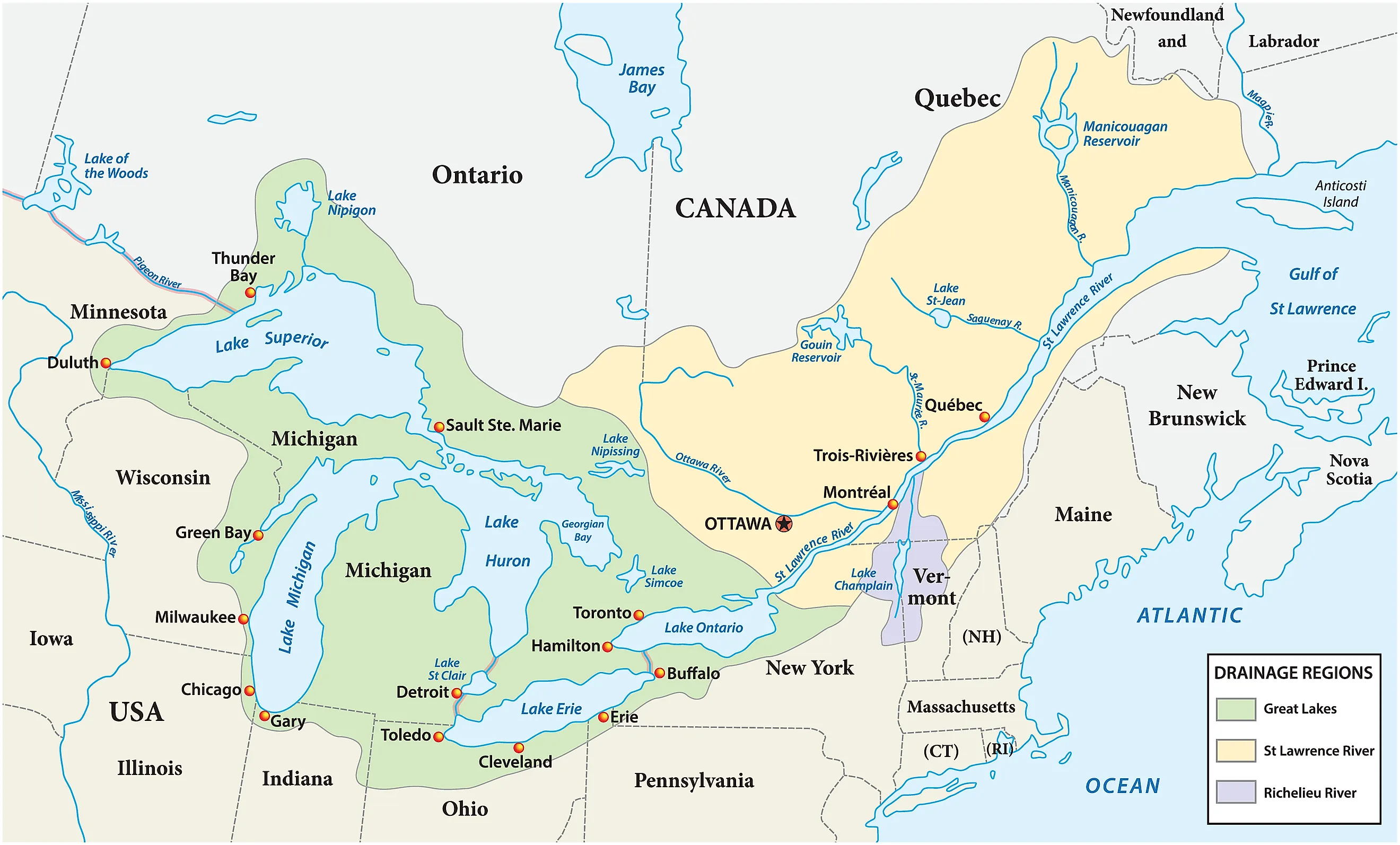
How The Great Salt Lake Compares To The Great Lakes
Lake Erie's average depth is 19 meters. The Great Salt Lake's deepest point is 10. So the shallowest Great Lake, the one this entire series has spent months using as a punchline, is on an ordinary day nearly twice as deep as the Great Salt Lake ever gets anywhere. That is the comparison in one line, and everything else makes it worse. The Great Salt Lake loses on area, loses catastrophically on volume, and it is not even made of the same substance.
It Loses On Area To All Five

In an average year the Great Salt Lake covers about 4,400 square kilometers, and that is not enough to trouble anybody here.
Lake Ontario, the smallest Great Lake by surface, is 4.3 times larger. Erie is 5.8 times larger. Michigan and Huron are both more than 13 times larger, and Superior is 18.7 times larger.
All five together cover 56 Great Salt Lakes. The largest saltwater lake in the Western Hemisphere would be a bay on Lake Huron.
On Volume It Is Not A Contest

Area is close by comparison with what happens when you add the third dimension.
The Great Salt Lake holds 18.92 cubic kilometers. Lake Erie holds 26 times that. Ontario holds 87 times, Huron 187, Michigan 260 and Superior 640.
All five together hold 22,684 cubic kilometers, which is 1,199 Great Salt Lakes. Superior alone could swallow it 640 times and would need a reminder that it had.
You Could Walk Across Most Of It
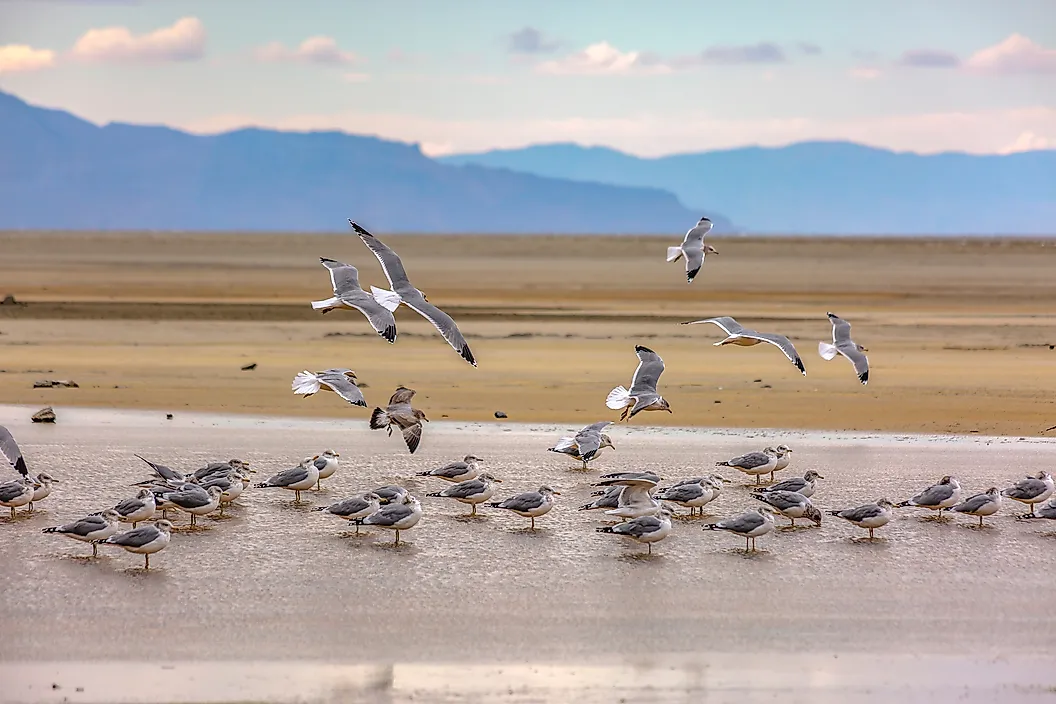
The depth figures are the reason for everything above, and they are genuinely hard to credit.
The Great Salt Lake averages 4.3 meters deep, about 14 feet, with a maximum around 10 meters. Superior averages 147 meters and reaches 406. Erie, the shallow one, averages 19 and reaches 64.
Superior's average depth is 34 times the Great Salt Lake's average and 40 times its maximum. A person standing on the bottom of the Great Salt Lake at its deepest point would be shallower than a typical spot in Lake Erie.
Its Own Size Varies By A Factor Of Three

Here is the problem with comparing the Great Salt Lake to anything, including itself.
Because it is so shallow, small changes in water level produce enormous changes in area. At its 1963 and 2022 record lows it covered about 2,460 square kilometers. At its 1986-87 record high it covered 8,547.
That is a factor of 3.5 between the same lake's own extremes. Lake Superior does not do this. Lake Superior has never surprised anybody with its dimensions.
It Has No Way Out
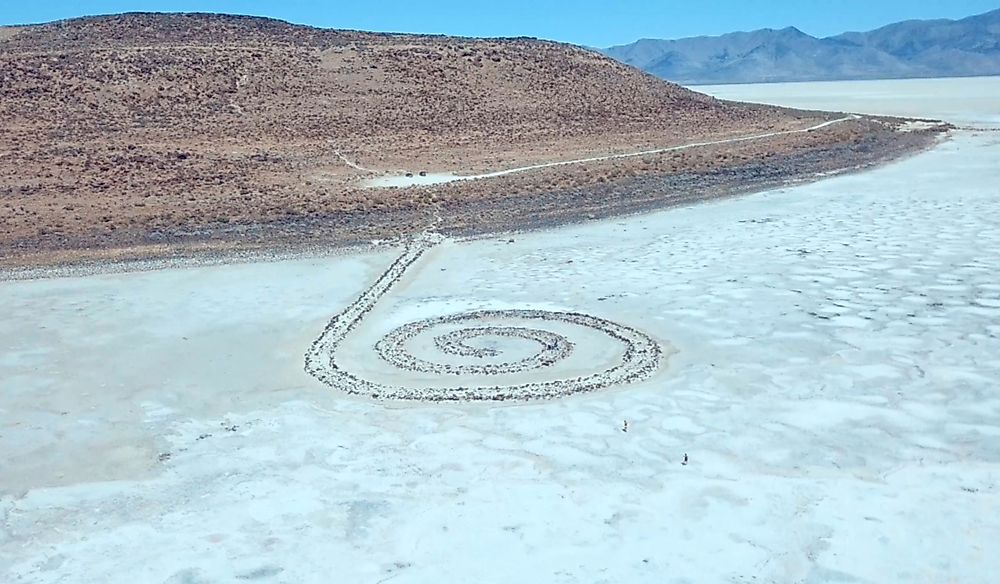
The structural difference underneath all of this is that one system drains and the other does not.
The Great Salt Lake is endorheic, with no outlet except evaporation. Water arrives from the Bear, Jordan and Weber rivers, leaves as vapor, and the minerals stay behind permanently. The Great Lakes drain to the Atlantic through the St Lawrence and flush continuously.
Which is why one is 5 to 27 percent salt and the other is drinking water for 40 million people. Same continent, opposite plumbing.
The Salt Disqualifies It Entirely

It is worth stating plainly that these lakes are not in the same category of thing.
The Great Lakes hold roughly a fifth of the world's surface fresh water. The Great Salt Lake holds none of it, being several times saltier than seawater at the upper end of its range and still saltier at the lower.
Nothing swims in it but brine shrimp and brine flies. The Great Lakes support a commercial fishery. One of these is a lake and the other is a very large brine pond with a reputation.
It Used To Be Lake Michigan
This is the fact that reframes the whole comparison, and it is almost too neat.
The Great Salt Lake is the remnant of Lake Bonneville, which at its greatest extent covered 58,000 square kilometers. Lake Michigan covers 58,000 square kilometers. Bonneville was, to the nearest thousand, exactly the size of a Great Lake.
It was also over 1,000 feet deep, which would have put it ahead of Michigan, Huron, Erie and Ontario on depth and behind only Superior. For a few thousand years, Utah had a sixth Great Lake.
Thirteen Times Smaller Than Its Own Ancestor

What happened to Bonneville is the same thing happening now, just slower and with witnesses.
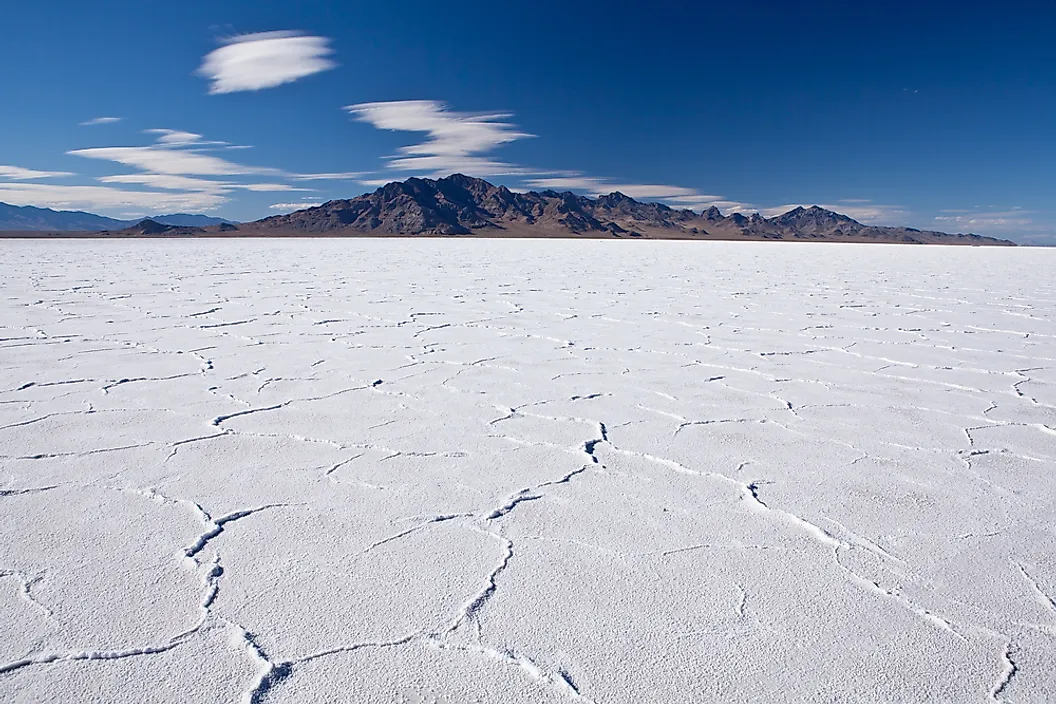
Bonneville covered roughly 13 times the area of the modern Great Salt Lake. The rest evaporated, leaving the Bonneville Salt Flats and a shrinking brine remnant in the lowest part of the basin.
The current lake is the puddle at the bottom of a drained bath, and the ring around the tub is 58,000 square kilometers wide.
It Is Still Going

The shrinkage is not a historical process, which separates it from every Great Lake comparison in this series.
In November 2022 the lake hit a record low elevation of 4,188.3 feet, nearly 12 feet below its historic average and three feet below the previous 1963 record, covering around 950 square miles. Utah's own state data describes the lake at that point as covering about 800.
Two strong snowpack years then raised it about 6.5 feet between November 2022 and May 2024, which helped and did not solve it.
Shallow Lakes Are Fragile Lakes

The pattern running through this entire series applies here more sharply than anywhere.
Lake Winnipeg is shallow and threatened. The Aral Sea was shallow and is now a desert. Lake Nicaragua is shallow and sits under a vast catchment. The Great Salt Lake is shallower than all of them, with a 55,685 square kilometer catchment feeding a basin averaging 14 feet deep.
Depth is what protects a lake from its own watershed. Superior has 147 meters of protection. The Great Salt Lake has 4.3, and it is spending them.
The Scoreboard

The Great Salt Lake finishes last against all five Great Lakes on surface area, last on volume by factors running from 26 to 640, and last on depth by so much that Lake Erie's average exceeds its maximum. All five together are 56 times its area and 1,199 times its water.
It also cannot be compared reliably to anything, since its own surface varies by a factor of 3.5 depending on the decade. It is too salty to drink, too shallow to swim in properly and too variable to measure. Its ancestor was the size of Lake Michigan and a thousand feet deep, which is the only version of this lake that would have belonged in the conversation, and it dried up fourteen thousand years ago.