The Great Lakes Freighters That Sank With All Hands
The body of John Groundwater, chief engineer of the freighter Charles S. Price, came ashore on the Ontario side of Lake Huron in November 1913 wearing a lifebelt from a different ship, the Regina. Nobody from either crew survived, so for a while that lifebelt was one of the few clues to what had happened out on the lake. When a Great Lakes freighter goes down with everyone aboard, the explanation has to come from objects like that one and, sometimes many decades later, from the wreck itself. Two of these ships have never been found.
This week marks 51 years since the Edmund Fitzgerald sank with all 29 men aboard, and it is still the largest ship ever lost on the lakes. Its crew was talking by radio with another freighter that evening, and even so, investigators were left without a firsthand account of the ship's final minutes.
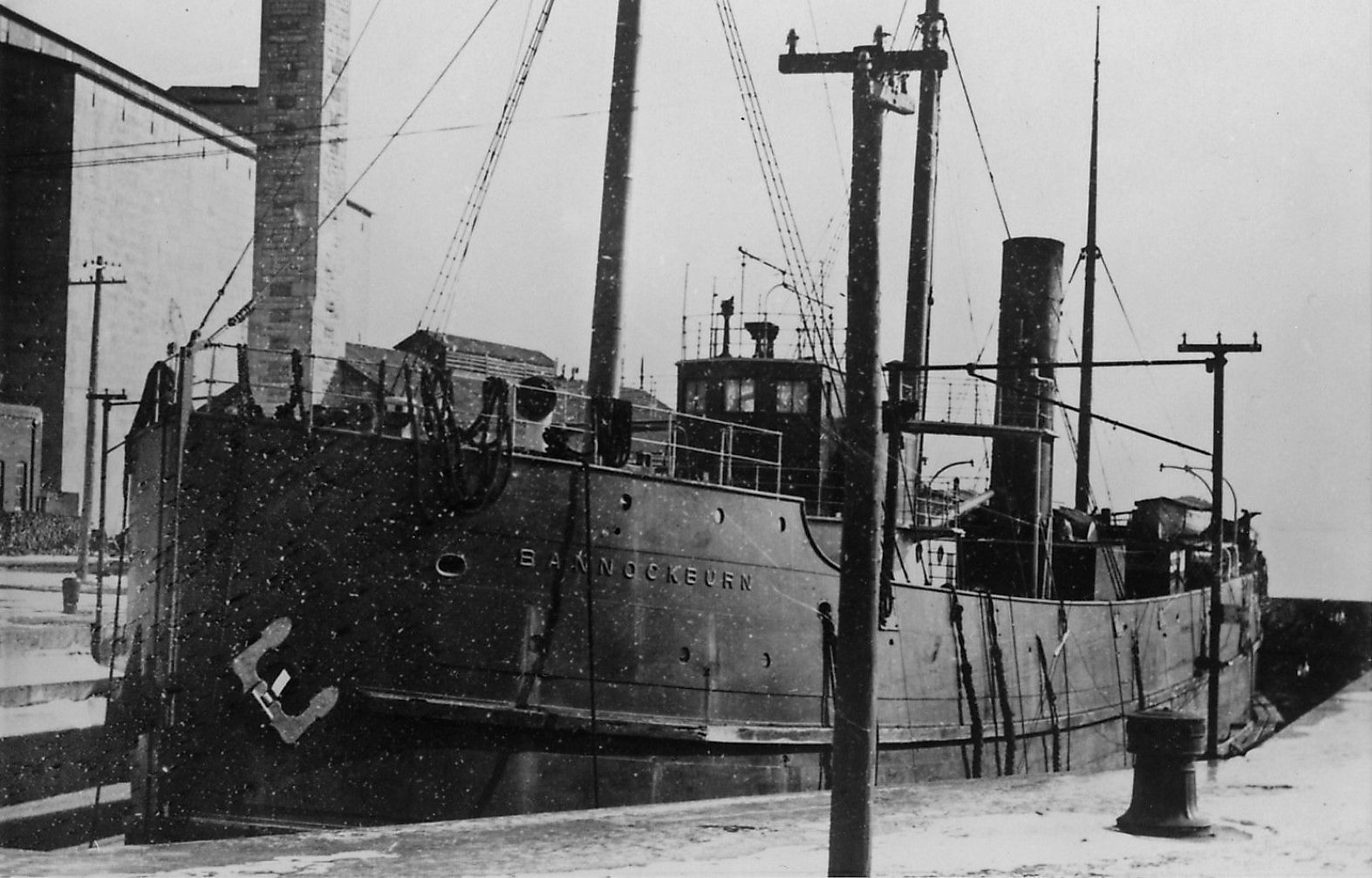
Bannockburn, Lake Superior (1902)

The Bannockburn was last seen on Lake Superior on November 21, 1902, by Captain James McMaugh of the steamer Algonquin, who lost sight of it a short time later and could not find it again. The 245-foot freighter was downbound, the term for a ship heading toward the lower lakes, with a load of wheat from Fort William, Ontario, and it disappeared in snowy weather with its crew of 20 and without any distress signal that anyone observed.
A cork life preserver from the Bannockburn washed up on a beach on December 12, and it is still the only piece of the ship ever found. The crew's bodies and the wreck itself have never turned up. McMaugh thought the boiler might have exploded, and others have pointed to Superior Shoal, a reef that had not yet been charted when the Bannockburn sailed.
Charles S. Price, Lake Huron (1913)

The Charles S. Price was found the day after it capsized, in the November storm of 1913 that sank 12 ships with all hands, eight of them on Lake Huron, and killed about 250 people across the lakes. On November 10, a hull was spotted floating upside down about 13 miles northeast of Port Huron, Michigan, with only its bow above the water.
Newspapers first guessed it was the Regina, but the color of the hull did not match, and on November 15 a diver went down and identified the 504-foot Price, which had left Ashtabula, Ohio, with a load of coal and a crew of 28. The hull sank about a week after it was found, and it now lies upside down in 94 feet of water roughly 11 miles south of Lexington, Michigan, inside the Sanilac Shores Underwater Preserve.
Groundwater's body came ashore below Grand Bend, Ontario, still wearing the Regina lifebelt, and the discovery led to speculation that the Price and the Regina had collided. Divers who examined the Price in 1916 found no damage consistent with a collision, although they noted significant damage to the stern. The wreck is also missing its rudder, and a freighter without a rudder cannot be steered in heavy seas.
Henry B. Smith, Lake Superior (1913)

On Lake Superior, the Henry B. Smith steamed out of Marquette, Michigan, with a load of iron ore during a lull in the same storm. Loading had been delayed because the ore froze in the dock's hoppers, and crewmen were seen still closing hatches as the ship left. Witnesses watched it turn to port, possibly heading for shelter behind Keweenaw Point. Two days later, debris from the Smith came ashore along the beaches of Chocolay Bay, and only two of the 25 men aboard were ever recovered.
A team of wreck hunters that included Jerry Eliason, Ken Merryman and Kraig Smith found the ship on May 24, 2013, about 30 miles north of Marquette and more than 500 feet down. It sits upright but broken in two near the middle, with the bow and stern largely intact among the spilled ore, and on a return trip that June their camera captured the name Henry B. Smith on the stern.
James Carruthers, Lake Huron (1913)

The James Carruthers had been launched less than six months before the 1913 storm sank it on Lake Huron. The 550-foot ship was Canada's newest and largest freighter, and it was carrying wheat from Fort William when it went down on November 9 with all 22 crew members. Debris and several bodies came ashore around Point Clark, Ontario, on the stretch of Canadian shore where most of the storm's dead were recovered, and the sailors who could not be identified were buried in the unknown sailors' grave at Maitland Cemetery in Goderich. Of the eight ships the storm sank with all hands on Lake Huron, the Carruthers was the last to be found. Shipwreck hunter David Trotter and Undersea Research Associates located it on May 26, 2025, upside down in 190 feet of water about 20 miles east of Harbor Beach, Michigan.
Benjamin Noble, Lake Superior (1914)

The Benjamin Noble was identified by the railroad rails in its hold. In 2004, members of the team that would later find the Henry B. Smith were searching Lake Superior for a different wreck, the Robert Wallace, when side-scan sonar picked up a hull about eight miles off Knife Island, near Knife River, Minnesota, and a camera lowered into the cargo hold showed the rails. The Noble lies 365 feet down, mostly intact, with its lifeboats and bell still aboard, and it was added to the National Register of Historic Places in 2007.
Those rails also made the ship top-heavy. The 239-foot Noble was heavily loaded with them on its first trip of the 1914 season, and the historian Dwight Boyer blamed deliberate overloading combined with the ship's unusual design, which left its deck low to the water. It sank in a storm in late April, and its hatch covers washed up on a beach near Duluth, followed a day later by the pilot house. The captain had not filed a crew list for that first trip, so the number of men aboard is put at between 16 and 20, and only 13 of their names are known.
Clifton, Lake Huron (1924)

The Clifton, a whaleback freighter with a rounded hull, was carrying crushed stone on Lake Huron when it disappeared on September 21 or 22, 1924, with a crew of more than two dozen. Painted sticks from the ship were picked up on September 26 about 24 miles northeast of the Pointe aux Barques Light, and a life raft turned up on October 1. Hatch covers, the forward end of the pilot house and a cabin door were also recovered, and none of the crew's bodies ever came ashore.
That debris was the only trace of the Clifton for more than 90 years. David Trotter found the wreck in 2016, about 100 miles from where several shipwreck hunters had believed it sank, lying heavily on its port side with the first 40 feet of the bow destroyed. The ship's newly installed self-unloading gear, conveyor equipment that let it discharge its own cargo, had long been suspected of breaking loose, but Trotter's divers found it still in place, and he concluded that a very large wave caught the Clifton broadside.
Kamloops, Lake Superior (1927)

Members of the Kamloops crew were found on Isle Royale the spring after the ship disappeared on Lake Superior. On May 26, 1928, two bodies turned up at Twelve O'Clock Point on Amygdaloid Island, at Isle Royale, both wearing life preservers stenciled KAMLOOPS. Fishermen found six more in early June, along with pieces of the superstructure and half a lifeboat, and nine bodies were eventually recovered. The four who could not be identified were buried in Thunder Bay, Ontario, where a memorial stone was placed in 2011.
The Kamloops was a 250-foot package freighter, built to carry general cargo such as the papermaking machinery and shoes aboard on its last trip, and the captain of the Quedoc was the last to see it, on the night of December 6, 1927, near the end of the shipping season. Twenty-two people were aboard, including two stewardesses, Jennet Grafton and Alice Bettridge. Sport divers found the wreck on August 21, 1977, on its starboard side at the base of an underwater cliff, deep enough that the National Park Service advises against diving it.
About a year after the sinking, a trapper near the Agawa River on the Ontario shore found a note in a bottle signed by Bettridge, although its authenticity has been questioned. It read, "I am the last one left alive, freezing and starving to death on Isle Royale. I just want mom and dad to know my fate."
Andaste, Lake Michigan (1929)

The Andaste carried no radio when it passed the Grand Haven harbor piers on Lake Michigan at 9:03 p.m. on September 9, 1929, the last time anyone saw it. The ship was probably overloaded with about 2,000 tons of sand and gravel. Its wreck has never been found, and the Michigan Shipwreck Research Association has been searching for it since 2006.
Wreckage, including a cabin door and parts of the hatches, was found floating southwest of Holland on September 12, and the bodies of 16 of the 25 men aboard washed ashore between Holland and Grand Haven, 11 of them in life jackets. The youngest of the crew, steward's assistant Earl Zietlow, was 14. A pencil note on a plank, signed with the initials of Captain Albert L. Anderson, read, "Worst storm I have ever been in. Can't stay up much longer. Hope to God we are saved. A.L.A.," though some doubted that he wrote it. A coroner's jury ruled that the ship had been lost for unknown reasons at an unknown location.
William B. Davock, Lake Michigan (1940)

The Armistice Day storm of November 11, 1940, killed at least 59 sailors on Lake Michigan, and two freighters went down with every man aboard. The William B. Davock, a 420-foot ship carrying coal for Chicago, had 33 crew members, and the 380-foot Anna C. Minch had 24.
The Minch was located four days later, when Pentwater fisherman Clyde Cross spotted a wind vane sticking out of about 40 feet of water a mile and a half south of Pentwater. Three divers found the Davock in May 1972, upside down and more than 200 feet down off Little Sable Point. A 2014 survey of that wreck found its broken rudder jammed against the propeller, with one or more blades snapped off, which would have left the ship with no steering or propulsion.
Bodies from the Davock washed ashore near Ludington, where the Salvation Army building served as a temporary morgue, and none of the Minch's crew was ever recovered. Three unidentified sailors were buried in Ludington's Lakeview Cemetery, where a marker memorializes the crews of both ships, and Michigan historical markers on Lakeshore Drive in Ludington and on South Hancock Street in Pentwater describe the storm.
Edmund Fitzgerald, Lake Superior (1975)

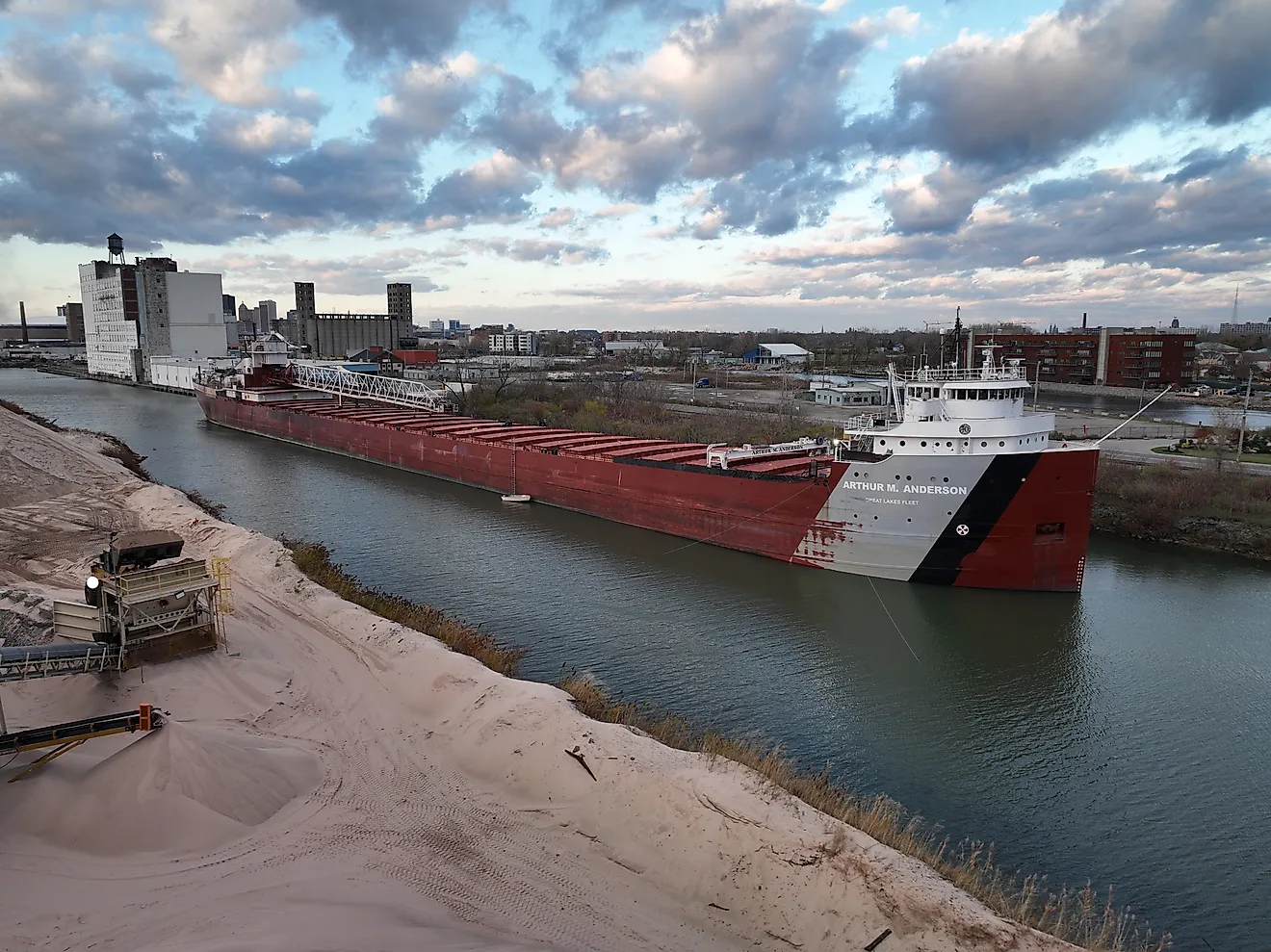
The Edmund Fitzgerald's crew was in radio contact with the Arthur M. Anderson, another freighter out on Lake Superior, on the evening of November 10, 1975. The last message, sent at about 7:10 p.m., was "We are holding our own." The Anderson lost radio and radar contact with the Fitzgerald about ten minutes later without receiving a distress call. The crew's final words describe a ship still riding out the storm, and the bodies of the 29 men aboard were never recovered.
Four days later, a Navy patrol plane located the wreck with a magnetic anomaly detector, an instrument that picks up the disturbance a large steel object makes in Earth's magnetic field. In 1976, the unmanned submersible CURV III found the ship in two large pieces 530 feet down. The Fitzgerald's bell was raised on July 4, 1995, and is displayed at the Great Lakes Shipwreck Museum at Whitefish Point, Michigan. Each November, the Mariners' Church of Detroit rings its bell 29 times for the crew and a 30th time for the many other sailors lost on the lakes.
The clearest mechanical answers to come out of these wrecks both involve a rudder. Divers found no collision damage on the Charles S. Price in 1916, which weakened the collision theory that grew out of the Regina lifebelt on John Groundwater's body, and the wreck is missing its rudder. In 2014, a survey of the William B. Davock found its broken rudder jammed against the propeller, which would have left the ship unable to steer or move under power. The Henry B. Smith, broken in two off Marquette, and the Clifton, with its unloading gear still in place, were found too, and the causes of both losses still rest on theory. The Bannockburn and the Andaste have never been located, so the evidence for those two crews comes down to a cork life preserver from 1902 and a pencil note on a plank from 1929.