Who Were The Roman Empire’s Biggest Rivals?
The Roman Empire was the most dominant force in Europe and the broader Mediterranean world for centuries. It didn’t achieve this status easily. Throughout its history, Rome experienced many challengers and rivals. Some, like Carthage, forced it to become stronger in the long run. Others, like Barbarians and the Ottomans, were major contributing factors to the end of the Roman Empire.
Carthage
Carthage was founded in the 9th century BCE by Phoenician settlers from Tyre (a city in modern-day Lebanon). Beginning as a small city-state in North Africa, it grew into an empire over the next 500 years. This brought it into competition with another rising Mediterranean power, the Roman Republic.
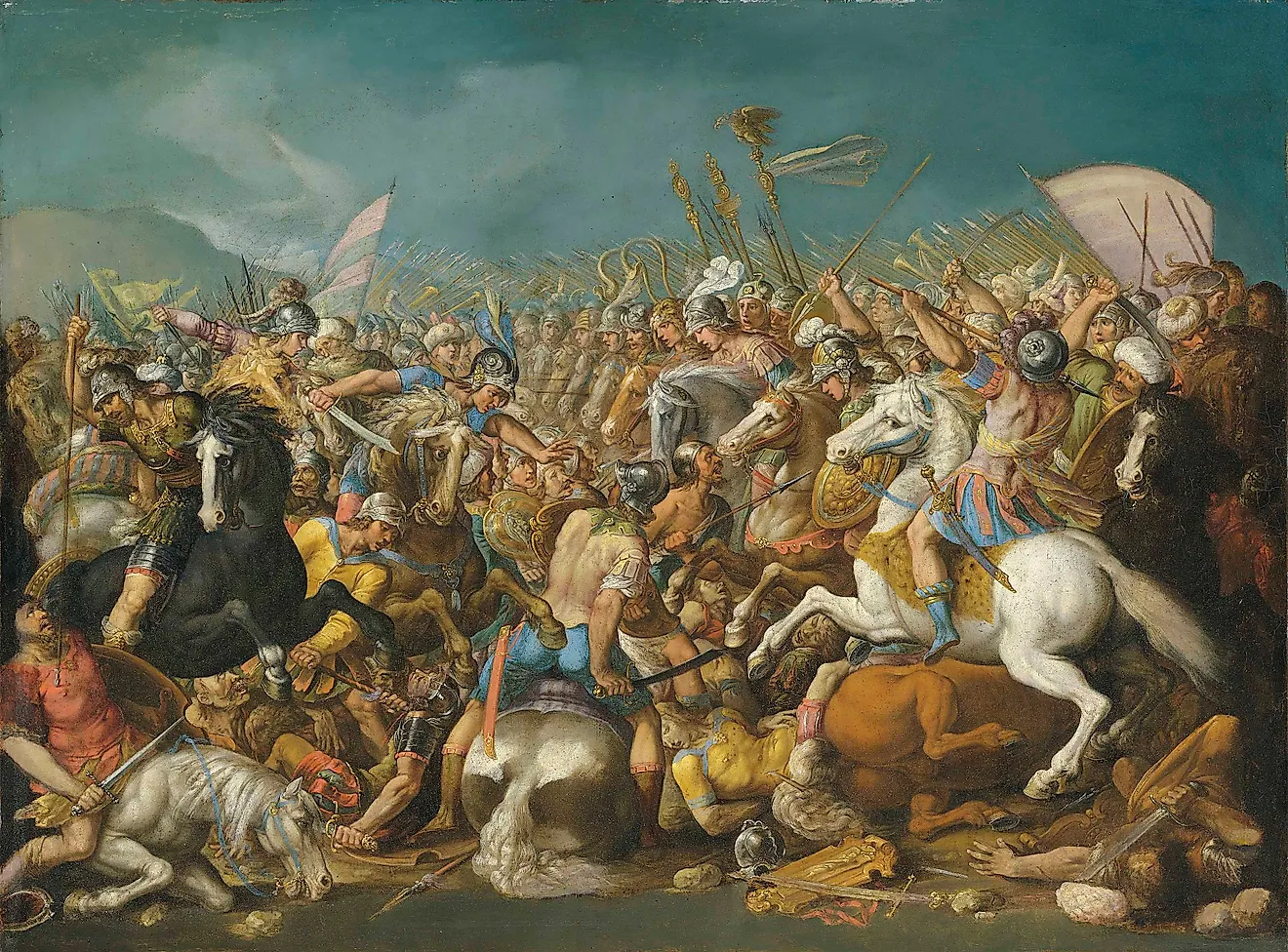
Rome and Carthage engaged in three conflicts from 264 to 141 BCE. Known as the Punic Wars, the first (264 to 241 BCE) was fought for control over Sicily. Initially, it appeared that Carthage would decimate Italy. A traditional seapower, it had a distinct advantage over the land-based Roman army. However, Rome adapted and quickly built up a navy that allowed it to win.

Rome was again forced to adapt during the Second Punic War (218 to 201 BCE), in which Carthage’s best general, Hannibal Barca, marched his army of soldiers and war elephants across the Alps. This caught the Romans off guard and put them on the defensive. When it appeared all was lost, dictator Quintus Fabius Maximus Verrucosus introduced the Fabian Strategy. The goal of this approach was to avoid all-out conflict and take advantage of superior supply lines. The strategy worked, and Rome managed to beat Hannibal in 201 BCE.

The Third Punic War (149 to 146 BCE) was the shortest and most decisive. Driven by paranoia rather than military necessity, Rome sent a massive land army to destroy Carthage once and for all. They besieged the city for three years, the first two of which saw little progress due to poor discipline and fierce Carthaginian resistance. The tide turned under the leadership of general Scipio Aemilianus, who finally took the city in the spring of 146 BCE. The city was leveled to the ground, and its inhabitants were killed or sold into slavery. This marked the end of Carthage.
The Parthian Empire

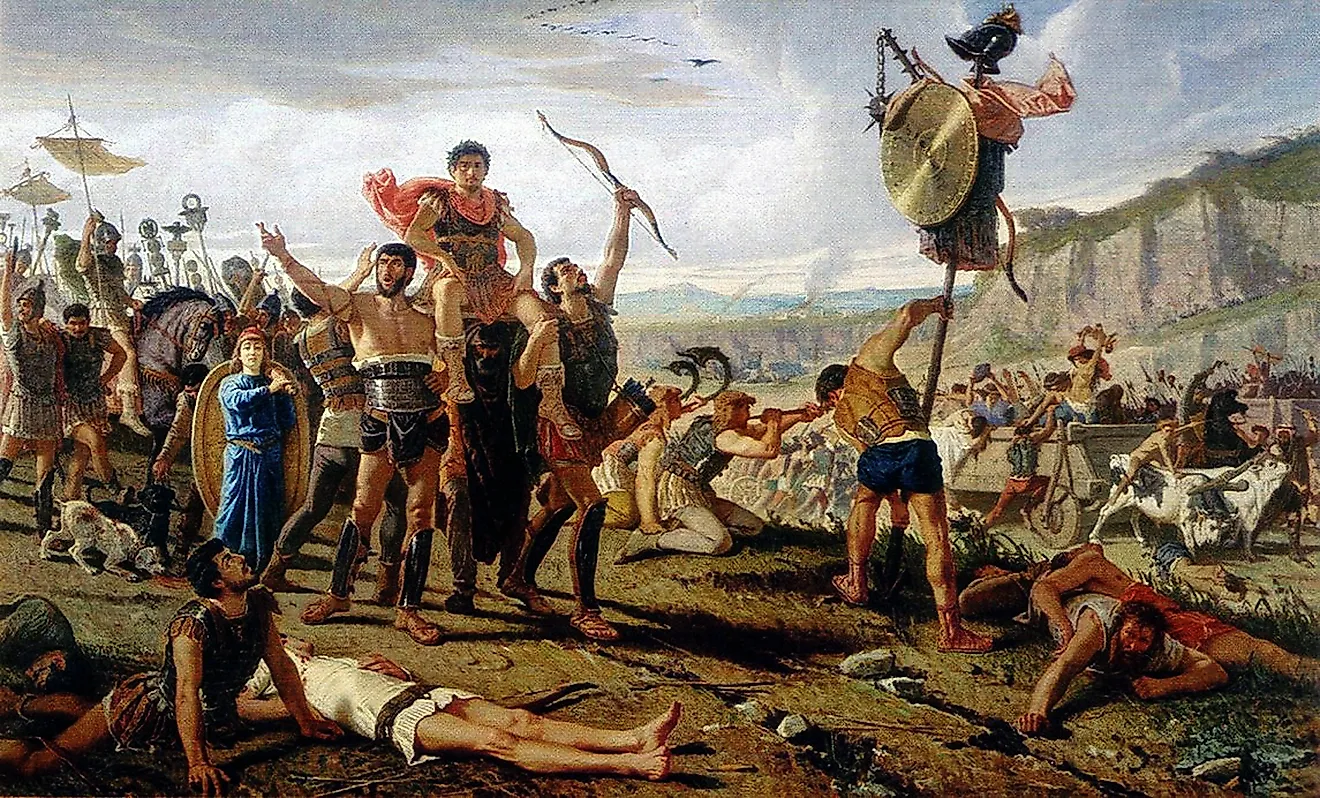
From the 1st century BCE to the 3rd century CE, the Parthian Empire was a constant threat. Located in modern-day Iran, Mesopotamia, Afghanistan, and Pakistan, it controlled the crucial Silk Road trade route that connected the Western and Eastern worlds. The Parthians also had highly effective armies that could match the Romans in battle. They demonstrated this fact in 53 BCE when Roman general Marcus Licinius Crassus invaded Parthia. He was subsequently decimated by Parthian horse archers in the Battle of Carrhae. From that point onwards, the Parthian-Roman rivalry resembled a cold war with intermittent hot flashes. Neither side made any meaningful gains, and they existed in a stalemate for centuries.
The Sasanian Empire

The Sasanian Empire emerged as the new dominant Persian power in 224 CE. More centralized and effective than the Parthians, many historians argue that they were Rome’s greatest long-term rival. The sheer power of the Sasanians was demonstrated in 260 CE when their king, Shapur I, captured Roman emperor Valerian alive in battle. This was the first time a Roman emperor had been captured in such a manner.
Despite being more powerful, the Sasanians found themselves in a similar situation to the Parthians: fighting endless wars against the Romans with little to no progress. This continued even as the Western Roman Empire fell, since the Eastern Roman Empire persisted. Eventually, being forced to constantly expend resources caught up with the Sasanians, and they fell to the Rashidun Caliphate in the 7th century CE.
Barbarians

Barbarians had a complicated relationship with the Roman Empire. To briefly define terms, a barbarian was anyone outside of the Roman political, cultural, or linguistic sphere. They included Germanic peoples like the Visigoths, Franks, and Vandals, and Central Asian peoples like the Huns.
Perhaps the most consequential group was the Visigoths (or Goths). In 376 CE, they entered the Roman Empire seeking refuge from the Huns. The Romans allowed them to do so, but treated them terribly. This resulted in the Goths rebelling and Emperor Valens being killed in the Battle of Adrianople in 378 CE. The Visigoths then sacked Rome in 410 CE. All these factors, paired with systemic problems in the government and economy, led to the end of the Western Roman Empire in 476 CE.
The Ottoman Empire

While barbarians helped bring about the fall of Western Rome, the Eastern Empire persisted for the next thousand years. Known retroactively as the Byzantine Empire, it was a major power in its own right and even briefly regained much of Western Rome’s former territory under the reign of Justinian I.
By the 11th, 12th, and 13th centuries CE, the Eastern Roman Empire was in trouble. The sack of its capital, Constantinople, during the Fourth Crusade had left it weak. This weakness was exacerbated by the rise of other powers in the region, the most notable of which was the Ottoman Empire.
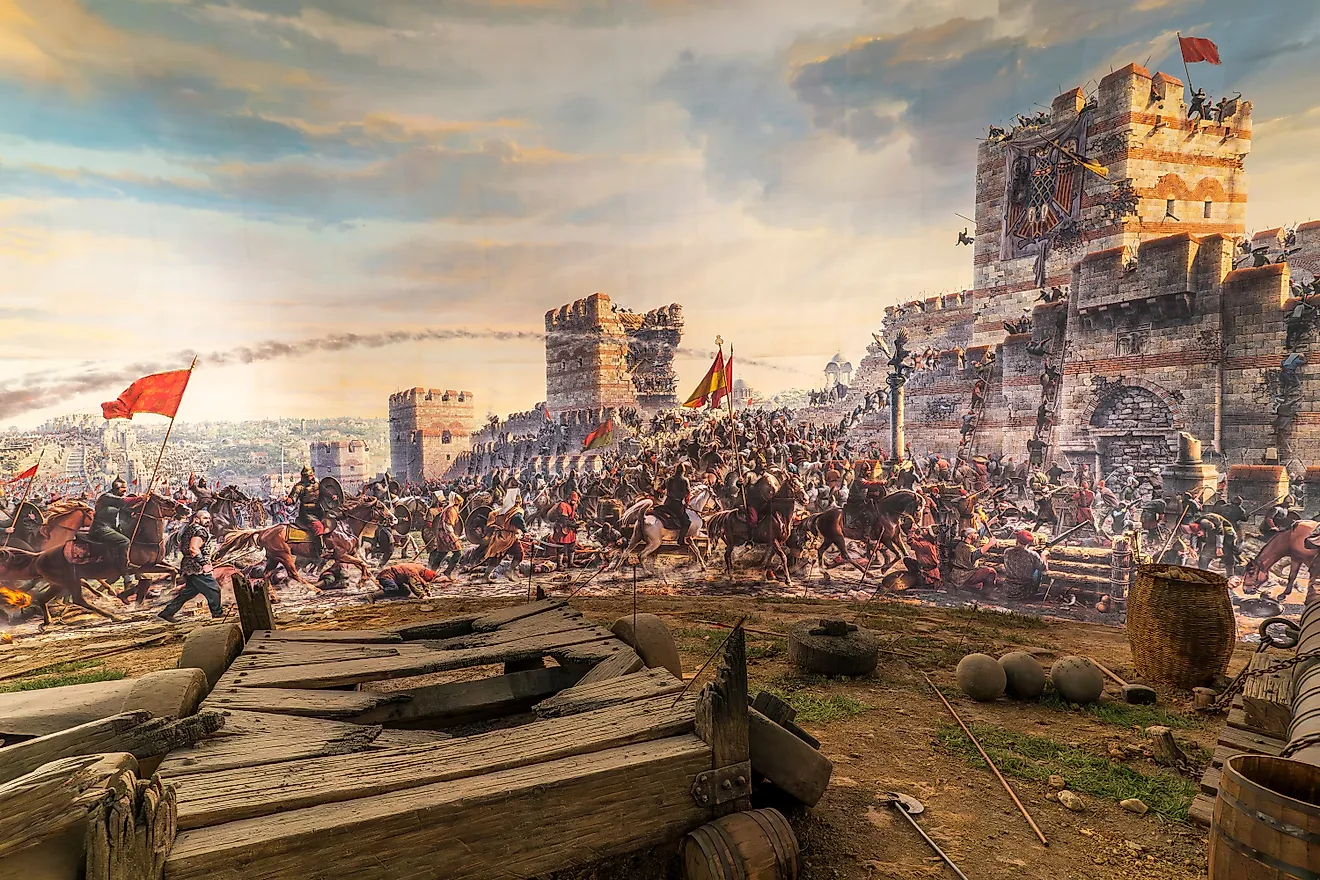
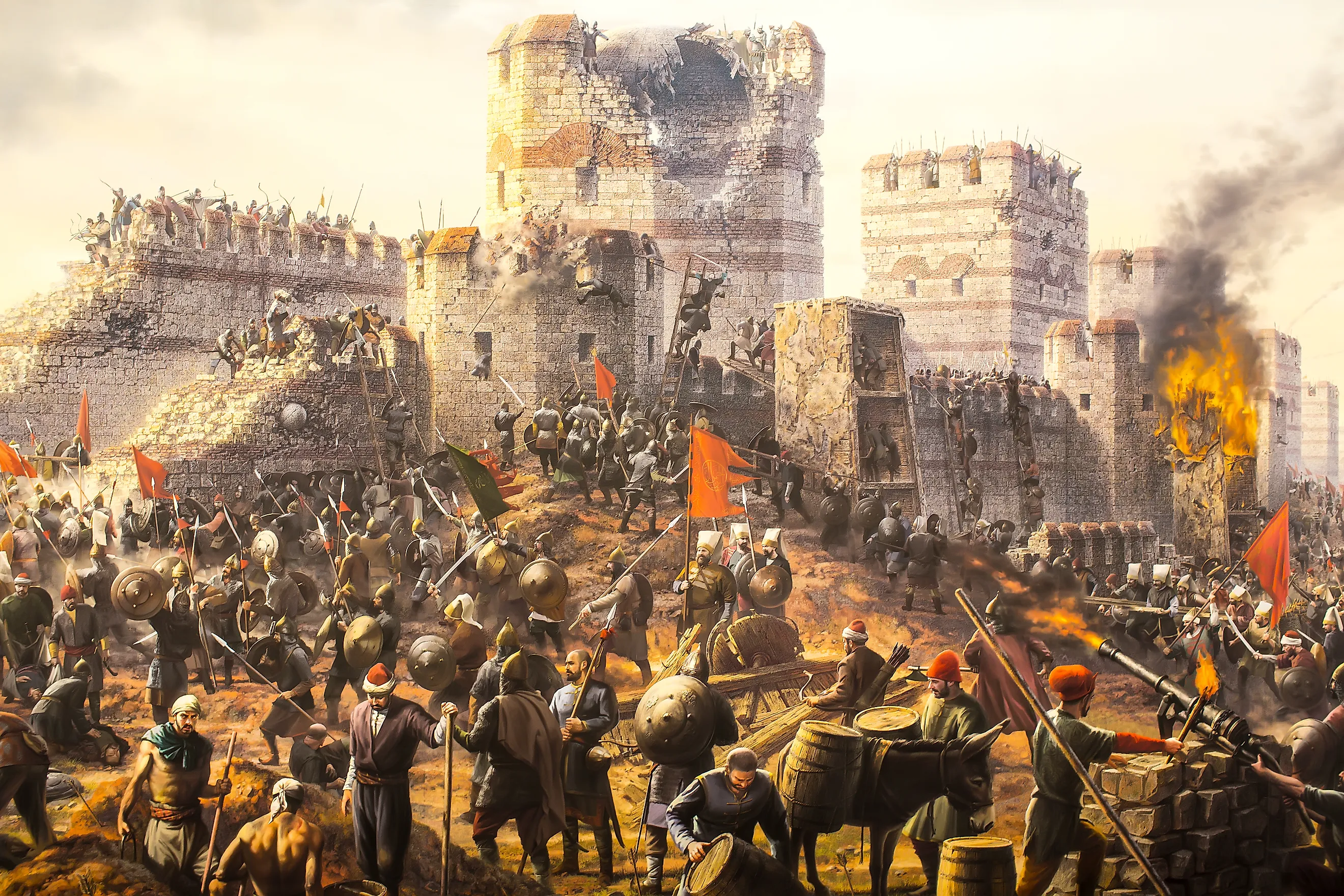
The Ottoman Empire began in 1299 CE as a small Anatolian state. Its strong founding myth and military focus allowed it to unite many surrounding states. With this combined power, it could now take on the Byzantines. For 150 years, the Ottomans gradually captured territory in the Balkans and northwestern Anatolia. This culminated in the siege of Constantinople in 1453 CE. Lasting 53 days, the city fell on May 29th, as did the last remnants of the Roman Empire.