The Worst Atrocities Of The Roman Empire
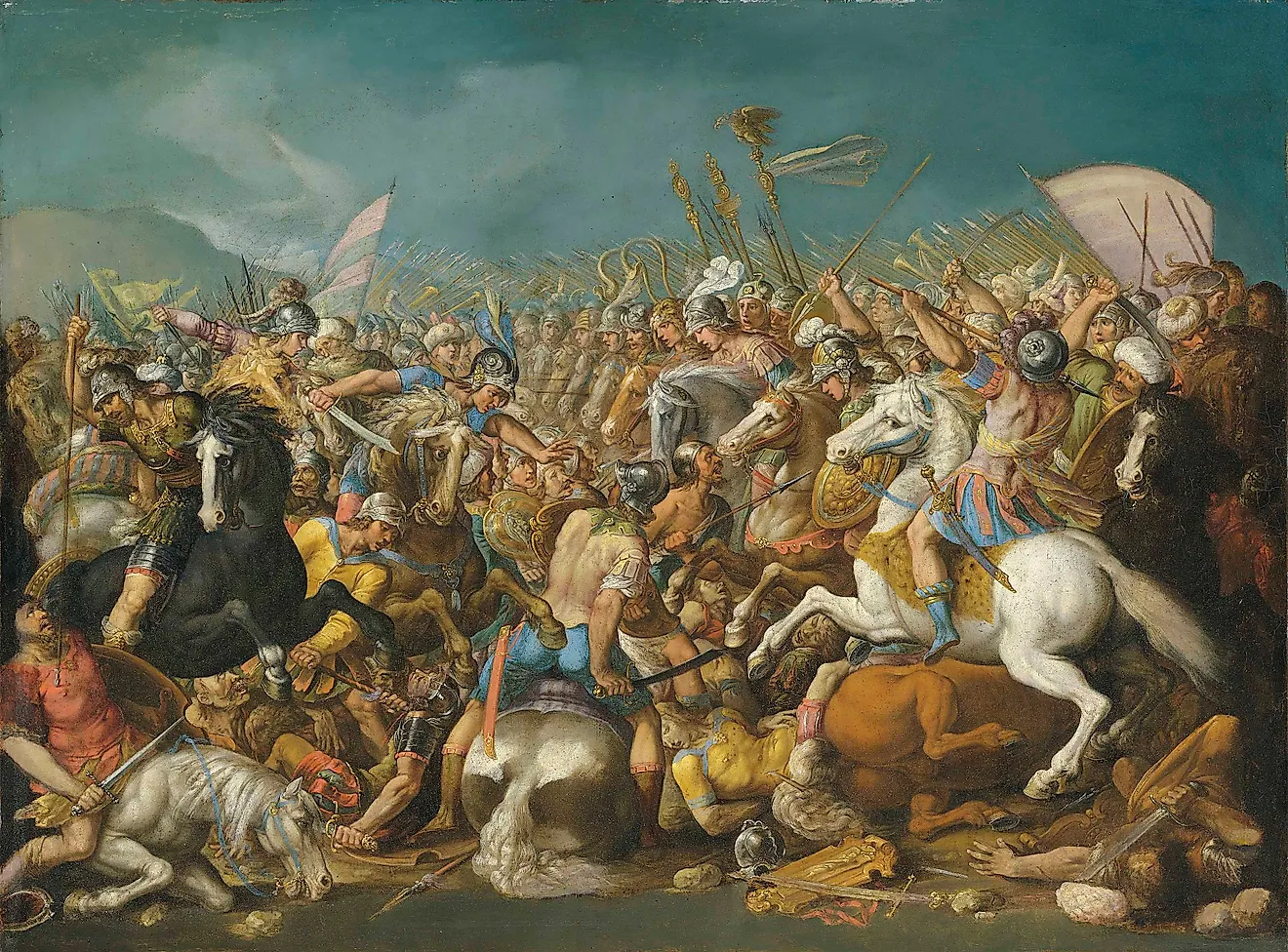
Like nearly every major civilization in history, the Roman Empire was responsible for many atrocities. In 146 BCE, it destroyed the city of Carthage. Nearly a century later, Julius Caesar possibly killed a million people during his conquest of Gaul. The following centuries then saw major persecutions of both Jews and Christians. Finally, in the 370s CE, the Romans extorted, abused, and murdered the Visigoths. These were just some of the many atrocities that stain the legacy of arguably the most powerful state of the ancient world.
The Destruction Of Carthage (146 BCE)

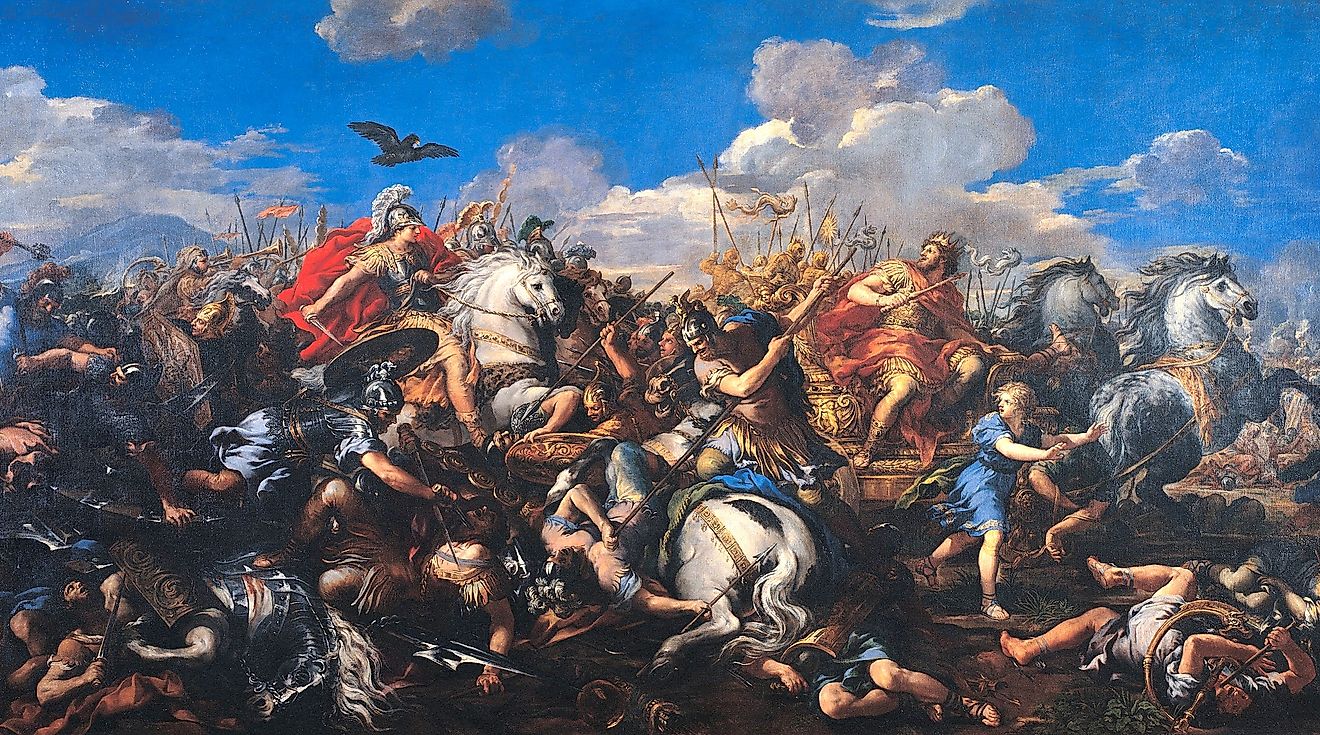
By 150 BCE, the Roman Republic and Carthage had been at war for over 100 years. The First Punic War (264 to 241 BCE) saw the Romans gain control of the island of Sicily. Angered by this development, the Carthaginians plotted revenge and invaded Italy in 218 BCE, leading to the Second Punic War. The Romans survived by avoiding major battles and leveraging their abundance of resources and allies. They eventually invaded Carthage and defeated it and its famed general, Hannibal Barca, in 202 BCE. Carthage remained independent afterward but was severely weakened and suffered severe military and financial restrictions.

As Carthage recovered over the next fifty years, some Roman leaders began insisting that it be destroyed entirely. The excuse to finally do so came in 151 BCE when Carthage attacked Numidia without Rome's permission. The Republic subsequently declared war on Carthage, marking the beginning of the Third Punic War. Rather than a series of open land or sea battles, as in the previous conflicts, this one consisted primarily of a siege of Carthage itself. The Romans struggled for the first three years, only for the tide to turn under the leadership of general Scipio Aemilianus. He tightened the naval blockade on the city and essentially isolated it completely. As conditions grew desperate, the Romans made their final assault.
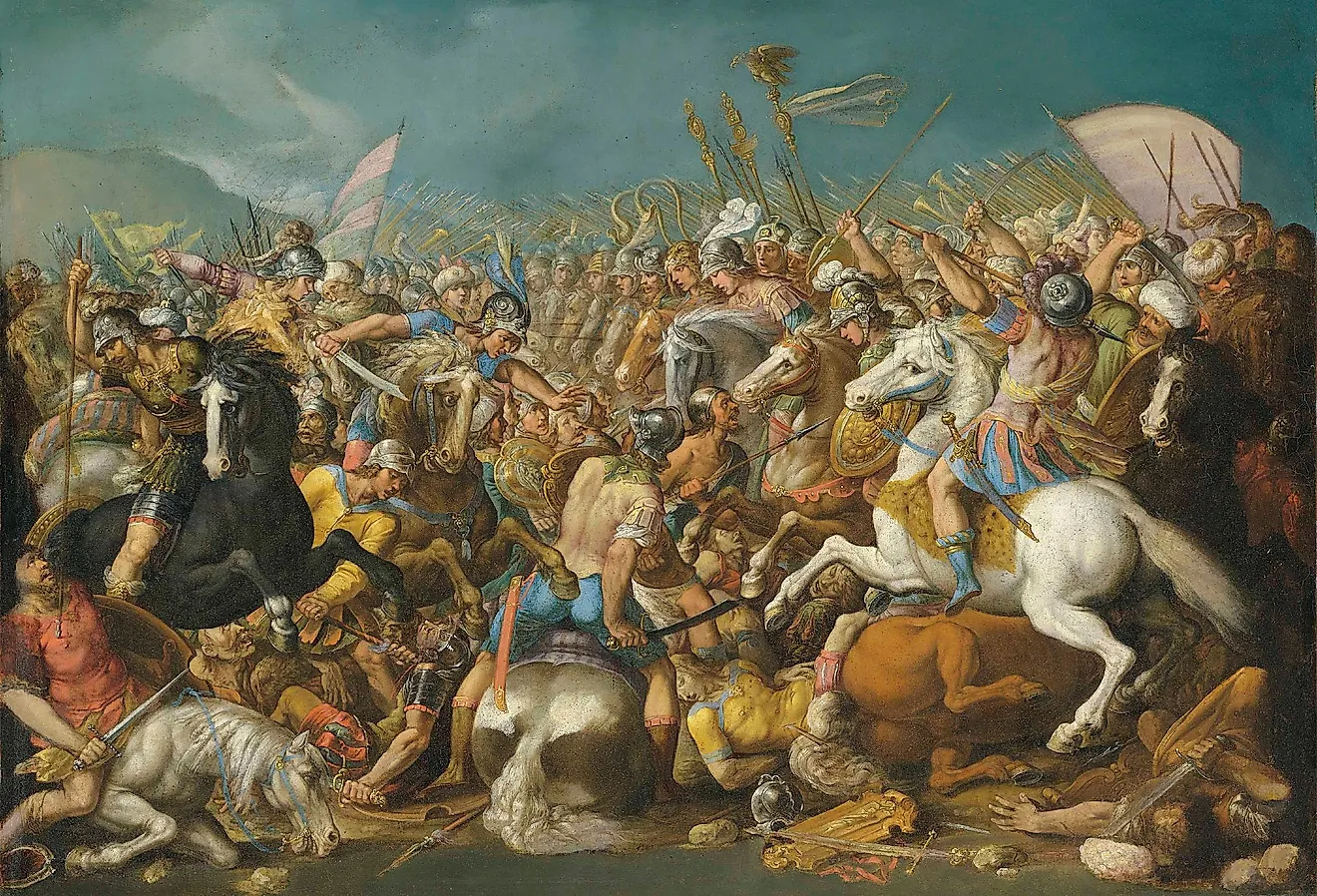
In 146 BCE, the city's walls were breached. Brutal street fighting occurred until the last of the resistance was eliminated. In total, about 62,000 Carthaginians died. Most of the surviving 50,000 were enslaved. Perhaps most brutally, almost the entire city was leveled. Doing so effectively destroyed Carthaginian civilization.
Julius Caesar's Conquest Of Gaul (58 to 50 BCE)

Beginning in 58 BCE, Roman general Julius Caesar set out to conquer Gaul (modern-day France, Belgium, and Luxembourg). The early campaign was relatively frictionless. The Gallic tribes were divided, allowing Caesar to play them against each other. He also made two expeditions into Britain and Germany. While Caesar didn't establish any permanent Roman settlements in these places, his intel proved crucial for future leaders.
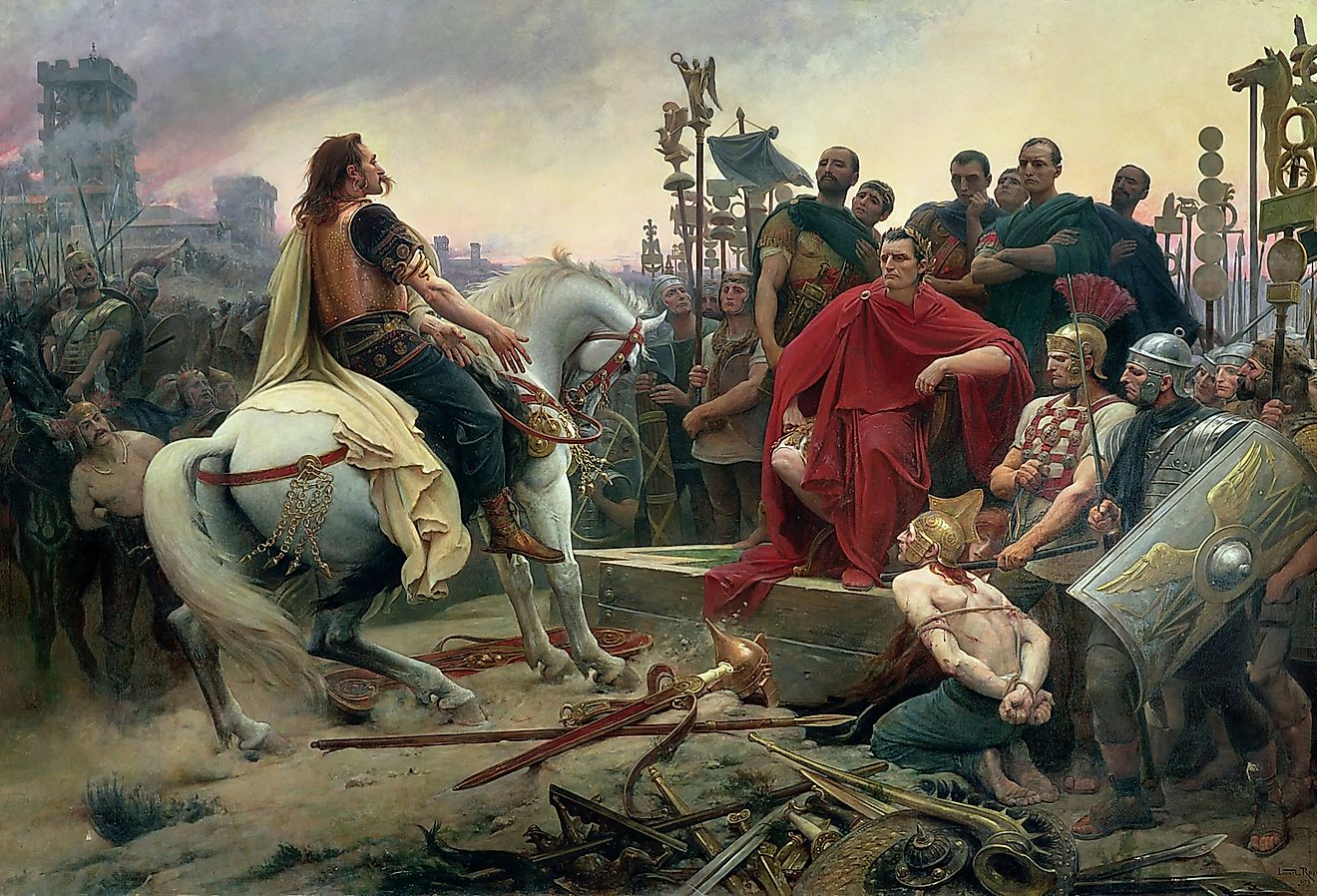
Caesar faced his first real challenge when several Gallic tribes united under the leadership of Vercingetorix. A nobleman and chieftain of the Arverni people, he led a scorched-earth resistance movement against the Romans. Eventually, Caesar managed to surround Vercingetorix in the settlement of Alesia. He then besieged the town and forced Vercingetorix to surrender. With this, more or less all organized resistance was eliminated, and Caesar completed his conquest of Gaul by 50 BCE.

The death toll of the Gallic campaign is staggering. Caesar claimed that over a million Gauls were killed, and a million more were enslaved. While these numbers are likely exaggerated, they were undoubtedly still enormous. Caesar also purposefully exterminated entire tribes, along with any remnants of their culture and history, to discourage resistance. This practice, paired with the death toll, is why many modern historians consider the Gallic campaign a genocide.
The Jewish-Roman Wars (66 to 135 CE)

From 66 to 135 CE, the empire's Jewish population rebelled several times. The first, appropriately known as the First Jewish-Roman War, occurred from 66 to 73 CE due to high taxation and resentment of Roman rule in Judea (modern-day Israel and Palestine). The second, called the Kitos War, lasted from 115 to 117 CE and saw Jews from across the Mediterranean rise up. Finally, the Bar Kokhba Revolt (132 to 136 CE) occurred after Emperor Hadrian announced plans to rebuild Jerusalem as a pagan city. He also proclaimed that circumcision would be banned.
The collective impact of these wars was devastating. During the first conflict, the Second Temple was destroyed, and between 600 and 1.3 million Jews were killed. Hundreds of thousands were likely killed during and following the Bar Kokhba Revolt as well. The Roman government also renamed Judea to Syria Palaestina in an attempt to diminish Jewish identification with the region. Perhaps most importantly, all three wars contributed to the Jewish diaspora across the Mediterranean.
The Persecution Of Christians Under Diocletian (303-311 CE)

For most of his reign, Emperor Diocletian was relatively tolerant of Christians. This changed as his junior emperor, Galerius, gained more influence. Galerius believed that the growth of Christianity had angered the gods and weakened the Roman state. Therefore, in 303 and 304 CE, Diocletian issued a series of increasingly harsh edicts. These stripped Christians of their legal rights, called for church leaders to be imprisoned, and demanded that all citizens offer public sacrifices to Roman gods. Many Christians were thus executed or driven from the empire.
The level of persecution varied depending on the location. It was particularly harsh in the eastern part of the empire, whereas western provinces like Gaul and Britain were more lenient. It also failed to eradicate Christianity, and Emperor Constantine converted around 312 CE, and the Edict of Milan legalized the faith across the empire in 313 CE. Nevertheless, Diocletian's persecution was still the most severe treatment of Christians in Roman history.
The Roman Treatment Of The Visigoths (370s CE)

In the 370s CE, the Visigoths (or Goths), a Germanic tribe, sought refuge from the Huns, a traditionally Central Asian tribe that was migrating into Europe. The Romans allowed them to settle in the empire but treated them horrifically. Local officials withheld food, and the Goths were forced to sell their children into slavery just to afford dog meat. The Romans also assassinated major Gothic leaders, like Alavivus.
This mistreatment backfired when the Goths revolted and soundly defeated the Romans at the Battle of Adrianople (378 CE). Emperor Valens was also killed. Ultimately, the revolt led to a chain reaction that ended in the sack of Rome in 410 CE. One of the most shocking events in Roman history, it demonstrated that the empire was no longer an unbeatable powerhouse and foreshadowed the fall of the Western Roman Empire in 476 CE.
A Legacy Built On Conquest
These episodes span more than five centuries, but they share a common logic. Whether Rome was leveling a rival city, subjugating a foreign people, suppressing a provincial revolt, or turning on those it had agreed to protect, the violence served the same end: securing and expanding Roman power. The destruction of Carthage removed a commercial competitor, the conquest of Gaul made Caesar's political career, the Jewish-Roman Wars answered a challenge to imperial authority, and the betrayal of the Visigoths grew out of the same disregard for those Rome deemed beneath it. The empire's engineering, law, and language shaped the Western world for millennia, but that inheritance was purchased with the suffering catalogued here.