The Kurdish Quest for a State
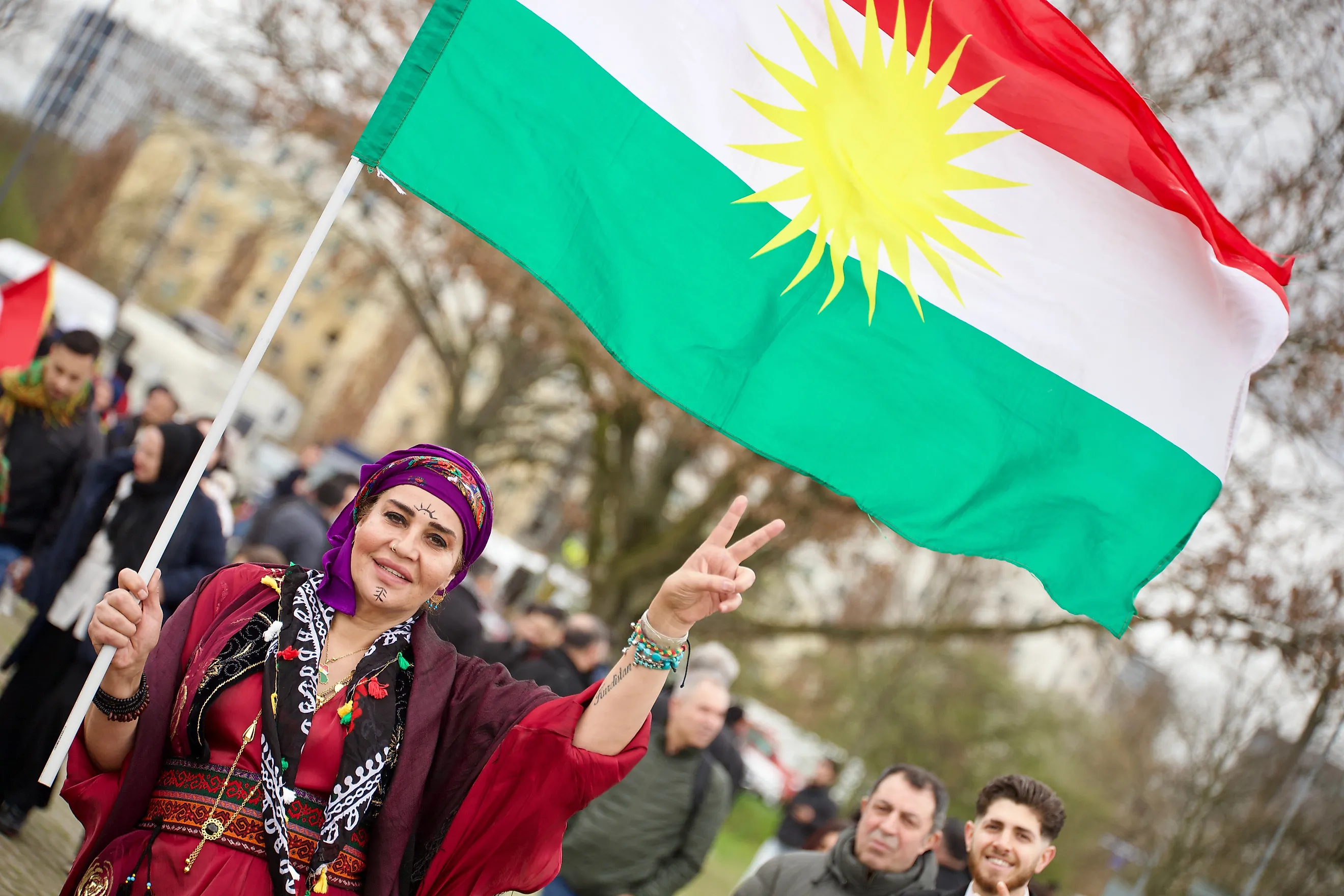
In 1920, the Treaty of Sèvres wrote a Kurdish state into international law, with three articles setting out a path to autonomy and possible independence for the Kurdish areas of eastern Anatolia. Three years later, the Treaty of Lausanne erased that path and drew the borders of modern Turkey with no mention of the Kurds. The roughly 35 million Kurds living across Turkey, Iraq, Iran, and Syria remain the largest people in the world without a state of their own.
Their language and cultural roots reach back more than two thousand years to ancient Indo-Iranian groups, long predating the empires that later governed them. This is the story of how a promised homeland slipped away, and how a century of revolts, repression, and shifting alliances followed.
A Nation Without a State: Postwar Borders and Kurdish Identity

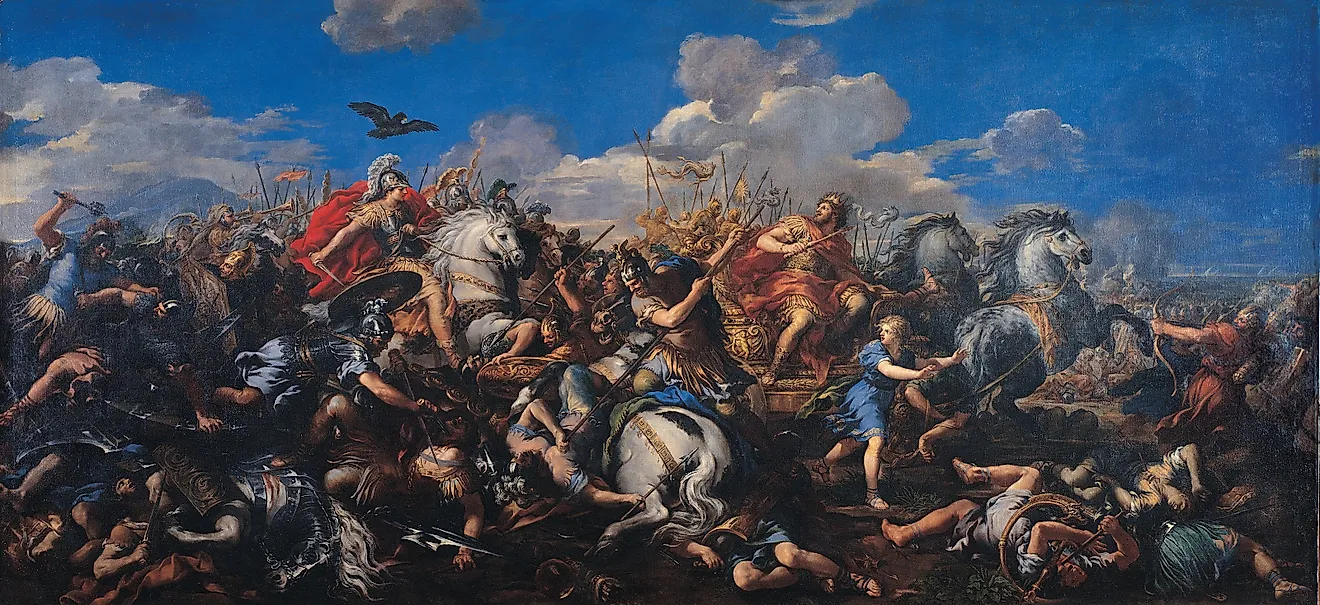
Kurdish heritage can be traced back more than two thousand years, and their language and cultural roots tie back to ancient Indo-Iranian groups. For thousands of years, they lived in a mountainous area referred to as Kurdistan, which covered sections of eastern modern-day Turkey, northern Iraq, northwest Iran, and northern Syria. Kurdish tribal groups and principalities often operated within bigger empires such as the Ottoman Empire and the Safavid Empire. Sometimes these Kurdish societies had a degree of local independence; however, their political loyalties changed depending on the shifting power in the region.
Beginning in the early 1500s, this area was divided between the Ottoman and Safavid Empires after years of conflict between the two powers. Following the decline of the Safavids, the Qajar dynasty took control. By the late 19th century, most Kurdish regions remained under Ottoman or Persian rule, with no independent Kurdish state.
In his book Kurdistan Rising?: Considerations for Kurds, Their Neighbors, and the Region, Michael Gunter says these Kurdish societies often kept their own local leadership under the rule of empires. But their allegiances and systems for governing changed when Ottoman or Persian influence moved into the region. Instead of becoming a single political entity, the regions inhabited by Kurdish people were incorporated into broader imperial systems. This helped limit and stop the formation of a unified Kurdish leadership.
Authority was generally influenced by tribal connections and regional power networks. Religious variety made Kurdish society more complex, since there were Sunni, Shi'a, Yazidi, and Alevi groups among the Kurds. But despite that, in the 19th century, a broader Kurdish identity began to develop and expand.
Post World War I

After World War I came to a close and the Central Powers, including the Ottoman Empire, were defeated, the Kurds saw a real chance at self-governance. In 1920, diplomats crafted the Treaty of Sèvres, a postwar arrangement signed by the Allies and the Ottoman Empire that detailed its division, and created a potential way for a Kurdish state to be formed. Specifically, Articles 62 through 64 included the language that would allow Kurdish self-rule in eastern Anatolia. It also recognized the potential for the Kurds to gain full independence in the future.
The treaty can be tied to broader international debates about self-determination, an idea strongly promoted by President Woodrow Wilson. In point 12 of his "Fourteen Points," Wilson stated that the non-Turkish nationalities under Ottoman rule "should be assured an undoubted security of life and an absolutely unmolested opportunity of autonomous development." But this plan was taken off the table soon after. By 1923, the Treaty of Lausanne established Turkey's modern borders and made no provision for an independent Kurdish state.
The postwar settlement placed Kurdish-populated Ottoman territories within the new Republic of Turkey, British-controlled Iraq, and French-controlled Syria, while other Kurdish communities remained within Iran. These new borders were difficult for Kurdish society. In each country, Kurdish communities faced political restrictions and were often viewed as a challenge by state authorities. Over the next century, this contributed to a cycle of uprisings and state crackdowns, alongside a Kurdish effort to secure greater autonomy or self-rule.
Revolts, Repression, and Regional Power Plays (1920s-1990s)
Turkey

The collapse of the Ottoman Empire left the Kurds split. All through the 20th century, the Kurds began to push back against governments that saw Kurdish independence as a security risk. In Turkey, during 1925, a large Kurdish rebellion, led by a man by the name of Sheikh Said, rallied thousands of fighters in a movement fueled by both nationalist and religious anger. Said sought Kurdish autonomy and restoration of Islamic authority against Turkey's secular nationalist reforms.
The newly born Turkish Republic, keen to solidify control, hit back at Kurdish nationalists by imposing martial law, executing Said and his top supporters, and shipping whole families off to western Anatolia. As Robert Olson, in his article "The Kurdish Rebellions of Sheikh Said (1925), Mt. Ararat (1930), and Dersim (1937-8)," notes, the destruction of the uprising had a big ripple effect on Kurdish nationalism in the region, saying it was "a severe blow to Kurdish nationalism in Turkey and its potential growth in Iraq and Iran."
Maybe the movement took a hit, but it definitely was not done. Fast forward twelve years, and protests erupted in Dersim, rebranded as Tunceli by the authorities, known for its Kurdish and Zaza-Alevi communities in eastern Anatolia. In response, Turkish forces entered the area in 1937 and 1938, employing both ground troops and an aerial bombing campaign.
These operations included allegations of toxic gas use to enforce the 1935 Tunceli Law (a law granting the Turkish state extraordinary powers to control and centralize Dersim) and consolidate central authority in response to resistance against policies such as forced resettlement and assimilation. Official reports listed more than 13,000 dead and nearly 20,000 driven from their homes, though Kurdish sources argue the death toll was significantly larger.
Iraq

Unlike Turkey, which clamped down on Kurdish resistance with rapid state centralization and assimilationist policies, Iraq's Kurdish conflict grew slowly. After the country's monarchy was toppled in 1958, things quietly worsened, as tensions led to years of drawn-out fighting and battles over Kurdish autonomy that was promised but rarely delivered. In 1961, Mullah Mustafa Barzani launched a Kurdish uprising that spread throughout northern Iraq and lasted for nearly a decade. Although the 1970 Autonomy Agreement promised Kurdish self-rule, Baghdad failed to fully implement its provisions, and the conflict resumed just four years later.
In Iraq, the Kurdish movement was not exactly unified. As Martin van Bruinessen explains in "The Kurds between Iran and Iraq," this period was marked by a deep divide between Barzani's conservative tribal forces and the more urban, radical elements of the movement. Kurdish factions also at times, sought support from Iran in their conflicts with Iraq.
This internal friction forced Barzani into a dangerous dependence on the Shah of Iran. The Shah gladly supplied the Kurds with weapons and sanctuary, not out of kindness, but to destabilize the Iraqi regime. Then came the betrayal. The Shah abruptly signed a peace treaty with Iraq and sealed the border. He abandoned the Kurds to Iraqi reprisals.
Despite this betrayal, Kurdish forces allied with Tehran once again when the Iran-Iraq War erupted in the 1980s. The leader at the time, Saddam Hussein, retaliated with genocidal fury, launching the infamous Anfal campaign from 1987 to 1988. Human Rights Watch would later say that between 50,000 and 100,000 Kurds were executed or simply disappeared. Whole areas were wiped clean, villages set ablaze, and chemical weapons hit Halabja in March 1988, killing nearly 5,000 civilians in just one strike.
Iran

In 1946, Iranian Kurds briefly established an self-governing republic. Supported by Soviet troops in the northwest, Qazi Muhammad formed the Republic of Mahabad, which aimed to promote autonomy for the region and support their own language. It lasted less than a year. The moment Soviet forces withdrew, the Iranian military swept back into Mahabad to systematically dismantle its newly formed institutions. Soldiers executed prominent Kurdish leaders. They drove political activism underground. Yet, the nationalist feeling did not disappear. It became concentrated mainly within the Democratic Party of Iranian Kurdistan (KDPI), an organization founded in 1945.
Unexpected revolts broke the peace during the 1960s, and state forces crushed a 1967 rebellion with rapid efficiency, yet cross-border alliances with Iraqi Kurdish factions started to catch on. Following Iran's 1979 Islamic Revolution, local Kurdish groups took a shot at carving out an autonomous zone under the transitional government. Instead, this ignited an uprising. This in turn, was suppressed with severity by the new authorities by 1981, with thousands of opposition members executed and many being forced to escape towards nearby countries. When the 1990s arrived, continuous repression from the state created lasting and profound mistrust, and the main Kurdish issue stayed completely unsolved.
Fragmentation and the Struggle for Unity
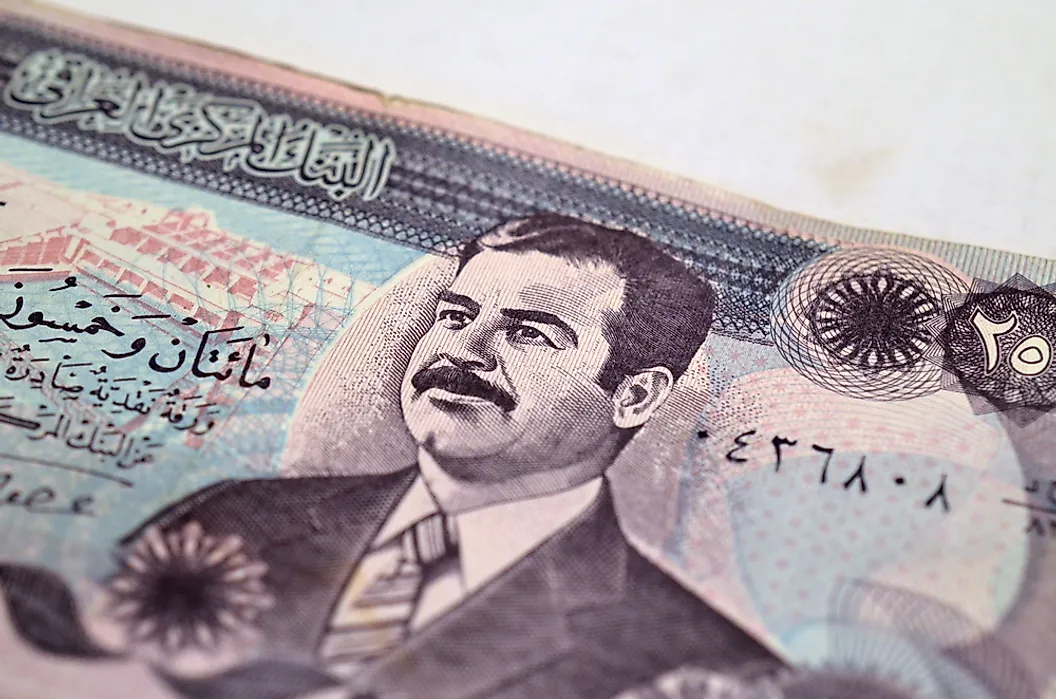
Iraqi Kurds had exercised de facto autonomy since 1991, but the fall of Saddam Hussein in 2003 and Iraq's 2005 Constitution gave that arrangement formal federal recognition. The Kurdistan Regional Government received formal status as an autonomous area inside Iraq. Erbil became a lively capital, while oil revenues became central to the finances of the regional government.
The entire arrangement was less stable than it appeared. In his article "Iraqi Kurdistan Twenty Years After," Joost Hiltermann claims that the resource meant to guarantee their future turned into what he calls a "dual curse" for the area. The oil wealth did not become a core column supporting independence, but rather became a reason for nepotism and corruption, which got in the way of the hope for one united nation.
And that lack of unity was easy to see. There was the Kurdistan Democratic Party (KDP), led by the Barzani family. Then, you had the Patriotic Union of Kurdistan (PUK), founded by Jalal Talabani. Power was split between the two. Each party kept its own Peshmerga units (Kurdish armed forces) that answered to the party leaders. Each group also managed its own parts of the regional institutions and their own patronage networks. At the same time, Turkey's Kurdistan Workers' Party (PKK), considered a terrorist organization by Turkey, the US, and the EU, was in rebellion, facing brutal assaults from Ankara. Iraqi Kurdish authorities did their best to not be involved.
There was also the Autonomous Administration of North and East Syria, which appeared during the Syrian Civil War, when Kurdish-led factions established local administrative structures in territories under their control. The rise of the YPG (Yekîneyên Parastina Gel, or People's Protection Units) brought greater international attention to Kurdish political movements. But divisions also emerged among Kurdish groups, as the administration's political direction marginalized some organizations. Not all accepted its approach or alliances, creating tensions that made Kurdish unity difficult to maintain.
ISIS and the Limits of International Support

Those gains were soon put to the test. When ISIS swept across Iraq and Syria in 2014, plunging the region into chaos, Kurdish forces found themselves on the front lines. Peshmerga forces defended Erbil and moved into disputed Kirkuk after Iraqi government troops withdrew. Meanwhile, in Syria, the People's Protection Units (YPG) organized to safeguard Kobane throughout an extended siege. The city became a battleground. The United States and its allies provided military support to Kurdish forces. U.S. airstrikes were coordinated with Kurdish troops who advanced on the ground. Months of heavy street fighting ended up on TVs around the globe. Kurdish women fighters, in particular, ended up as icons, with their faces all over Western news.
Although Kurdish troops cooperated with the coalition led by the United States, the relationship with Baghdad deteriorated. In 2017, Iraqi Kurds held a referendum on independence across the Kurdistan Region and disputed territories. More than 92 percent voted yes, but Baghdad wasn't on board, brushing off the result as unconstitutional. Before long, the Iraqi army moved into the contested zones, and Kurdish fighters left Kirkuk.
By 2019, ISIS had been deprived of most of its territory. However, during this period of conflict, the Kurds suffered severe losses. For a time, Kurdish leaders hoped their sacrifices would bring them strong international acknowledgment. But those expectations soon faded as longstanding political disputes and pressures again limited their ambitions.
Turkey viewed the YPG as an extension of the PKK, which Turkey had long battled in southeastern Anatolia, and launched a series of cross-border military operations that displaced Kurdish residents from the border regions. At the same time, some U.S. troops were withdrawn from northern Syria. In Washington and various European countries, authorities praised Kurdish bravery yet refrained from offering a major commitment to any sort of statehood acknowledgment.
William Hale, in his article titled "Turkey, the U.S., Russia, and the Syrian Civil War," says the U.S.'s withdrawal from northern Syria was described as a "disaster in the making." For many Kurds, the partial American withdrawal from northern Syria in 2019 left a deep feeling of betrayal. It also revealed a repeated pattern during the Iraq and Syria wars: they had been essential allies during the fighting but were left without support after the violence ended.
What Future for the Kurds?

The period after 2019 showed how fragile the Kurdish gains were. After U.S. troops left key Syrian regions, Turkey wasted no time sending its forces over the border. The operations in Ras al-Ayn and Tel Abyad forced many Kurds to flee. Eventually, Turkish officials promoted plans for Arab families to settle into some of those emptied areas. Even if the Autonomous Administration continued to control North and East Syria, it was facing Turkish assaults and unreliable support from Russian and Syrian troops.
Over in Iraq, the Kurdistan Regional Government had stumbled into problems, too. The 2017 independence vote reflected the public's appetite, but Kirkuk slipping out of Kurdish hands overnight showed how little help the Kurds could expect when push came to shove. Since then, Baghdad and Erbil have been stuck trading arguments about oil revenue and hashing out who gets to actually call the shots on security in the region. Reliance on Turkey for a pipeline transit has further constrained the bargaining power of Kurds. Meanwhile, the KDP and PUK continued to operate separate systems, despite repeated promises to unify.
In Turkey, Kurdish politics have continued to face intense political pressure and restrictions. The pro-Kurdish Peoples' Democratic Party (HDP) faced a closure case and did not contest the 2023 elections under its own name. Its candidates instead ran through the Green Left Party, which was later renamed the Peoples' Equality and Democracy Party, or DEM Party. Turkish authorities have also removed elected pro-Kurdish mayors, detained politicians, and replaced some local administrations with government-appointed trustees. These measures have sharply restricted opportunities for legal Kurdish political activism.
Separately, the PKK declared a ceasefire in March 2025 and later announced that it would dissolve and end its armed struggle against Turkey. Fighters began withdrawing from Turkey, although the peace process subsequently stalled amid disputes over legal reforms, political prisoners, and continued Turkish military operations. In March 2025, the Syrian interim government and the Kurdish-led Syrian Democratic Forces agreed in principle to integrate northeastern Syria's civil and military institutions into the state. Implementation stalled, however, and renewed fighting in early 2026 left the SDF with less territory and leverage. A new agreement announced in January 2026 outlined a ceasefire, the entry of government security forces into northeastern cities, the integration of SDF units into state structures, and protections for Kurdish civil and educational rights. Implementation began in early 2026, including the entry of Syrian Interior Ministry forces into al-Hasakah and steps toward integrating civil and security institutions. However, the final division of authority, the status of SDF forces, and the future of Kurdish local self-government remain unsettled.
In Conclusion
The Kurdish pursuit of self-governance has endured during periods of imperial domination and the partitioning of their ancestral lands. However, a settlement still remains out of reach. The Kurds have faced violence throughout the last century, showing their resilience. Once Saddam Hussein's regime fell, a Kurdish self-governing area came into being, though ongoing infighting and outside pressure have kept things unpredictable and prevented any real solution to the Kurdish question.
The Kurds' combat against ISIS brought them international recognition for being reliable actors in promoting regional order, but did not lead to global action to provide them with sovereign land. As of 2026, while there is no independent Kurdish state, its spirit survives within their common language and collective memory. This spirit has been supported by the continuing existence of their community and the hope that future circumstances might change.