The Real History Hidden Inside The Odyssey
Odysseus spends ten years dodging a Cyclops and a sea god just to reach his own front door. Buried under that fantasy sits a real memory of the Bronze Age Mediterranean world, where Greeks had already lost.
Odysseus himself may trace back to an actual Mycenaean warlord whose story grew with each retelling. His long voyage tracks the sea lanes that early Greek traders and colonists were just beginning to open. The Trojan War behind it all points to a genuine conflict Homer inflated into legend. Recorded history would arrive only centuries after Homer sang this poem into being.
The Story Of The Odyssey

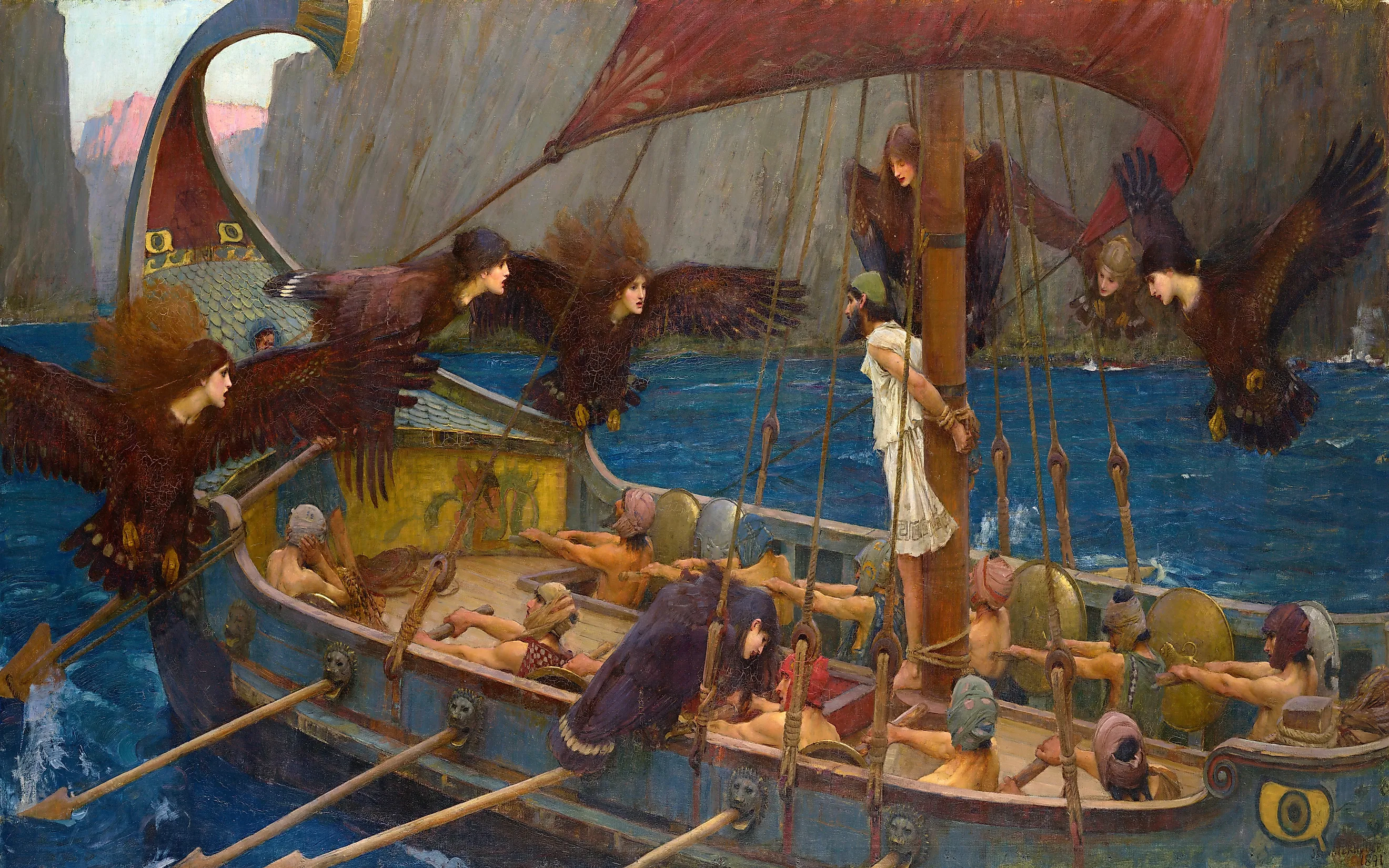
The Odyssey tells the story of Odysseus, King of Ithaca, and his ten-year struggle to return home after the Trojan War. On his adventure, he encounters some of the most famous figures in mythology, including the Cyclops, the legendary sorceress Circe, the Sirens, and Calypso, a nymph who holds Odysseus captive on her island for seven years. He also has to contend with the divine wrath of the sea god Poseidon. Eventually, the gods take pity on him, and Odysseus is allowed to build a raft and sail home.

Upon returning, he finds over 100 suitors aggressively pursuing his wife, Penelope. To prove he is who he claims to be, Odysseus, with the help of his son, Telemachus, strings his old hunting bow and shoots through a line of axe heads. He then slaughters the suitors. Still unconvinced, Penelope asks her servants to move her bed. This enrages Odysseus, since he built the bed around a rooted olive tree that made it impossible to move. A secret only he and she knew, Penelope is finally convinced. The Odyssey ends with the goddess Athena intervening to stop a devastating civil war between the families of the slain suitors and Odysseus's allies.
The Fictional Elements

As is perhaps obvious from the summary, the Odyssey contains many fictional elements. Sea monsters, like the Sirens, Cyclops, and Calypso, don't exist. Greek gods are also generally considered mythological figures and aren't really believed in by anyone in the 21st century. Odysseus himself, along with all the characters, was likely fictional as well. Finally, the story's structure was a Homeric invention. While some of the events possibly occurred (as will be discussed later), they were ordered in a particular way to make an entertaining and engaging narrative.
What The Odyssey Tells Us About The Ancient World

Despite all these fictional elements, the Odyssey contains vital insights about the ancient world. Homer likely composed it between 725 and 675 BCE, at the tail end of the Greek Dark Ages. It therefore reflected many anxieties from this period. The battle between the "civilized" and "barbarian world" was embodied by Odysseus and his encounter with various monsters. As a Mediterranean-spanning adventure, the story also encapsulates the realities of early Greek exploration and colonization. Finally, Odysseus's use of intelligence, rather than pure brute strength, is indicative of a Greece that increasingly valued intellectual pursuits.
What The Odyssey Tells Us About Mycenaean Greece

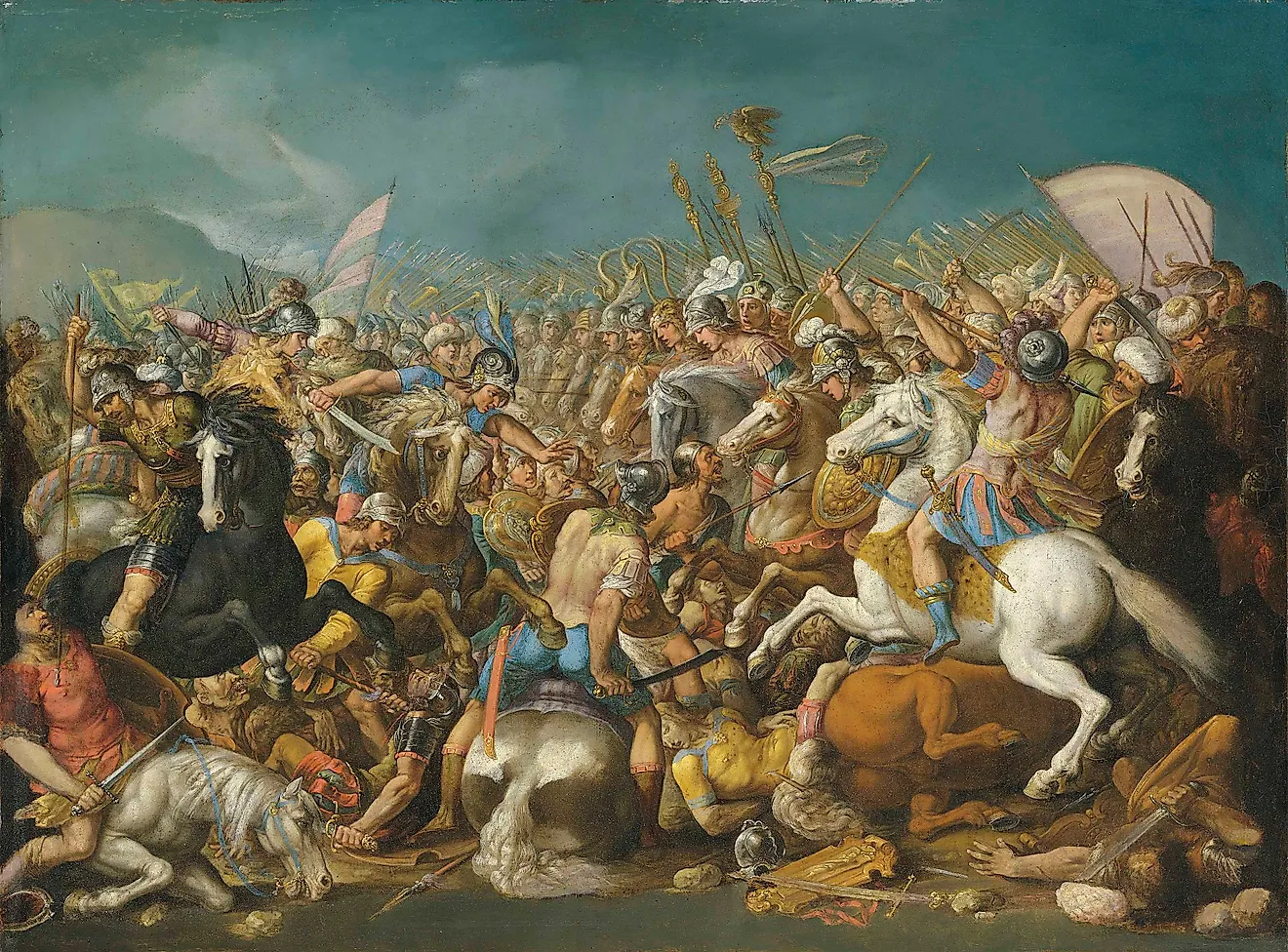
Since it takes place in the 12th century BCE, the Odyssey also has much to tell us about pre-Dark Ages Greece, specifically Mycenaean civilization. Odysseus himself was possibly based on a real Bronze Age king. Some historians posit that he was a composite hero, a combination of several different real historical figures whose stories merged over generations. Penelope's struggle to fend off suitors was also reflective of the social expectations of women, particularly noblewomen, at the time. Most importantly, the backdrop of the entire story, the Trojan War, was likely based on a real event, albeit one that was much smaller and less dramatic than what was described by Homer.
What The Odyssey Tells Us About The Nature Of Ancient History

Homer lived long before recorded history as we know it. In fact, Herodotus, who lived from 484 to 425 BCE (three centuries after Homer), is considered the "father of history". His defining work, "The Histories," sought to determine why Greeks and Persians fought each other. Rather than relying on myth and opinion, he interviewed witnesses, went to battlefields, compared different accounts of the same events, and studied local customs. Admittedly, he wasn't perfect. Herodotus sometimes failed to decide which version of a particular event was true and instead included multiple accounts. His work also contains stories of many fantastical beings, including griffins, flying snakes, and gold-digging ants.

Thucydides (460 to 400 BCE) built on what Herodotus had started. An Athenian general during the Peloponnesian War, he was exiled after a military failure. With ample time on his hands, he wrote arguably the most iconic historical work of the ancient world, the "History of the Peloponnesian War". Utilizing many of the same techniques as Herodotus, Thucydides aimed to create a fact-based accounting of the lead-up to the war and the conflict itself. More broadly, he wanted to make a document that demonstrated to future generations how power actually works. In doing so, he deliberately rejected the myths that plagued Herodotus' work. He also tried to corroborate his sources, admitted when he couldn't, and sought psychological and human-behavior-based reasons for events, rather than divine will. For these reasons, Thucydides is considered the first analytical and scientific historian.

Why does all this matter? Since anything resembling the modern practice of history originated hundreds of years after the Odyssey was written, it gains even more importance as a historical document. Indeed, it (and its predecessor, the Iliad) act as some of the only connections to the Greek Dark Ages and Mycenaean civilization. Obviously, it can't be taken literally and must be understood in conjunction with archaeological evidence. Nevertheless, the Odyssey's historical significance is difficult to overstate.
Impact And Legacy
The Odyssey wasn't based on a true story. At the same time, it contains important insights into the ancient world. Its themes and events shed light on Greek society under the Mycenaeans and during the Dark Ages. As one of the primary surviving documents from a "pre-history" world, it also functions as a vital connective tissue between modern historical conceptions and ancient myths.