What Were The Roman Empire’s Biggest Disasters?
The Roman Empire rose to heights few other civilizations would match, but not without experiencing its share of catastrophes. Amid raging fires, foreign invasions, civil wars, and devastating military defeats, some disasters came close to changing its history permanently. Even at its height, Rome faced existential threats, and could be shaken by military failure, economic instability, and political collapse. Read on to discover some of the Roman Empire's biggest disasters.
The Battle Of The Teutoburg Forest

From 58 to 50 BCE, Roman general Julius Caesar conquered Gaul (modern-day France and Belgium and parts of neighboring countries). While doing so, he also made incursions into modern day Britain and lands east of the Rhine. Caesar did not permanently conquer Britain or Germania, but his campaigns gave Rome valuable information about those regions.
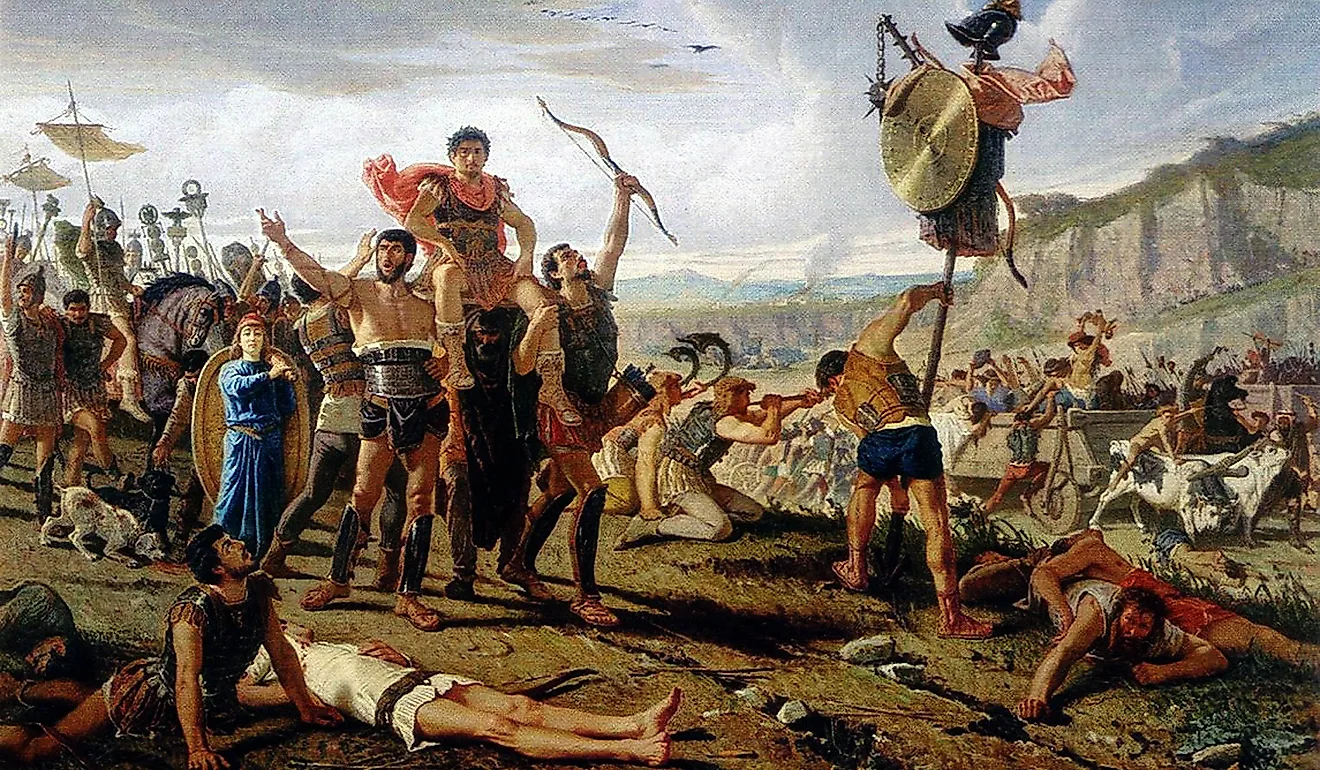
Beginning in 12 BCE, Emperor Augustus began expanding into Germania. Roman commanders pushed beyond the Rhine and began organizing parts of the region as if they might become permanent Roman territory. However, the tide turned with the Battle of Teutoburg Forest in 9 CE.
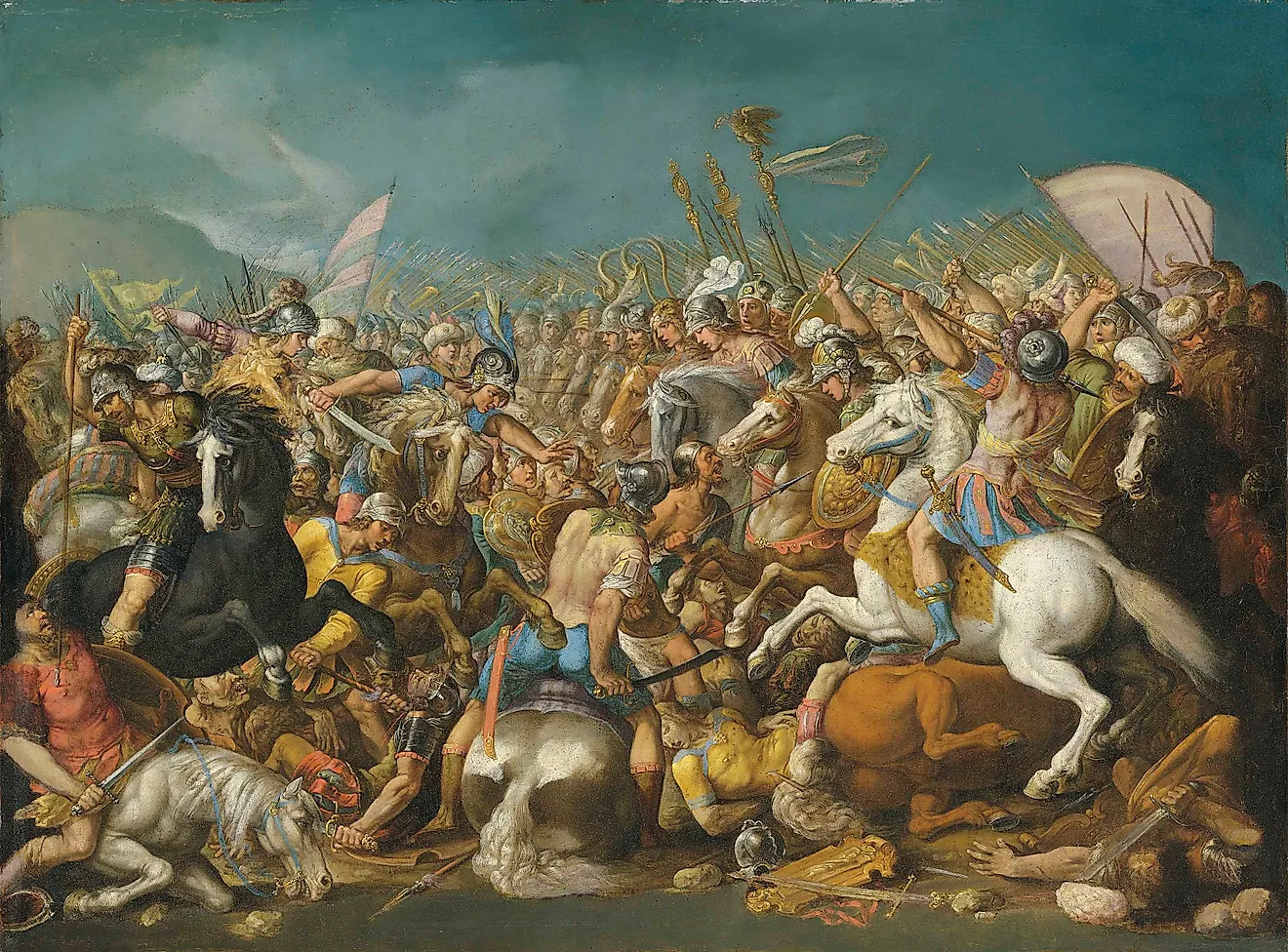
Throughout their campaign, the Romans had relied on German auxiliaries and local allies, including a prince named Arminius. This backfired when he lured them to the dense and swampy Teutoburg Forest, where a coalition of Germanic tribes ambushed them. An estimated 15,000 to 20,000 Roman soldiers were killed, and General Publius Quinctilius Varus committed suicide. The sheer scale of this defeat discouraged Roman ambitions to expand into Germania. Therefore, the Battle of the Teutoburg Forest showed that, even at its peak, the Roman Empire’s power was finite.
The Great Fire Of Rome

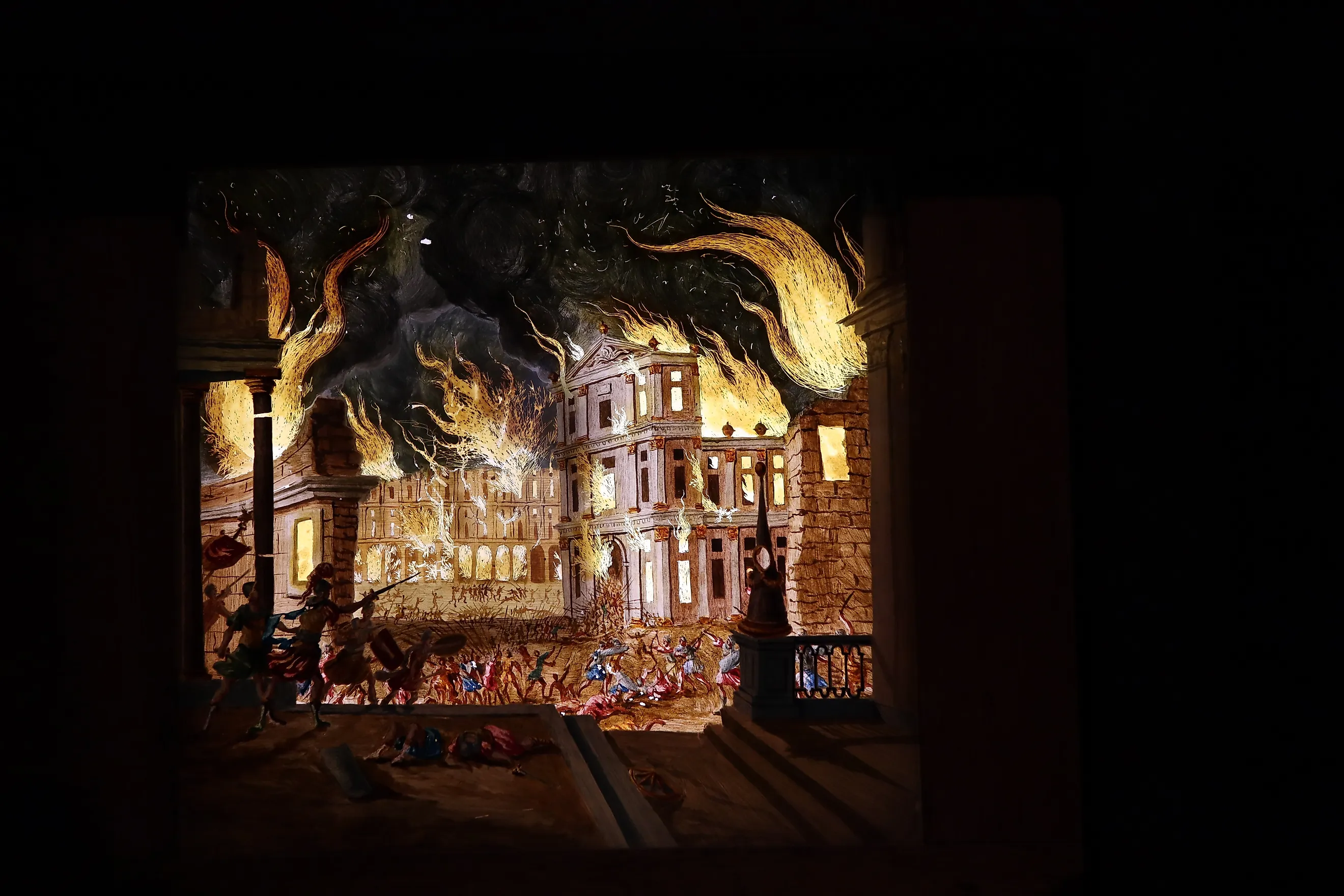
On the night of July 18, 64 CE, a massive fire swept through Rome. Beginning near the merchant shops around the Circus Maximus, the fire quickly grew to encompass much of the city. Three of Rome’s 14 districts were destroyed, and seven more were heavily damaged. Major landmarks like the Temple of Jupiter Stator were also burned to the ground. Due to the lack of reliable sources, the exact death toll is unknown.
Many Romans believed that Emperor Nero caused the fire so he could rebuild the city. While unlikely (the causes may have included poor urban planning and flammable construction material), Nero did have a questionable response to the tragedy. He used the devastated, cleared land to build an opulent and garish palace complex called the Domus Aurea (Golden House). He also blamed Christians, a small and mistrusted religious minority, for the fire. This scapegoating backfired. As Christians were burned alive, torn apart by animals, and crucified, many felt sympathy toward them. In turn, Nero became even more unpopular.
The Crisis Of The Third Century

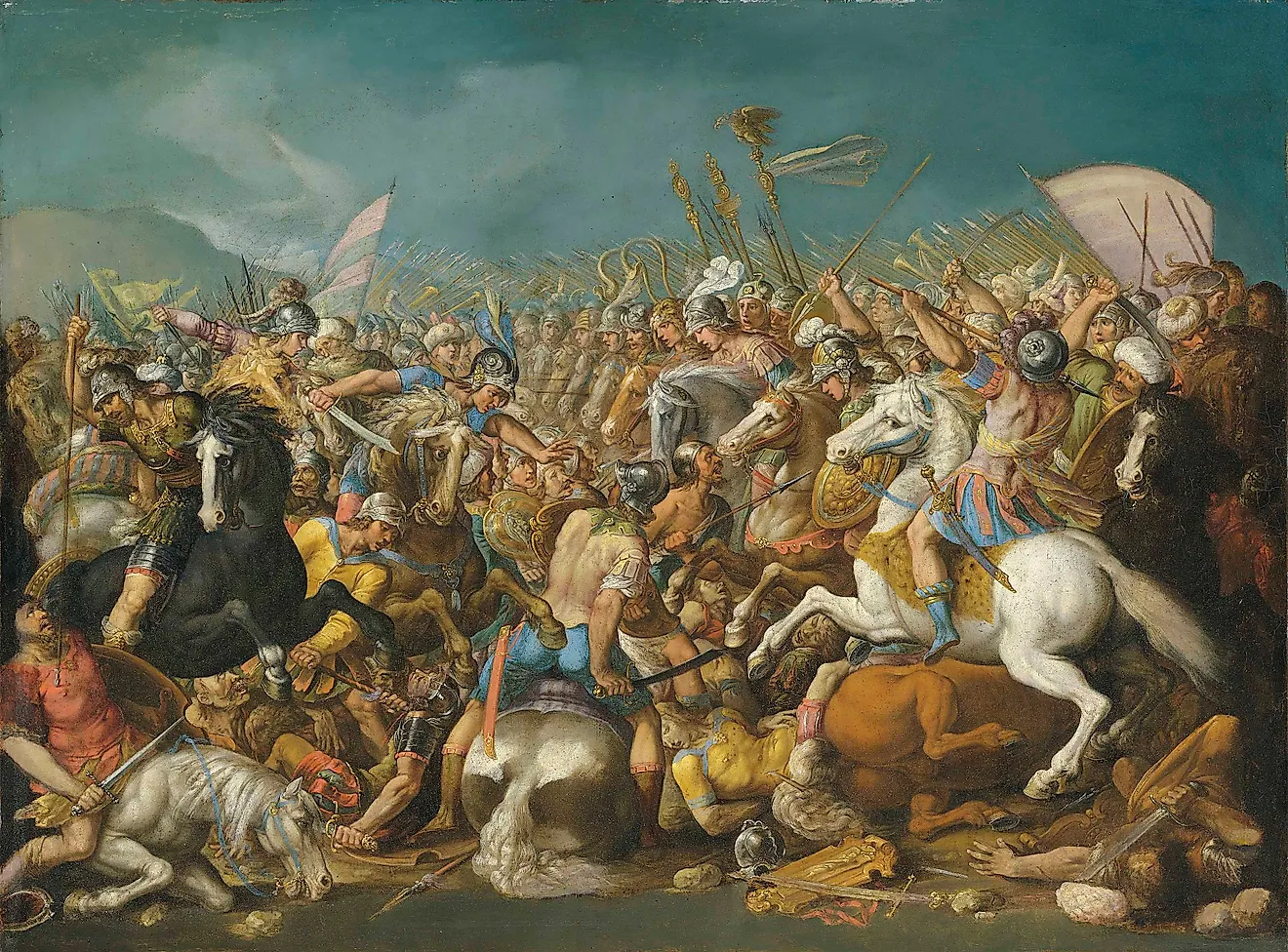
The Crisis of the Third Century was a nearly fifty-year period of civil war, invasion, and instability. It began due to several factors. Following the death of Emperor Alexander Severus in 235 CE, the military became significantly more involved in politics. Emperors rose and fell as they lost favor with the army, and many military officials became emperors themselves. Rampant inflation also destroyed local trade networks and lessened governmental authority over the provinces. Finally, Germanic tribes in the north and Sasanian Persia in the east took advantage of this chaos by attacking Rome’s borders, further destabilizing the empire.
As centralized authority broke down, provinces fractured into competing empires. The Gallic Empire emerged in Britain, Gaul, and at times Iberia. The Palmyrene Empire, centered on Palmyra in Syria, extended into Egypt, the Levant, and parts of Anatolia. For a time, the central Roman government controlled a much-reduced territory between these breakaway powers.
The crisis began to resolve under the reign of Diocletian. In 293 CE, he created the Tetrarchy, a system which used two senior emperors, called Augusti, and two junior emperors, called Caesars, to govern different regions of the empire. This administrative division ensured that rulers could better understand the needs of specific regions. Diocletian also reformed the tax system and helped bring inflation under control. In short, the Crisis of the Third Century ended with some much-needed reforms that (temporarily) strengthened the empire. However, it also showed that Rome wasn’t invincible and could fall under enough pressure.
The Sack Of Rome

In 376 CE, large groups of Goths, Germanic tribes fleeing the Huns, sought refuge in the Roman Empire. Roman officials exploited them, food supplies collapsed, and some Gothic families were reportedly forced to sell children into slavery for food. A failed Roman attempt to kill Gothic leaders helped push the situation into open rebellion. Decades later, under the leadership of King Alaric I, they further pressured the Western Roman government for territory. Even as the Visigoths reached the city of Rome itself and blockaded it, Alaric didn’t seek to destroy the Roman Empire. Rather, he wanted formal recognition for his rule, a homeland for the Visigoths, and secure food supplies. Alaric eventually abandoned this diplomatic approach, but only after negotiations with Emperor Honorius collapsed.
In August 410 CE, the Visigoths entered through Rome’s Aurelian Walls and began sacking the city. For three days, they looted its wealth, while being careful to leave important religious sites unharmed. This event caused immense psychological and reputational harm. It was the first time in 800 years that Rome had been sacked. Ultimately, it demonstrated that the Western Roman Empire could no longer defend itself, foreshadowing its collapse in 476 CE.
Rise and Fall of an Empire
Rome’s biggest disasters reveal a powerful, yet vulnerable empire. Fires revealed the dangers of crowded urban life, civil wars weakened central authority, and invasions damaged Rome’s reputation as an unconquerable capital. Some catastrophes were survived, and others left wounds that never fully healed. Together, they remain important scars on the corpus of Roman history, tied to events which would shape the future of the empire.