The Most Underrated Military Minds of Antiquity
History has a short memory for many of the men who shaped it. Caesar, Genghis Khan, and Napoleon get the textbooks and the statues, but the ancient Mediterranean produced commanders just as brilliant who never quite received their due. They won battles that changed the course of history, often against worse odds and with fewer resources, yet their names have largely faded from popular memory. Some were overshadowed by more famous contemporaries, and others were undone by politics after their campaigns were won. What they share is a quality of military thinking that still rewards close study: an ability to read a battlefield, adapt under pressure, and force outcomes that by any reasonable measure should not have been possible. The generals below deserve to be better known.
Scipio Africanus

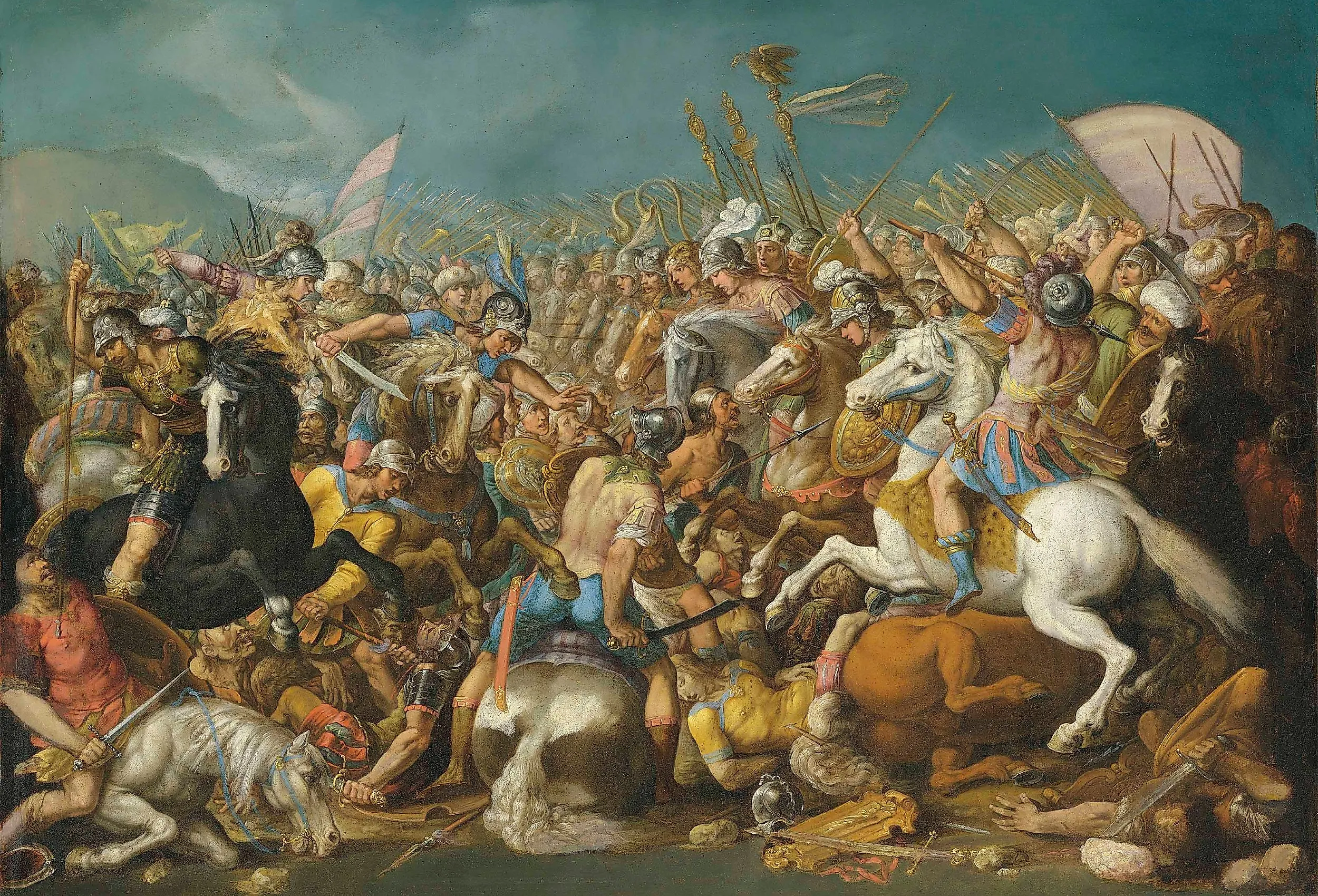
Born to Roman nobility in 236 BC, Scipio came into his own in 218 amidst the Second Punic War against the Carthaginian Empire. During that year, Scipio fought in the Battle of the Ticinus River and is said to have saved his father's life. Two years later, at the Battle of Cannae, Scipio and 4,000 Roman soldiers survived the destruction inflicted by the forces of Carthaginian general Hannibal. In 210, following the deaths of his father and uncle while fighting, Scipio took command of his own army and captured the vital Carthaginian city of New Carthage in Spain, providing a stockpile of weapons and supplies. Scipio continued his series of victories at the Battle of Baecula in 208 by causing the brother of Hannibal, Hasdrubal, to retreat into Italy with a portion of his soldiers and then, in 207, persuaded the Spaniards to reject Carthage’s rule and ally with Rome.
The next year, Scipio decisively defeated the Carthaginians in Spain, thus securing the region for the Romans. Ultimately, in 202, Scipio clashed with Hannibal near Carthage in the Battle of Zama, gaining victory in part through broad lanes and Roman trumpets that disconcerted some Carthaginian war elephants, which then attacked their own infantry, causing chaos. The resulting triumph decisively ended the Second Punic War in Rome’s favor, solidifying Roman supremacy throughout much of the Mediterranean.
Epaminondas

Like Scipio Africanus, Epaminondas’ family was aristocratic. Hailing from the Greek city-state of Thebes, he was born in 410 BC and was given good early education. In 382, Sparta gained control of Thebes and established a dictatorship. After three years, Spartan rule was overthrown in 379, in which Epaminondas was said to have played an influential role. The ensuing years saw warfare among the Greek city-states of Sparta, Athens, and Thebes. That conflict culminated in 371 at the Battle of Leuctra, where Sparta and Thebes clashed.
Epaminondas took a leading position in the battle, utilizing the innovative tactic of concentrating his men on the left wing of his army to overwhelm the strongest Spartan troops. The strategy was an unmitigated success, inducing crushing losses on Sparta. Capitalizing on his victory, Epaminondas led Theban forces in 370-369 into the Peloponnesian peninsula and the doorsteps of Sparta itself. The subjugated Helots eventually rebelled against their Spartan masters, and Epaminondas reorganized the surrounding territory into a buffer against Sparta. Epaminondas then surrendered his command in 367 in order to serve in an expedition to save his close friend Pelopidas. After the expedition suffered setbacks, Epaminondas was appointed general and successfully secured Pelopidas's release from captivity. Shortly thereafter, Athens and Sparta were at war once more with Thebes. During the Battle of Mantineia in 362, Epaminondas employed more innovative methods and defeated the combined forces of Athens and Sparta, but died in combat.
Marcus Vipsanius Agrippa

A close friend and lieutenant of Augustus, the first Roman emperor, Marcus Vipsanius Agrippa’s early years are largely lost to history. His presence appears in 44 BC in the aftermath of Julius Caesar’s assassination. Octavian, Caesar’s adopted son who would become the emperor Augustus, began asserting himself as Caesar’s true successor with Agrippa by his side. From 41 to 40, Agrippa battled Lucius Antonius, the brother of Mark Antony, in the war for supremacy in Rome. Not long after, the war between Antony and Octavian came to a temporary end with Agrippa playing an influential role in settling the peace.
Approximately four years later, Agrippa took charge of the naval war against Octavian’s enemy, Sextus Pompeius, first constructing a formidable harbor in the Bay of Naples. He then decisively defeated Pompeius in the naval battles of Mylae and Naulochus. Before long, however, Mark Antony and Octavian resumed hostilities, and in 31, Agrippa crushed Antony’s naval fleet at the Battle of Actium, cementing Octavian’s position as the most powerful man within the Roman Republic. The remainder of Agrippa’s life saw him assume a more civil role in Rome, assisting Augustus in a wide range of administrative affairs. Agrippa eventually passed away in 12 BC, and he was eulogized by his longtime friend Augustus, who very well may never have become emperor if not for him.
Philip II of Macedon

Largely overshadowed by his more illustrious son, Alexander the Great, Philip was capable of his own military prowess as well. Born to Amyntas III, the Macedonian king, in 382 BC, he inherited the throne in 359 when his brother, Perdiccas, was killed during an invasion by the neighboring Illyrians. Philip II of Macedon, the new king, moved quickly to secure his rule, paying off the Illyrians and the northern Paeonians while conceding the city of Amphipolis to Athens. With peace now established, Philip expanded his armed forces. A year later, in 358, Philip invaded Paeonia and trounced the Illyrians. Philip then retook Amphipolis and, in 356, annexed the Thracian town of Crenides, which was valuable for its silver and gold reserves. The next ten years saw Macedonia at war with Athens, and Philip’s victories on the battlefield led to his election as president of the Thessalian League, a confederation of Greek city-states, around 352.
In 348, Philip seized the city of Olynthus and the Chalcidice peninsula, enslaving its residents in the process. The war with the Athenians was finally resolved in 346 with Philip as arguably the most powerful figure in the Greek world. Philip further solidified his position in 342-340 by incorporating parts of Thrace into a province. When a new war against Macedonia by an alliance of Greek city-states soon emerged, Philip defeated his enemies at the Battle of Chaeronea in 338, establishing Macedonia as the supreme power in Greece.
Themistocles

Another son of Greece, Themistocles, who lived over a century before Philip’s time, is often credited with helping check the Persian empire's expansion into the Greek world. The child of an aristocratic father and a non-Athenian mother, Themistocles was elected archon, a government and judicial officer, of Athens in 493 BC, and helped oversee harbor construction and preside over trials within the city. Following the Battle of Marathon, part of the ongoing Greco-Persian Wars, Themistocles used his position to urge statesmen to enlarge Athenian naval power. Due to the tense political atmosphere, Themistocles was hindered, but his demands eventually succeeded in 483 when government coffers were used to upgrade the navy. Additionally, Themistocles successfully persuaded the Athenians to increase the navy. The efforts were well placed. During the Battle of Salamis in 480, Themistocles commanded the combined Greek navy to lure the Persian fleet into the strait of Salamis and destroy about 300 Persian vessels, effectively making the Greeks the dominant naval force and the peninsula safe from seaborne invasion. Nonetheless, Themistocles was exiled due to political infighting and would serve the very Persians he fought against until his death around 460.
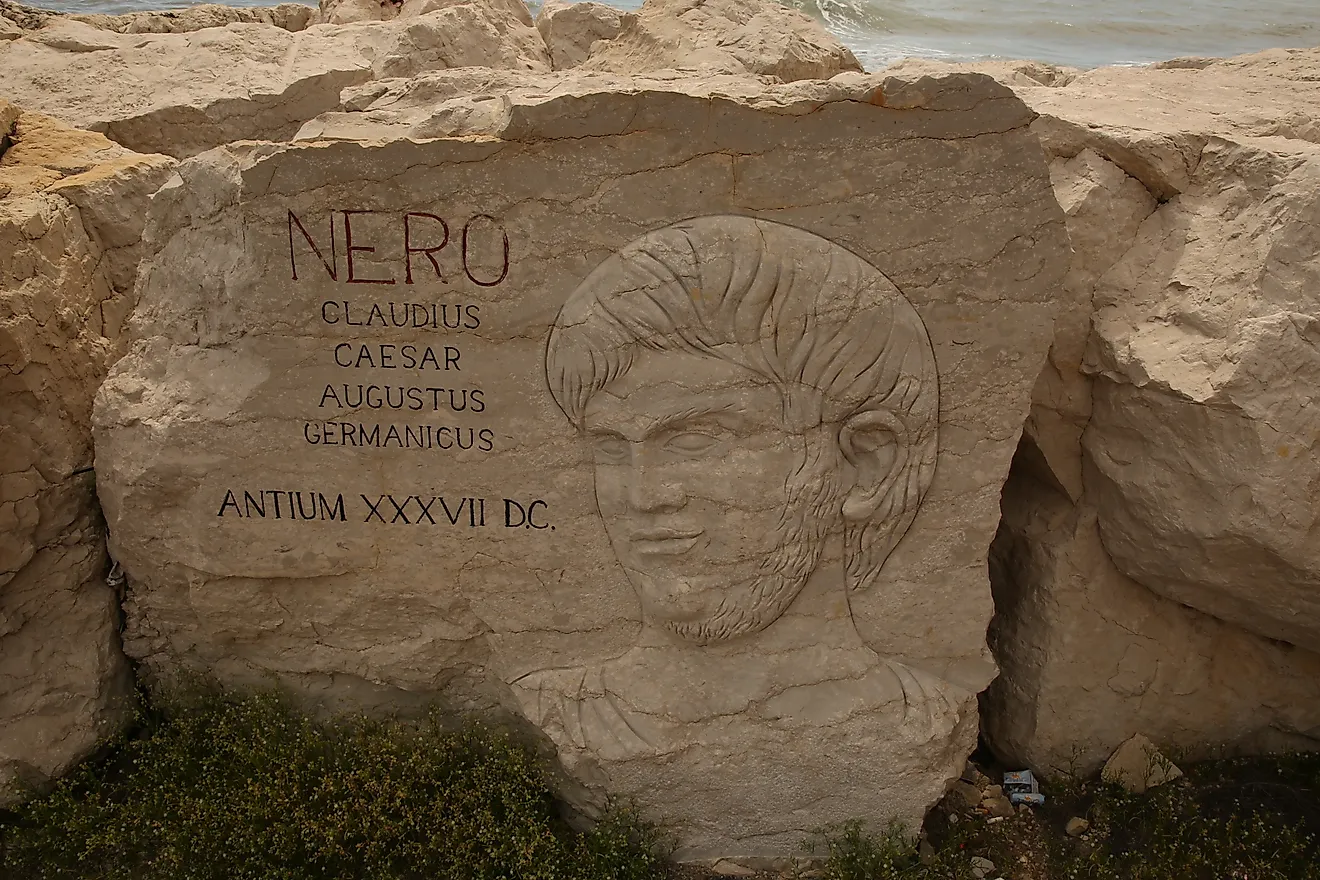
Gaius Claudius Nero

The second Roman commander on this list to serve in the Second Punic War against Carthage, Nero was a high-ranking official who was ordered to Spain in 211 BC to aid Roman forces in fighting the Carthaginian army led by Hasdrubal, the brother of the famed general Hannibal. By clever tactical maneuvers, Hasdrubal escaped with his army and eventually led his troops into northern Italy, near the heart of the Roman Republic. Through reconnaissance, Nero learned of Hasdrubal’s intentions and marched his army by night from Metapontum in southern Italy to its northern frontier. Concealing their movements from the Carthaginians, the Romans linked up with another army under the command of Livius Salinator. At the Battle of Metaurus in 207, the overwhelming Roman army routed the Carthaginian forces, killing Hasdrubal himself in the process. The battle proved vital in stopping the Carthaginian advance into Italy. However, Salinator took credit for the victory, and Nero was later dispatched to Macedonia in 205.
Pyrrhus

While he is better known for the term “Pyrrhic victory,” describing a victory won at nearly unbearable cost, Pyrrhus was a formidable military intellect in his own right. Born in 319 BC, Pyrrhus inherited the throne of Hellenistic Epirus at age 12. But an uprising in 302 removed him from his position, and he was restored to it in 297 with the support of Ptolemy I Soter, ruler of Egypt. Pyrrhus then obtained adjacent lands, including Parauaea and Tymphea, as well as other territories. In 284, Pyrrhus attacked Demetrius I Poliorcetes, king of Macedonia, and annexed western Macedonia before being repulsed by Lysimachus.
Three years later, in 281, Pyrrhus allied with the Italian city of Tarentum in its war against Rome. The following year, he successfully defeated the Romans, but at high cost. Pyrrhus defeated Rome once again in 279 at Ausculum in southeastern Italy, again having a substantial number of his men killed in battle. In 278, Pyrrhus invaded Carthaginian Sicily and proclaimed himself king of the island, but his despotic rule provoked a revolt by the Greek Sicilians, and in 276, he returned to Italy. Pyrrhus then returned to Greece and bested Antigonus II Gonatas, the Macedonian king, in 274. He next turned his attention to Sparta in 272, but was killed in a night skirmish in the streets of Argos.
Why Their Reputations Still Matter
Whether driven by a desire for glory, power, or wealth, all the men above did achieve at least one thing: success in war. However one judges the violence of their age, they proved capable of reshaping wars and states alike. Whatever their motives, their campaigns changed the balance of power in the ancient world, and that is why they remain worth remembering.