The US Lakes Where Lake Sturgeon Still Survive
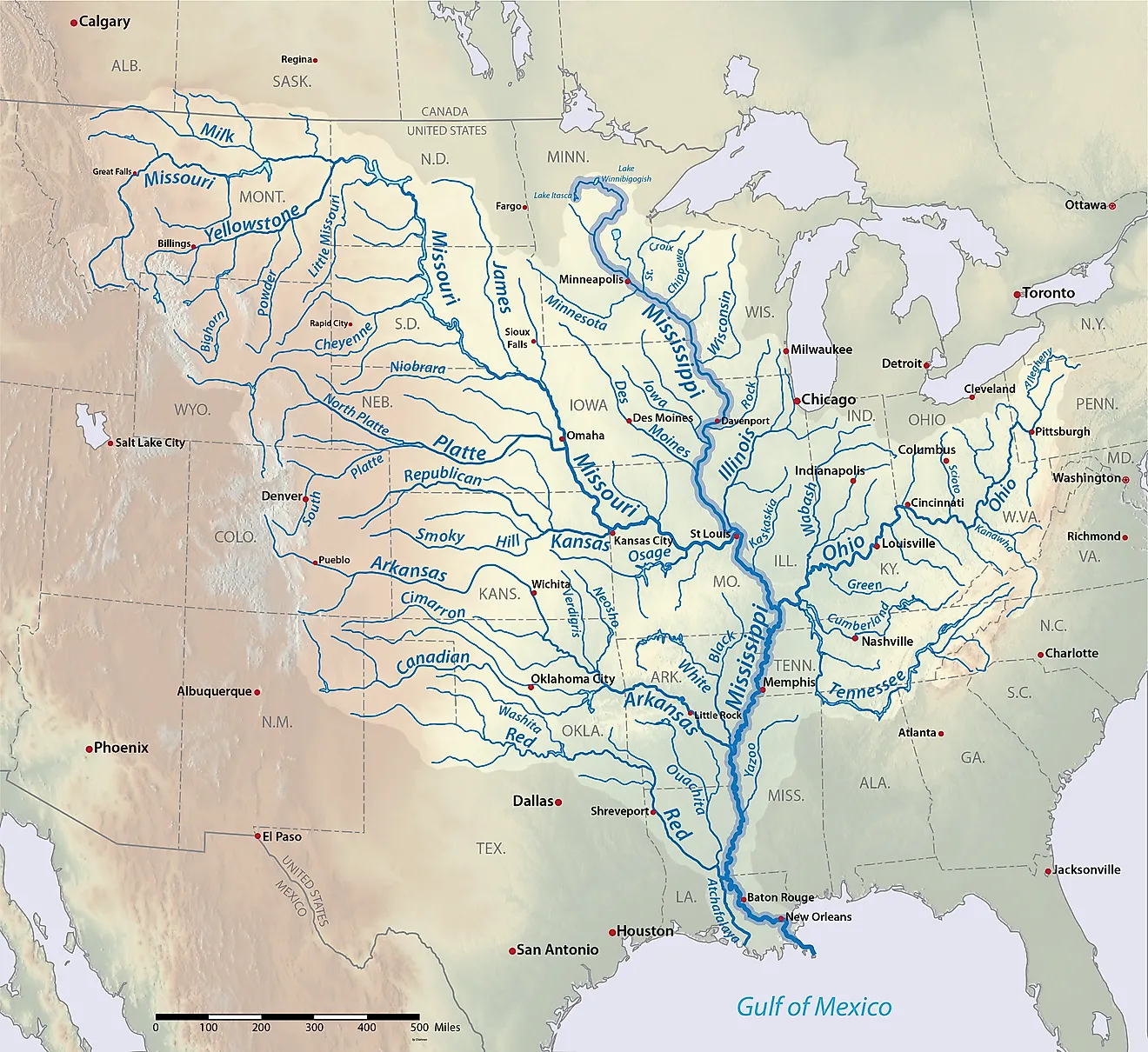
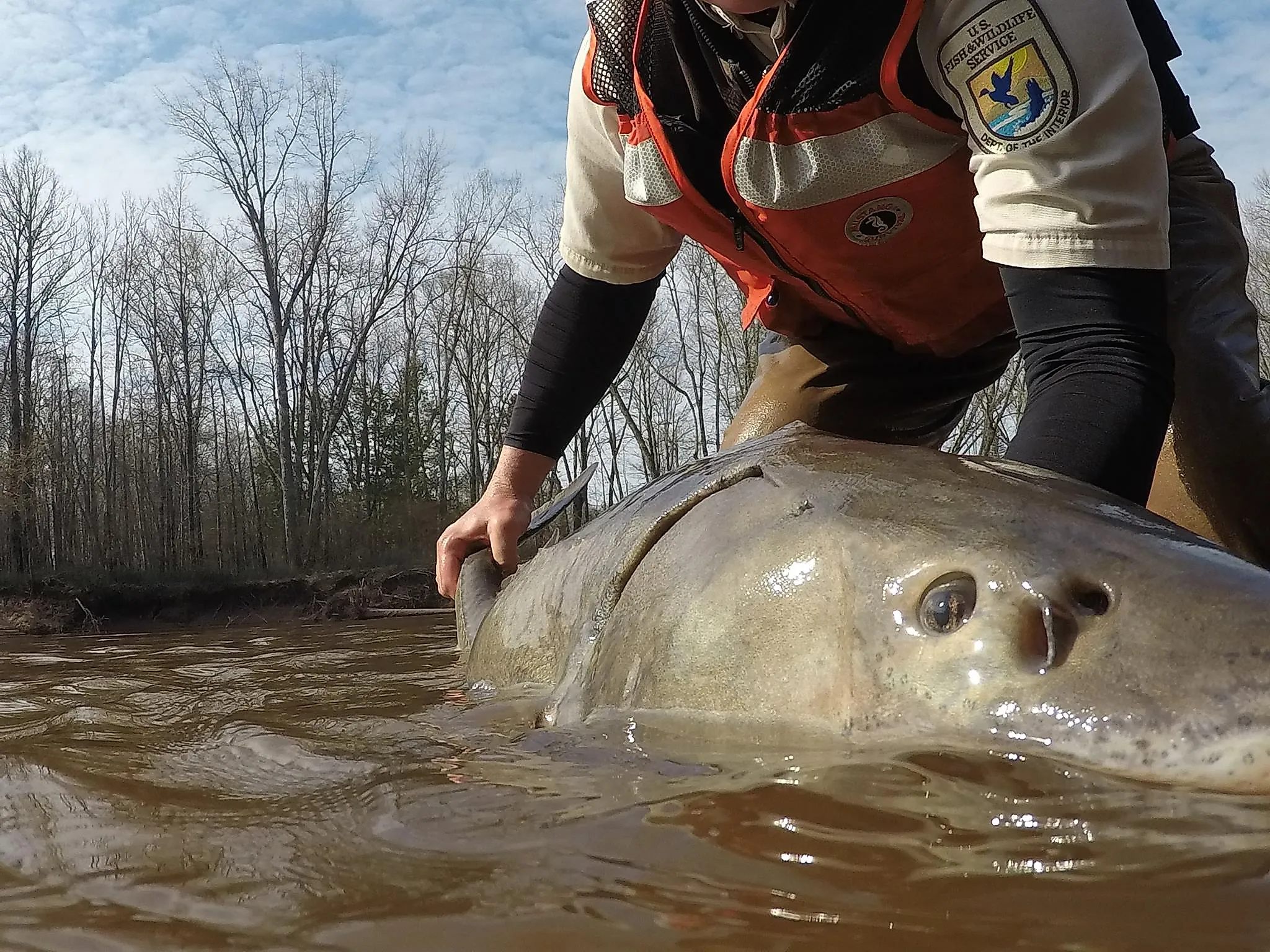
Lake sturgeon still swim beneath the boats on Lake St. Clair and through Wisconsin's Lake Winnebago, sometimes growing longer than the people studying them. A 125-pound fish caught during a 2024 Lake St. Clair survey measured more than six feet. These freshwater fish feed along the bottom, locating food with whiskerlike barbels and sucking it into a toothless mouth.
Across the Great Lakes and smaller inland waters, many surviving populations depend on accessible rivers where another generation can hatch. In several lakes, that generation now includes fish raised in hatcheries and young born in the wild.
Black Lake, Michigan

Black Lake's 2026 sturgeon season lasted 48 minutes. By 8:48 a.m. on February 7, anglers had taken the six permitted fish, closing a season scheduled for up to five days. The largest weighed 79.4 pounds. Black Lake lies in northern Michigan's Cheboygan and Presque Isle counties. Adults spawn in the Black River, and a streamside facility raises young fish to support their recovery. A 2023 juvenile assessment caught more than 400 sturgeon in Black Lake. Most were stocked fish, but some came from natural reproduction. Five of the six sturgeon harvested in 2026 had previously been handled during lake surveys or spring spawning work.
Lake Winnebago, Wisconsin

Wisconsin's Winnebago system supports tens of thousands of adult lake sturgeon and a winter spearing tradition built around them. The 2026 estimates put the connected system at about 25,100 adult males and 16,500 adult females. Those fish occupy Lake Winnebago and its associated waters, including upstream lakes such as Poygan and Winneconne. In spring, adults leave the lakes to spawn in the Wolf and upper Fox rivers. Hundreds can gather along riverbanks at places such as Bamboo Bend in Shiocton and the Sturgeon Trail near New London. These concentrations bring large fish close enough for people to watch from shore. After the Wolf River's April 2026 flooding receded, workers collected eggs and sperm near Shawano Dam for national rehabilitation programs.
Lake Of The Woods, Minnesota

The Rainy River once became so polluted that Lake of the Woods sturgeon struggled to recover even after commercial fishing declined. Adults survived, but their primary spawning and nursery habitat had deteriorated. Cleaner water following pollution controls in the late 1960s and 1970s allowed reproduction to improve.
By 2014, the shared Minnesota-Canadian lake-and-river system contained an estimated 92,000 sturgeon longer than 40 inches, compared with about 16,000 in 1990. On April 18, 2026, Travis Keating caught an 80-inch lake sturgeon in the Rainy River, earning Minnesota's catch-and-release record. The fish measured six feet eight inches, with a 38-inch girth.
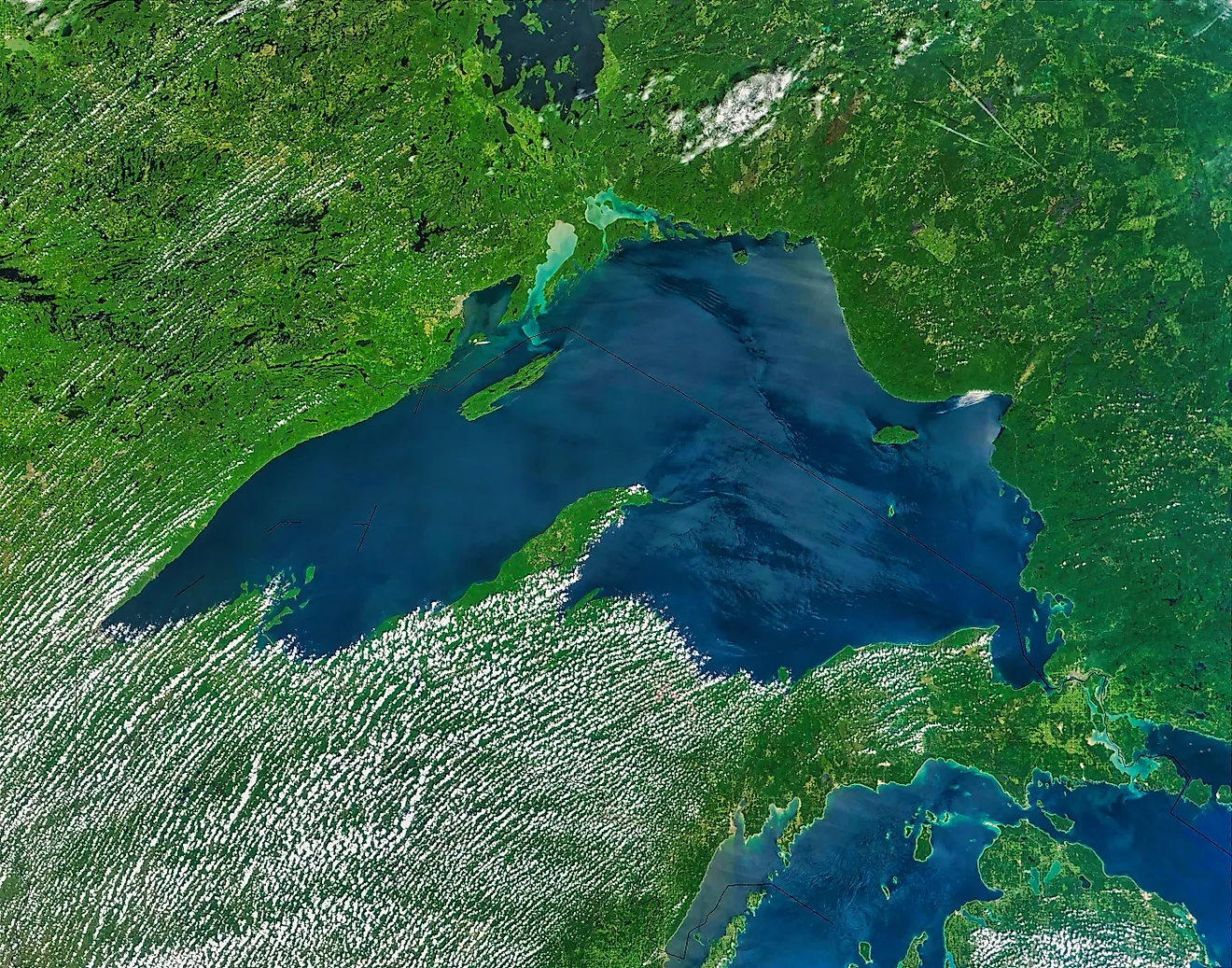
Lake Superior, Michigan, Wisconsin, And Minnesota

Lake Superior's sturgeon use comparatively shallow water around the Apostle Islands and in Keweenaw Bay. Wisconsin's Bad River and Michigan's Sturgeon River retain spawning populations that meet the Great Lakes Fishery Commission's adult-abundance recovery criteria. At the lake's western end, the St. Louis River population had to be reestablished after intensive fishing and pollution had nearly eliminated it.
Stocking began there in 1983. In 2009, workers placed rocks and boulders below Fond du Lac Dam to improve spawning habitat. Two years later, tribal biologists collected naturally produced sturgeon larvae below the dam, the first documented in decades. The adults had reached breeding age and reproduced in a river entering Lake Superior between Duluth and the city of Superior.
Lake Michigan, Wisconsin And Michigan

In spring 2026, lake sturgeon swam upstream into Ozaukee County on the Milwaukee River for the first time in more than a century. Their route out of Lake Michigan had improved after workers altered Estabrook Falls, an artificial obstruction left by historic bedrock mining. The fish passage project, completed in 2025, created routes through the falls under different water levels. Together with other passage improvements, it opened access to more than 30 miles of the Milwaukee River.
Sturgeon reintroduction there began in 2003, giving stocked fish years to grow in the lake before returning upstream. Farther north, Green Bay supports sturgeon associated with the Menominee River, Lake Michigan's largest remaining population. A separate passage project completed in 2015 helps adults travel around dams to reach spawning habitat along the Wisconsin-Michigan border.
Lake Huron, Michigan

A young sturgeon released into the Flint River in 2023 turned up in Lake Huron's Saginaw Bay the following year, about 40 miles away. Its journey followed the connected river system into the lake, where the fish was caught during a state survey. Saginaw Bay's returning sturgeon population includes juveniles stocked into rivers that flow through places such as Flint and Frankenmuth.
Black Lake's streamside facility also raises fish for the Saginaw watershed. In 2025, naturally hatched larvae collected from northern Michigan's Black River spent the summer growing there. They reached four to six inches before release into Saginaw River tributaries. Other sturgeon populations continue spawning around Lake Huron, including in the St. Marys River. In Saginaw Bay, the recently stocked fish must survive years of growth before they can return upstream as breeding adults.
Lake St. Clair, Michigan

Beside metropolitan Detroit, Lake St. Clair holds sturgeon large enough to exceed 100 pounds. In 2024, a survey crew caught a 75.2-inch fish weighing 125 pounds, the longest recorded in the survey's history. The lake sits within the St. Clair-Detroit River corridor connecting Huron and Erie, where the Great Lakes' largest remaining lake sturgeon population survives.
Young fish occupy the St. Clair River's North Channel, while larger individuals appear in surveys across the lake. Spawning habitat in the connecting rivers has also been rebuilt after dredging destroyed much of the original rocky bottom. By 2024, restoration partners had created about 20 acres of reef habitat in the corridor, and sturgeon eggs were appearing repeatedly. The fish lay those eggs among rocks, where gaps provide shelter as water flows over them.
Lake Erie, New York, Pennsylvania, Ohio, And Michigan

Many of eastern Lake Erie's tracked sturgeon stay near Buffalo throughout the year, returning to spawning grounds at the head of the upper Niagara River. Some of the tracked fish traveled across the lake. A recent population estimate placed eastern Erie's adult population at approximately 889 fish.
Restoration is extending into tributaries where spawning populations disappeared. Stocking began in Ohio's Maumee River in 2018. In 2025, releases expanded to the Cuyahoga and Sandusky rivers and New York's Cattaraugus Creek. The creek received approximately 1,000 young sturgeon through work involving the Seneca Nation and state and federal fisheries staff. These programs are planned to run for up to 25 years, adding successive groups of young fish as earlier releases reach breeding age.
Lake Ontario, New York

Niagara Falls separates the sturgeon associated with Lake Ontario's lower Niagara River from those spawning above the falls near Lake Erie. Along Ontario's New York shore, sturgeon also occupy Black River Bay, where a 2023 assessment caught 36 fish. The largest measured 70 inches. Two had previously been tagged in the Genesee River, documenting movement between different parts of the lake's southern and eastern shore.
The Genesee population has received stocked fish since 2003. On May 25, 2021, biologists collected a spawning female there for the first time in more than 50 years. She measured 61 inches and weighed nearly 70 pounds. Another fish recaptured in Black River Bay in 2023 had been stocked into Oneida Lake 20 years earlier. It had navigated past at least seven dams.
Oneida Lake, New York

Oneida Lake's sturgeon can grow unusually quickly. Its relatively warm, productive water supplies food such as snails and zebra mussels, and fish also consume winter-killed gizzard shad. In June 2019, researchers caught a 139-pound sturgeon measuring 72.5 inches. It was estimated to be about 20 years old and likely originated in a 1999 stocking.
Stocking began in 1995, but the lake now produces wild young as well. In 2023, Cornell field crews caught 13 untagged juvenile sturgeon. Age assessments have identified naturally produced fish from every year-class since 2011. Oneida's sturgeon also move beyond the lake through its connected waterways. Stocked fish have reached the Oneida and Seneca rivers, and some have continued through the Oswego River into Lake Ontario.
Lake Champlain, Vermont And New York

Near Burlington, some young lake sturgeon spend the winter in deeper water than adults do. Tracking between 2017 and 2020 found that tagged adults repeatedly used the Winooski River delta in Lake Champlain, swimming upstream during the spawning season. More than half the tagged juveniles in a given year wintered in deeper water on the delta's slope. Some also entered Burlington Bay during colder months, when no tagged adults were detected there. Adults concentrated at a shallower overwintering site near the river mouth. The Winooski also provides spawning and nursery habitat, but fish can reach only its lower 10.6 miles before encountering the Winooski One Dam. Adults tracked during spring reached the upstream spawning site; tagged juveniles entering the river stayed farther downstream.
A Recovery Measured In Decades
A six-foot adult can remain in a lake through years when too few young fish survive to replace it. Lake sturgeon's long lifespans helped their populations persist after intensive fishing, but decades can pass before a young female produces offspring. Oneida now has documented wild-born fish over successive years, while Milwaukee's returning adults are gaining access to river habitat that has been blocked for generations. Even after females mature, they do not necessarily breed each spring. Losing access to a spawning site can interrupt a breeding cycle already separated by years. In Wisconsin, females typically begin spawning at around age 24 to 26 and may wait another 4 to 6 years between spawning runs.