The World Lakes Where Sturgeon Grow Largest
Sturgeon are the closest thing freshwater has to a dinosaur. These armored, bottom-cruising giants have been around for roughly 200 million years, they wear bony plates instead of scales, and the biggest of them can outweigh a grizzly bear and live well past a century. But "largest" is a slippery word with sturgeon, because it depends entirely on the species: a giant lake sturgeon is a very different animal from a giant white sturgeon, which is a different animal again from the almost mythical beluga. So we have gathered the lakes where each kind grows to its most jaw-dropping size, from Wisconsin all the way to the shores of Central Asia. Mind the tackle.
The Caspian Sea (The Undisputed Giant)

Let us start at the top, because nothing else comes remotely close. The Caspian Sea, which despite the name is technically the largest lake on Earth, is home to the beluga sturgeon, the biggest freshwater fish that has ever swum. The record is genuinely hard to believe: a beluga taken from the Volga Delta in 1827 reportedly weighed 3,463 pounds and stretched 23 feet, 7 inches, which is not a fish so much as a small submarine with fins. Belugas can live over 100 years and produce the world's most prized caviar, a double whammy that has, sadly, pushed the species to critically endangered status. No lake on any other continent grows a sturgeon anywhere near this size. The Caspian wins, and it is not particularly close.
Lake Winnebago, Wisconsin

For the lake sturgeon, North America's homegrown giant, the beating heart of the sturgeon world is Lake Winnebago. This shallow Wisconsin lake holds the largest self-sustaining lake sturgeon population on the planet, and it is famous for one of the strangest fishing traditions in the country: sturgeon spearing. Every February, thousands of hardy souls cut holes in the ice, drop into darkened shanties, and wait to spear a prehistoric fish gliding below. It works, too. The system regularly produces fish over 170 pounds, with the biggest on record pushing beyond 200. A lake sturgeon can top 7 feet and live longer than the person hoisting it, making Winnebago a genuine, living, thrashing time capsule.
Lake Roosevelt, Washington

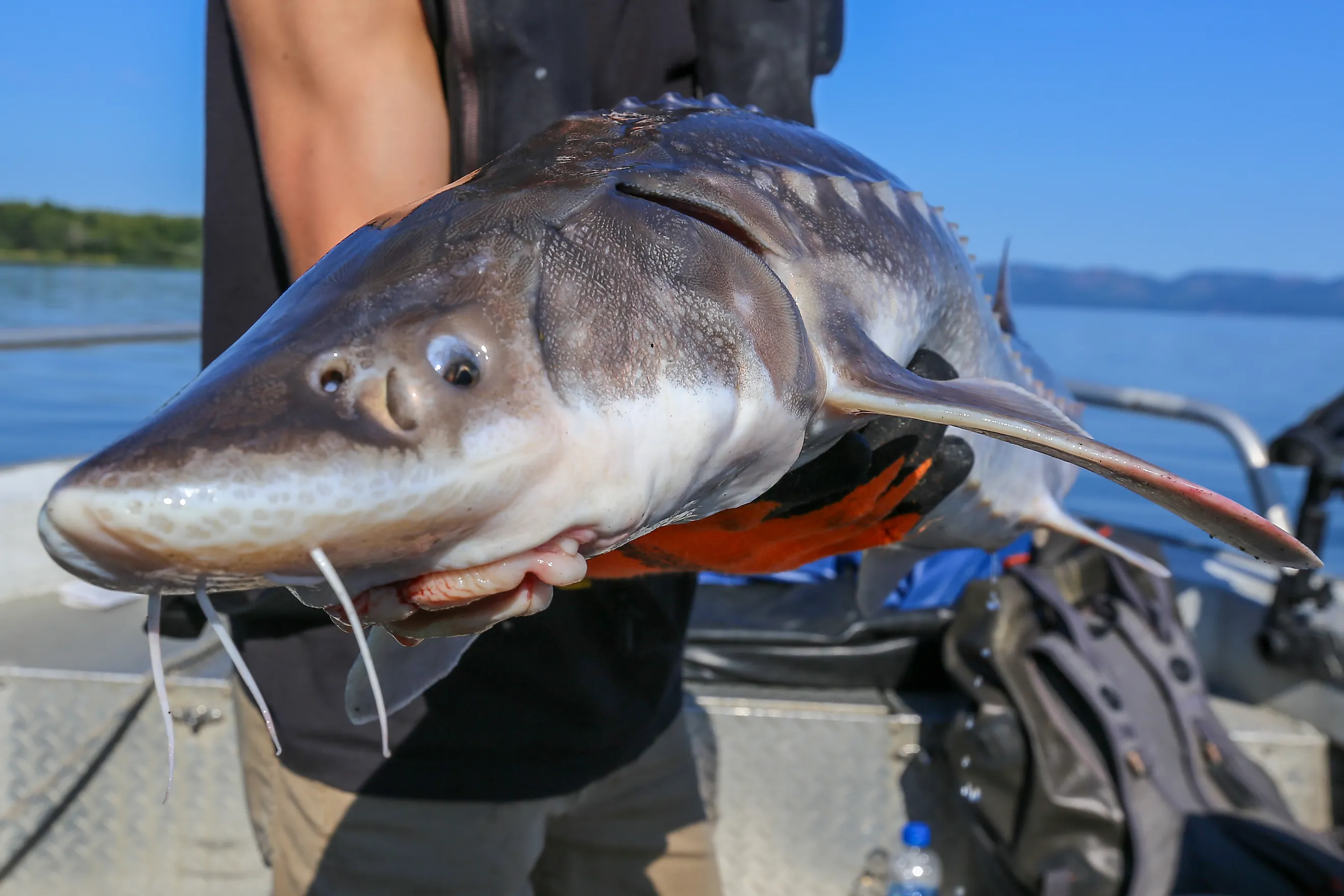
Enter the white sturgeon, the largest freshwater fish in North America and a bruiser that can historically reach 20 feet. Where a river gets dammed, these giants can end up landlocked in the reservoir behind it, and Lake Roosevelt, the huge Columbia River reservoir above Grand Coulee Dam, is a prime example. Tribal fisheries crews there handled a 9-foot white sturgeon weighing 507 pounds in 2014, a fish estimated at 60 to 80 years old, and they have reported an even longer 11-footer that simply overwhelmed their weighing gear. When your scientific equipment taps out before the fish does, you are dealing with a serious animal. These are the closest thing the Lower 48 has to a freshwater monster.
Kootenay Lake, British Columbia

Up in British Columbia, deep and moody Kootenay Lake holds one of the most fascinating sturgeon stories going. Its white sturgeon belong to the Kootenai River population, a genetically distinct group cut off from the rest of the Columbia Basin by natural barriers for thousands of years, essentially their own private lineage of giants. Researchers captured a 350-pound specimen here in 1995 that was estimated at 85 to 90 years old, a fish that was already swimming when the lake's dams were built. Sadly, this isolated population has struggled badly to reproduce in the modern era, which makes every surviving elder in the deep water both a marvel and a warning.
Lake Baikal, Russia
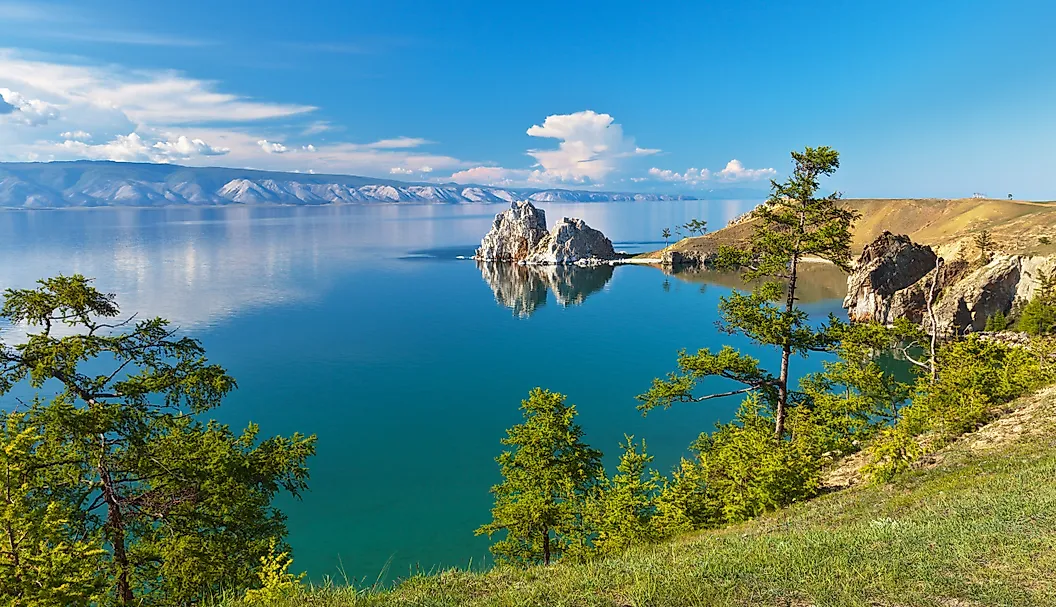
Back to Asia for the deep cut. Lake Baikal, the deepest and oldest lake in the world, is home to its own endemic sturgeon, the Baikal sturgeon, a form of the wider Siberian sturgeon that has adapted to this extraordinary Siberian inland sea. It does not reach beluga proportions, but it can still grow well over 6 feet and weigh in the hundreds of pounds, and it thrives in a lake so vast and deep it holds a fifth of the planet's unfrozen fresh water. Like almost every sturgeon on this list, the Baikal population has been hammered by overfishing and now enjoys protected status. A giant, ancient fish in a giant, ancient lake feels exactly right.
Lake Erie

The Great Lakes were once so thick with lake sturgeon that fishermen treated them as a nuisance, stacking them like cordwood and even burning them as steamboat fuel, which is a brutal thing to do to a living fossil. That reckless era collapsed the population by 1900, but the giants were never entirely gone. Lake Erie made the point emphatically in 1998, when an enormous lake sturgeon measuring 88 inches, roughly 7.5 feet, washed ashore, with the state describing it at around 240 to 250 pounds. Decades of protection and stocking are slowly nursing these fish back, and every huge Erie sturgeon is a hopeful sign that one of the Great Lakes' oldest residents is hanging on.
Lake of the Woods, Minnesota and Ontario

Sprawling across the border between Minnesota, Ontario, and Manitoba, the island-studded Lake of the Woods is one of the best and best-managed lake sturgeon fisheries in North America. Careful, tightly regulated management of this shared border water has allowed it to keep producing genuine trophy sturgeon, and it draws anglers specifically hoping to tangle with a fish older than their grandparents. The connected Rainy River, which feeds the lake, hosts a famous spring run that makes for some of the most reliable big-sturgeon fishing anywhere. It is proof that with enough care, these slow-growing dinosaurs can still thrive rather than merely survive.
Lake Washington, Washington

We finish with the plot twist: some of the largest sturgeon on the continent live in a lake with a city skyline for a backdrop. Lake Washington, the big freshwater lake right beside downtown Seattle, holds white sturgeon that rank among the biggest in North America, cruising the deep water while commuters cross the bridges overhead. Most of the millions of people living around its shores have no idea that genuine freshwater monsters lurk below, quietly minding their own ancient business. It is the perfect note to end on, a reminder that these prehistoric giants are not always off in some remote wilderness. Sometimes the dinosaur is hiding in plain sight, right under the boat.