Why The Mississippi Runs Brown And The Ohio Runs Green
At the southern tip of Illinois, two of North America's largest rivers merge into a single channel that can look split down the middle. Below Cairo, green water from the Ohio and brown water from the Mississippi can run side by side for miles before they finally blend. The seam is sharp enough to show up in photographs taken by astronauts in orbit. The reasons behind each shade trace back hundreds of miles upstream, and after a wet enough season the two colors can trade places.
The Missouri Helps Turn The Mississippi Brown

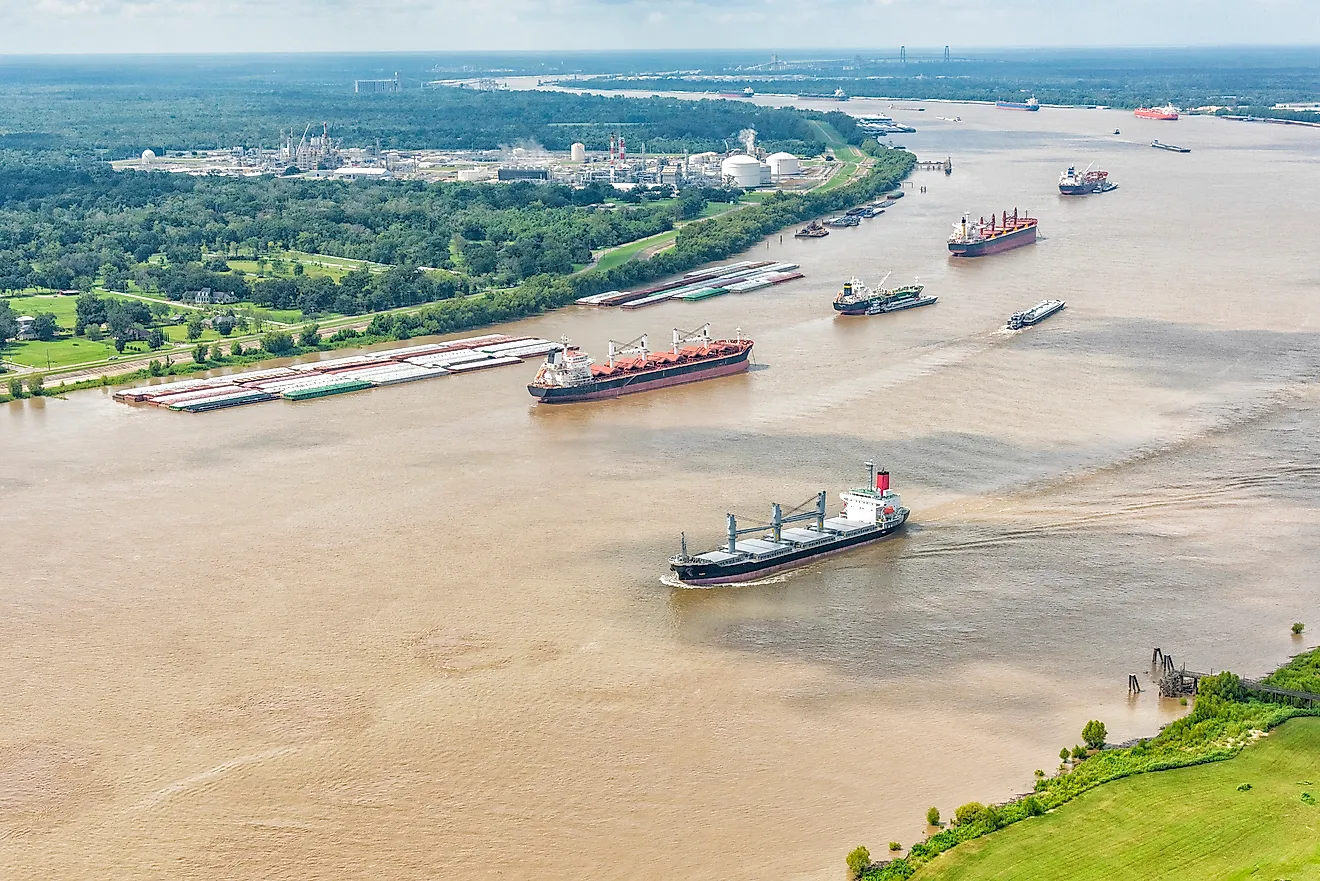
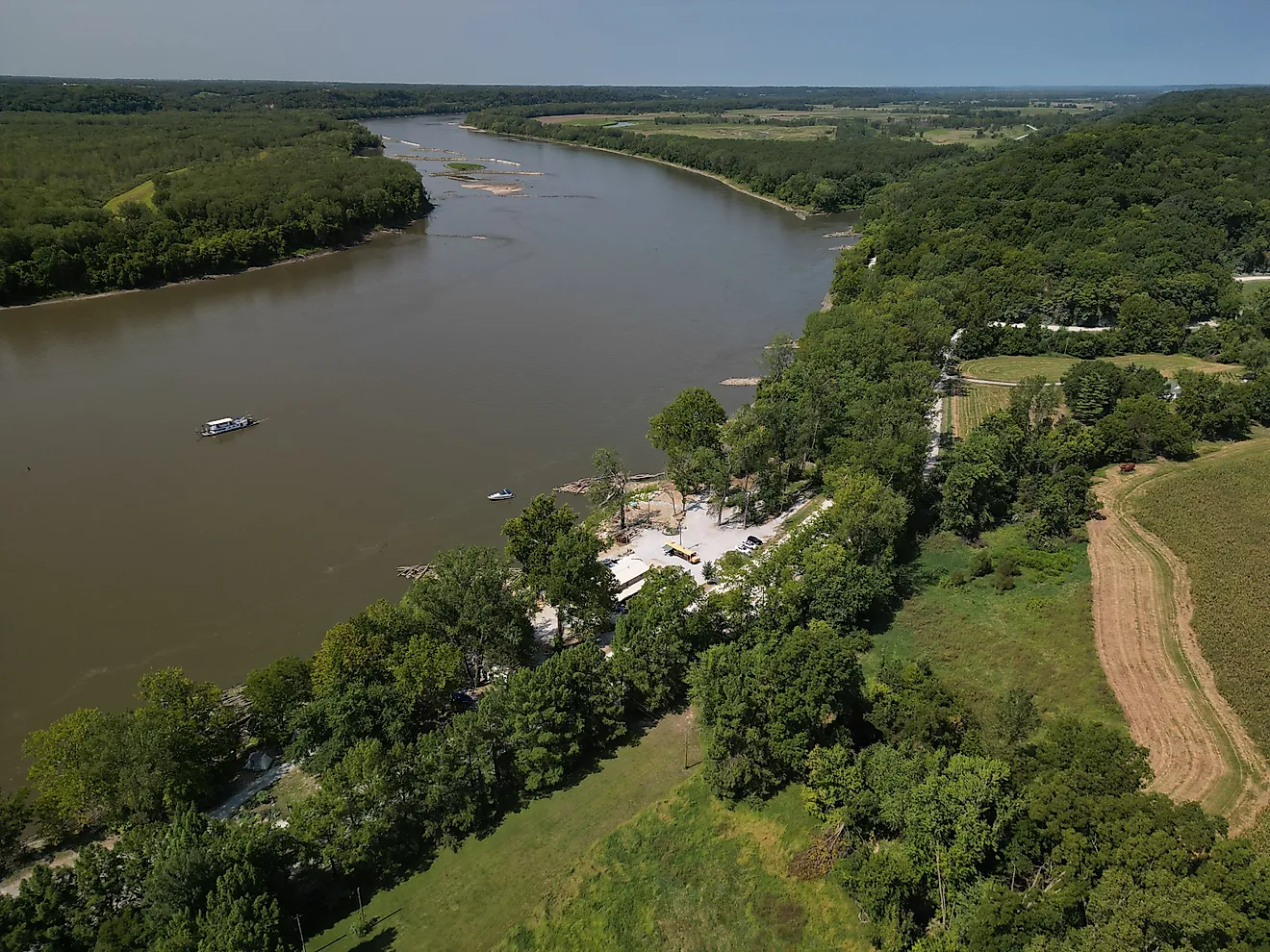
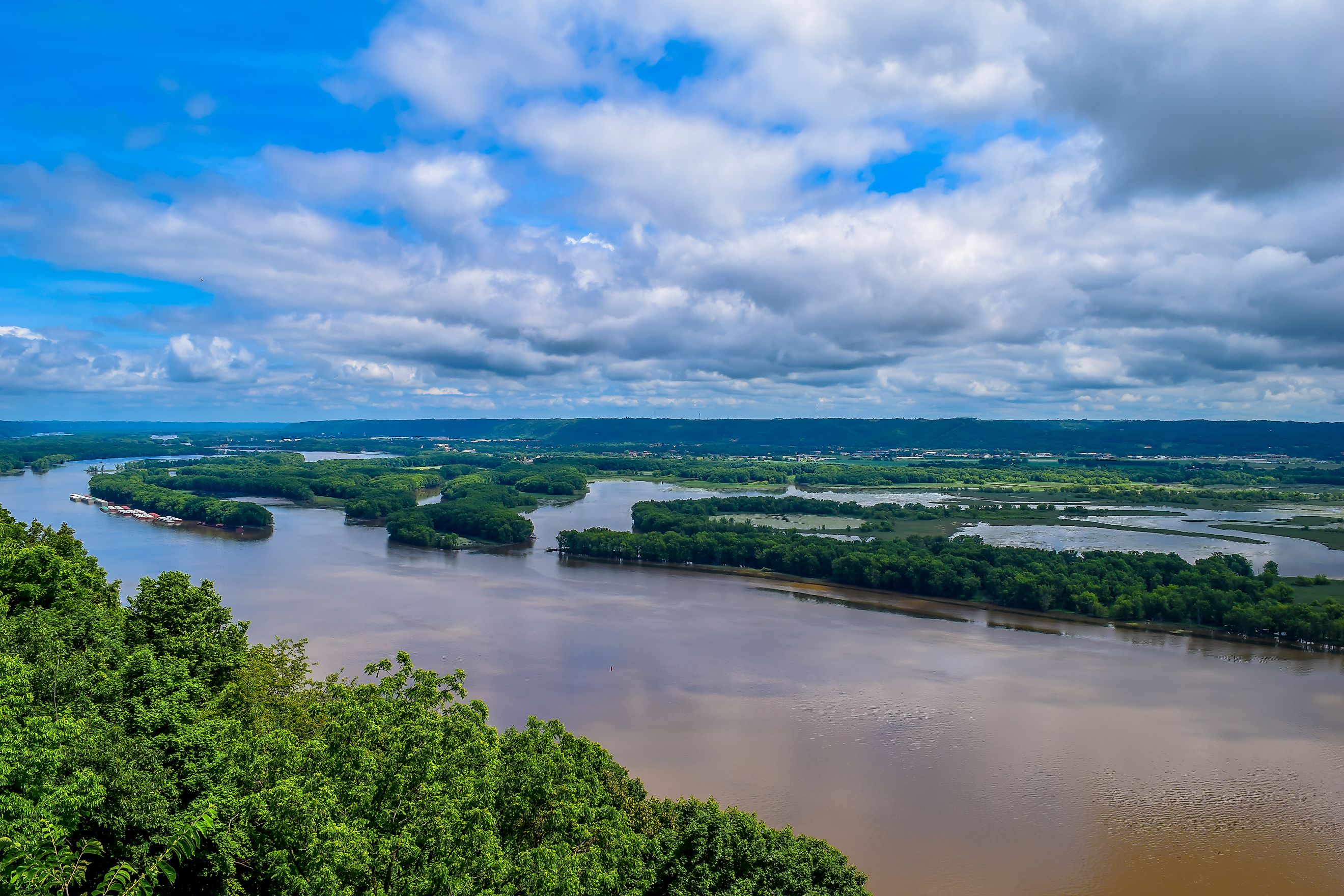
Before the Mississippi reaches Cairo, it has already joined another large river near St. Louis. The Missouri brings muddy water into a comparatively clearer stretch of the upper Mississippi. Below that junction, the combined river has a higher turbidity, the measure of how cloudy the water looks. Much of that cloudiness comes from tiny sediment particles suspended in the current. Runoff washes eroded soil into streams, and fast-moving water can lift sediment off the riverbed. Those particles change how the water absorbs and scatters light, producing a brown or tan appearance. When the current slows, some settle out; stronger flows can pick them up again. The Missouri's reservoirs now trap substantial amounts of sediment before it can reach the Mississippi. Bank protection and soil-conservation measures have reduced the supply, too.
The Ohio's Green Has More Than One Cause

The Ohio's relatively clear water contains living material as well as mineral particles. Algae occur naturally in the river throughout the year, and water rich in these microscopic organisms often looks green. Their chlorophyll absorbs red and blue light while reflecting green. The amount of suspended sediment also matters: a heavy load of brown particles can dominate the color even where algae are present.
Water itself absorbs different wavelengths of light unevenly, with pure water having a faint blue tint. Suspended particles and dissolved organic matter alter the color reaching our eyes. Ohio's green, therefore, reflects a combination of conditions, and an ordinary greenish river does not automatically indicate an algal bloom. During low flows, many rivers become clearer and greener as less sediment remains suspended. For aquatic plants, the reduced cloudiness allows more light to penetrate the water.
The Two Colors Take Time To Mix

At the confluence, both flows enter the same downstream channel, but water takes time to move sideways across its width. Turbulence gradually exchanges water between the two flows. A visible seam can persist while water is already mixing along its edges. The shape of the Mississippi below Cairo helps determine how quickly the colors blend. Bends generate cross-channel circulation, and islands divide and redirect the flow. Measurements downstream of the Ohio confluence found stronger lateral mixing in reaches containing sharp bends than in a relatively straight reach.
Heavy Rain Can Reverse The Colors

On January 12, 2006, an astronaut photographed a brown Ohio meeting a greener Mississippi at Cairo. NASA suggested that very heavy rainfall over the Appalachians and northeastern United States the previous December had increased sediment in the Ohio basin. The rain does not have to fall at Cairo to change the view there. Storm runoff can wash soil into tributaries across a river's drainage basin. Higher flows can also stir up sediment already lying in channels. Because the Ohio and upper Mississippi collect water from different regions, a wet spell can muddy one river more than the other. In the 2006 photograph, the boundary remained distinct roughly three to four miles downstream of the junction.
A Greener Ohio Can Still Have Water-Quality Problems

In 2015, a harmful cyanobacterial bloom spread across hundreds of miles of the Ohio River. Cyanobacteria, often called blue-green algae, can produce toxins. The event prompted recreational advisories and additional treatment measures at drinking-water plants along the river. Warm water and slow flows can favor blooms, especially when nutrients are abundant. These conditions differ from the sediment-heavy runoff that often turns rivers brown after storms. ORSANCO, the interstate commission monitoring Ohio River water quality, tracks chlorophyll along with conditions such as water temperature and dissolved oxygen. Neither river's color can establish whether toxins or other pollutants are present.
Farther downstream, the sediment responsible for much of the Mississippi's brown appearance becomes material that can build land. Deposits carried toward coastal Louisiana have helped form the river's delta and its wetlands. Where sediment reaches suitable shallow coastal areas, it can accumulate; where that supply is restricted, marshes lose one source of replacement material. Dams upstream and levees along the river have changed where sediment travels and settles. The same particles that reduce underwater visibility near Cairo can eventually contribute to ground supporting wetland vegetation. In the Atchafalaya system, which receives part of the Mississippi's flow, sediment has been building two coastal deltas for decades.