What Happens To The Coachella Valley If Lake Mead Hits Dead Pool
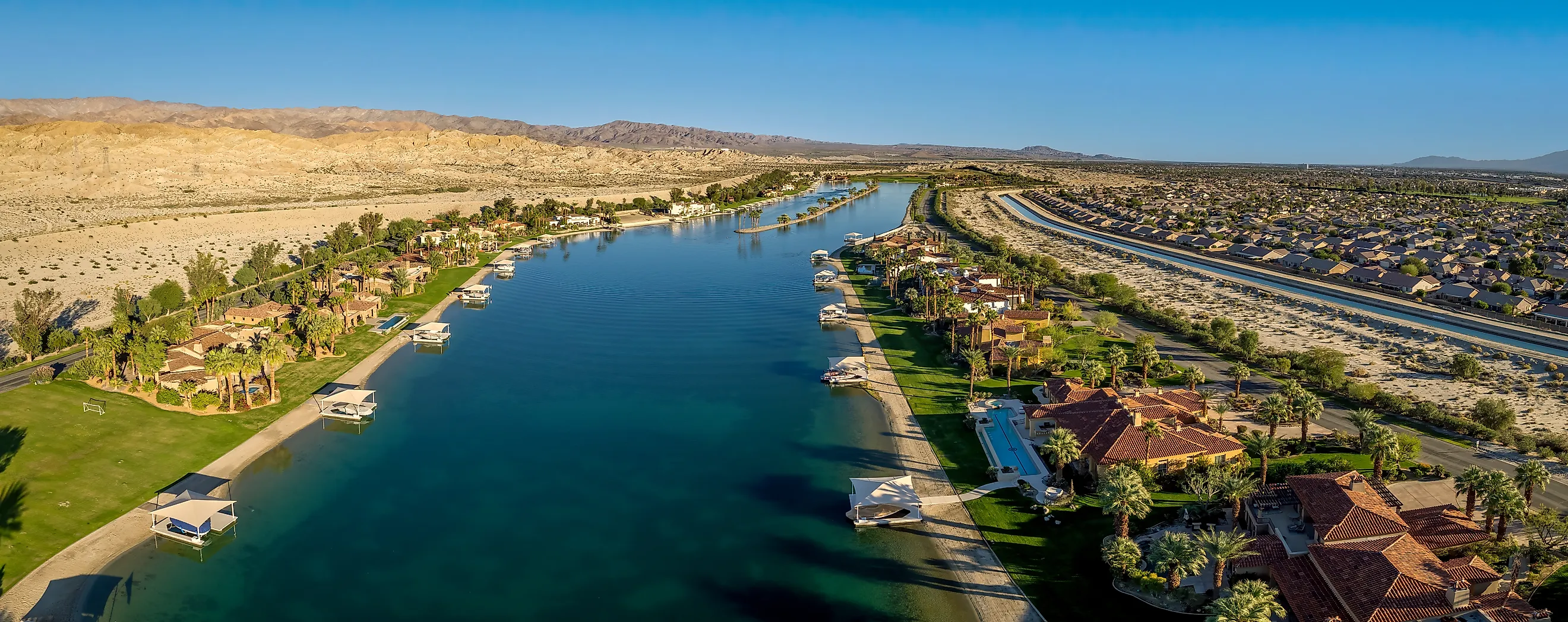
Nobody in the Coachella Valley drinks Colorado River water. The taps run entirely on groundwater pumped from an aquifer holding roughly 30 million acre-feet in its upper thousand feet, which is more than Lake Mead can store at full pool. Colorado River water arrives through the 123-mile Coachella Canal and goes to farms, golf courses and recharge ponds, not to houses. So the dead pool question gets a different answer here than in the Imperial Valley next door. It is not the reassuring one it first appears to be.
The Aquifer Is Bigger Than Lake Mead

One fact separates this valley from every other dead pool scenario, and it is underneath the whole thing.
The Whitewater River subbasin, the valley's principal groundwater basin, has an estimated storage capacity of around 30 million acre-feet in the upper 1,000 feet. Some assessments put the figure closer to 39 million down to the same depth.
Lake Mead at full pool holds about 26 million. The valley is sitting on more water than the reservoir it would be losing.
The River Water Never Reaches A Tap
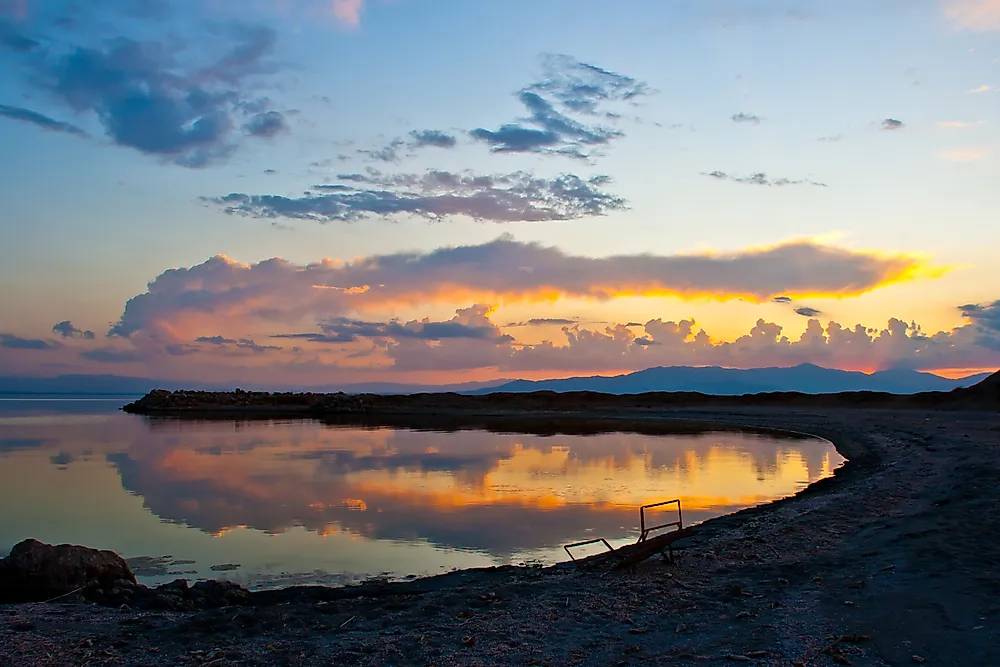
Understanding what dead pool would actually interrupt means knowing what the canal water currently does, and it is not domestic supply.
Colorado River water delivered through the Coachella Canal serves more than 1,200 farms, 36 golf courses within the district, and four groundwater replenishment facilities. Canal water is used only for irrigation and recharge.
Drinking water in the valley is groundwater, full stop. A dead pool at Hoover would not shut off a single household tap directly.
The District Holds A Large Entitlement

What would stop arriving is substantial, and it has accumulated through decades of agreements.
The Coachella Valley Water District's base Priority 3(a) allocation under the 1931 Seven Party Agreement is 330,000 acre-feet. Layered on top are a Quantification Settlement Agreement transfer from Imperial ramping to 103,000 acre-feet by 2026, 35,000 from Metropolitan, 21,500 from San Diego County, 4,500 from the San Luis Rey settlement and 3,000 in prior perfected rights.
The quantified total under the QSA is around 450,000 acre-feet a year. All of it leaves the river at Imperial Dam, far downstream of Hoover.
The Backup Is Already Overdrawn

Here is where the reassuring version falls apart, and the numbers are not close. Annual groundwater extraction in the valley runs around 280,000 acre-feet. Long-term natural recharge of the Indio subbasin averages about 50,000 acre-feet a year. The gap is made up by pumping Colorado River water into the ground.
Since 1973 more than 5.1 million acre-feet of imported water have been replenished into the aquifer at four facilities. Remove that and the basin is running a deficit of roughly 230,000 acre-feet annually against natural inflow.
The State Water Project Does Not Help
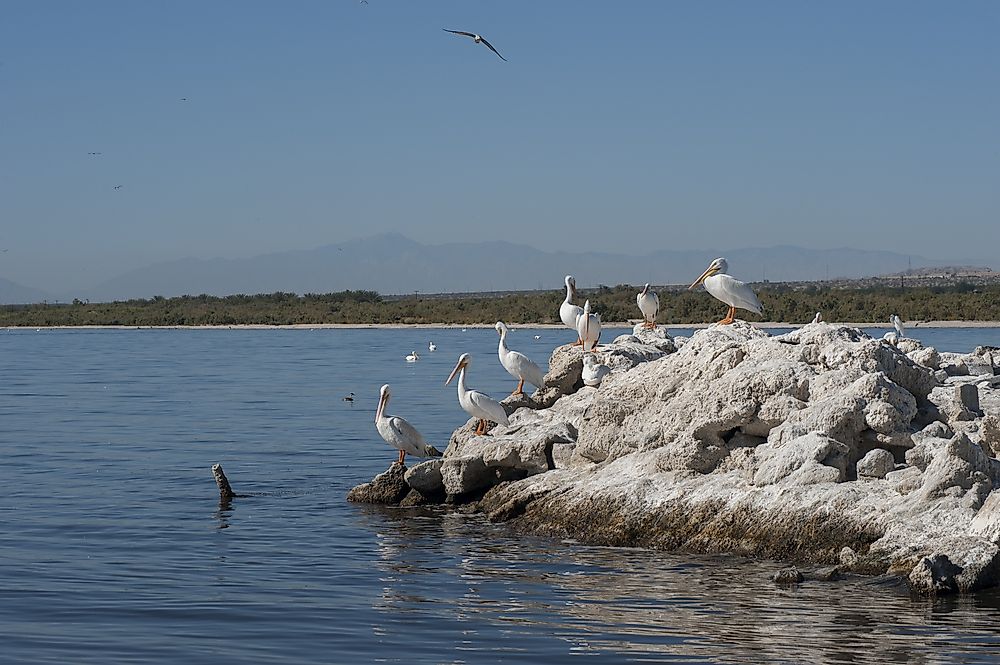
The obvious fallback turns out to be the same water under another name, which is the detail most summaries miss.
CVWD and the Desert Water Agency jointly hold a State Water Project entitlement of 194,100 acre-feet a year, the third largest in California. No State Water Project pipeline reaches the Coachella Valley.
Instead the agencies exchange that entitlement with Metropolitan for Colorado River water, which is delivered to the Whitewater recharge ponds. If the Colorado stops, the exchange has nothing to deliver, and the paper entitlement is 400 miles from the valley with no way to get there.
Agriculture Goes First

The immediate effect would land on the farms the canal was built for in 1948. More than 1,200 farms take canal water, and a quarter to a third of farm irrigation already comes from privately owned wells. Losing the canal means those operations either pump considerably more or stop, and the valley produces the bulk of the American date crop along with table grapes, citrus and winter vegetables.
Golf is the other large canal user. The 36 courses on canal water were specifically converted to it in order to reduce groundwater pumping, so losing the canal reverses that conversion.
Everything Lands On The Aquifer
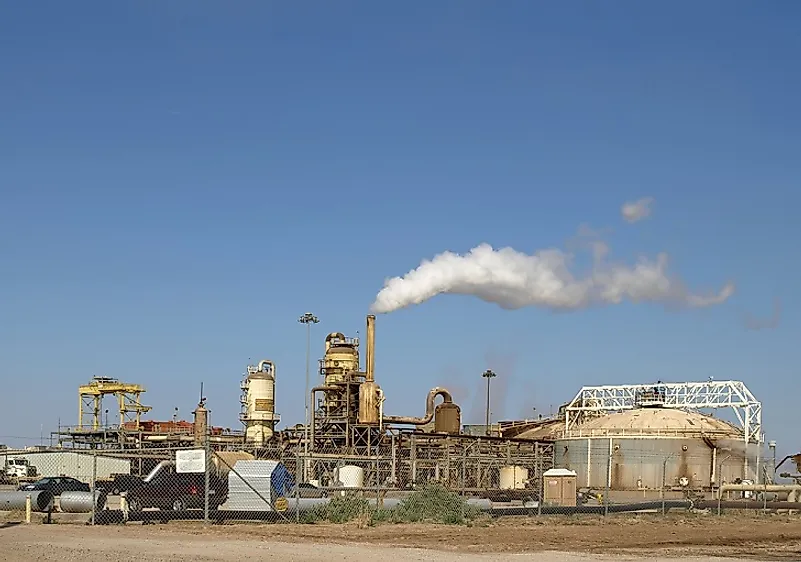
The sequence after a dead pool is less a shortage than a transfer of demand.
Farms, golf courses and landscape irrigation would all revert to groundwater at the same moment that groundwater replenishment stopped. Demand on the basin would rise sharply while the only remaining input dropped to natural recharge.
Thirty million acre-feet of storage is a large buffer. A deficit of 230,000 a year against it is survivable for a long time and is still a deficit, and overdraft brings land subsidence and water quality problems well before a basin empties.
It Is Downstream Of Hoover Like Everything Else

The physical argument is identical to the one next door, and worth restating because entitlements do not create water.
The Coachella Canal branches off the All-American Canal, which takes water from the river at Imperial Dam about 20 miles north of Yuma. Every drop has already passed through Lake Mead.
Dead pool at Hoover is elevation 895 feet, the level below which water cannot leave the dam by gravity. Above it, priority decides who gets what. Below it, there is nothing at Imperial Dam to be third in line for.
How Close It Actually Is

Proportion is worth keeping in view before anybody reconsiders a tee time.
Lake Mead stood at about 1,037 feet in Reclamation's mid-October 2026 reading. Dead pool is 895 feet, leaving roughly 142 feet. Minimum power pool at 950 would halt electricity generation 55 feet before water deliveries were affected.
Power fails well before water does, and neither threshold is close. The useful figure for the valley is not dead pool but how deep the shortage tiers cut in the meantime.
The Short Answer
If Lake Mead reached dead pool, the Coachella Valley would keep its drinking water, because that comes from an aquifer holding more than Lake Mead does. It would lose roughly 450,000 acre-feet a year of canal water that supplies 1,200 farms, 36 golf courses and four recharge facilities, plus a State Water Project entitlement that only exists as an exchange for Colorado River water.
Everything would then fall on a basin already extracting 280,000 acre-feet against 50,000 of natural recharge. Unlike the Imperial Valley, Coachella has a backup. Unlike a real backup, it is already being spent.