The US Lakes Under Permanent Invasive Species Quarantine
A permanent invasive species quarantine is a standing legal requirement, not just a one-season ban. It means every boat entering or leaving a lake must be inspected, decontaminated, or held for a set drying period before it can touch another body of water, and the rule stays in place indefinitely rather than lifting after a single summer. Ten of the lakes now carrying this kind of designation span the continent, from Colorado River reservoirs of the Southwest to a Missouri River lake on the Great Plains and a historic resort lake in upstate New York.
The stakes for compliance are high. Aquatic invaders like quagga, zebra, and golden mussels can clog water intakes, wreck boat engines, and cost water agencies tens of millions of dollars a year once they take hold. In at least one case, an infestation has triggered a federal law restricting how water crosses a state line. The lakes below were selected because a state or federal agency has classified them as infested, contained, or subject to mandatory inspection on a standing basis, not a temporary closure. Each entry notes whether the quarantine is in response to an active infestation or is a preventive measure guarding a lake that authorities hope to keep clear.
Lake Mead, Nevada and Arizona

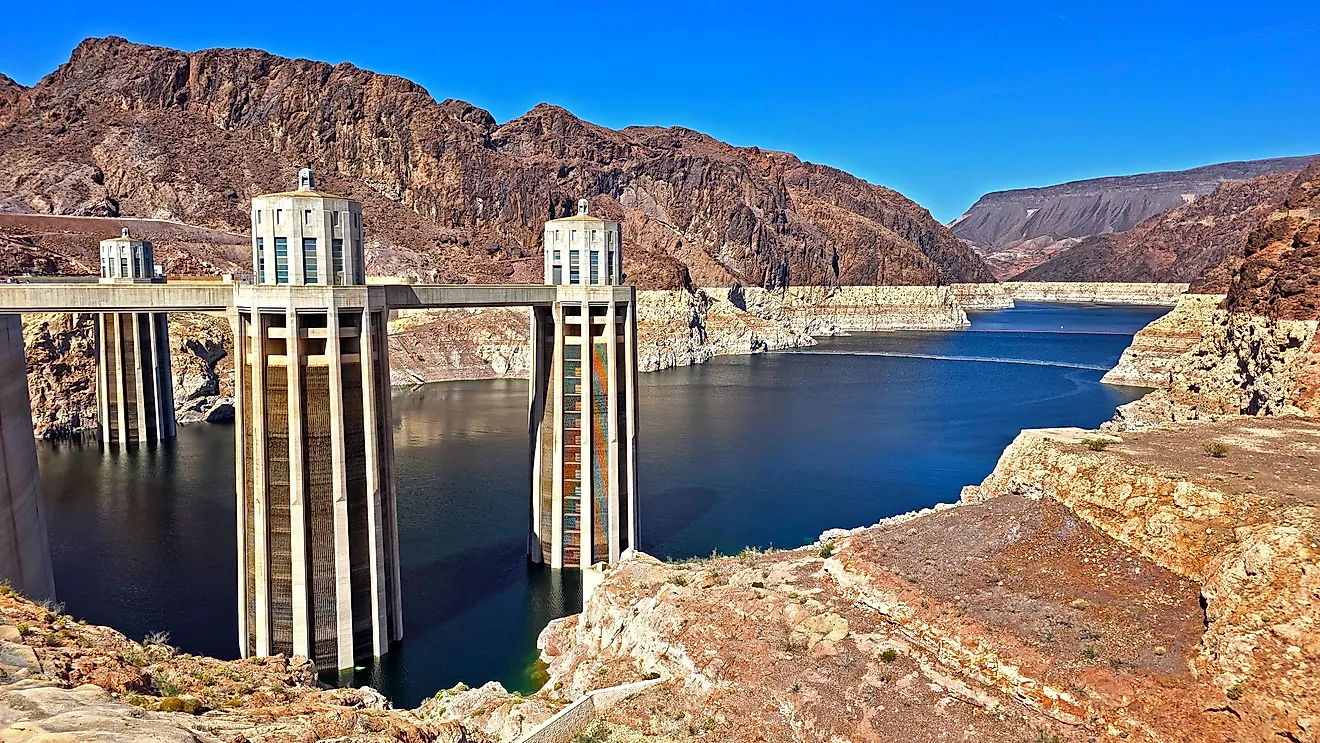
Lake Mead is the largest reservoir in the United States by volume, held back by the Hoover Dam on the Colorado River between Nevada and Arizona. Quagga mussels turned up here in January 2007. It was the species' first confirmed appearance west of the Rockies, and the population has since grown into the trillions. The National Park Service manages the Lake Mead National Recreation Area and now requires boaters to clean, drain, and dry their vessels every time they leave the water. Any boat that has been on Lake Mead is treated as high risk anywhere else in the West. Decontamination stations operate at marinas around the lake, and officials report performing hundreds of decontaminations each boating season.
The infestation has proven impossible to reverse thus far. Water agencies serving Nevada, Arizona, and California now budget millions of dollars annually just to prevent mussels from clogging intake pipes and treatment plants, and the quarantine period for outbound boats has become a permanent fixture of the lake's operations rather than a temporary response.
Lake Powell, Utah and Arizona

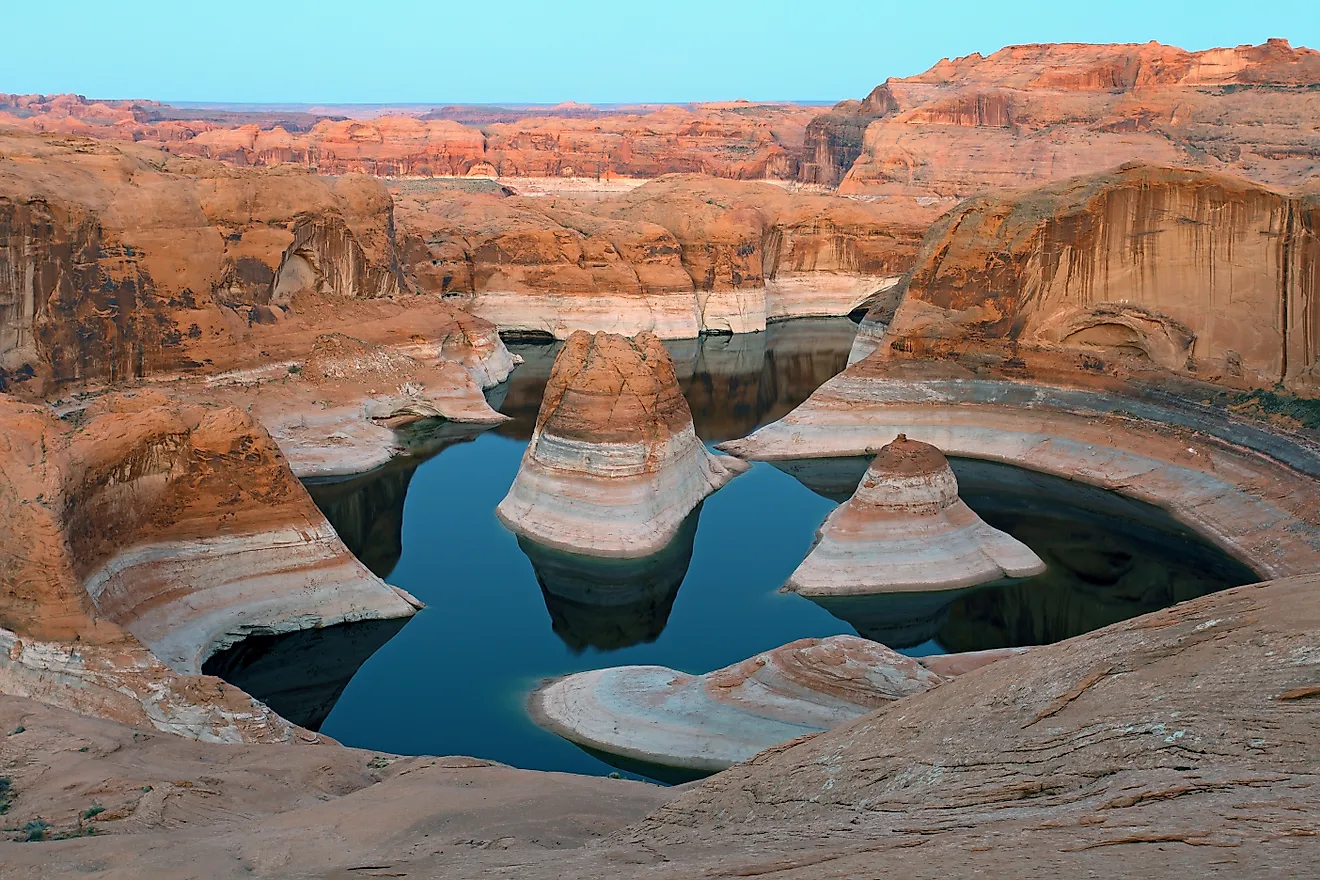
Straddling the border of Utah and Arizona, Lake Powell is the second-largest reservoir in the country and sits inside Glen Canyon National Recreation Area. The destructive quagga mussels were confirmed in Lake Powell in 2012, just five years after they were spotted in Lake Mead downstream. Since then, the species quickly established itself throughout the reservoir's flooded canyons. It remains the only waterbody in Utah currently classified as infested with invasive mussels.
The National Park Service works with Utah's Division of Wildlife Resources and Arizona Game and Fish to operate decontamination stations at the Wahweap, Bullfrog, and Halls Crossing marinas. Crews flush boat engines and other components with water heated to 140°F (60°C) to kill any remaining mussels. Statewide in Utah, agencies inspected more than 288,000 boats and performed over 6,500 decontaminations in a single recent season, with the Lake Powell area accounting for a large share of that work. The inspection requirement applies to every boat leaving the lake, with no end date in sight.
Lake Havasu, Arizona and California

Lake Havasu, formed by Parker Dam on the Colorado River between Arizona and California, was one of the three original sites where quagga mussels were discovered in the West back in 2007, alongside Lake Mead and Lake Mohave. The mussels have since spread throughout the lake and into the Central Arizona Project canal system that draws water from it. The shelled creatures continue to colonize the pumping equipment despite regular maintenance.
Arizona law requires boaters to remove drain plugs and follow clean, drain, and dry procedures before leaving any quagga-infested water. The lake draws roughly a million visitors a year for fishing and boating around Lake Havasu City, so the ongoing inspection requirement affects a large recreational economy. The invader population here shows no sign of declining, and researchers studying potential control methods have admitted the species is likely to persist in the lake for the foreseeable future.
Lake Mohave, Nevada and Arizona

Downstream of Lake Mead and formed by Davis Dam, Lake Mohave was the third lake where quagga mussels turned up in 2007, with colonies confirmed near Katherine Landing within months of the initial Lake Mead discovery. Like its neighbors upstream, Lake Mohave falls within the boundary of the Lake Mead National Recreation Area, and boats moving between the two reservoirs or to other Colorado River lakes are subject to the same standing inspection and decontamination rules.
The lake stretches for about 67 miles (108 km) along the river valley between Nevada and Arizona, and its clear water and consistent year-round temperatures make it a popular destination for swimming and fishing at resorts such as Cottonwood Cove. Because Lake Mohave shares a hydrological connection with Lake Mead, there is little practical hope of ever declaring it mussel-free again. The quarantine on outbound boats functions less as a control measure at this point and more as a permanent barrier protecting the lakes and rivers further downstream and inland that have not yet been breached.
Lake Berryessa, California

Lake Berryessa, a reservoir on Putah Creek northeast of Napa Valley, represents the newest front in this fight. Golden mussels had never been recorded in North America before they turned up in the Port of Stockton in October 2024. Within weeks, the Bureau of Reclamation imposed a mandatory quarantine at Berryessa. Several other Northern California reservoirs followed. Boaters at Berryessa can launch after a solid 30-day quarantine with a red seal attached to the hull, or opt for hot-water decontamination by approved Solano County Water Agency staff at an authorized station on the lake. Only after a clean exit inspection does a boat receive a green seal, allowing it to launch again without delay.
Golden mussels tolerate a wider range of water conditions than quagga or zebra mussels and reproduce year-round, which has led water agencies across the region to treat this as an emerging long-term, rather than seasonal, problem. Because the species was first detected here so recently, Berryessa's program is still evolving toward best practices, but officials give no indication that the quarantine will be lifted anytime soon.
Lake Tahoe, California and Nevada

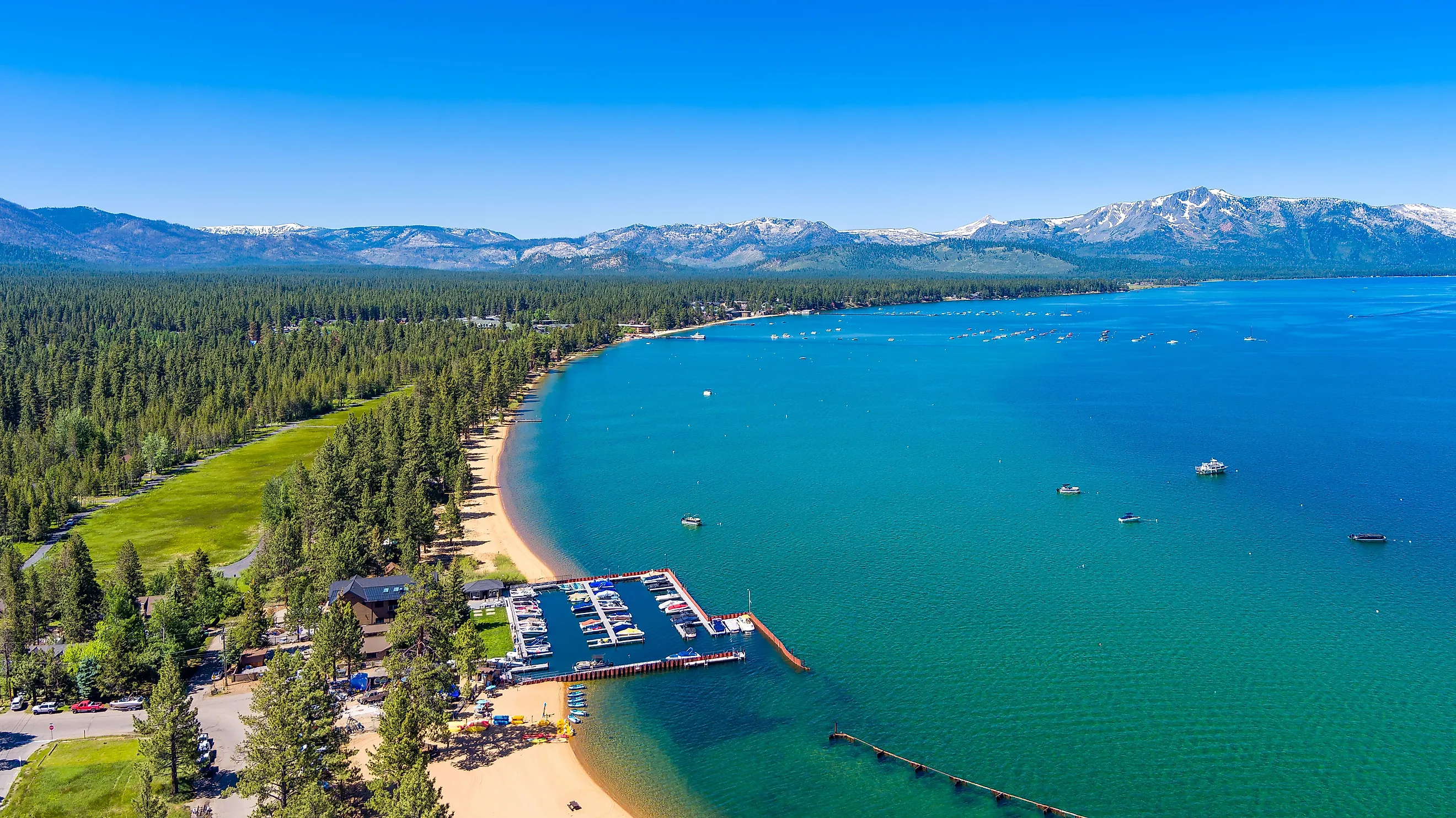
Lake Tahoe sits in a different category from the reservoirs above: no invasive mussel has ever established itself here, and the lake's mandatory watercraft inspection program exists to preserve that status. Since 2008, every motorized boat has been required to pass through one of several regional inspection stations before launching into Tahoe, Fallen Leaf Lake, or Echo Lake, a rule enforced under a Tahoe Regional Planning Agency ordinance. Inspectors check hulls, engines, and ballast tanks for standing water or attached mussels.
After golden mussels reached the Sacramento-San Joaquin Delta, the agency went further in 2025 and required a hot-water decontamination of every visiting motorized vessel, not just those arriving from known infested water. Interceptions climbed as boat sales and long-distance trailering increased, peaking in 2021 when inspectors stopped twenty-eight vessels carrying zebra or quagga mussels, the most in a single season. No invasive mussel has been found in the lake itself. Tahoe's clarity and the roughly $22 million a year in economic damage that mussels could inflict are why the inspection requirement is permanent.
Lake Texoma, Texas and Oklahoma

Lake Texoma, formed by Denison Dam on the Red River between Texas and Oklahoma, illustrates a unique situation of a mussel infestation that escalated into a federal law. Zebra mussels were discovered in the lake in 2009. The following year, federal wildlife officials determined that a water intake station operated by the North Texas Municipal Water District sat partly across the Oklahoma state line because of an earlier boundary survey error.
Because the federal Lacey Act bars the interstate transport of injurious species, the discovery meant the district's normal water pumping would have violated federal law by carrying zebra mussels from Oklahoma into Texas. The district was forced to halt pumping and then build a fully enclosed 46-mile (74 km) pipeline. At a cost of roughly $300 million, the pipeline moves Lake Texoma water to a treatment plant without exposing it to open water anywhere along the route. Congress passed a targeted waiver of the Lacey Act so the district could resume pumping in 2014. The underlying restriction on the open transfer of Texoma water across the state line remains in effect today.
Lake Minnetonka, Minnesota

West of Minneapolis, Lake Minnetonka is one of Minnesota's largest and most developed lakes, ringed by more than a dozen towns along its 125 miles (201 km) of shoreline. Unfortunately, it also appears on the Minnesota Department of Natural Resources' list of infested waters for zebra mussels. That has resulted in a standing statutory designation, which triggers specific rules governing bait harvest, water diversion, and equipment cleaning whenever someone leaves the lake. Minnesota posts orange advisory signage on infested waters at public accesses and has operated a watercraft inspection program since 1992, staffed by nearly 1,000 authorized inspectors statewide during peak season.
Zebra mussels are present in fewer than one in ten of the state's roughly 11,800 lakes, but researchers studying Minnetonka have said eradicating the species here is no longer realistic given how established the population has become. Current efforts instead focus on preventing further spread to other lakes in the western Twin Cities metro. The classification and the inspection requirements that come with it have no scheduled end date.
Lewis and Clark Lake, South Dakota and Nebraska

Formed by Gavins Point Dam on the Missouri River, Lewis and Clark Lake straddles the border of South Dakota and Nebraska and draws more than two million visitors a year to its 90 miles (145 km) of chalk-bluff shoreline. Zebra mussels were confirmed here in 2015. South Dakota's Game, Fish, and Parks Department has since classified the lake as a "containment water." This formal designation was created specifically to manage waters where an aquatic invasive species is established.
Eradication is no longer the goal. Containment is. Surveys conducted in the years following the initial discovery have found that mussel densities on docks and boat hulls have grown substantially, and the classification now applies indefinitely rather than for a fixed review period. Nebraska has responded on its side of the border by adding a dedicated aquatic invasive species fee to boat registrations, which helps fund inspection and containment work at Lewis and Clark and other affected reservoirs in the state. Zebra mussels that have since turned up in more than a dozen additional South Dakota lakes can often be traced back to boats that had been in Lewis and Clark Lake.
Lake George, New York

Known for generations as the "Queen of American Lakes," Lake George in the southern Adirondacks has never been overrun by invasive mussels the way the Colorado River reservoirs have, though zebra mussels are among the handful of aquatic invasive species already documented there, alongside Eurasian watermilfoil and the spiny water flea. More than $7 million has been spent on controlling the species already present. In 2014, the Lake George Park Commission enacted the first mandatory boat inspection and decontamination program east of the Mississippi River, requiring every trailered boat to pass through one of the lake's regional inspection stations before launching, during a season that now runs from mid-April to late November.
Inspectors check the hull, engine, anchor line, and drainage points using a standardized protocol. Any boat that fails inspection is decontaminated on the spot with hot water before receiving a numbered seal that must remain intact to launch. Since the program began, nearly 400,000 boats have been inspected, and officials report no new invasive species detected in the lake in that time. Funding comes jointly from lakeside municipalities, New York State, and the nonprofit Lake George Association. The program operates every season without exception, making it one of the oldest continuously operating mandatory quarantine systems of its kind outside the West.
When a Quarantine Becomes Permanent
Once quagga, zebra, or golden mussels take hold in a reservoir, there is currently no proven way to remove them, so the quarantine becomes a permanent feature of how the lake operates rather than a temporary inconvenience. Some of the busiest recreational lakes in the country, from Lake Mead to Lake Texoma, now run boat inspections as a routine part of a normal weekend, while lakes that have so far escaped infestation, like Tahoe and George, treat prevention as a standing cost of protecting water clarity and property values. For boaters, the takeaway is straightforward: cleaning, draining, and drying a boat before moving it to new water is no longer optional advice; it is often the law.