The Venomous Snakes Of The Chesapeake Bay Shoreline
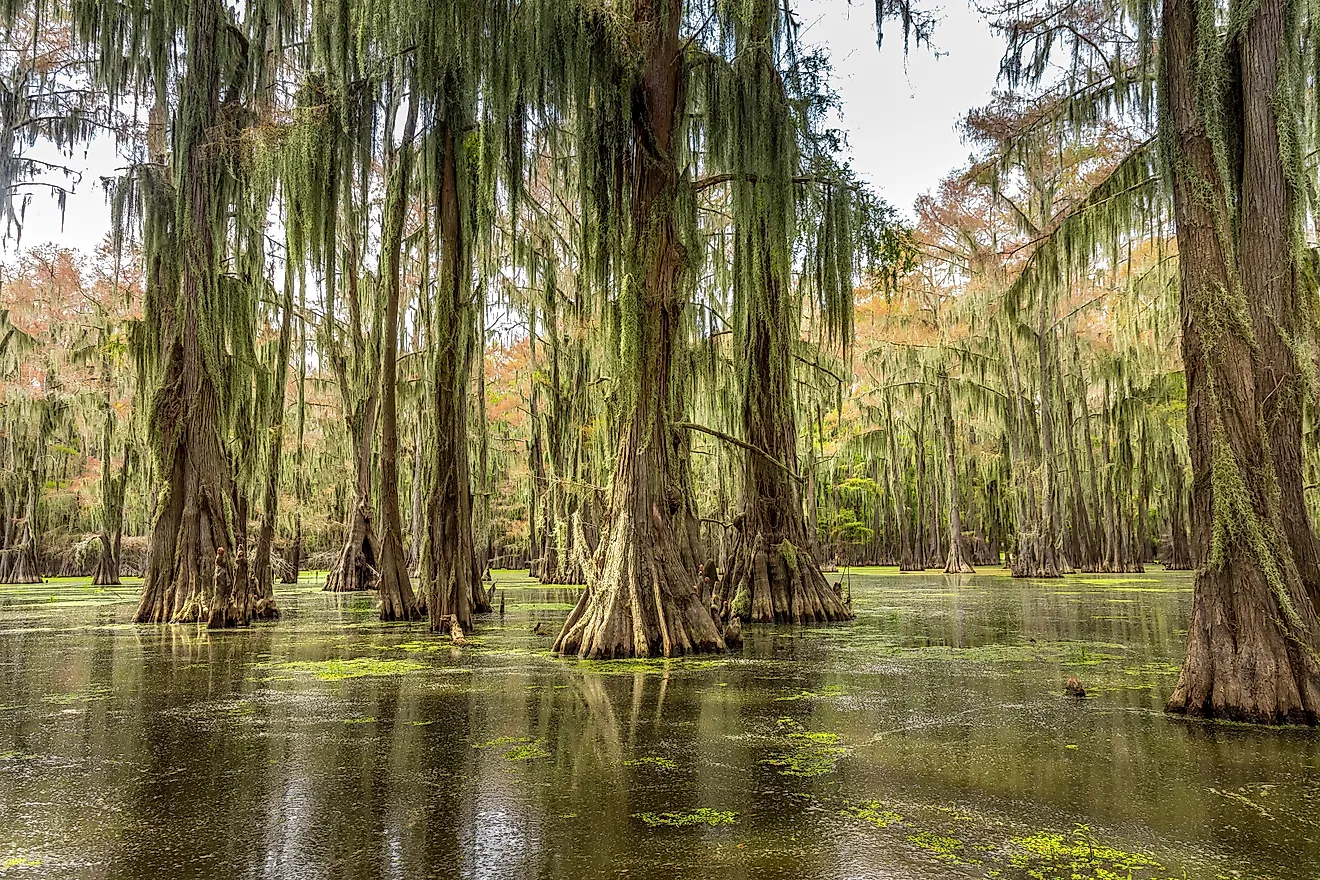
Imagine sitting by a beachside park in the Chesapeake Bay or exploring a historic American Revolutionary War battlefield when you see, out of the corner of your eye a slithering visitor come right up the shoreline. The first question you'll ask is: is it venomous? In most cases, the answer will be no, but there are two venomous snakes that call this region home.
The copperhead and timber rattlesnake share this region with about 18.5 million people. Most of the time, they will stay far away from the beaches, preferring the Appalachian Mountains outside of the bay or the woods surrounding it, but in some cases they can wander right up to houses and even hide in a backyard to find mice or other small prey to eat.
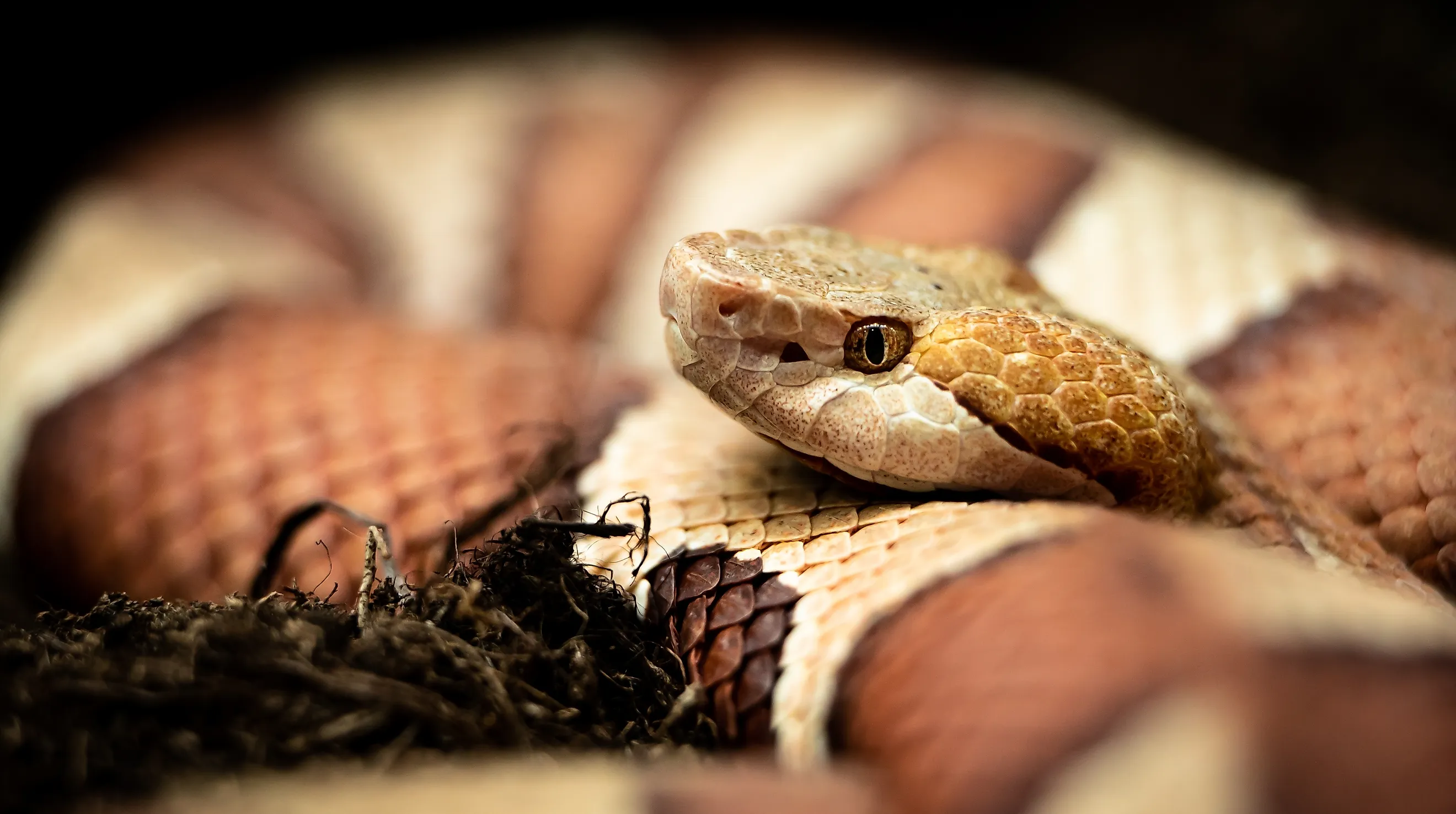
The copperhead is the biggest biter

The copperhead is the most common venomous snake that one might find in the Chesapeake Bay. It's also the only one that might wander very close to the shoreline itself. The eastern copperhead can be found throughout the entire Chesapeake Bay region and 28 states across the U.S. This pit viper is highly adaptable, which explains why it can live in so many states, from Texas to New England.
Its preferred environment is mixed woodlands, or deciduous forests, but it also branches out into mountains, swamps, river basins, streams, and residential areas. In some rare cases, a copperhead might even wander out onto a Chesapeake Bay beach. Copperheads can swim, using their tail as a rudder while keeping their head above the surface. It usually doesn't go underwater like unlike water snakes such as the northern water snake.

Copperheads will find all sorts of nooks and crannies to hide, such as under a rock or even under fallen leaves in a backyard. This is part of the reason why it is the biggest contributor to venomous snake bites. Estimates and reports vary in how high the number of bites are, with some listing copperheads as 2,920 bites annually, but this study dates back to the 1960s. A more modern study from 2025 from the CDC listed the total number of venomous snake bites averaging out at 7,500 per year.
A National Library of Medicine study from 2020 listed 4,700 venomous snake bites that year, with 90% coming from the Crotalinae subfamily of Viperidae, containing copperheads, rattlesnakes, and cottonmouths. Although that study on Outcomes of Copperhead Snake Envenomation Managed in a Clinical Decision Unit didn't give an exact number, it did mention that the majority of those Crotalinae bites were from copperheads.
Why do copperheads bite so much?

There's a misconception that copperheads will deliberately bite humans for no reason. This, however, is not true, as copperheads only strike in defense, due to being threatened.
One common theory as to why copperheads strike more is due to a behavioral tendency. Rather than other venomous snakes that flee when approached by a human, copperheads will try to blend in via camouflage, and if that fails, they will strike.
However, some research has contradicted this finding. The Susquehannock Wildlife Society simulated a boot stepping on a copperhead snake to see how it would react. They tested 69 snakes, and of those, only two struck at the boot.
So why so many bites? As mentioned above, copperheads are more likely than other venomous snakes to wander into towns, cities, or backyards. In addition, humans may provoke the snake by trying to handle it or kill it.
Is copperhead venom dangerous?

No amount of venom is good for any living creature, but in general the answer is no. Copperheads have hemotoxic and cytotoxic venom, which attack blood cells and tissue. They do not possess the powerful neurotoxins of some rattlesnakes.
A copperhead can deliver an average of 26 milligrams of venom in a bite, which falls below the 40 to 100 milligrams needed to kill a human. Also, copperheads are far more likely to give dry bites with no venom.
This likely will be no consolation to a victim of a copperhead bite, as it can be very painful and cause nausea and tissue damage.
The timber rattlesnake hides in the mountains above the shore

The timber rattlesnake is the most venomous snake in the Chesapeake Bay region, growing anywhere from 3 to 5 long. Its scientific name is Crotalus horridus, meaning (roughly) dreadful rattler.
Its venom profile varies depending on the geography. In the Northeast and Appalachian area, they have a hemotoxic venom similar to copperheads. In the Southeast and along the coastal plain, it has neurotoxic venom that can interfere with breathing by interrupting nerve signals to the muscles used for breathing. This means that a timber rattlesnake in the Chesapeake Bay will not have the neurotoxins.
A timber rattlesnake can inject more than 100 milligrams of venom, but much like the copperhead, it can also do dry bites.

Unlike the copperhead, the timber rattlesnake is very unlikely to head right down to the shoreline. That's because they typically choose to live in forests, such as hardwood and pine, although they can hide in agricultural fields. Their preferred habitat depends on the region, as those up north tend to live on south-facing slopes with rock crevices that they can sleep in, while in the south they can live in the swamps or lowland hardwood forests.
In the case of the Chesapeake Bay, they are only found in the Appalachian Mountains section of Maryland and Virginia, due to preferring the higher rocky environments to hide and hunt.
Are timber rattlesnakes big biters?

Of the 7,500 annual snake bites, rattlesnakes are responsible for roughly half, but this is across all rattlesnake species. There is no exact number for how many people timber rattlesnakes bite.
However, based on the available evidence, it is likely that the number is quite low, because timber rattlesnakes tend to be very shy around humans. During the day, they hide in a coiled position, waiting for prey, while during the winter they may hibernate alone or in dens shared by other snakes.
The Smithsonian's National Zoo & Conservation Biology Institute notes that the timber rattlesnake is "more docile than other members of its family" and will likely respond to a threat by staying motionless. It may also shake its rattle to warn off approaching predators or humans. The rattle is made of keratin segments that create a buzzing noise when the snake vibrates it. Keratin is the same material that makes up hair and nails in humans.
Staying snake smart

Snakes are wild animals, meaning their behavior isn't always easy to predict, but the one key fact to remember is they aren't interested in humans. If anything, an encounter with a human is far more likely to end with the snake's death than the human's, as only around 4 to 5 people die annually in the US from snake bites.
If the snake is in a park, simply keeping your distance and informing others nearby about its presence is the right move. In addition, wearing proper footwear, watching your step, and not reaching underneath holes or rocks in the woods are all good ideas. Should a snake wander into a residential area, you should contact the local wildlife authorities, because in the Chesapeake Bay states of Virginia and Maryland it is illegal to kill a snake, including the copperhead and timber rattlesnake.