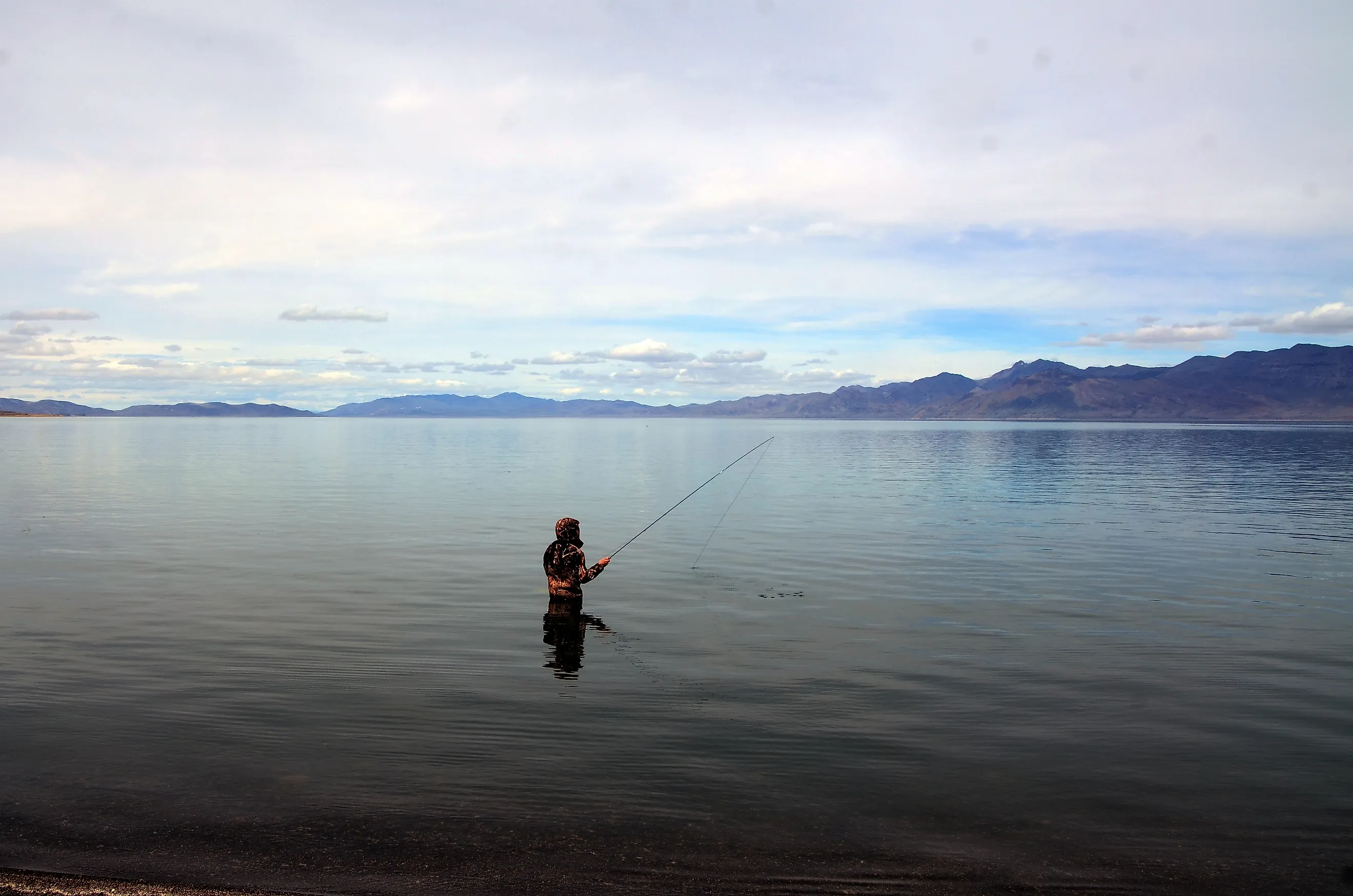
The Best Fly Fishing Lakes In America
Fly anglers climb onto stepladders in Pyramid Lake to reach cutthroat trout the size of a leg. Wild brook trout spawn along the November shoreline of Maine's Moosehead Lake. Rainbows rise to insect hatches on New York's Lake Placid every spring. A float tube gets a beginner into fish at Oregon's East Lake by afternoon. These ten American lakes reward a fly rod in ways no river quite matches.
A few hold fish worth traveling across the country to chase. Others put a newcomer onto trout within a short cast of the parking lot. This guide covers what makes each lake good for fly fishing and which species to target. It also explains the seasons, the regulations, and the real cost of a day on the water once licenses and permits are counted.
Pyramid Lake, Nevada

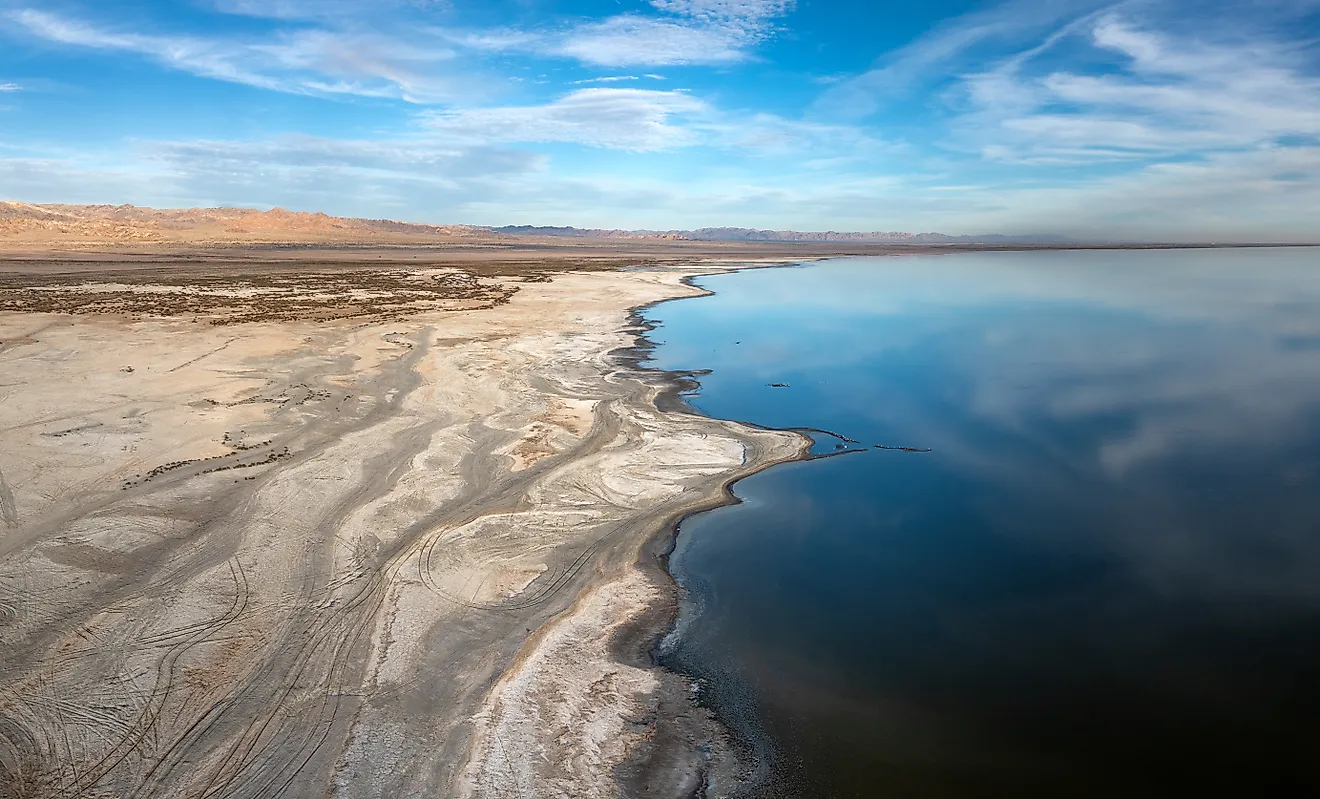
Among the lakes where trout grow largest, few match the shoreline fly fishing at Pyramid Lake. About 35 miles northeast of Reno, this 125,000-acre desert lake reaches roughly 348 feet (106 m) deep and is the ancestral home of Lahontan cutthroat trout. It ranks among the lakes that produce record-breaking fish. The 41-pound cutthroat caught here by Johnny Skimmerhorn in 1925 remains the world record, while Pyramid Lake Fisheries continues to manage the population as both a recreational and trophy fishery.
Fly fishing is particularly unusual here because enormous trout move within casting distance of shore. During winter, cutthroats cruise the shallows for insects and small crustaceans. As spawning season approaches, mature fish concentrate inshore, with the shore bite typically peaking around mid-April. On shallower beaches, fly anglers famously wade out and fish from ladders to reach deeper water, while midges beneath indicators and woolly buggers on sinking lines are established approaches.
Pyramid Lake lies entirely within the Pyramid Lake Paiute Reservation, so a Nevada fishing license is not required. Anglers 12 and older instead need a Tribal fishing permit. As of 2026, the Tribe sells fishing permits for the October 1 through June 30 fishing period. But travelers should check the current Tribal regulations before visiting.
Henrys Lake, Idaho

Henrys Lake has produced trout of almost absurd proportions. A 36-inch rainbow-cutthroat hybrid caught here in 2022 was estimated at 17 to 20 pounds. Idaho's 8-pound state-record brook trout also came out of these waters. Yellowstone cutthroats are another major target for fly fishing. In 2024, surviving hybrids sampled by Idaho Fish and Game averaged 22 inches, the highest average recorded in at least 20 years. Idaho stocked 1.543 million trout in 2025, and about 85% of its Yellowstone cutthroats are hatchery-origin.
The roughly 6,077-acre lake sits at about 6,500 feet in eastern Idaho, close to the Montana border and Yellowstone National Park. Its shallow, highly productive water and extensive aquatic vegetation support abundant trout food, making the margins and weed beds particularly interesting for fly anglers before warming summer water pushes fish deeper. Summer and early fall are prime periods for open-water fishing.
Visitors need an Idaho fishing license to fish in Henrys Lake. A nonresident one-day license currently costs $22.75, with consecutive additional days costing $7 each, while Idaho residents pay $13.50 for a day before any applicable price lock discount. Henrys Lake is open year-round, but the areas around Staley Springs and within 100 yards of Hatchery Creek are closed to fishing. Trout are catch-and-release throughout the remainder of the lake from February 15 through the Friday before Memorial Day weekend.
East Lake, Oregon

East Lake is one of the rare places where a beginner can try fly fishing from shore while someone with a float tube can spend the day chasing much larger trout across open water. The Oregon Department of Fish and Wildlife specifically calls the lake popular with fly fishers, with anglers having success within 200 feet of shore and along the eastern and southeastern shorelines early and late in the day. Boats, pontoons, and float tubes generally provide the best fishing.
The lake sits inside Newberry Caldera, about 42 miles south of Bend, and has rainbow and brown trout as the main fly-fishing targets. Kokanee also live here. An Oregon fishing license is required for anyone 12 or older. In 2026, adults pay $29 for one day, while annual licenses cost $50 for residents and $138 for nonresidents. Anglers ages 12 through 17 pay $10 for an annual youth license, and children under 12 do not need one.
ODFW's July 2026 report had anglers catching large numbers of 16- to 18-inch rainbow trout, along with trophy brown trout over 24 inches. The lake remains open to fishing year-round, although tiger trout must be released. Low water levels were making larger boats difficult to launch in summer 2026, another reason a float tube or pontoon can make sense for a fly angler.
Spinney Mountain Reservoir, Colorado

There are two costs to remember before casting in Spinney Mountain Reservoir in Colorado. Firstly, a 2026 Colorado fishing license costs $18.07 for one day for residents and $21.90 for nonresidents. Anglers buying annual licenses generally also need the $12.76 Habitat Stamp if they are ages 18 through 64. The second is that Spinney Mountain is inside a state park that charges an entrance fee. 2026's daily entry runs $10-$15 per vehicle or $4 for individual entry without a vehicle.
Once inside, fly fishers quickly see why Colorado gave Spinney Mountain Reservoir its Gold Medal Water designation. The 2,444-acre reservoir is nationally renowned for trophy-sized rainbow, cutthroat, and brown trout. Anglers have pulled record-class cutbows from it for years, the rainbow-cutthroat hybrids that reach exceptional size in its rich water.
The man-made lake, which is in South Park, southwest of Denver, restricts fishing to artificial flies and lures. Bait and scented offerings are prohibited, giving fly anglers an unusually prominent place in the fishery. Current regulations allow only one trout of at least 20 inches to be kept. Northern pike are also abundant enough that their harvest is encouraged.
Manzanita Lake, California

Fly fishing is the main reason many anglers drive to Manzanita Lake. The National Park Service calls it nationally known for the sport, and Lassen Volcanic National Park lists it as a California-designated blue-ribbon fly fishery. The rainbow and brown trout here are wild rather than freshly stocked. Managers stopped stocking the lake decades ago, and NPS says it still supports a healthy, self-sustaining trout fishery.
The lake sits at about 5,850 feet (1,783 m) near Lassen's northwestern entrance, with views toward Lassen Peak and Chaos Crags. Its clear water can make the fishing surprisingly technical. NPS recommends a six-weight fly rod between 9 and 10.5 feet, while waders and float tubes are commonly used. Only non-motorized boats are allowed, giving anglers another way to move beyond the sections of shoreline where vegetation can interfere with casting.
The entire lake is catch-and-release, with artificial flies or lures and a single barbless hook required. Anyone 16 or older needs a California fishing license. In 2026, a one-day license costs $21.09 for residents or nonresidents. There is also the cost of entering Lassen Volcanic National Park. From April 16 through November 30, a seven-day pass costs $30 per private vehicle, $25 per motorcycle, or $15 for someone entering on foot or bicycle. Winter admission is cheaper.
Becker Lake, Arizona

Fly anglers have only 107 acres to work at Becker Lake, but Arizona manages that small body of water with large trout in mind. Located two miles northwest of Springerville in the White Mountains, the lake sits at 6,910 feet (2,106 m) inside the much larger 622-acre Becker Lake Wildlife Area. Arizona Game and Fish manages it as a special-regulation trout water, limiting the number of trout stocked in hopes of growing the surviving fish as large as possible.
Those rules suit fly fishing well. Becker is open year-round, and anglers work it with artificial flies and lures rather than bait. Rainbow trout are the principal attraction, and Arizona Game and Fish manages the water for larger fish rather than large numbers of catchable trout. Anyone 10 or older generally needs an Arizona fishing license. For someone visiting for a day, the current short-term combination hunt-and-fish license costs $15 for an Arizona resident or $20 for a nonresident. Annual general fishing licenses cost $37 and $55, respectively.
Lake Placid, New York

When insects begin hatching over Lake Placid, rainbow trout come into play for fly anglers. New York DEC specifically says fly fishing for rainbows during hatches can be good, and in spring 2026 the state planned to stock another 8,840 eight-inch rainbow trout in the lake. Lake trout reproduce naturally here, while brook and brown trout are also present.
Lake Placid covers 2,173 acres, stretches roughly four miles, and reaches 151 feet (46 m) deep in the Adirondacks of northern New York. A public DEC launch provides boat access from the southern end. New York also makes a short fly-fishing trip relatively inexpensive. Anglers 16 and older generally need a freshwater license, with a one-day license costing $5 for residents and $10 for nonresidents in 2026. Seven-day licenses cost $12 and $28, respectively.
Lake trout have their own April 1 through October 15 season and 15-inch minimum, and ice fishing is prohibited. For fly anglers, however, the rainbows are the more compelling reason to come, particularly when a hatch turns the surface of this deep Adirondack lake into feeding water.
Moosehead Lake, Maine

Brook trout weighing three to seven pounds have been documented spawning along the shoreline of Moosehead Lake. That is unusual even here, since most of the lake's brook trout reproduce in tributaries. Maine fisheries biologists found these large fish beginning their shoreline spawning in mid-November, sometimes continuing into January. For fly anglers, wild brook trout join landlocked salmon as two compelling reasons to explore Maine's largest lake.
Moosehead covers 74,890 acres of Maine's North Woods and reaches 246 feet (75 m) deep. Maine lists wild brook trout and lake trout among its primary fisheries, while landlocked salmon are supported by both natural reproduction and stocking. Multiple developed launches provide access around such an enormous body of water. A 2026 fishing license costs $18 for one day whether you're a Maine resident or visitor, while annual licenses cost $30 and $83 respectively, before agent fees.
This isn't a compact trout pond where every shoreline is within easy reach. Its deep, cold, well-oxygenated water supports salmon, lake trout and brook trout across nearly 75,000 acres, while its tributaries and outlets sustain fisheries of their own. For someone coming with a fly rod, the possibility of encountering a wild Maine brook trout weighing several pounds is what separates Moosehead from the average northeastern trout lake.
Naknek Lake, Alaska

More than 150,000 acres (60,702 hectares) of water make Naknek Lake the largest lake entirely contained within an American National Park. It stretches across Katmai National Park and Preserve in southwestern Alaska, where Arctic char, lake trout, and all five species of Pacific salmon are abundant. Naknek itself is so large that boats are the practical way to reach many fishing areas, with road access and a launch available at Lake Camp near King Salmon.
The most distinctive fly fishing is around Brooks River, which empties directly into Naknek Lake. Brooks is fly-fishing only, allowing unbaited, single-hook artificial flies, and rainbow trout cannot be kept in the river or within one-quarter mile of its mouth in Naknek Lake. An Alaska sport-fishing license is required, with current nonresident prices of $15 for one day, $30 for three days, and $45 for seven days. A king salmon stamp is additionally required when fishing for kings.
However, there is another animal competing for the fish here. Katmai's salmon runs support some of the highest densities of brown bears on Earth. Brown bears and grizzlies are some of the most dangerous animals found in national parks, and the NPS warns that anglers often fish in the same places bears do. At Brooks River, fishing must stop when a bear comes within 50 yards, with flies removed from the water and hooked fish released.
Yellowstone Lake, Wyoming

Fishing Yellowstone Lake comes with an unusual responsibility. Every native Yellowstone cutthroat trout caught must go back into the water, while every invasive nonnative lake trout must be killed. The rule is part of a conservation effort that began after lake trout were discovered here in 1994. Biologists estimate the cutthroat population crashed from several million fish to roughly 500,000 by the mid-to-late 2000s, only about a tenth of its former numbers.
Today, Yellowstone Lake still holds the largest population of wild cutthroat trout in North America. There is plenty of lake to cover with a fly rod. Yellowstone Lake spans about 132 square miles (342 km²), reaches 430 feet (131 m) deep, and sits at 7,733 feet (2,357 m) in Yellowstone National Park, primarily in Wyoming. Its native cutthroats feed heavily on aquatic insects and other small invertebrates, including mayflies and leeches.
Anglers 16 and older don't need a Wyoming fishing license. Instead, a Yellowstone permit costs $40 for three days, $55 for seven days or $75 for the season. Only artificial flies or lead-free artificial lures are permitted throughout the park, hooks must be barbless, and bait is prohibited. Bringing any sort of vessel, including a float tube, requires a boat permit and must first pass an aquatic-invasive-species inspection.
Picking Your Water
The best fly-fishing lake depends partly on what you want at the end of the line. Pyramid Lake has produced a 41-pound Lahontan cutthroat, Spinney Mountain produced two Colorado-record cutbows in 2025, and Moosehead supports wild brook trout that can weigh several pounds. Other lakes stand out for healthy wild populations or unusual fishing rules. There is considerably more to lake fly fishing than simply finding trout.