The Waterfalls That Freeze Solid Every Winter
Every winter, photos of a "frozen" Niagara Falls go viral, and every winter, they are a little misleading. Niagara does not freeze. Its spray coats the cliffs in thick ice, but underneath, millions of gallons of water keep pouring over the edge every minute. Some American waterfalls, though, really do turn to ice. Smaller streams, higher elevations, and long stretches of subzero cold transform them into towering columns and curtains that climbers scale and hikers walk behind, almost every year.
Why Most Waterfalls Keep Flowing

Moving water is hard to freeze. As a river cools below freezing, it forms tiny crystals called frazil ice that drift with the current instead of locking into a solid sheet. Spray and mist freeze first, building ice around the edges of a waterfall while the main flow keeps tumbling down behind it.
A waterfall only freezes solid after the stream feeding it slows or freezes too. That is why the biggest falls almost never stop. In 1848, an ice jam on Lake Erie cut off Niagara's flow and the falls went nearly silent for about 30 hours, but that was a blockage upstream, not a true freeze. The waterfalls that do freeze are fed by small creeks, spring seeps, or snowmelt that slows to a trickle in deep winter.
Bridal Veil Falls And The Fang, Colorado

At the head of Telluride's box canyon, Bridal Veil Falls drops 365 feet, making it the tallest free-falling waterfall in Colorado. Each November, as temperatures plunge, it freezes into a giant pillar of ice clinging to the canyon wall, with a historic hydroelectric plant perched right at the top.
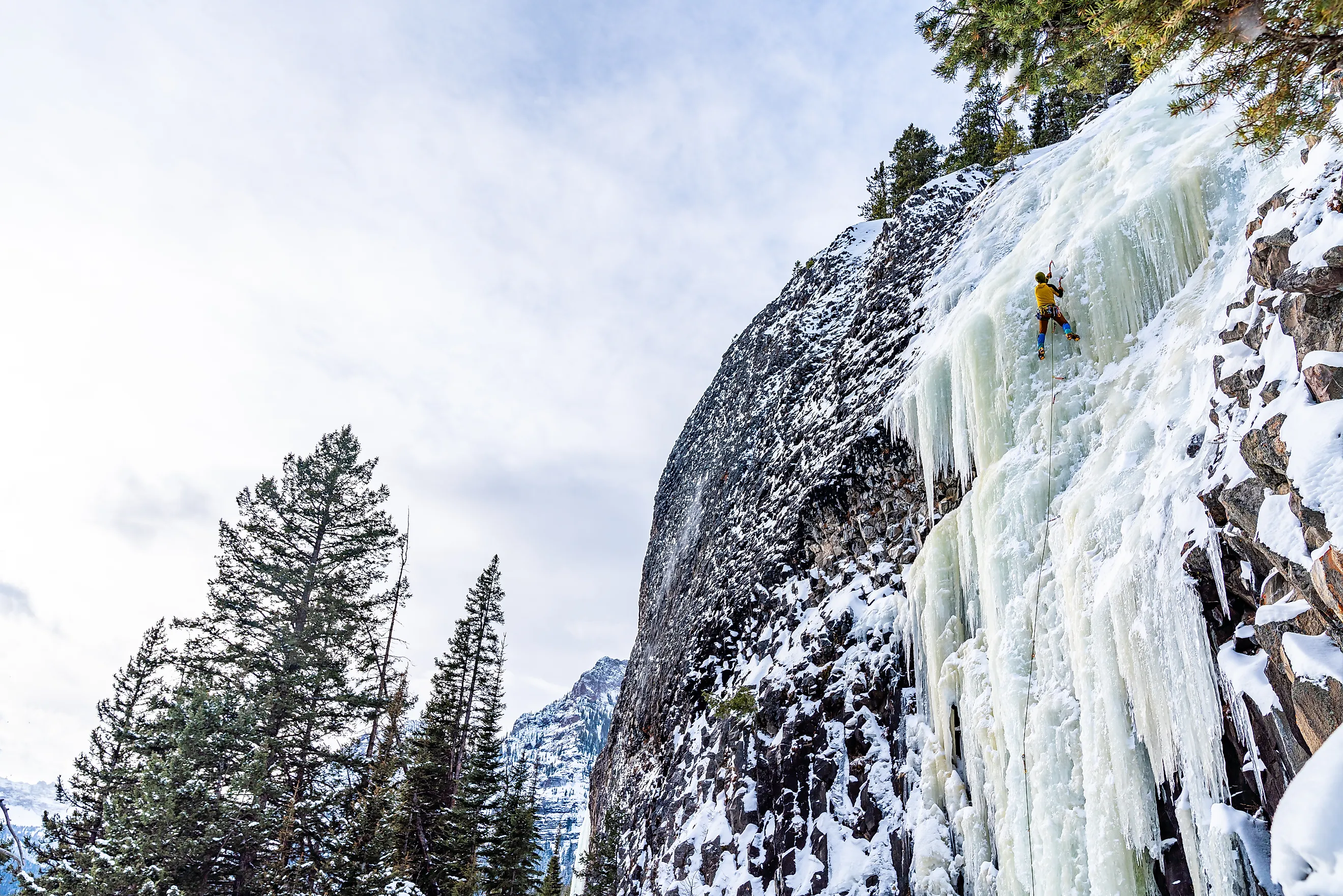
Frozen Bridal Veil is one of the most famous and difficult ice climbs in the country. It opened to climbers in 2008 after a land deal brought the base of the falls into public hands. Non-climbers can see it from the end of the canyon, since the steep road to the falls closes in winter.
Just outside Vail, Colorado, a seasonal waterfall pours over a cliff band, and in cold winters it freezes into The Fang, a freestanding column of ice about 165 feet tall. When it forms, it looks like a giant tooth hanging off the rock, and it draws ice climbers from around the world.
The Fang depends on long, steady cold. In warm winters, it may never fully connect from top to bottom, and climbers watch it closely before attempting the route.
Hyalite Canyon, Montana

South of Bozeman, Hyalite Canyon holds one of the densest collections of frozen waterfalls in North America. Dozens of small streams pour off its cliffs, and in winter they freeze into curtains, pillars, and smears of blue ice. The canyon is a magnet for ice climbers, with routes for beginners and experts alike, and it reliably freezes from late fall into spring. Each winter, the Bozeman Ice Festival brings climbers together for clinics and competitions on the canyon's frozen falls.
Minnehaha Falls, Minnesota

Minnehaha Falls, a 53-foot waterfall in a Minneapolis city park, is one of the most famous frozen waterfalls in the Midwest. When subzero cold settles in, the creek feeding it slows and the falls can freeze completely, turning into a wall of icicles and frozen spray. Once frozen, it usually stays that way for much of the winter.
Visitors often hike down into the glen to see the ice up close, and some venture behind the frozen curtain. Ice can be thin and unstable near flowing water, though, so the park's trails and overlooks are the safest places to enjoy the view.
Gooseberry Falls, Minnesota

On Minnesota's North Shore of Lake Superior, Gooseberry Falls State Park has a series of waterfalls that turn into frozen cascades during the coldest months. Thick ice builds over the rocky ledges, leaving only a thin channel of water running underneath.
The park's short trails lead to overlooks of the upper, middle, and lower falls, and winter visitors often have the frozen scenery almost to themselves.
Munising Falls, Michigan
Munising Falls, at the edge of Pictured Rocks National Lakeshore, freezes into a massive column of ice each winter, fed by a small creek that slows in the deep cold. Nearby, water seeping from the sandstone cliffs along Lake Superior freezes into giant icicles and curtains.
The area hosts the Michigan Ice Fest each February, drawing climbers to the frozen columns along the lakeshore. The paved trail to the base of the falls has been closed since storm damage in April 2025, and the canyon remains off-limits, so check the park's alerts before planning a visit.
Spearfish Canyon, South Dakota

In the Black Hills, Spearfish Canyon's waterfalls, including Roughlock Falls and Spearfish Falls, freeze into cascades of ice in the coldest weeks of winter. The canyon's steep limestone walls and shaded corners keep the ice in place long after a cold snap.
Snowshoers and hikers follow short trails to the falls, where they can stand beneath walls of ice that roared with water just a few months earlier.
Seeing Frozen Waterfalls Safely
Frozen waterfalls are beautiful but dangerous. Ice can break off without warning, and the water beneath it may still be flowing. Stay on marked trails, keep a safe distance from the base of tall ice columns, wear traction devices on slick paths, and leave ice climbing to trained climbers with proper gear. The best views often come from a safe overlook.