The National Park With The Largest Lake
Ask this question at a trailhead and you will hear Yellowstone. It is a reasonable guess, and Yellowstone National Park invites it. It is also wrong, and the actual answer is a lake most Americans have never heard of, in a park with six miles of trail and no roads leading to it.
The winner is Naknek Lake, in Katmai National Park and Preserve, Alaska. It is the largest lake sitting entirely inside a United States national park, and it beats Yellowstone Lake by a margin that is not remotely close.
Naknek Lake

Naknek covers roughly 150,000 acres, which works out to about 235 square miles. It runs 40 miles end to end and ranges between three and eight miles wide. It drains west into Bristol Bay through the Naknek River, and it takes up a small fraction of a park that spans more than four million acres.
The lake is also genuinely strange to look at. Meltwater carries rock flour, a fine glacial powder that stays suspended in the water column and scatters blue and green light, which turns the Iliuk Arm a turquoise that does not look like it belongs at that latitude.
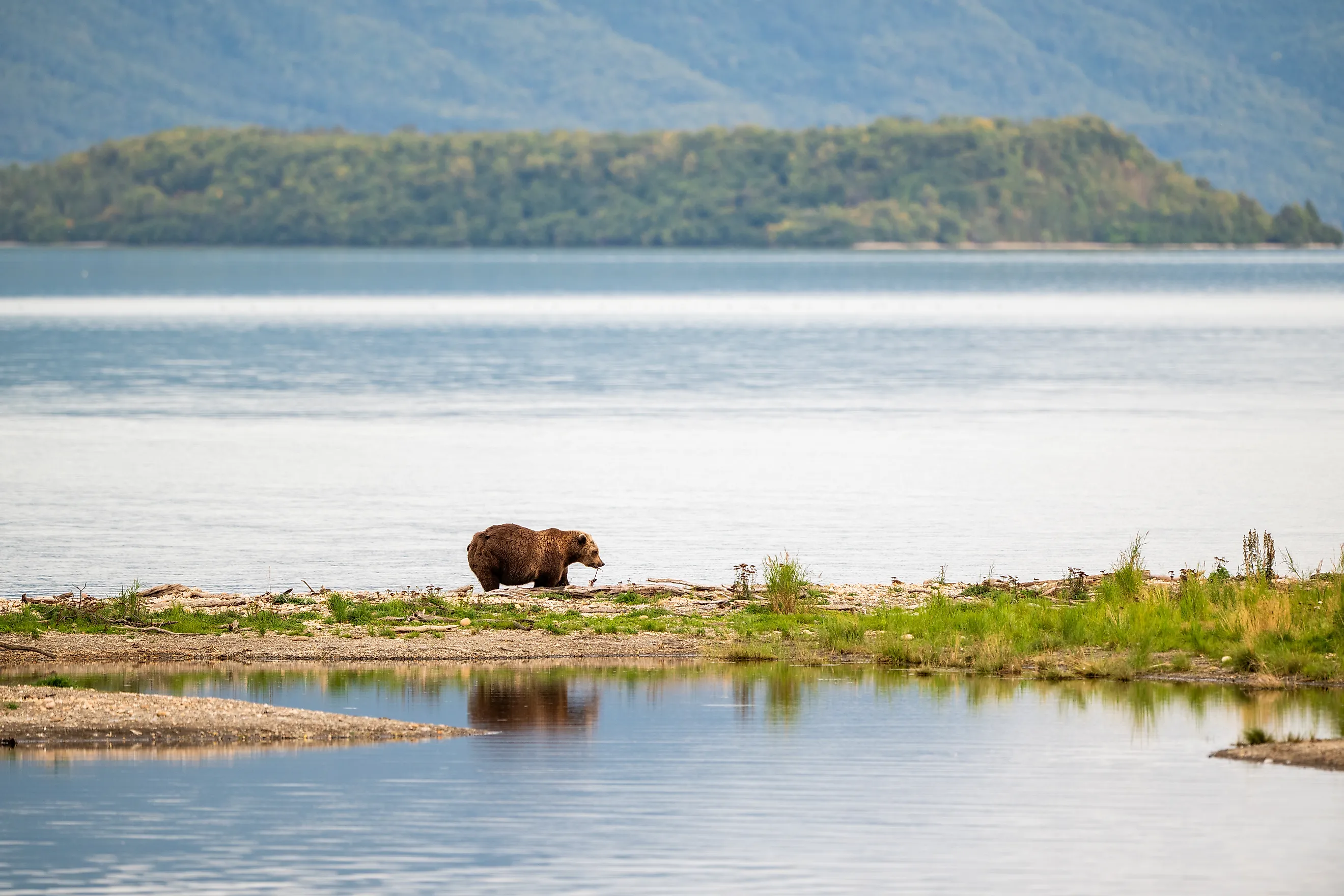
Getting there is the catch. Katmai has no road access. Most visitors fly in on floatplanes to Brooks Camp on the lakeshore, where the first order of business is a mandatory bear safety orientation. That is not a formality. Katmai holds one of the densest brown bear populations on earth, and the bears are there for the same reason the park is famous: sockeye salmon running out of Naknek Lake and up the Brooks River.
Yellowstone Lake

Losing to Naknek does not make Yellowstone Lake small. It covers 136 square miles, making it the largest body of water in Wyoming and the biggest lake in any national park in the lower 48.
Its real distinction is altitude. The surface sits at 7,732 feet, which makes it the largest freshwater lake above 7,000 feet anywhere in North America. It averages 139 feet deep and drops to roughly 400 feet at its lowest point. In winter it freezes under ice that can reach three feet thick, except directly over the hot springs on the lake bottom, which keep their own patches of open water going all season.
So Yellowstone is not the wrong answer out of ignorance. It is the wrong answer because Alaska keeps winning these arguments and nobody remembers to check.
Isle Royale

Here is where the question gets slippery. Isle Royale National Park covers 894 square miles, and only 209 of those are land. The other 685 square miles are open Lake Superior, because the park boundary extends out into the water around the island.
Which means there are 685 square miles of Lake Superior, the largest freshwater lake on the planet, sitting inside the boundary of a national park. That is nearly three times the size of Naknek.
Does it count? Not for the title, and the reason is worth stating. Naknek is a whole lake contained by a park. Isle Royale is a park contained by a lake. Lake Superior does not belong to anybody, least of all the National Park Service. Still, if you want to be the most annoying person on the trail, this is your move.
The Bigger Lakes That Got Disqualified On A Technicality

Lake Mead is bigger than Naknek. At full pool it covers around 247 square miles, and it is the largest reservoir by capacity in the country. Lake Powell is in the same weight class. Neither one takes the title, and the reason is a naming convention rather than a measurement.
The National Park Service manages 433 units. Only 63 of them carry the words "national park" in the name. The rest are monuments, seashores, historic sites, preserves, and recreation areas. Lake Mead sits inside Lake Mead National Recreation Area, which was the first national recreation area ever created, and Lake Powell sits inside Glen Canyon National Recreation Area. Both are run by the Park Service. Neither is a national park.
If the question were "largest lake in the national park system," the answer would be Lake Mead and this would be a much shorter article. Worth noting as well that Mead has spent years far below full pool, so the number on paper and the water actually out there have not matched in a long time.

Crater Lake

One more park deserves a mention for losing this contest in the most interesting way possible. Crater Lake is the deepest lake in the United States at 1,943 feet, and it is the centerpiece of its own national park. By surface area it is roughly 21 square miles, which puts it at about a tenth of Naknek.
It filled a collapsed volcano rather than a glacial basin, so it went vertical instead of spreading out. Different question, different winner.
Final Thoughts

The clean answer is Naknek Lake in Katmai National Park and Preserve, about 235 square miles, the largest lake lying entirely within a national park.
The qualifiers are where it gets fun. Largest in the lower 48 is Yellowstone Lake. Largest in the whole park system is Lake Mead, on a technicality of naming. The most park-enclosed water of any kind is the chunk of Lake Superior inside Isle Royale. Deepest is Crater Lake, which is not the same contest at all.
All of which points at something true about American geography. The biggest version of almost anything ends up in Alaska, and there is usually no road to it.