The Best Trophy Fishing Lakes In The Rockies
Somewhere in the Rockies right now, a lake trout is cruising 100 feet down in cold water, eating kokanee and adding to a weight that could top 50 pounds. Catching a fish like that is the reason anglers plan whole trips around a handful of mountain lakes. This ranking sorts the best of them across the Rocky Mountain states and into western Canada. It weighs verified records, recent catches, and how carefully each fishery is managed. The great ones hold cold water, a rich prey base, and rules built to keep producing giant monsters. Several also reveal the strange truth behind trophy fishing: sometimes the biggest fish appear only after anglers thin the population out.
1. Flaming Gorge Reservoir, Utah and Wyoming

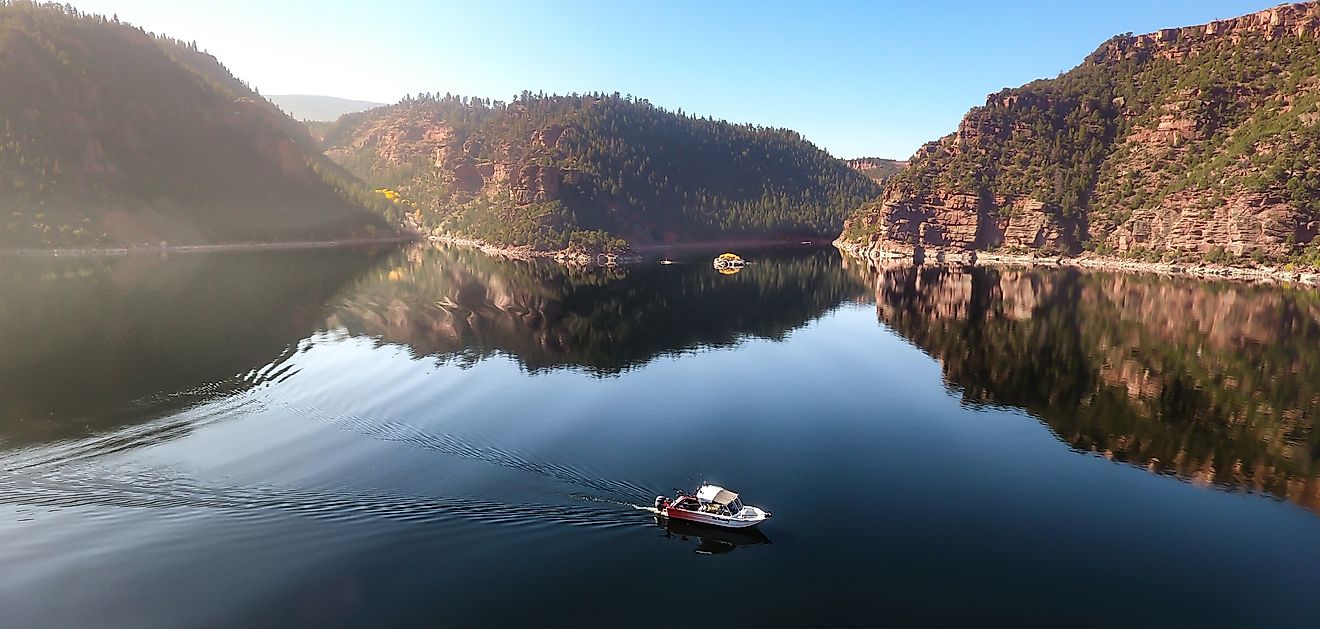
Flaming Gorge has produced some of the heaviest verified lake trout in the Rocky Mountain region. Wyoming's record books include a 50-pound fish caught there, while fisheries crews have sampled lake trout believed capable of exceeding the standing record. The reservoir's trophy potential depends heavily on kokanee salmon, which provide the concentrated, high-energy prey needed for lake trout to attain exceptional weight. When kokanee declined, managers began removing smaller lake trout while protecting the limited number of large adults. Current regulations allow unlimited harvest of lake trout below 28 inches but restrict anglers to one fish above that threshold. This is not simply a generous fishing rule. It is an attempt to reduce competition among predators without removing the older fish that make Flaming Gorge internationally significant.
2. Lake Pend Oreille, Idaho

Lake Pend Oreille is the strongest Rocky Mountain candidate for trophy rainbow trout. Its deep water supports a predatory form commonly called the Gerrard or Kamloops rainbow, which grows large by feeding on kokanee and other fish. The lake produced Idaho's 37-pound certified-weight rainbow record, and in 2024 it was producing more rainbows above 20 pounds than any other known fishery. Angler data from 2025 showed that fish measuring at least 32 inches represented about 13.5 percent of reported rainbow catches. The importance of that figure lies in frequency. Pend Oreille is not relying entirely on one historic record; anglers continue to encounter fish large enough to qualify as genuine trophies. Tagged-fish reports and voluntary logbooks now help biologists track whether that size structure is holding.
3. Jackson Lake, Wyoming

Jackson Lake holds one of the most important lake trout records in the Rockies. A 50-pound, 45-inch fish caught there in 1983 remains tied for Wyoming's weight record. That catch is supported by decades of biological monitoring rather than standing as an isolated local story. Wyoming Game and Fish has conducted recurring lake trout sampling and tagging in Jackson Lake since the 1980s, giving managers evidence of survival, growth, and movement within the reservoir. The lake's depth allows trout to remain in cold water through summer, while its forage fish provide enough energy for a small portion of the population to reach remarkable size. Jackson Lake does not necessarily yield trophy fish quickly. Its appeal lies in the presence of long-lived adults whose dimensions place them among the largest lake trout documented anywhere in the mountain West.
4. Blue Mesa Reservoir, Colorado

Blue Mesa is Colorado's most complete trophy trout reservoir. Its lake trout opportunities are unmatched within the state, but the reservoir also supports large brown trout and productive kokanee fishing. The relationship between those species determines how many lake trout can become truly heavy. Kokanee are both a sport fish and the principal high-quality prey for Blue Mesa's largest predators. Too many lake trout can suppress kokanee, leaving a reservoir full of slower-growing fish. Managers have therefore used harvest regulations and population control to protect the prey base while retaining large adults. Blue Mesa ranks above several waters with bigger individual records because its trophy fishery is broad enough to produce more than a single species of interest. It also has an established management program built around sustaining large fish, not merely documenting them after capture.
5. Payette Lake, Idaho

Payette Lake has undergone one of the clearest trophy-fish recoveries in the region. Its lake trout population became so dense that kokanee collapsed and many medium-sized predators grew thin. Idaho Fish and Game began targeted netting in 2018, removing smaller lake trout while releasing the large adults most valuable to anglers. More than 160 fish above 27 inches were tagged and returned through 2026. A 54-pound lake trout was captured and released by biologists in 2023, while anglers established catch-and-release state records from Payette Lake in 2018, 2025, and 2026. The latest measured 43.25 inches. These results show why predator control can improve a trophy fishery rather than diminish it. Removing numerous small competitors leaves more kokanee available for the surviving lake trout, allowing a limited number to regain the body condition associated with trophy weight.
6. Flathead Lake, Montana

Flathead Lake produced Montana's 42.69-pound lake trout record and its 10.46-pound lake whitefish record. Both came from the same enormous lake, demonstrating that its productive capacity extends beyond one exceptional predator. Deep offshore water gives lake trout extensive summer habitat, while the lake's scale allows some individuals to avoid capture and survive for decades. That longevity is essential because lake trout generally need many years to move from merely large to record-class. Flathead's trophy reputation has an ecological cost. Lake trout are not native to the system and compete with or prey upon native bull trout and westslope cutthroat trout. Management must therefore account for conservation objectives as well as angling value. The result is a trophy fishery in which harvesting lake trout can support native-fish recovery, even though the largest specimens remain among Montana's most sought-after catches.
7. Henrys Lake, Idaho

Henrys Lake produces trophy trout without the immense depth that characterizes most waters on this list. Its shallow, nutrient-rich environment supports rapid growth in Yellowstone cutthroat trout, rainbow-cutthroat hybrids, and brook trout. A 36-inch hybrid caught in 2022 set Idaho's catch-and-release record for the type, while Henrys Lake also produced the state's 7.06-pound certified-weight brook trout record. Recent monitoring adds important context. A 2025 survey found hybrids above 27 inches and fish exceeding 20 inches in every managed trout group, although overall trout abundance remained below the management target. Henrys therefore ranks highly for maximum size but not because every season produces equal numbers of fish. Much of the population is hatchery-supported, and survival can vary sharply between stocked year classes. The fish that survive can grow with unusual speed.
8. Bear Lake, Idaho and Utah

Bear Lake specializes in a trophy that few other fisheries can reproduce: the Bonneville cutthroat trout. The lake's largest cutthroat are salmon-sized, an appropriate comparison for fish that become open-water predators and feed heavily on other species. The lake's value is strengthened by the origin of those trophies. Bonneville cutthroat are native to the Bear River drainage, and restoration work has rebuilt a population once threatened by altered tributaries and excessive harvest. Wild reproduction now accounts for a much larger share of the fishery than it did before the recovery program. Lake trout provide a second big-fish opportunity, but Bear Lake belongs on this list because of its cutthroat. A thirty-inch native cutthroat represents a different biological achievement from a forty-pound lake trout and is far more difficult to pursue elsewhere in the Rockies.
9. Morrow Point Reservoir, Colorado

Morrow Point Reservoir holds Colorado's lake trout length record, a 46⅞-inch fish caught and released by Ryan VanLanen. Its narrow, steep-sided canyon creates a fishery unlike the broad basins of Blue Mesa or Granby. Cold water occupies much of the reservoir's depth, giving mature lake trout room to remain below warmer surface layers and continue feeding through summer. Access is the factor that keeps Morrow Point from ranking higher. Reaching fishable water and operating safely in the canyon require more planning than fishing a marina-centered reservoir, and the lake does not have the same volume of publicly reported catch data as Blue Mesa. Its position rests on confirmed maximum size. A nearly 47-inch lake trout is exceptional even in western reservoirs known for the species, and the record proves that Morrow Point can support fish at the upper edge of Colorado's known growth range.
10. Lake Granby, Colorado

Lake Granby contains Colorado's largest and densest lake trout population, regularly producing fish longer than 30 inches. That abundance creates both the attraction and the problem. Lake trout consume kokanee, and too many predators can reduce the prey needed to produce heavy adults. Colorado Parks and Wildlife has responded by increasing opportunities to harvest smaller lake trout while protecting the limited number of larger fish. The agency also stocks roughly one million kokanee fry annually in the Colorado River above the reservoir, where returning adults supply eggs for future production. Granby is consequently a useful example of why fish length and fish condition must be considered separately. A reservoir can contain many long lake trout without producing the maximum weights expected from their length. Trophy management here centers on restoring enough kokanee to improve growth while preventing the predator population from expanding beyond its food supply.
11. Lake Minnewanka, Alberta

Lake Minnewanka is the principal large-lake trout fishery in Banff National Park. Its reputation traces partly to a 43-pound lake trout caught in 1889, a historical record that Parks Canada still references when describing the lake. Minnewanka remains unusual within the national park because lake trout are the only fish that anglers may retain; the possession limit is two, while catches elsewhere in Banff are generally subject to mandatory release. That exception reflects the species' status and the lake's management history. Minnewanka has the depth and cold-water habitat required for long-lived trout, but recent public data on trophy catch frequency are much thinner than those available for Pend Oreille or Payette. It belongs in the ranking because its habitat and verified maximum are exceptional, although its present-day trophy rate cannot be assessed with the same confidence as the leading American reservoirs.
12. Kootenay Lake, British Columbia

Kootenay Lake is the historic home of Gerrard rainbow trout capable of exceeding 20 pounds, with older provincial research documenting fish above 9 kilograms and occasional individuals considerably larger. Modern conditions require a more cautious assessment. Gerrard rainbows depend heavily on kokanee, and the collapse of that prey population reduced trout growth and body condition. Provincial spawner counts for the Gerrard strain improved in 2023, but managers continued removing predators and maintaining liberal rainbow trout harvest rules to help kokanee recover. Regulations for 2025 through 2027 allow ten rainbow trout per day from the main lake, with an annual limit on fish above 50 centimeters. Kootenay remains biologically capable of producing extraordinary rainbows, but it ranks below Pend Oreille because current management is still repairing the predator-prey imbalance that weakened its trophy fishery. Its historic reputation is stronger than its recent consistency.
Why Trophy Lakes Require Fewer Predators
The strongest fisheries on this list share a management principle that appears counterintuitive: producing more giant trout often requires removing large numbers of trout. Lake trout and predatory rainbows attain exceptional size only when kokanee or another energy-rich prey species remains abundant. When predator numbers expand too far, growth slows and long fish become unusually thin. Flaming Gorge, Payette, Granby, and Kootenay have all used harvest or direct removal to correct that imbalance. Trophy regulations then protect a smaller number of mature fish while anglers and biologists reduce competition beneath them. The best Rocky Mountain trophy lake is therefore not necessarily the lake with the most predators. It is the one capable of supporting enough prey for a few predators to survive for decades and convert that food into exceptional length and weight.