The Southern Lakes Where Snakes Drop Out Of Trees Into Boats
The story is told on every lake in the South. A cottonmouth waits on an overhanging branch, a boat passes underneath, and the snake drops in deliberately. Georgia's wildlife agency, the Florida Museum of Natural History and every herpetologist who has been asked all say the same thing about it. The Florida Museum puts it in four words: however, this is not true. Snakes do land in boats. The part everyone gets wrong is which snake, and why.
Cottonmouths Barely Climb

The animal at the center of the legend is poorly equipped to be there.
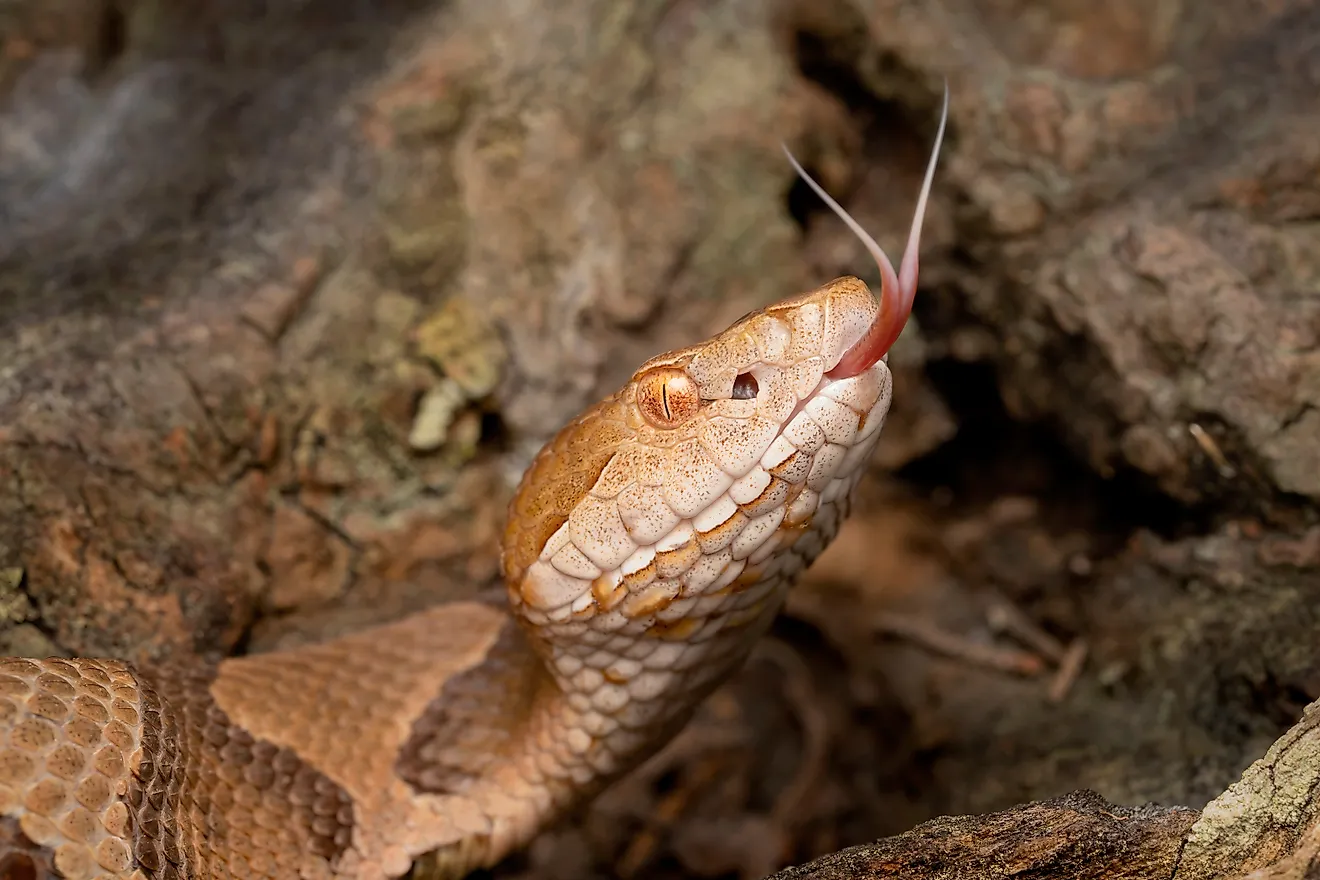
Cottonmouths typically bask on land, on stumps or on logs near the water surface, and only occasionally climb to low limbs where vines or a gradually sloping branch give them access. They are rarely found more than a few feet off the ground.
A heavy-bodied pit viper is not built for hanging in a tree over open water. One field herpetologist in Florida reports simply never seeing them bask in elevated limbs.
The Snake In The Tree Is A Watersnake

There is a species doing exactly what the legend describes, and it is harmless.
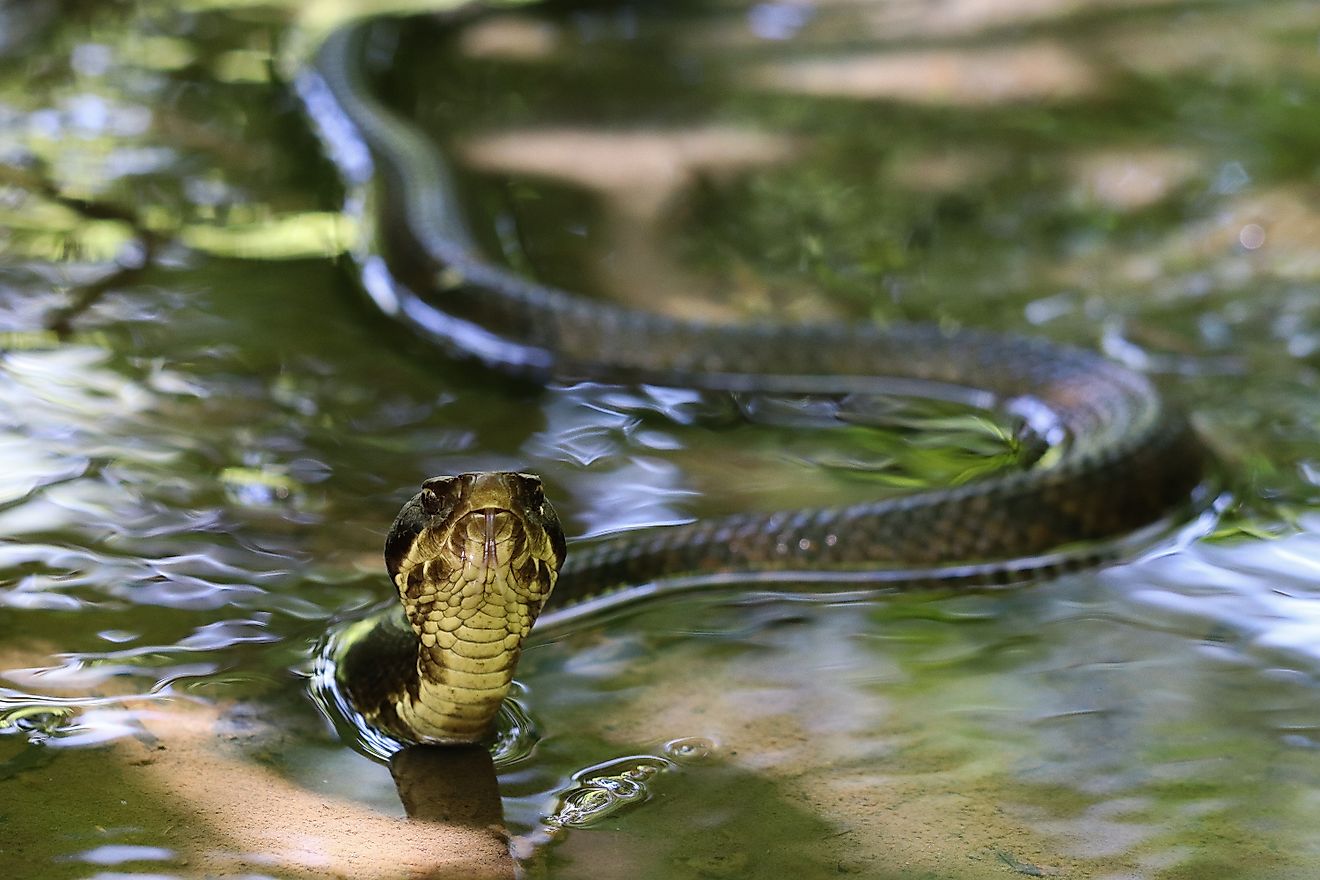
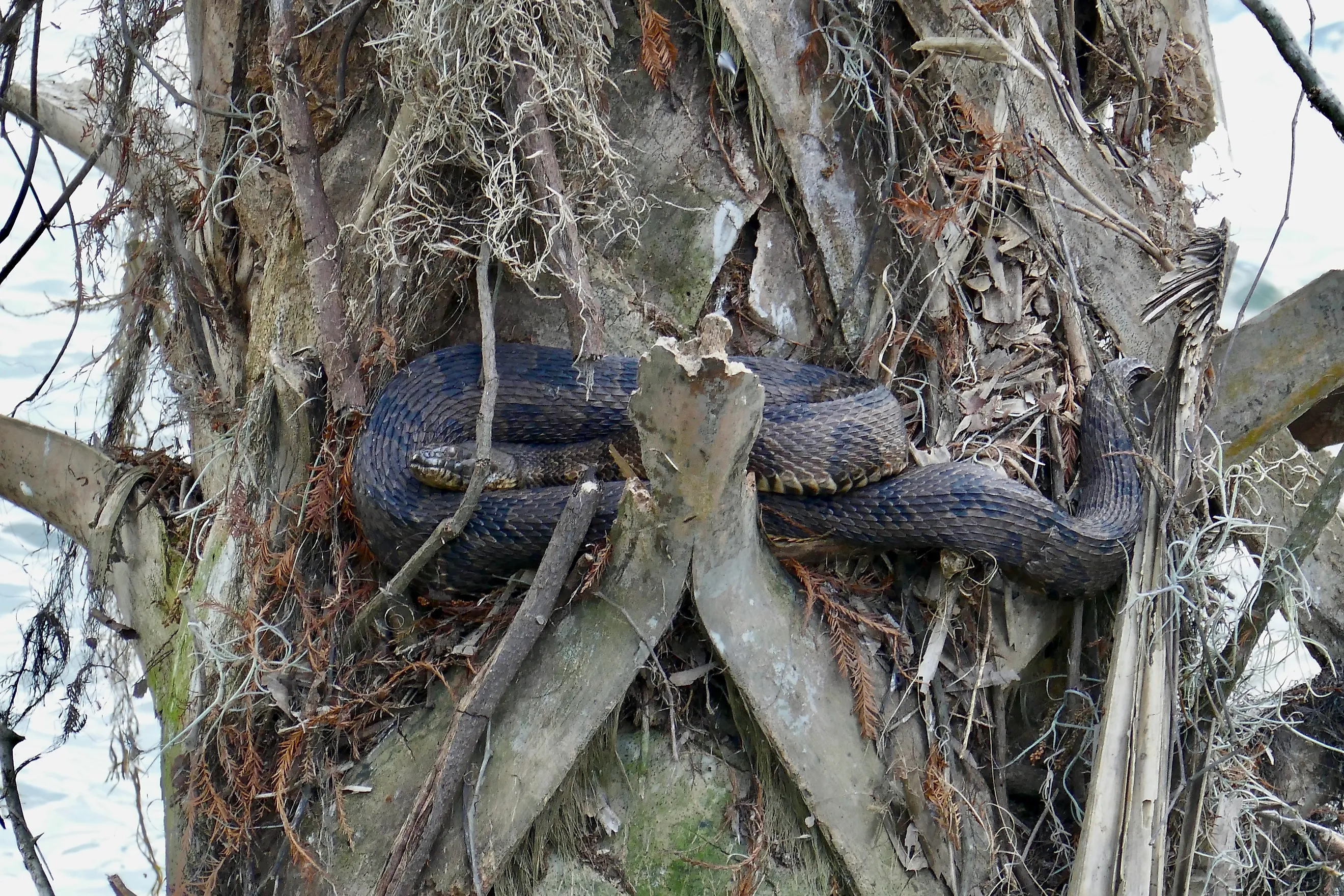
Watersnakes are very agile climbers and spend a great deal of time basking on the limbs of shrubs and trees overhanging water. The brown watersnake in particular prefers limbs above open water.
Georgia's agency states plainly that stories of water moccasins falling from overhanging limbs into boats are most likely based on misidentification.
Dropping Is Its Escape, Not Its Attack

This is the detail that turns the whole story inside out.
A basking watersnake's entire defensive strategy is to drop straight down into the water and swim away under the surface. That is not aggression. It is the fastest exit available to an animal sitting on a branch.
The diamondback watersnake does the same thing while hunting, hanging from branches and dipping its head below the surface to find fish, then dropping in when approached.
The Boat Is In The Way

Put those two facts together and the real mechanism is obvious.
The Florida Museum describes it precisely: when frightened by an approaching boat, the watersnake escapes by dropping off the limb into the water. Occasionally its attempt to flee is too slow and it accidentally falls into the boat instead.
The snake was aiming for the water. The boat got there first.
The Folklore Version Is Much Better

The stories that circulate are considerably more dramatic than a slow-moving reptile missing its landing.
In the standard telling, the cottonmouth waits quietly on a branch, leaps onto the deck in a murderous rage as the boat passes, and attacks the crew. A companion legend involves a water skier falling into a nest of them.
Neither has ever been documented. Cottonmouths have not been recorded dropping into boats as a behaviour at all.
Two Species That Look Alike

The confusion has a straightforward basis, and it is not stupidity.
Watersnakes and cottonmouths are both large, heavy-bodied species with rough scales and relatively dull coloring. At a distance across water, in a hurry, they look much the same.
The diamondback watersnake is often mistaken for a cottonmouth or a rattlesnake and killed out of fear, despite being far more common than either in places people actually go.
The Tells Are Reliable

If a snake does land in your boat, the identification is not difficult once you know what to look at.
Watersnakes have bands widest on top and narrow on the sides, round pupils and a double row of scales under the tail. Cottonmouths have bands widest on the sides, elliptical pupils and a single row.
Swimming posture works at a distance. A cottonmouth rides on the surface with its whole body visible. A watersnake swims mostly submerged with only its head showing.
People Will Not Be Told

The persistence of this belief is itself part of the story.
One Florida herpetologist notes that when he identifies a treed snake as a brown watersnake and shows people the features, they frequently insist it is still a poisonous cottonmouth.
Many people assume every snake in the water is a water moccasin and kill it just in case, which is why agencies keep publishing the brochures.
The Real Danger Is The Reaction

The practical risk in all of this has nothing to do with venom.
A harmless snake landing in a small boat prompts people to stand up, swing paddles and move suddenly in a vessel that does not tolerate any of it. Capsizing on a cypress lake is a genuine hazard. The snake is not.
The animal wants to leave at least as much as the people do. It is also, in almost every recorded case, not venomous.
The Short Answer

Snakes do occasionally fall into boats on southern lakes, and the snake is almost always a brown or banded watersnake rather than a cottonmouth. Watersnakes bask on limbs over open water and escape by dropping straight down into it. When a boat is underneath, some of them miss.
Cottonmouths rarely climb more than a few feet, do not bask in overhanging limbs as a rule, and have never been recorded doing this deliberately. The folklore has the right event and the wrong animal, the wrong motive and the wrong level of danger.