What Happens When A Great Lakes Freighter Runs Aground
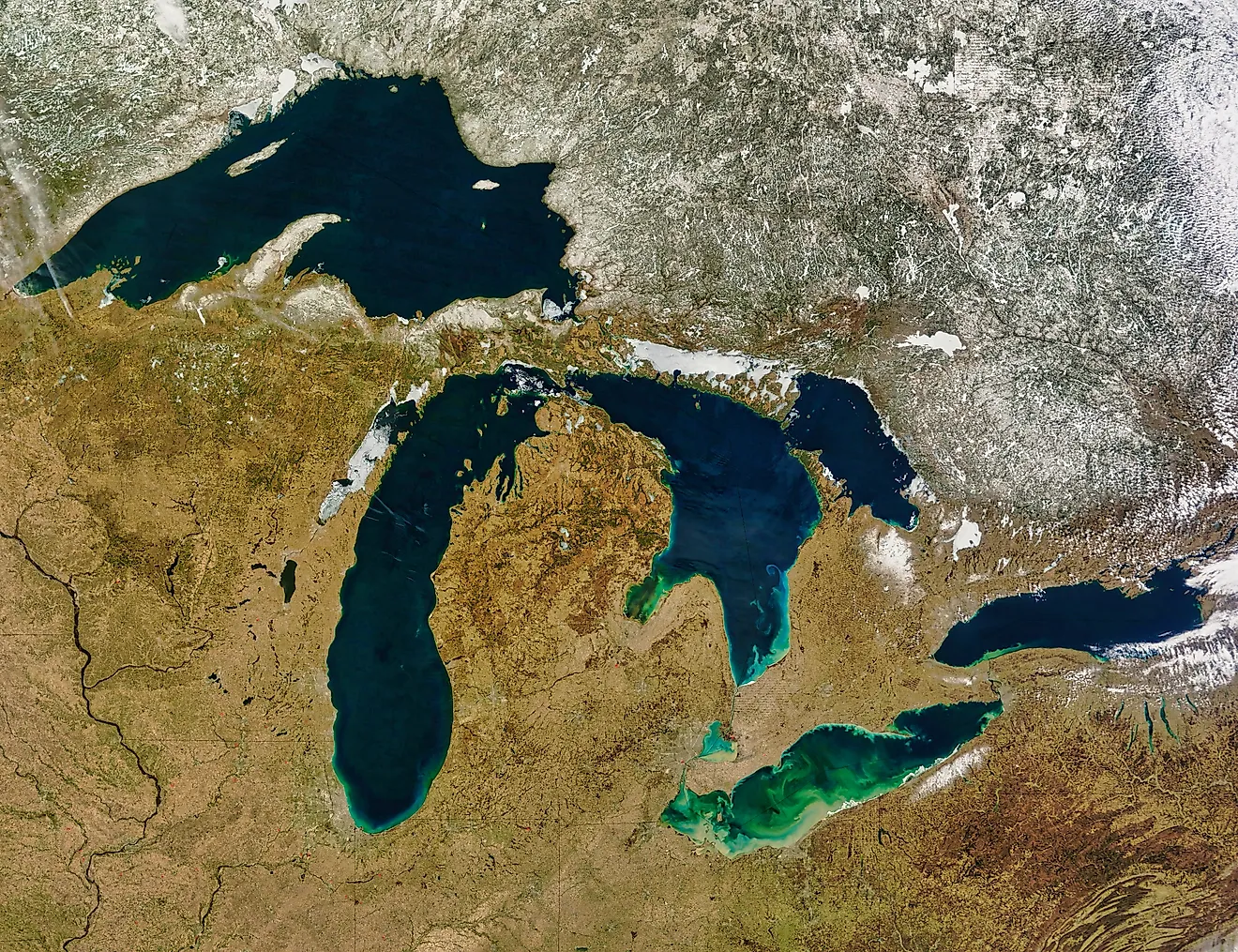
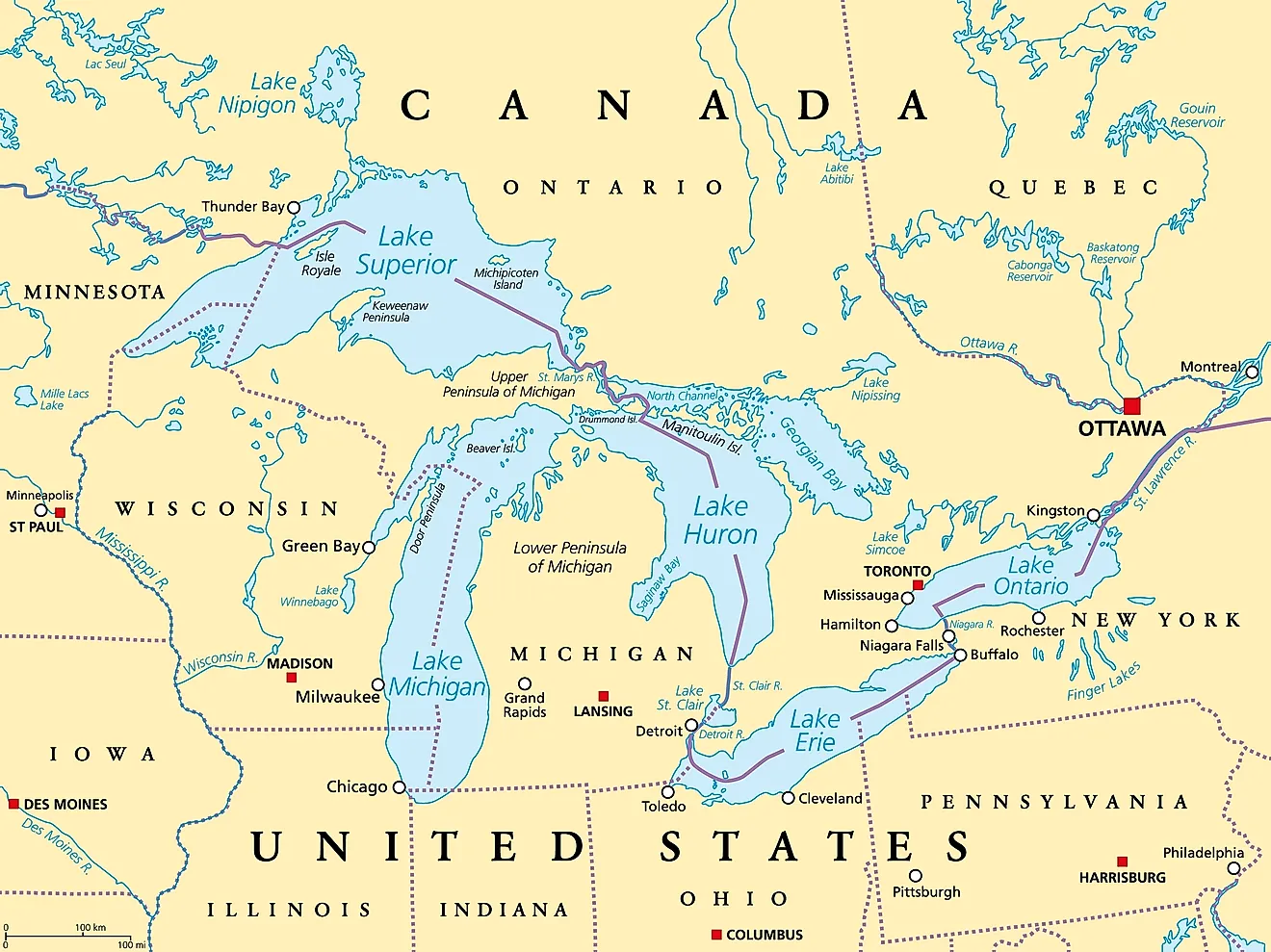
Freighters hauling iron ore, coal, stone, and grain squeeze through the narrow rivers that link the Great Lakes, and sometimes one of them finds the bottom. In the last two years alone, freighters have gone aground in plain view of downtown Detroit, near Sarnia on the St. Clair River, in the bar district of Cleveland's Flats, and twice in the St. Marys River. Some were moving again within hours. Others sat for days, blocked the channel for every ship behind them, or headed straight to a shipyard with a torn hull. What happens in between follows a chain of steps, and the first one begins before anyone outside the ship even knows.
The Crew Sounds The Tanks To Find The Damage

On May 27, 2016, the 858-foot Roger Blough, loaded with iron ore pellets, strayed out of the channel at the mouth of the St. Marys River and dragged its bottom across Gros Cap Reefs for two full minutes. As soon as it stopped, the crew began sounding the tanks, checking the water level in each compartment to see which ones had opened to the lake. The readings pointed to multiple punctures and large fractures in the hull. The forepeak at the bow and the first two port ballast tanks had flooded to the waterline, and an empty void space in the double bottom was completely full.
All of those spaces sit outside the cargo holds. The void that filled is part of the double bottom, a second layer of steel beneath the holds, and the ballast tanks are compartments the crew normally fills and empties to trim the ship. Water also reached the Blough's port cargo belt tunnel and knocked its unloading conveyor out of alignment, but nobody was hurt and no pollution was reported. The signal is not always that obvious. On June 8, 2025, the crew of the 806-foot Honorable James L. Oberstar felt unusual vibration after a turn at Johnson's Point in the St. Marys River, then anchored in nearby Hay Lake to find out what it had hit.
The Coast Guard Gets The Call, And The Crew May Be Tested

Federal rules treat any unintended grounding as a reportable marine casualty. Once the immediate safety problems are handled, the master or operator must notify the nearest Coast Guard office, then file a written report within five days. Twelve minutes after the Blough grounded, its second mate alerted the freighter behind it, the Sam Laud, and then the Coast Guard's vessel traffic center for the St. Marys River. The traffic center alerted the command center in Sault Ste. Marie, which activated an incident command system to run the response. Because the ship sat on the border, Transport Canada was notified too.
A grounding with serious consequences starts a second clock. If it counts as a serious marine incident, the crew members directly involved must be tested for alcohol within two hours and give drug-test specimens within 32 hours. That label landed on the 406-foot cement carrier Sunnanvik in Cleveland on June 20, 2025, after it struck a boardwalk in the Flats while backing toward a dock on the Cuyahoga River and wedged across the channel. The Coast Guard estimated more than $250,000 in damage to the ship and the boardwalk and kept the vessel in port while investigators interviewed the captain and crew.
Mud Means A Quick Pull, Rock Means A Torn Hull

The Coast Guard calls a ship soft aground when it is stuck in the bottom but still surrounded by water, with no immediate hazard to navigation, the environment, or public safety. That described the 738-foot Rt. Hon. Paul J. Martin on November 7, 2025, when it grounded in the Detroit River near the Renaissance Center while trying to anchor so an ill crew member could go ashore. Four tugs freed it the next day, and it was cleared to continue to Quebec. Three weeks later the Robert S. Pierson, carrying about 18,000 tons of stone, grounded on the same stretch of river. The local harbor master cited extreme low water and wind, and two tugs had it off by midday the next day.
With the hull intact, the job is mostly pulling. The salt carrier Mark W. Barker, then the newest freighter in the U.S. fleet, lost propulsion to an electronics malfunction and settled into mud and sand off Belle Isle around 8 a.m. on May 17, 2023. A salvage team had it moving by about 12:30 p.m. In July 2026, the 740-foot Algoma Equinox grounded near Sarnia on the St. Clair River with a load of grain and floated off the next afternoon under its own power, with tugs assisting and no sign of water entering the hull.
Rock is a different problem. In August 2012, the 1,013-foot Paul R. Tregurtha, the largest ship on the lakes, ran its bow onto a shoal on the west side of Neebish Island in the lower St. Marys River with about 62,000 tons of coal aboard. The ship then pivoted until its stern grounded too, leaving it hard aground at both ends with damage to its bow and port rudder.
Traffic Backs Up When The Ship Blocks The Channel

Every laker moving between Lake Superior and the lower lakes passes through the St. Marys River, and in its narrowest stretches upbound and downbound ships use separate channels. The Tregurtha ended up spanning the entire width of the downbound channel near the Rock Cut, so the Coast Guard's traffic service restricted movement on parts of the river. By the time the channel reopened, 11 vessels were waiting. The 497-foot Harvest Spirit caused a smaller version of the same jam in January 2025, when a mechanical failure put it aground near Neebish Island and the downbound channel closed while upbound ships kept moving. Reopening depends on the bottom as much as the ship. After the Oberstar grounded in June 2025, the U.S. Army Corps of Engineers surveyed the channel and verified it was safe for commercial traffic.
Engineers Plan The Salvage While Responders Guard Against Spills

Before anyone pulls, someone has to work out what the damaged hull can take. The Coast Guard's Salvage Engineering Response Team, part of its Marine Safety Center, keeps naval architects and marine engineers on call around the clock for groundings, sinkings, and structural damage. In 2012, Interlake, the Tregurtha's owner, worked with that team and the Coast Guard sector in Sault Ste. Marie to choose the safest way to refloat a 1,000-foot ship resting on rock at both ends.
When fuel is at risk, the planning table gets bigger. The Oberstar's hull was breached badly enough to flood and list, and two days after the grounding a unified command formed with the Coast Guard, Michigan's Department of Environment, Great Lakes, and Energy, Chippewa County, and Interlake. The Army Corps, the Sault Tribe of Chippewa Indians, the Bay Mills tribe, and the city of Sault Ste. Marie advised it, and its stated priorities included protecting wildlife on a river that empties into Lake Huron. Responders kept 600 feet of containment boom around the stern and pumped an oily water mixture out of a damaged fuel tank.
Tugs, Ballast, And Cargo Transfers Lift The Ship Free

On the Tregurtha, salvors started with the stern. At 5:30 a.m. on August 16, 2012, two tugs with a combined 4,000 horsepower pushed it back toward the middle of the channel. Crews then filled empty compartments at the stern, which shifted weight aft and eased the pressure of the bow on the rocks. The ship came free about 27 hours after it grounded.
A ship pinned harder than that has to be made lighter, a process called lightering. The same transfer can help inspectors: at its Hay Lake anchorage, the Oberstar moved 4,500 net tons of limestone into the Kaye E. Barker to give divers more room under the keel. The Blough sat on Gros Cap Reefs for a week before its fleetmate, the Philip R. Clarke, came alongside. The Blough is a self-unloader, so starting at 5:45 a.m. on June 3, 2016, it ran taconite off its own conveyor straight into the Clarke's holds. At 10:45 the next morning, the Blough floated free and sailed under its own power to an anchorage in Waiska Bay, where the rest of its pellets went into the Clarke and the Arthur M. Anderson.
The Ship Heads To A Shipyard As Investigators Find The Cause

For ships with torn hulls, the next stop is a shipyard. The Blough spent two weeks on temporary repairs at anchor, then a month at Sturgeon Bay, Wisconsin. Damage to its hull and cargo system came to $4.5 million, and it returned to service on August 6, 2016. The Tregurtha needed about three weeks at Bay Shipbuilding in Sturgeon Bay while its port rudder was re-machined in Escanaba, Michigan, and it was back at work 30 days after grounding. The Oberstar made a 28-hour trip to Fraser Shipyards in Superior, Wisconsin, arriving June 18, 2025, with damage to roughly 90 percent of its hull.
Investigators work on the cause at the same time. The Coast Guard declared the Oberstar grounding a major marine casualty, which brought in the NTSB. On the Blough, the NTSB found that the Blough's second mate had lined up to pass a slow tow on the far left of the Birch Point Course and was watching through the bridge windows, not the electronic chart that showed the ship straddling the channel edge. Speed made it worse. A ship moving through shallow water squats, riding lower and changing trim, and the effect grows fast: twice the speed can produce more than four times the squat. The Blough was still near full speed. Low water was ruled out, since eastern Lake Superior stood about a foot above chart datum that afternoon. The board also cited inadequate monitoring by the traffic center, whose watchstanders did not realize the ship was in danger until the crew reported it aground.
The outcome depends on the bottom more than on the size of the ship. The 740-foot Algoma Equinox and the 738-foot Paul J. Martin sat in sediment with intact hulls, and tugs had each one moving within about a day. The Blough and the Tregurtha tore their hulls on rock, and the Oberstar's breach flooded tanks and threatened its fuel; those ships needed salvage plans, cargo transfers or ballast shifts, then weeks in a shipyard. The first minutes also build the record investigators read later, from the tank soundings to the time of the call to the Coast Guard and, after a serious incident, alcohol tests taken within two hours. The changes that followed the Blough aimed at the minutes before any of that, while a ship is still in deep water and heading for the edge. Its operator added speed restrictions in various waterways and had no-go areas marked into passage plans, built around the same electronic chart that showed the Blough straddling the channel line while its second mate watched through the window.