The Florida Lake That Drains Itself Every 25 Years
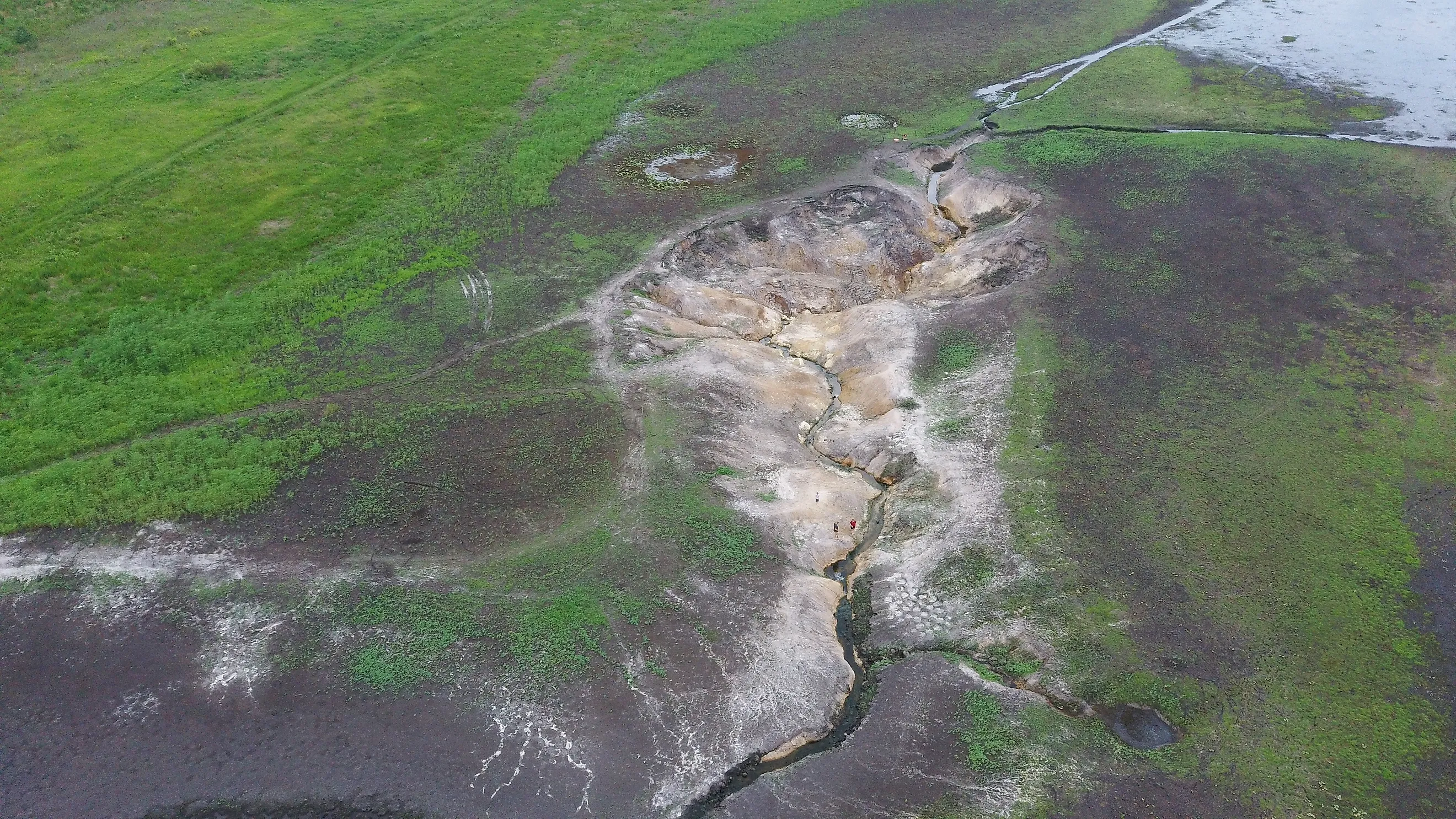
Over a weekend in June 2021, a 4,000-acre lake north of Tallahassee emptied down a hole. Not a breach, not a drought, not a failed dam. The bottom of Lake Jackson opened and the water went into the ground.
It has done this for as long as anyone has kept records, roughly once every 20 to 25 years, and the local scientists who study it will tell you the same thing every time: this is the lake working correctly.
The Hole Has A Name

Two major sinkholes sit in the lakebed. Porter Hole Sink, near Faulk Drive Landing, is the famous one, a cavernous shaft about 28 feet deep in a lake that averages six. Lime Sink, further south, does the same job less often.
When the water goes, it does not evaporate or run off downstream. It pours into the Floridan Aquifer, the limestone groundwater system that underlies most of the state. The lake does not have an outlet in the usual sense. It has a drain.
Locals call the exposed sink Tallahassee's grand canyon, because as the last of the water runs out it carves small valleys through the silt on its way down. In the final stages the lake can appear to empty in a matter of hours.
The Limestone Is Doing It On Purpose

Most of Florida sits on limestone, and limestone dissolves in slightly acidic rainwater. Over a long enough period the rock below develops voids, the sediment above sags into them, and you get a basin. Lake Jackson is one of those basins, which means it was formed by the same process that periodically empties it.
The sinks are never fully sealed. State scientists describe Porter Hole as always draining, even when it is underwater. What changes is the balance: in wet years rainfall into the basin outpaces the leak, and in dry years it does not.
So a dry-down is not a sudden failure. It is the slow side of a ledger finally winning, usually after several years of below-average rain, and then finishing with a flourish.
Why Scientists Call It Healthy

A shallow lake accumulates muck. Organic sediment builds on the bottom, chokes plant growth, and degrades the habitat that fish depend on. Draining the basin exposes that layer to air and sunlight, which oxidises and compacts it.
When the water returns, the lakebed underneath is firmer and cleaner, aquatic plants recolonise it, and the fishery rebounds. Lake Jackson's reputation as one of the better trophy bass waters in the Southeast rests partly on this cycle, which is why biologists treat a dry-down as maintenance rather than catastrophe.
The lake also gives things up while it is empty. The 2021 dry-down exposed two human skulls off Faulk Drive, which is the sort of discovery that only happens when several thousand acres of lakebed become walkable at once.
The Cycle Is Speeding Up

Every 20 to 25 years is the historical rhythm, and the record supports it. The first documented disappearance was May 1907, followed by 1918, 1932, and a stretch in the early 1980s.
Then the pattern breaks. Porter Hole drained in 1999, Lime Sink opened and drained the lake in 2000, Porter Hole went again in 2006, again in 2012, and again in 2021. State managers have recorded it draining fully 11 times since that June 2021 event alone.
Two explanations compete and both are probably right. Regional drought has reduced the rainfall that used to keep the basin topped up. And development around the lake has changed how water moves across the land into it, altering how much actually arrives after a storm. One geologist's caution is worth keeping: a couple of hundred years of observation is a short sample for a landform that works on geological time.
It Is Not The Only One

The Red Hills region around Tallahassee is full of lakes doing versions of the same thing. Lake Iamonia drained in 1910 and has repeated it since. Lake Lafayette has gone dry. Lake Miccosukee developed its own sinkholes about fifteen years ago and now drains more frequently than Porter Hole does.
What they share is geology rather than coincidence. These are basins sitting on soluble rock with a direct connection to the aquifer beneath, and they behave less like lakes than like very slow drains that happen to hold water most of the time.
As of late 2025, with the National Weather Service declaring extreme drought across the area, Porter Hole was exposed again, after holding water from December 2023 to October 2025. If you want to see the bottom of Lake Jackson, the odds have rarely been better.