The Lakes That Produce the Most Record-Breaking Fish
A 72-pound lake trout came out of one Canadian lake in 1995. That single fish still tops the record books for its species today. Numbers like that are why anglers memorize certain lakes the way baseball fans memorize batting averages. Ten waters across North America and Japan hold International Game Fish Association all-tackle world records. Each one grew a single fish bigger than any of its kind ever caught on rod and reel. Weights below run in pounds first, with kilograms in parentheses.
Great Bear Lake, Northwest Territories

Great Bear Lake sits above the Arctic Circle in a remote stretch of northern Canada. Lloyd Bull pulled a 72 lb 0 oz (32.65 kg) lake trout from its water on August 19, 1995, and that fish remains the all-tackle world record for the species. The catch is no fluke of one lucky day. Great Bear is the fourth-largest lake in North America, and its cold, deep basin gives lake trout the room and the years to reach that size. Bigger lakers have turned up in commercial nets, but no rod-and-reel catch has topped Bull's.
Lake Diefenbaker, Saskatchewan

A broad prairie reservoir is the last place most anglers would expect a record trout. Yet Lake Diefenbaker in southern Saskatchewan produced the biggest rainbow trout on the books. Sean Konrad landed the 48 lb 0 oz (21.77 kg) fish on September 5, 2009, and it still stands as the all-tackle world record. The rainbows here are triploid trout raised near a fish farm, sterile fish that pour all their energy into growth instead of spawning. That head start helped one of them outgrow every wild rainbow ever recorded.
Lake Biwa, Japan

Bass fishing built its legend in the American South, so the sport's most famous record living in Japan still surprises people. Manabu Kurita caught a 22 lb 4 oz (10.12 kg) largemouth bass on Lake Biwa on July 2, 2009. His fish tied the all-tackle world record set by George Perry in Georgia back in 1932, a mark that had stood for 77 years. IGFA rules say a fish under 25 pounds must beat the old record by two full ounces to claim it outright, so Kurita shares the title rather than owning it. Lake Biwa is Japan's largest freshwater lake, and it had produced oversized bass for years before Kurita's cast made it a global name.
Lake Havasu, Arizona and California

Lake Havasu has become the place to go for a giant redear sunfish, a panfish most anglers are happy to catch at a single pound. Thomas Farchione's fish weighed 6 lb 4 oz (2.83 kg) when he landed it on May 4, 2021, setting the all-tackle world record. It was the third world-record redear to come out of Havasu, following the marks set in 2011 and 2014. The reason sits on the lake bottom: invasive quagga mussels arrived around 2007 and gave the redear an endless supply of high-calcium shellfish to crush and eat. The panfish ballooned, and a desert reservoir formed by Parker Dam on the Colorado River turned into the best big-redear water anywhere.
Pyramid Lake, Nevada

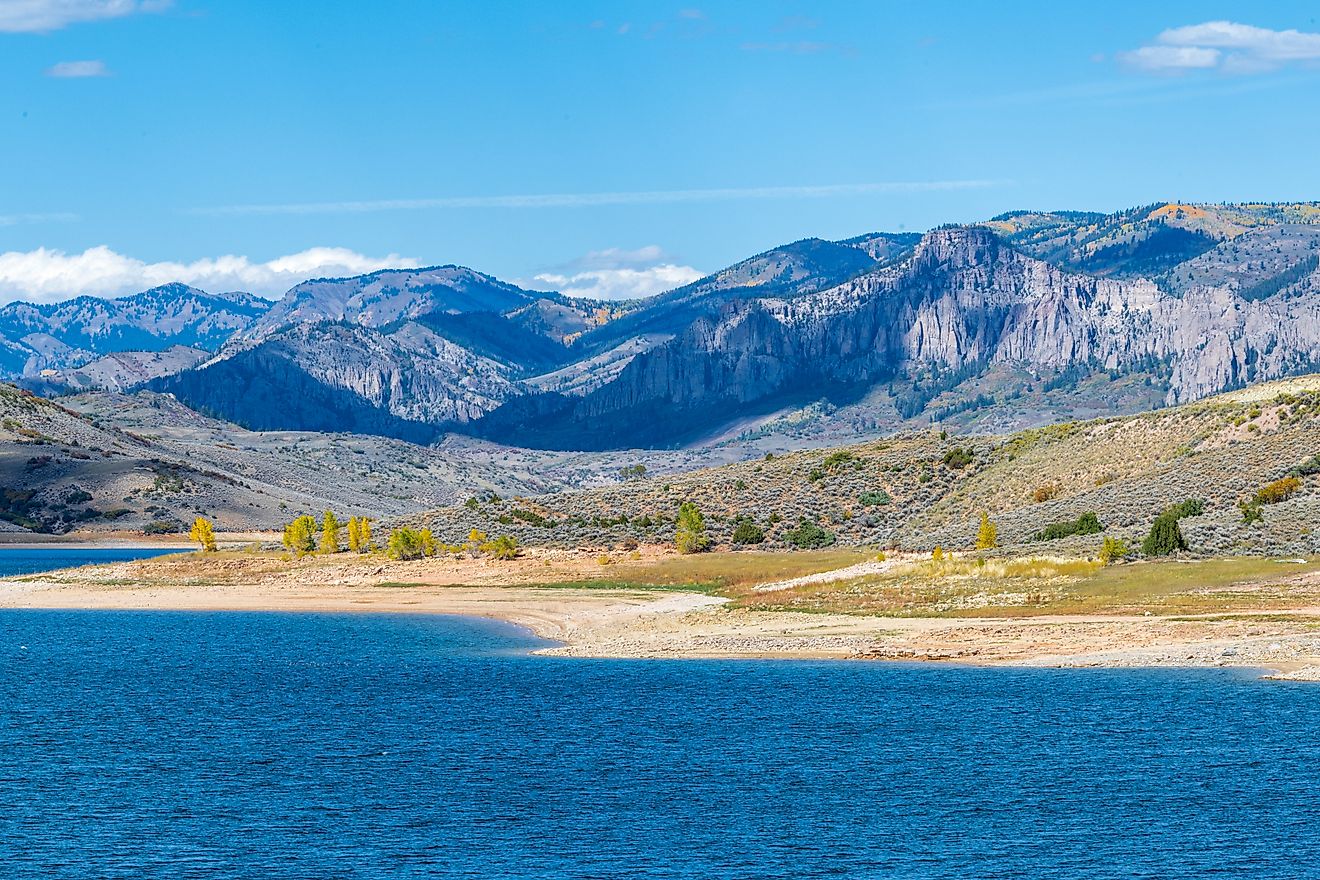
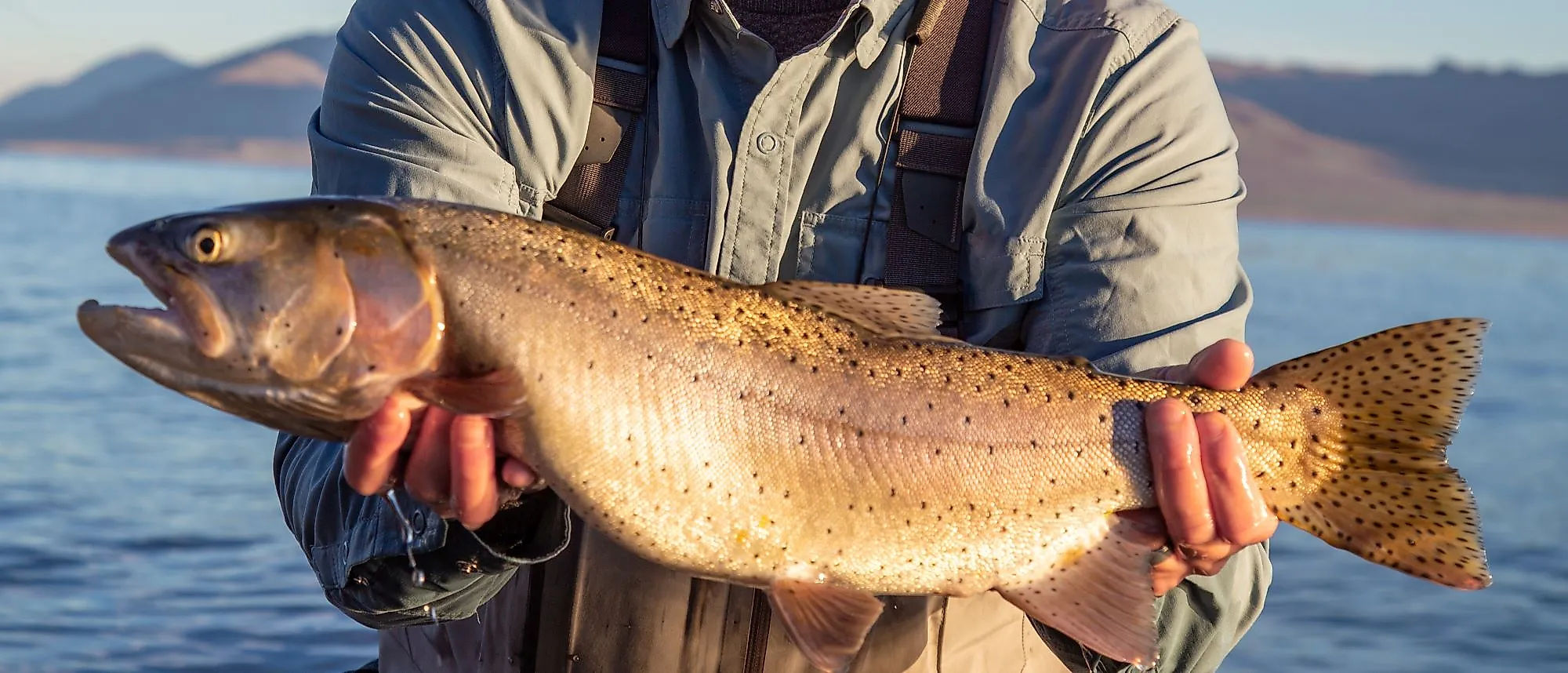
Trout fishing calls up shaded mountain streams, not open desert, which makes Pyramid Lake the oddest entry here. John Skimmerhorn caught a 41 lb 0 oz (18.59 kg) cutthroat trout on this Nevada water on December 1, 1925. A full century later, it is still the all-tackle world record for the species. The fish is a Lahontan cutthroat, a native trout left over from the vast Ice Age lake that once covered the Great Basin. Blue water, bare shoreline, and the lake's namesake tufa rock formations surround one of the greatest trout records in the sport.
Lake Pend Oreille, Idaho

Northern Idaho's Lake Pend Oreille runs more than 1,100 feet deep, cold and dark near the bottom. That kind of water is exactly what a bull trout needs to grow large. N. Higgins caught the 32 lb 0 oz (14.51 kg) all-tackle world-record bull trout here on October 27, 1949, and no one has come close since. Bull trout are now a threatened species, protected and handled under strict rules, so this record belongs to an earlier era. It stands as a marker of what the lake's deep, cold habitat could produce.
Lac Courte Oreilles, Wisconsin

Anglers call the muskellunge the fish of ten thousand casts, because hooking a big one can take a season of trying. Cal Johnson beat those odds on Lac Courte Oreilles near Hayward on July 24, 1949. His 67 lb 8 oz (30.61 kg) muskie is the all-tackle world record, and it has held for more than 75 years. The lake sits in the heart of northern Wisconsin muskie country, a region of wooded shorelines and lake cabins built around the fish. Johnson's catch gave that country its single biggest claim.
Dale Hollow Lake, Tennessee and Kentucky

Smallmouth bass usually run smaller than their largemouth cousins, which is what makes Dale Hollow's record so hard to believe. David Hayes was trolling this reservoir on the Tennessee-Kentucky line on July 9, 1955, when he landed an 11 lb 15 oz (5.41 kg) smallmouth. The catch was disqualified in 1996 over a tampering claim, then reinstated in 2005 after investigators cleared it, and it remains the all-tackle world record. The three heaviest smallmouth ever recorded all came from this one lake. No water has a stronger claim on the species.
Santee Cooper Reservoir, South Carolina

The Santee Cooper lakes brought warm-water fishing and one of the oldest records here into the same story. W. B. Whaley caught the 58 lb 0 oz (26.3 kg) all-tackle world-record channel catfish in this South Carolina system on July 7, 1964. The record covers Lakes Marion and Moultrie, the two big reservoirs that make up the Santee Cooper system. It is a Lowcountry fishery of cypress trees and wide, open water, a world away from the cold northern lakes higher on this list. More than 60 years on, no channel catfish has topped Whaley's.
Kerr Lake, Virginia and North Carolina

Kerr Lake, known locally as Buggs Island Lake, produced a fish that outweighed the anglers chasing it. Richard Nicholas Anderson landed a 143 lb 0 oz (64.86 kg) blue catfish here on June 18, 2011, in the Virginia stretch of the reservoir, and it stands as the all-tackle world record. This Roanoke River reservoir spreads across the Virginia and North Carolina line, ringed by hundreds of miles of wooded shoreline. Blue catfish are native to the big rivers of the middle of the country, but stocked populations in the mid-Atlantic have grown to sizes their home waters rarely match. Anderson's fish is the clearest proof of that.
What These Record Waters Share
These ten lakes look nothing alike on a map. Great Bear and Pend Oreille are cold and deep, Pyramid sits in open desert, and Diefenbaker spreads across flat prairie. Santee Cooper and Kerr are warm Southern catfish water, while Biwa put a bass record on the far side of the Pacific. Havasu turned an invasive mussel into a world-record panfish factory. What ties them together is not scenery but the recipe underneath it: the right food, the right water, decades of time, and in several cases careful fisheries management. Grow all of that together and a lake can produce a fish that outlasts every challenger for generations. That is worth noticing even for people who will never pick up a rod.