Why Some Great Lakes Freighters Are Really A Tug Pushing A Barge
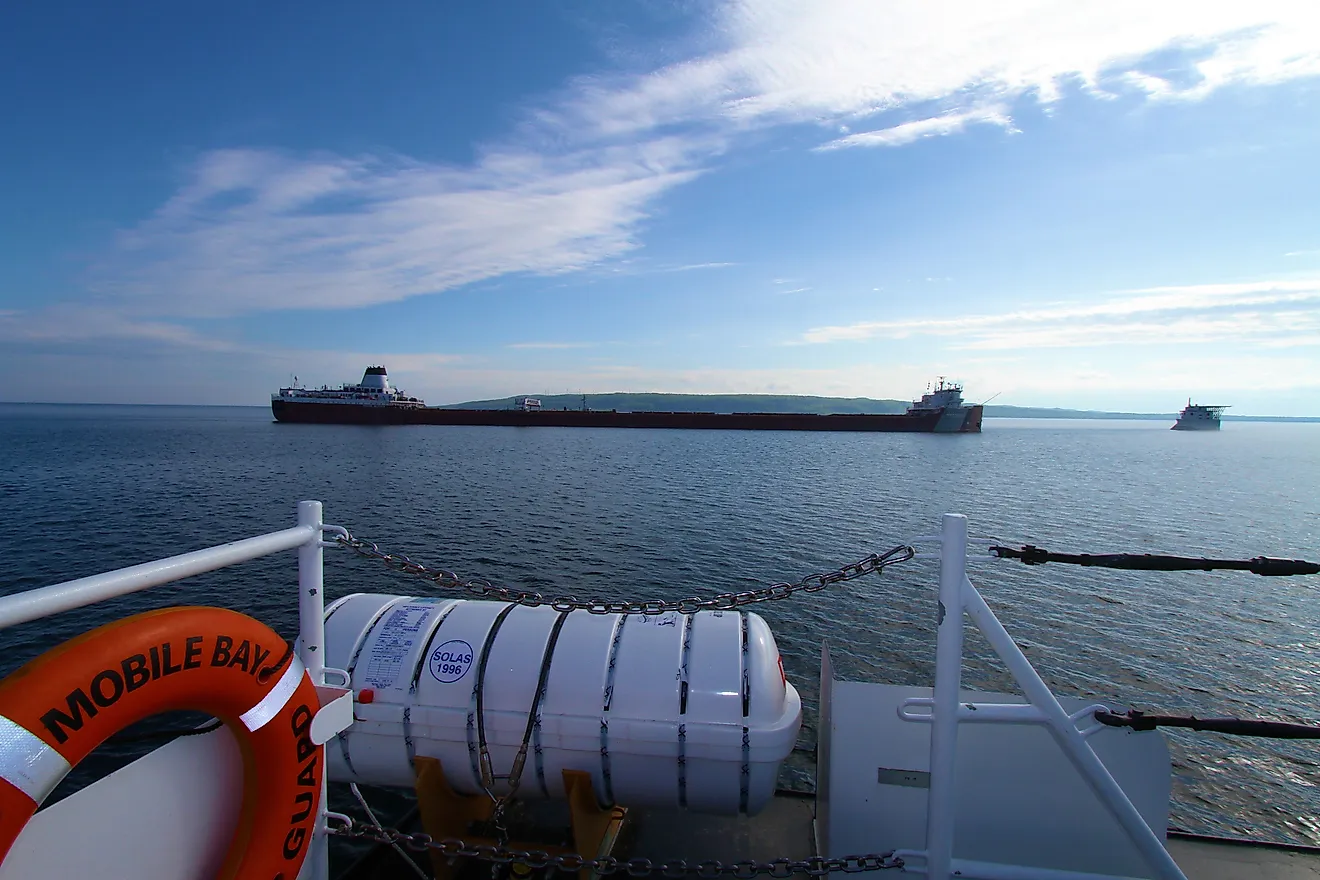
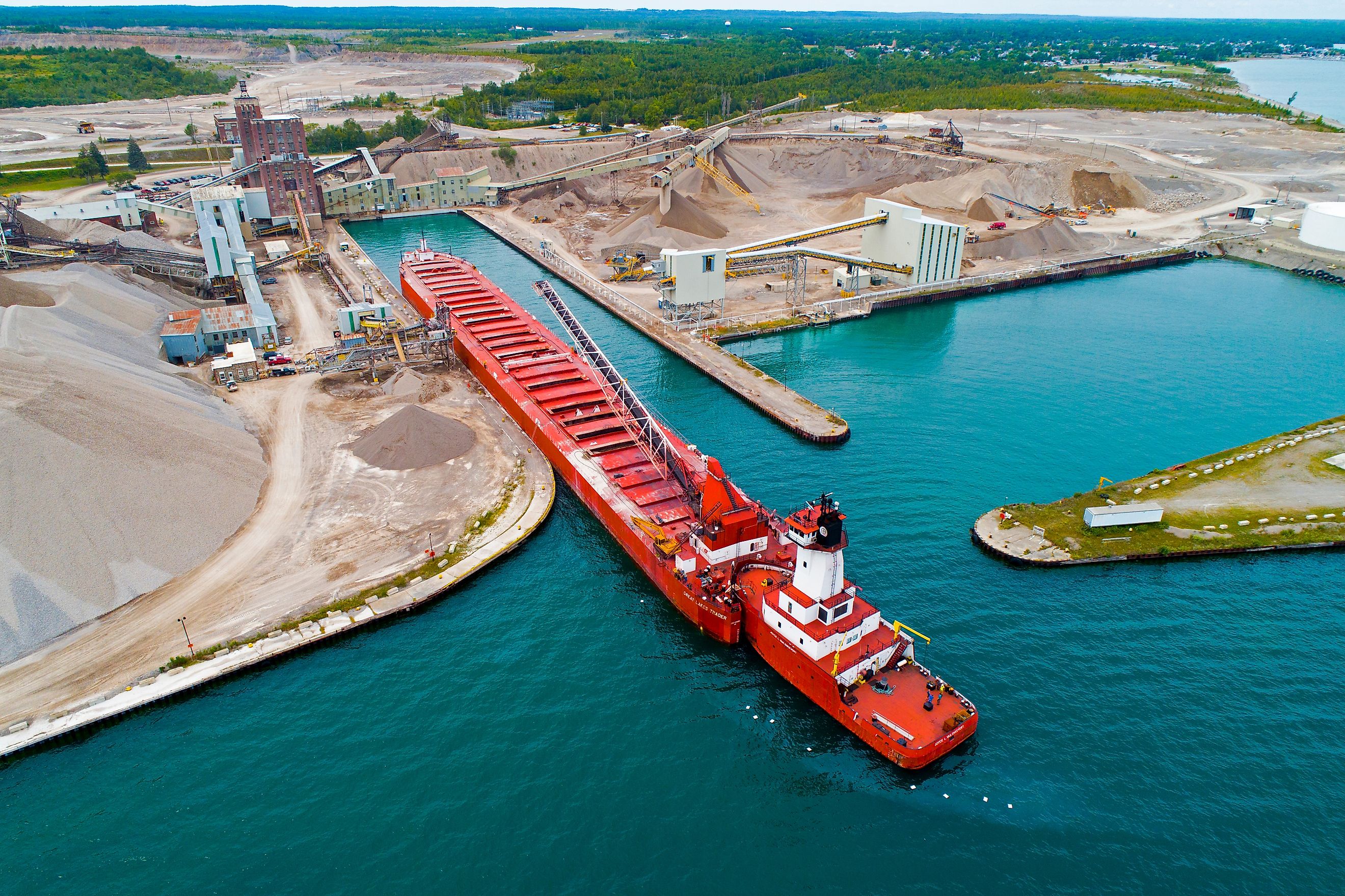
Several of the vessels moving cargo on the Great Lakes are not ships. They are a tugboat wedged into a notch cut in the stern of an unpowered barge, locked in place by hydraulic rams, operating as one unit. From a distance the result looks like a freighter. Up close the join is visible, and the reason it exists is not engineering elegance. It is the crew list.
A Ship Needs Twenty-Three People

The economics start with how many people a vessel is legally required to carry.
A self-propelled vessel of this size typically crews around 23. A tug and barge unit of comparable capacity crews somewhere between six and twelve depending on the route, because the tug is manned as a tug rather than as a ship.
That is roughly a third fewer people, and tug crew members sit on a different wage scale from ship crews. Across a nine-month season the difference is substantial.
The Tug Sits In A Notch

The physical arrangement is simpler than it sounds and visible from any shoreline.
The barge has a notch cut into its stern. The tug's bow fits into that notch and locks there, so the two travel as a single vessel with the tug providing all the power.
Loaded, the barge's own hull does the carrying. The tug contributes propulsion, accommodation and a wheelhouse high enough to see over the cargo.
Hydraulic Teeth Hold It Together

The connection is the piece of engineering that makes the whole concept work.
Coupling systems such as Hydraconn, Intercon and Artubar use a hydraulic ram on each side of the tug to drive a toothed head into a pin rack built into the sides of the barge's notch. The Hydraconn system was pioneered on the lakes by VanEnkevort.
The connection allows the tug and barge to pitch independently while operating together. That hinge is what distinguishes the modern type.
Articulated Hinges, Integrated Does Not

Two different designs get confused, and the difference matters legally as well as mechanically.
An articulated tug barge, or ATB, has a hinged connection allowing independent pitch. An integrated tug barge, or ITB, locks rigidly with no hinge and usually has a much longer notch surrounding most of the tug.
The Presque Isle is an ITB, which is why its notch wraps so far around the tug. Newer units are almost all ATBs.
The Thousand-Footer That Failed Its Own Plan

The largest example on the lakes exists because of the crewing rules and then did not benefit from them.
Litton Great Lakes built the 1,000-foot Presque Isle in 1973 as an integrated tug barge, specifically designed to take advantage of Coast Guard tug and barge manning requirements. The tug was then declared unseaworthy on its own.
Because of that it had to operate with a full-size crew of roughly 18 to 25, the same as any conventional freighter. The loophole it was built for closed before it could use it.
Most Of Them Are Converted Ships
Many lake ATBs were not built as tug and barge units at all.
The Dorothy Ann and Pathfinder pairing came from converting the 1953 steamer J. Mauthe, with the tug entering service alongside the barge in 1999. Pere Marquette 41 was formerly the SS City of Midland 41, built in 1940.
The conversion involves cutting the stern down, building a tug hull around the existing propeller and rudder, then cutting the tug free and plating the resulting notch.
One Of Them Was 107 Years Old

The most extreme conversion on the lakes took a vessel that had been sailing since before the First World War.
The St Marys Challenger spent 107 years as a self-propelled boat before her steam engine was removed in 2014 and she was cut down to a barge, paired with the tug Prentiss Brown.
The refit cost over 10 million dollars and shortened her from 552 feet to 527. She still carries the same cargo capacity she always did.
They Burn Half The Fuel And Go Half The Speed

The operating trade-off is as clear as the crewing one.
Tug and barge units consume about half the fuel per mile of a self-propelled vessel, but move at around nine knots, roughly half the speed. The saving comes partly from going slower.
Construction and maintenance costs on a barge also run well below those for a self-propelled vessel of similar size, and a state-of-the-art ATB has been costed at 26 to 27 million dollars.
Fewer People Doing The Same Jobs

The crewing advantage has drawn a fair question from people in the industry.
If an ATB does everything a ship does, what is not being done that allows for fewer crew? An ATB usually carries one engineer, where a ship moving the same cargo would carry a chief engineer, three licensed engineers and three unlicensed engine crew.
Those smaller crews still handle cargo pumping, mooring, sea watches, maintenance and inspections. The workload does not shrink with the crew list.
The Rules Are Catching Up

The original advantage rested on regulations that are no longer quite what they were.
The crewing rules that made ATBs attractive have been described as somewhat arbitrary, and they have been updated over time, so the crew size differences are no longer as large as they once were.
The format persists anyway, because the fuel economy, the lower build cost and the ability to convert an existing hull all survive regardless of what the manning tables say.
The Short Answer

Some Great Lakes freighters are a tug locked into a notch in a barge because the combination can be crewed as a tug rather than a ship, cutting the complement from around 23 to between six and twelve, burning half the fuel per mile and costing far less to build or convert.
The hinge between the two is a hydraulic ram driving a toothed head into a pin rack, which lets them pitch separately while sailing as one vessel. Several of these units were ships once, cut down and rebuilt around their own propellers, including one that had been sailing for 107 years before it was turned into something it had to be pushed.