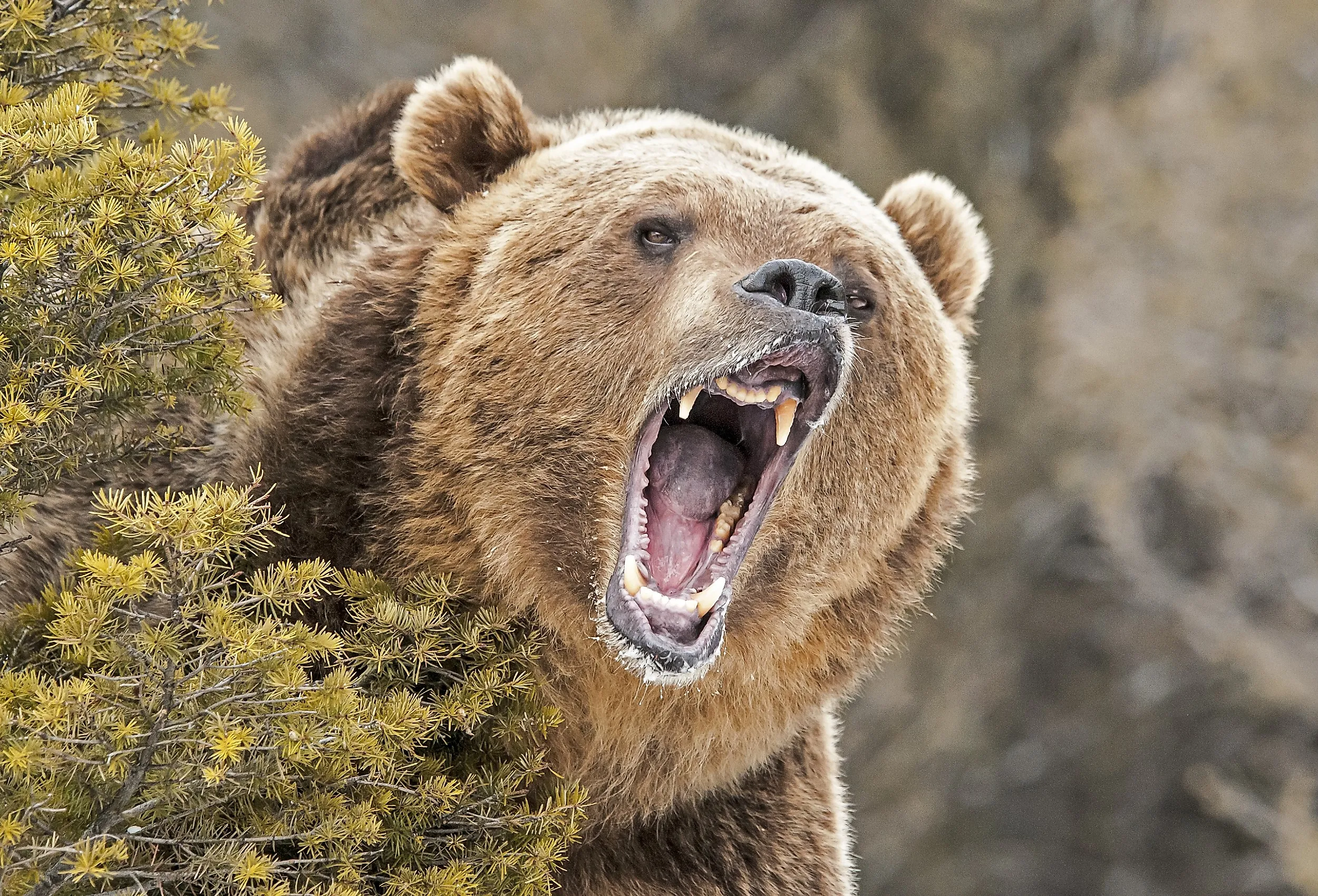
The Most Bear-Dense States in the United States
Across the United States, bear populations thrive in places as varied as Alaska’s salmon-filled rivers, Maine’s deep forests, and the volcanic slopes of the Pacific Northwest. Alaska alone contains well over 130,000 black, grizzly, and polar bears combined, far more than any other state. Meanwhile, California and Maine each support tens of thousands of black bears despite very different climates, landscapes, and levels of urban development. Particularly in the West, rugged mountain systems in states such as Idaho, Washington, and Oregon also continue to provide large stretches of suitable habitat with relatively limited human disturbance.
But other states with markedly smaller bear populations still account for some of the densest in the country. The unsuspecting New Jersey, for example, with its smaller size, still boasts about three bears per square mile in some regions. Others, like Vermont and Pennsylvania, also have ideal habitat despite their smaller borders compared to those of more western states.
The availability of food plays perhaps the biggest role, with berry fields, nut- and seed-producing forests, and salmon runs helping sustain healthy populations. Using combined black bear and grizzly bear estimates, these states rank among the most bear-infested places in the US and remain some of the country’s strongest strongholds for wildlife in general.
Maine

Maine supports the largest black bear population in the eastern United States, with an estimated 35,000 bears spread across its heavily forested New England landscape. And with a small land area of only 30,865 square miles, Maine has one of the most dense bear populations of any state in the US, with approximately 1 bear per square mile.
Maine’s numbers come entirely from black bears, which thrive in its remarkably wild and rugged terrain. Much of northern and central Maine remains sparsely developed, providing bears with extensive habitat with relatively limited disturbance.
Maine's geography plays a major role in why it supports so many bears, as vast stretches of mixed hardwood and pine forests cover much of the state, particularly in the North Maine Woods region near the Canadian border. Moreover, numerous swamps, lakes, and rivers here provide abundant feeding areas for fish and other aquatic organisms throughout the warm months. Logging areas have also been known to benefit resident bears by creating new plant growth and berry patches.
Seasonal food sources are especially important in this region, which faces long, harsh winters, and bears also feast heavily on berries, beechnuts, acorns, and insects during the fall before entering their winter dens. Combined with cold winters and large, undeveloped tracts of land, these factors all line up to allow Maine to maintain the densest bear population in the US.
Vermont

Although Vermont is also located in the Northeast, like Maine, it too is very much a wilderness-covered state with few truly metropolitan areas. The state takes up about 9,616 mi², and wildlife officials estimate the black bear population at roughly 7,750 animals. With its vast wilderness and parklands, bears here are fairly well distributed across much of the state, but the densest populations occur in the Green Mountains and the heavily forested regions of central and northeastern Vermont.
Extensive hardwood forests provide reliable food sources, while Vermont's notably mountainous terrain, popular with hikers in the summer and skiiers in the winter, offers large stretches of connected habitat with relatively low human fragmentation. The resident population has expanded significantly over the past several decades, too, mainly thanks to conservation measures and forest recovery.
Run-ins with humans are most common during late summer and fall, when many people are also out for sightseeing. This is when black bears search aggressively for high-calorie food before winter denning season, so just be extra cautious when on the trail.
Pennsylvania

This state encompasses around 46,054 mi² and is home to an estimated 20,000 black bears, the bulk of which inhabit the heavily wooded northern and central parts of the state, including the Allegheny Plateau, Pocono Mountains, and extensive Appalachian ridges. Large tracts of pristine wilderness area and farmland in the wide space between Philadelphia to the east and Pittsburgh to the west offer ample room for wildlife to flourish. Pennsylvania’s long history of forest regeneration following 19th-century logging has contributed greatly to this.
Black bears are now present in nearly every county, though densities remain highest in remote mountain regions with lower levels of pressure from urban development. Pennsylvania is also known for producing exceptionally large black bears, the state regularly recording some of the heaviest black bears in North America, with adult males occasionally exceeding 700 lbs before winter hibernation season.
New Hampshire

New Hampshire is yet another New England state with large numbers of black bears relative to its land area. The state covers about 9,350 mi² and supports an estimated population of roughly 5,000 to 6,000 black bears, with the strongest enclaves occurring in the White Mountains, the northern forests near the Maine border, and the more remote central highlands. These regions provide continuous hardwood and conifer forests with reliable seasonal food sources, sometimes even including agricultural crops in surrounding valleys.
Moreover, limited large-scale urban development outside southern New Hampshire allows its bears to move relatively freely between forest blocks, reinforcing stable population levels. However, suburban expansion in southern counties has also contributed to occasional sightings farther from the core habitat.
New Jersey

Despite being one of the smallest and most densely populated states in the country (at 8,722 mi² and a human population of 9.5 million people), New Jersey is popularly considered one of the most bear-dense states in the United States. Estimates generally place New Jersey’s black bear population at around 3,000 animals, but the concentration per mi² is often cited as unusually high because suitable habitat is compressed into a relatively small geographic area.
Most of the state’s black bears live in the heavily forested northwestern counties, especially Sussex, Warren, Morris, and Passaic Counties. The Kittatinny Ridge region, Delaware Water Gap area, and large stretches of Highlands forest especially provide ideal habitat with their abundant acorns, wetlands, and thick cover.
Encounters between bears and residents have become increasingly common in suburban communities bordering forest land. State wildlife officials regularly respond to reports involving overturned garbage cans, bird feeders, and bears wandering through neighborhoods. To add to this, adult males in New Jersey can exceed 500 lbs, making them among the larger black bears found in the Northeast.
Alaska

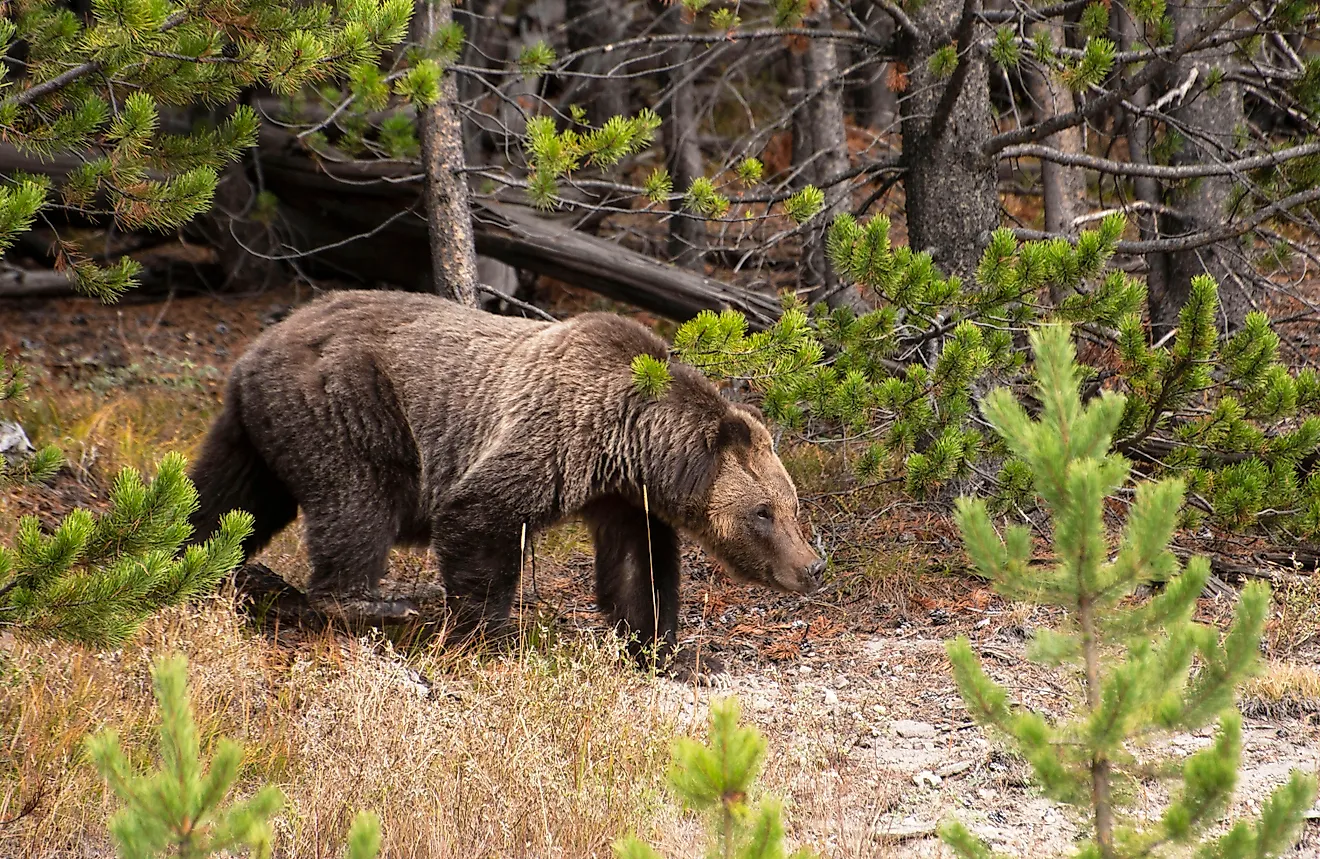
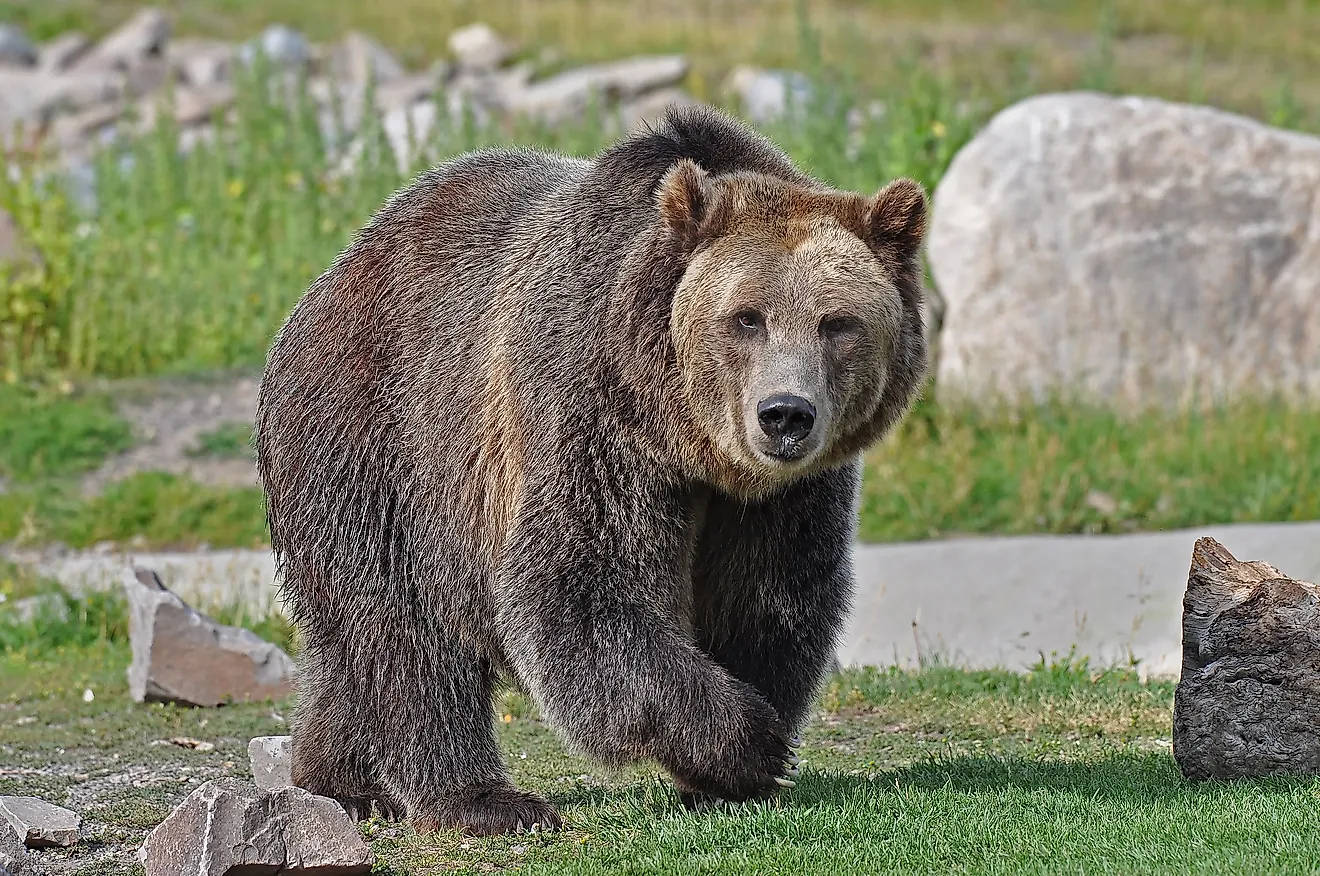
In terms of sheer number of bears, Alaska reigns king in the United States by a massive margin, with roughly 100,000 black bears and around 30,000 grizzly bears spread across its enormous wilderness. However, since the state spans a whopping 570,641 square miles, it isn't as densely populated with bears as other US states.
The state's bear populations are so prolific that it's been featured several times in bear-related media, including the animated Brother Bear, the survival thriller The Edge, and the renowned Werner Herzog documentary Grizzly Man.
The state’s geography is the main reason those numbers are so high, as Alaska contains millions of acres of untouched forests, tundra, wetlands, river systems, and remote mountain ranges with relatively little human development in between to top it off. With that, resident bears still have access to huge, uninterrupted habitats that no longer really exist across much of the Lower 48.

Food availability is another major factor. Alaska’s rivers support some of the world’s largest salmon runs, especially in coastal places like Katmai National Park and Preserve and Kodiak Island, where coastal brown bears can grow to enormous sizes, going up to 1,500 lbs (680 kg) at times! On the other hand, inland grizzlies feed on berries, roots, carrion, and moose calves, while the usually smaller black bears thrive more so in the heavily wooded southern and interior regions of the state.
Alaska's notoriously long winters and low human population density also reduce pressure on bear habitat, allowing it to support one of the planet’s highest concentrations of medium- to large-sized predators, including wolves, lynx, wolverines, and even polar bears.
California

Another large state that breaks records for its total number of bears is California, which holds the largest black bear population in the contiguous US. Different sources on the subject vary widely, but the California Department of Fish and Wildlife estimates that 49,000 to 71,000 live across the state. But unlike Alaska, California’s bear population consists entirely of black bears, since grizzly bears were hunted to extinction there in the early 20th century. Ironically, the grizzly bear is still prominently featured on the state flag despite this.
Today, local black bears occupy a wide range of habitats stretching from the Klamath Mountains and North Coast woodlands to the Sierra Nevada and parts of Southern California. This highly diverse geography creates ideal conditions, with extensive mountain ranges, conifer forests, and large protected wilderness areas, all of which are perfect for bears to thrive. California’s varied elevations and relatively mild climate also allow bears to remain active across longer portions of the year than in colder locales, further helping to sustain such a large statewide population.
National parks and forests such as Yosemite National Park, Shasta-Trinity National Forest, and Sequoia National Forest, in particular, provide huge tracts of habitat with reliable food and water sources. Here, bears feed primarily on berries, acorns, insects, carrion, fish, and the occasional unattended camper's cooler box. Furthermore, lower-elevation ecosystems offer especially important feeding grounds before winter hibernation.
Idaho

Going up to the Pacific Northwest, Idaho boasts a healthy mix of black bears (about 20,000 to 30,000) and a recovering grizzly population, the latter nearly pushed to extinction by humans in its eastern and northern mountains near the border with British Columbia. Black bears occupy much of the state’s forested terrain, whereas grizzlies remain concentrated mainly near the Greater Yellowstone Ecosystem and other remote areas close to Montana and Wyoming.
Idaho contains a number of steep mountain chains, alpine valleys, and isolated river systems that provide reliable shelter and ample sources of nutrition. But above all, large sections of Idaho remain notably wild and lightly settled, giving this gorgeous state's bears room to roam across multiple connected landscapes. Massive protected regions such as the Selway-Bitterroot Wilderness and the Frank Church-River of No Return Wilderness contain some of the best of this untouched backcountry, and some of the wildest in all of the continental United States, for that matter.
Throughout the warmer months, Idaho's bears feed on huckleberries, roots, insects, trout, and animal carcasses left behind by other predators or exposure to harsh conditions. And, as in most bear-dense places across North America, this state's winters see these animals hibernating, waiting to emerge from their dens in early to mid-spring the next year.
Washington

Washington has an estimated 20,000 to 30,000 black bears, along with a very small grizzly bear population. Even with so few grizzlies remaining, this state edges out neighboring Oregon in terms of bear density, as its land area is much smaller.
Washington's mountainous and heavily wooded geography, particularly west of the Cascade Range, is characterized by thick evergreen forests that receive substantial rainfall throughout the year. The Olympic Peninsula, North Cascades, and a collection of large national forests provide extensive cover, tons of food sources, and relatively isolated terrain, where bears are often spotted moving between alpine slopes and river valleys, depending on the season. Here, salmon streams running towards the ocean support some populations near coastal watersheds, while again, berries, insects, nuts, and various vegetation remain important food sources elsewhere.
Oregon

Like Washington to its north, Oregon houses an estimated 25,000 to 30,000 black bears. Oregon no longer has a confirmed grizzly bear population, so its ranking is based entirely on black bears. They are found across much of the state, particularly in the Coast Range, Cascade Range, and the forest-blanketed mountains of southern and northeastern Oregon.
Several geographic factors help support so many bears in this scenic Pacific coast state. For one, western Oregon receives heavy rainfall that sustains towering evergreen woodlands, thick undergrowth, and productive berry patches that provide reliable food throughout much of the year. Running down its center, the Cascade Mountains add another layer of suitable terrain, with remote valleys, volcanic slopes, and extensive public lands creating large areas with limited human involvement.
Oregon’s black bears use a variety of habitats across the state, especially forested mountain ranges, meadows, and river corridors, as seasonal foods become available. In autumn, many feed heavily on blackberries, acorns, insects, and carrion before winter dormancy, often in high-elevation dens.
Be Especially Bear Smart in These States
Taken together, these states show how geography and land use can form bear-friendly spaces across the United States. Whether it's in Alaska’s vast wilderness, one that supports by far the nation’s largest and most diverse populations, or the much more urbanized New Jersey and Pennsylvania that foster high levels of black bears in particular, each region mentioned above offers the room and resources these large omnivorous animals need.
Even where grizzlies are rare or absent, black bears continue to maintain strong footholds in remote mountains and woodlands, many of which are also popular recreation areas for people. In bear country, follow local wildlife-agency guidance: secure food and trash, keep distance, make noise where visibility is poor, and carry bear spray where recommended, especially in grizzly habitat.