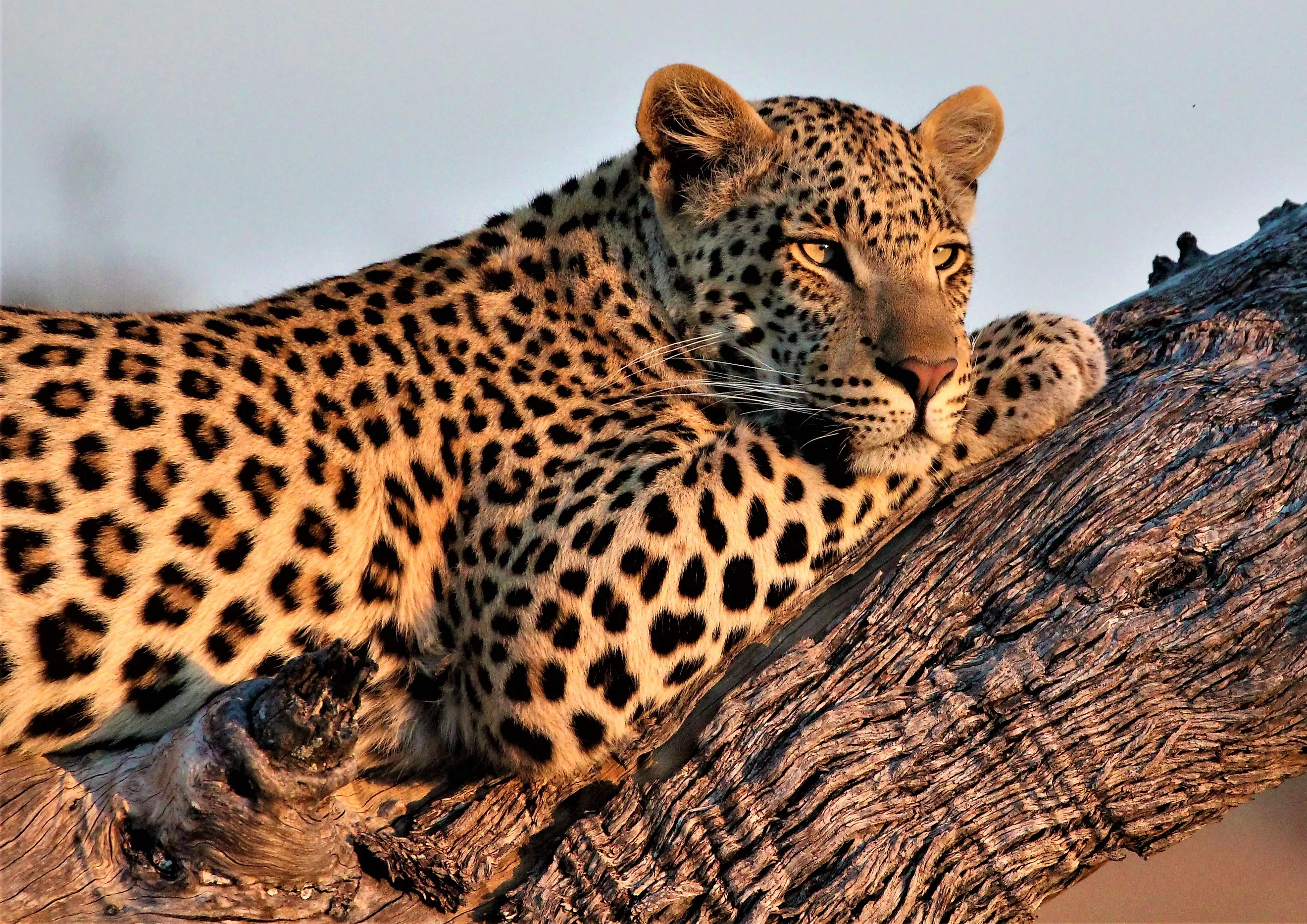
Leopard
The leopard is the most widely distributed wild cat on Earth, present across more countries and habitat types than any other large felid. They are simultaneously powerful and elusive predators, capable of bringing down animals heavier than themselves while remaining almost invisible to their prey. While they face significant threats, this stealthy cat has adapted to a wide range of environments.
In some places, they move through urban areas at night like a ghost to hunt feral animals, retreating back into the forest during the day. In others, they still inhabit the remote, wild places of their ancestors. The combination of raw power, elusiveness, and behavioral flexibility makes the leopard particularly interesting to study.
Taxonomic Classification

The leopard (Panthera pardus) belongs to the family Felidae and the genus Panthera, a group that also includes lions, tigers, and jaguars. The word "leopard" carries an ancient misconception. It is a compound of the Greek leōn, meaning "lion," and pardos, meaning "male panther," because writers in European antiquity, including Pliny the Elder, believed the leopard was a hybrid offspring of a female lion and a male panther. Today, a panther commonly refers to a black leopard.
Following the 2017 revision by the IUCN Cat Classification Task Force, eight subspecies are currently recognized across Africa and Asia. Each subspecies reflects the pressures of a distinct regional environment. For example, the Amur leopard (Panthera pardus orientalis) is among the rarest wild cats in the world, with a total population estimated at roughly 200 individuals across Russia and China.
Range and Habitat

Populations persist across sub-Saharan Africa, parts of North Africa, West Asia, South Asia, and Southeast Asia. Seven of the eight subspecies exist across Eurasia, while one subspecies, Panthera pardus pardus, ranges across Africa. The Amur subspecies has the northernmost range, reaching as far as the Siberian border regions of Russia and China.
Habitat flexibility is a central reason this species has survived where other big cats have not. Leopards live in dense rainforests, semi-arid savannas, mountain ranges above 5,000 feet in elevation, coastal scrub, and agricultural margins. In arid regions like the Kalahari, leopards can go up to ten days without drinking standing water. Instead, they draw moisture from the blood and tissue of prey and even obtain water from eating desert melons. In cold mountain environments, the Amur leopard grows a thick, dense coat for insulation, and its large, broad paws distribute weight across snow like natural snowshoes. In dense rainforests, water-resistant fur helps shed moisture and prevent heat loss.
The color of their coat and the shape of their rosettes also depend on the environment each population inhabits. In dry savannas and deserts, the coat is yellow-brown. In forests, it shifts to a reddish-orange. Researchers have noted that rosettes are more circular in East Africa and squarer in South Africa to better match the surrounding habitat.
The African savanna and the Indian subcontinent hold the largest known concentrations. In Africa, Kruger National Park and the surrounding private reserves in South Africa sustain some of the most studied populations. In Asia, protected areas in India's Western Ghats and Central Indian highlands support significant numbers of the Indian leopard (Panthera pardus fusca).
Diet and Hunting

Though the smallest of the five big cats, leopards are powerful hunters built for agility and speed. They can jump 20 feet horizontally and 10 feet vertically and briefly reach speeds of up to 40 miles per hour. Like all cats, they are obligate carnivores, which means they rely exclusively on meat to survive. Their diet covers a remarkably broad prey base including impala, reedbuck, warthog, baboons, hares, and even large insects. In parts of Asia, prey consists heavily of deer, wild pigs, and monkeys. Domestic livestock and pets may also be hunted as the habitats of these cats and humans increasingly overlap.
In some regions, individuals have adapted to living within or immediately adjacent to cities. In Mumbai, India, leopards have been documented moving through densely populated neighborhoods at night, preying on feral dogs and pigs. Hunting is conducted almost entirely at night or in the low light of dawn and dusk. The technique relies on concealment and proximity rather than sustained pursuit.
A leopard will stalk within a few feet of its prey before launching. Once a kill is made, leopards often haul carcasses into trees to protect their prize from hyenas and other big cats, a feat requiring extraordinary muscular strength. Their skull and jaw structure are built for tremendous force relative to their body size. Retractable claws grip bark and allow them to descend from trees headfirst, an unusual ability among large cats. They sometimes move through trees and drop from limbs onto their prey below. The tail provides critical balance during high-speed pursuits on the ground and when maneuvering through the canopy.
Their coats, consisting of rosettes (circular or semi-circular dark spots arranged around a lighter center), help the animals camouflage themselves. Across the back and sides, these rosettes are dense and closely spaced. On the face, legs, and underbelly, solid spots replace the rosette pattern. Some individuals appear almost entirely black due to excess pigment production and may be called black panthers, but they remain the same species. Their rosettes can be hard to see, although they remain fairly visible in direct sunlight.
Behavior

These cats are solitary outside of mating and raising cubs, but that does not mean they are out of communication with each other. They just do it without meeting face to face. Individuals hold large territories that overlap, and they use various methods to communicate their presence and avoid conflict. The size of these overlapping territories can range considerably, from seven to 770 square miles, depending on the cat's sex, region, and prey availability. In Thailand, a male Indochinese leopard's (Panthera pardus delacouri) range is about 17 square miles. In Namibia's savanna woodlands, a male leopard's range can extend to about 280 square miles.
Scent marking, scratch marks on trees, and vocalizations share critical information such as claims to territory, body size, reproductive availability, and warnings. Markings leave chemical signals that allow individuals to mark territory and assess competitors or potential mates without direct contact. Secretions are also left behind from cheek glands when leopards rub their face against trees or vegetation.
These marking behaviors continue throughout an individual's life, developing into a kind of routine. African leopards are known to revisit and refresh specific marking sites roughly every ten days, keeping their presence legible across the territory. The height and depth of a scratch mark even provides rivals a rough read on body size before any direct encounter happens.
Rasping vocalizations, called sawing, carry long distances and function as a territorial broadcast or way to locate a potential mate. When in close proximity to each other, leopards use chuffing and purring sounds to communicate affection. During aggressive encounters, vocalizations include hisses, snarls, and growls.
The leopard's whole communication system is built around sharing maximum information with minimal risk. A direct fight can injure or kill both animals, so this layered network of signals lets them establish boundaries, navigate overlapping territories, and find mates without frequent danger or consequence.
Reproduction

Female leopards can become pregnant year-round, though in some regions they time reproduction to coincide with greater prey availability. Most females breed once each year. After a gestation period of about 90 to 105 days, a female gives birth to one to three cubs, with two being the average. Cubs are born with their eyes closed and a muted, smoky coat, while their full rosette pattern becomes visible within a few weeks.
Cubs stay with their mother for 12 to 18 months. During that time, she teaches hunting skills through direct exposure, bringing live prey to the cubs and allowing them to practice pursuit and capture. However, mortality rates are high in those early months. Lions, hyenas, and rival leopards claim a significant portion of cubs before they reach independence. Males take no part in raising offspring and are a genuine threat to cubs that are not their own.
Sexual maturity arrives at about two to three years of age. To reproduce, however, males must successfully hold their own territory. This typically happens when they are around three and a half years old.
Threats

Leopards face significant threats from habitat loss globally, with some populations at high risk of collapse. Agricultural expansion, urban development, and road construction fragment territories and cut off prey access. Fragmentation isolates populations and limits the gene flow a species needs to stay healthy over generations.
As human and leopard territories increasingly overlap, conflict can increase. Snares set for prey animals can catch leopards as incidental casualties. In parts of Asia, active poaching feeds demand for bones, skins, and organs. When leopards hunt livestock, they may be killed in retaliation by farmers under increasing pressure to protect their animals. The Amur and Arabian subspecies face the sharpest pressure, with numbers low enough that local extinction is a possible near-term outcome without serious intervention.
Climate change compounds all of this. Shifting vegetation, desertification, and disrupted prey distribution are degrading habitat quality across large swaths of ecosystems that support leopard populations.
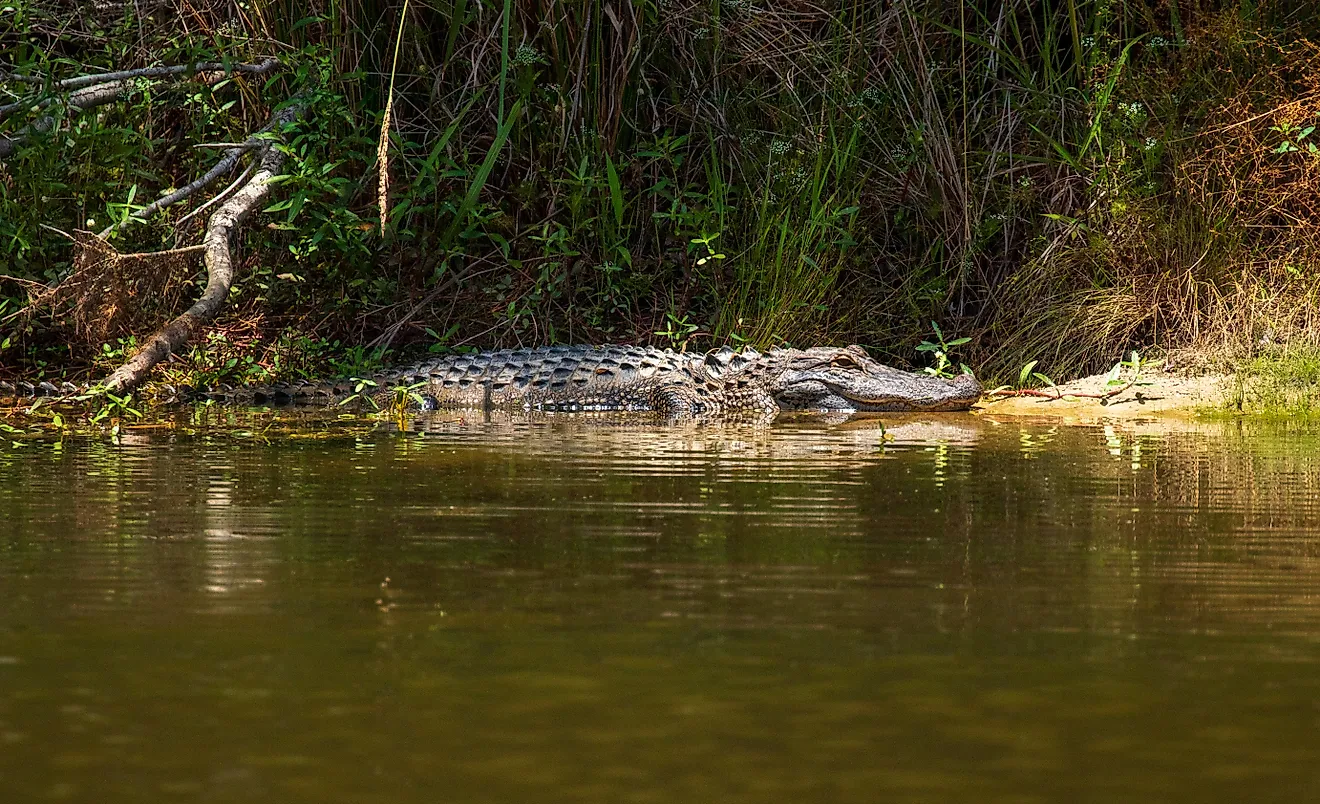
Leopards also face predation pressure from other large carnivores, particularly lions, tigers, and spotted hyenas. These animals will hunt leopards directly, especially sick or injured ones, and steal their kills whenever they can. Hauling prey up into trees and resting there during the day helps prevent both the stealing of carcasses and predation from other large carnivores. Nile crocodiles pose a threat to leopards when they hunt near rivers or drink from large bodies of water.
For cubs, the dangers extend further. African wild dogs and baboons have been documented killing young leopards, and adult male leopards practice infanticide, killing cubs that are not their own when they take over a new territory.
Importance to the World

As apex predators, these wild felids keep prey populations in check and prevent the overgrazing and habitat degradation that follows when herbivore numbers go unregulated. Pull them out of the ecosystem and the effects cascade through vegetation structure, water availability, and the health of entire food webs.
Beyond ecology, they carry deep cultural weight for many communities. They appear in the art, mythology, and ceremonial traditions of dozens of African and Asian societies. Their presence in the wild also sustains ecotourism economies that represent primary income for many rural communities.
Conservation work is happening across the leopard's range, with some programs producing measurable results. Panthera's Leopard Program operates across multiple African countries, using camera trap networks and GPS collar data to track population health and establish wildlife corridors that connect fragmented habitats. In Russia, the Land of the Leopard National Park was established in 2012 to protect the Amur leopard.
Subsequent surveys recorded population growth from an estimated 30 individuals in the year 2000 to around 130 in Russia today. The Wildcats Conservation Alliance estimates roughly 50 additional Amur leopards living across the border in China, bringing the total to about 200 wild individuals.
Leopards: Strength, Stealth, and Survival
The presence of leopards in the wild is a direct measure of ecosystem health. A landscape that can support them is a landscape with functioning prey populations and enough undisturbed territory to sustain complex life. Lose the leopard, and that signal goes dark. Several subspecies are already in serious trouble, and the broader population is being forced to exist at the edges of its range in ways that are difficult to reverse once habitat fragmentation sets in.
The Amur leopard's recovery is proof that the trajectory can be reversed with focused effort. Population tracking, wildlife corridor establishment, and expanded protected wilderness areas have all produced measurable results. Leopards can recover when given the support and space to do so. With sustained investment in these programs and divestment from the conditions driving climate change, this remarkable cat can persist for generations to come.