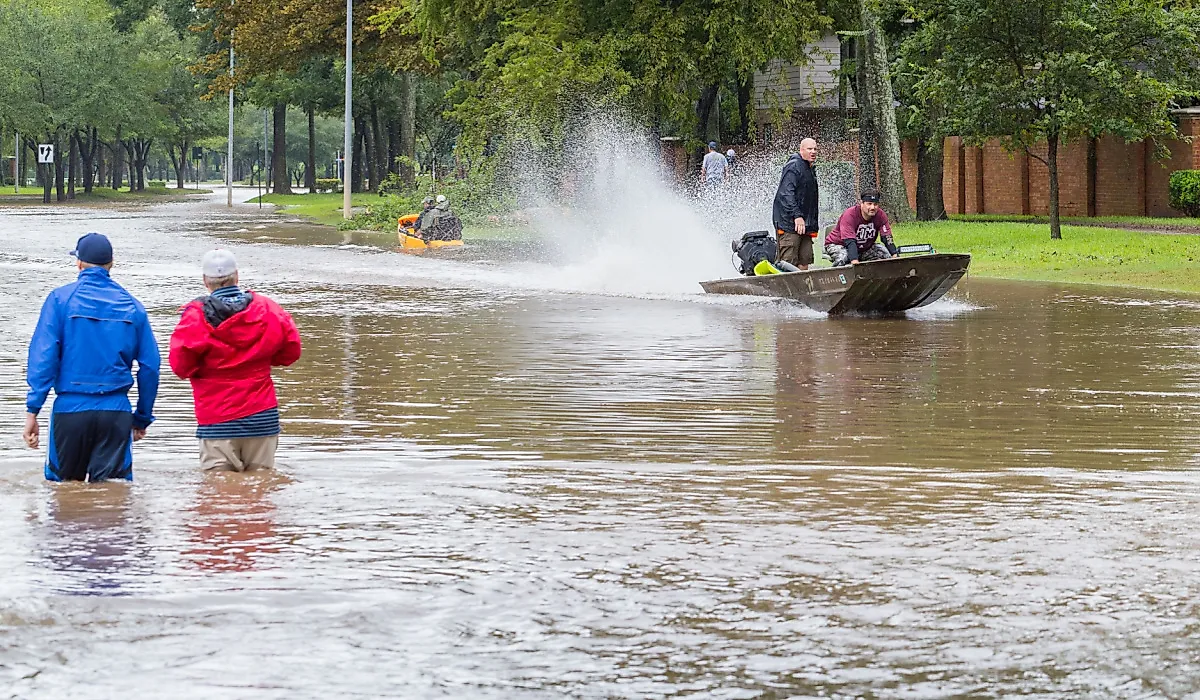
The 10 Most Flood-Prone States in the US
Flooding remains the most widespread and costly natural disaster in the United States. The trend shows no sign of slowing. By the end of the century, parts of cities like Miami and New Orleans are projected to be mostly underwater. The 2023 Fort Lauderdale flash flood cost over $1 billion in damage and showed how quickly an urban event can escalate. Florida consistently ranks among the most affected states. Many other states also face mounting flood risk from intensified rainfall patterns. The ten flood-prone states ahead are identified using NOAA NCEI Vintage 2024 disaster data plus FEMA flood maps and Fathom flood modeling research.
Florida

Florida experiences some of the country's most frequent and costly flood events. A mix of tropical cyclones, extreme rainfall, and extensive coastal development shapes much of the state's exposure. NOAA reports 94 billion-dollar disasters from 1980 to 2024, including 4 flooding events and 36 tropical cyclones, with tropical systems driving most of the losses. Florida leads the country in cumulative billion-dollar disaster costs since 1980 at roughly $450 billion. The 2023 Fort Lauderdale flash flood and Hurricane Idalia show how storm surge and intense rainfall continue to strain roads, drainage systems, and coastal infrastructure.
Flood factors extend well beyond major hurricanes. Seasonal thunderstorms regularly produce localized downpours across southern Florida and the Gulf Coast, especially in low-lying urban corridors around Miami, Tampa, Jacksonville, and Fort Lauderdale. The state's recent five-year average rose to 6.8 billion-dollar events per year, more than triple the 1980-2024 long-term rate of 2.1. Fathom modeling projects annual flood losses increasing as extreme rainfall and sea-level rise compound, with a substantial share of impacts occurring outside FEMA-mapped flood zones.
Texas

Texas faces a different but equally costly combination of flood threats driven by tropical systems, severe storms, and rapid urban expansion. Its 367-mile Gulf Coast (per the Congressional Research Service) and more than 3,300 miles of shoreline around bays and estuaries leave wide stretches of the state exposed to tropical cyclones and storm surge. NOAA reports 190 billion-dollar disasters from 1980 to 2024, including 9 major flooding events and 16 tropical cyclones. The recent five-year average climbed to 13.6 events per year, more than triple the long-term rate of 4.2.
Heavy inland rainfall compounds those risks. Tropical Storm Imelda dropped 24 to 36 inches of rain between Houston and Beaumont in September 2019. Houston experiences some of the state's most severe flood impacts, but fast-growing metros such as Dallas, Austin, and San Antonio also face recurring problems as development increases runoff and pressure on aging infrastructure. Texas now ranks second in cumulative billion-dollar disaster costs since 1980 at roughly $436 billion.
Louisiana

Louisiana experiences many of the same Gulf Coast storm systems that affect Texas, but low-lying terrain and widespread coastal wetlands intensify flood impacts across the state. NOAA reports 106 billion-dollar disasters from 1980 to 2024, including 10 major flooding events and 27 tropical cyclones. Louisiana ranks third in cumulative billion-dollar disaster costs since 1980 at roughly $314 billion. The recent five-year average rose to 6.8 events per year, nearly triple the long-term rate of 2.4.
Extreme inland rainfall remains a major concern. The 2016 Louisiana flood produced 20 to 30 inches of rain and damaged or destroyed tens of thousands of homes across Baton Rouge and surrounding communities. Storm surge, river flooding, and tropical rainfall continue to threaten populations in New Orleans, Baton Rouge, and Lake Charles during both hurricane season and major rain events.
California

California faces a very different flood profile than the Gulf Coast, with atmospheric rivers and winter storms driving many of the state's most destructive events. NOAA reports 46 billion-dollar disasters from 1980 to 2024, including 6 major flooding events, with the recent five-year average at 1.6 events per year compared to the long-term rate of 1.0. USGS research shows that past storms, including ARkStorm-scale scenarios, have caused widespread flooding across the Central Valley and coastal regions. The 2022 to 2023 atmospheric river sequence alone caused an estimated $4.7 billion in damages and exposed vulnerabilities in levees and flood-control systems.
California's geography amplifies those hazards. Runoff from the Sierra Nevada and Coast Range funnels into heavily populated valleys and river corridors, especially along the Sacramento, San Joaquin, and Feather Rivers. NOAA tide-gauge stations also track recurring coastal flooding near San Francisco and Los Angeles, and Fathom modeling projects continued growth in exposure as extreme rainfall events grow more intense.
South Carolina

South Carolina faces substantial flood exposure because tropical cyclones and large river systems shape much of the state's landscape. NOAA reports 101 billion-dollar disasters from 1980 to 2024, including 3 major flooding events and 25 tropical cyclones. The recent five-year average rose to 6.2 events per year, nearly triple the long-term rate of 2.2. Historic floods along the Pacolet, Congaree, Wateree, and Santee Rivers show how prolonged rainfall can overwhelm inland communities like Columbia, Camden, and low-lying towns in Georgetown County.
Flood risk stretches from the Upstate to the Atlantic coast. FEMA maps show broad floodplains along the Broad, Edisto, Pee Dee, Salkehatchie, Saluda, Santee, and Savannah River basins. NOAA tide-gauge stations record recurring coastal flooding near Charleston and the Grand Strand. Fathom modeling projects continued increases in annual flood losses and population exposure as the century progresses.
North Carolina

North Carolina experiences similar rainfall patterns to South Carolina, but the state's higher hurricane frequency increases overall flood exposure. NOAA reports 121 billion-dollar disasters from 1980 to 2024, including 2 major flooding events and 31 tropical cyclones. The recent five-year average rose to 7.4 events per year, well over double the long-term rate of 2.7. Hurricanes Floyd and Matthew caused catastrophic inland flooding along the Neuse and Tar Rivers, damaging communities like Kinston, Goldsboro, Rocky Mount, and Princeville.
The Coastal Plain remains especially vulnerable during prolonged rain events. FEMA maps show extensive floodplains across eastern North Carolina, while NOAA tide-gauge stations monitor recurring coastal flooding near Wilmington and the Outer Banks. Population growth across flood-prone regions has also increased long-term exposure as stronger rainfall events continue to become more common, with Hurricane Helene in 2024 producing catastrophic inland flooding across western North Carolina that pushed losses even higher.
New Jersey

Atlantic storm systems regularly push floodwaters into the Passaic and Raritan River basins and into coastal communities like Sandy Hook, Atlantic City, and Long Beach Island. NOAA reports 75 billion-dollar disasters from 1980 to 2024, including 4 major flooding events and 13 tropical cyclones. The recent five-year average climbed to 5.2 events per year, more than triple the long-term rate of 1.7. USGS flood records document repeated high-water marks along the Passaic, Raritan, and Delaware Rivers, with storms such as Irene and Ida producing some of the state's most destructive inland flooding.
Development patterns increase the consequences of those storms. FEMA maps show large floodplains around communities such as Wayne, Bound Brook, Manville, and Trenton. NOAA tide-gauge stations track frequent coastal flooding around Sandy Hook and Atlantic City. Urban density, aging drainage systems, and continued coastal development all contribute to rising statewide flood vulnerability.
New York

New York experiences many of the same tropical remnants and nor'easters that affect New Jersey, but the state's larger river systems create additional inland flood risks. NOAA reports 95 billion-dollar disasters from 1980 to 2024, including 5 major flooding events and 16 tropical cyclones. The recent five-year average rose to 6.2 events per year, nearly triple the long-term rate of 2.1. Flood history records show repeated high-water events along the Hudson, Mohawk, Susquehanna, and Delaware Rivers, especially during storms such as Irene, Lee, and Ida.
Flood exposure also affects heavily populated coastal communities like Lower Manhattan, Red Hook, Coney Island, and the Rockaway Peninsula, along with Long Island towns including Freeport, Long Beach, and Port Washington. NOAA tide-gauge stations track frequent coastal flooding in areas such as Lower Manhattan and Kings Point. FEMA maps highlight wide floodplains across eastern and central New York, including the Hudson, Mohawk, and Susquehanna River valleys. Fathom modeling projects continued growth in flood exposure as development expands into vulnerable areas and rainfall intensity increases.
Georgia

Georgia faces growing flood exposure as tropical cyclones, intense rainfall, and expanding metro areas continue to redefine the state's landscape. NOAA reports 134 billion-dollar disasters from 1980 to 2024, including 4 major flooding events and 27 tropical cyclones. The recent five-year average rose to 9.8 events per year, more than triple the long-term rate of 3.0. State flood history records show repeated high-water events along the Chattahoochee, Flint, Ocmulgee, and Savannah Rivers during major tropical systems.
Rapid population growth has increased pressure on flood-prone regions, especially in fast-growing inland areas like metro Atlanta's outer counties and Middle Georgia communities like Macon, as well as coastal counties including Chatham, Glynn, and Camden. FEMA maps show broad floodplains around central Georgia communities such as Warner Robins and Milledgeville, and across southern cities including Albany, Valdosta, and Bainbridge. NOAA tide-gauge stations track recurring coastal flooding near Fort Pulaski and the Savannah area. Fathom flood modeling shows exposure increasing as heavier rainfall coincides with ongoing development in vulnerable corridors.
Virginia

Virginia experiences recurring flood events tied to tropical cyclones, nor'easters, and extensive river systems connected to the Chesapeake Bay watershed. NOAA reports 116 billion-dollar disasters from 1980 to 2024, including 5 major flooding events and 23 tropical cyclones. The recent five-year average rose to 8.0 events per year, more than triple the long-term rate of 2.6. Flood history records document repeated high-water events along the James, Rappahannock, Potomac, and Roanoke Rivers during major storms.
Low-lying coastal regions across Hampton Roads, including Norfolk, Virginia Beach, Hampton, and Poquoson, remain particularly vulnerable. NOAA tide-gauge stations continue to track recurring flooding near Sewells Point and the lower Chesapeake Bay. FEMA maps show broad floodplains along the James, Rappahannock, and Potomac River corridors in cities such as Richmond, Fredericksburg, and Alexandria. Continued development across Hampton Roads and the lower Chesapeake Bay, combined with stronger rainfall events, is expected to increase long-term flood exposure statewide.
After The Flood
The Gulf and Atlantic coasts are clearly the most flood-prone regions of the country. While the ten states in this analysis show different combinations of risk, they share overlapping conditions that intensify flood impacts. Tropical cyclones continue to drive losses in Florida, Texas, Louisiana, and the Carolinas, while atmospheric rivers and winter storms shape California's most damaging events. Inland rainfall also remains a major concern in places such as New Jersey's Passaic and Raritan River basins and Georgia's Chattahoochee and Ocmulgee corridors, where development has expanded into flood-prone areas. The harder question is what we will do about it.