The Most Dangerous Animals of the Amazon Rainforest
A bullet ant sting that hurts for a full 24 hours. A black caiman that grows to 450 kilograms. An electric eel that can fire 860 volts in a single discharge. Each of these animals has refined its weapon across millions of years, and each commands a wide berth from anything else that shares the Amazon basin, including the indigenous communities that have learned to recognize them as both rivals and symbols.
Anaconda

The green anaconda (Eunectes murinus) is the heaviest snake species on earth, with verified weights up to 227 kg (500 lbs) and lengths reaching about 5.2 meters (17 ft) for confirmed specimens, though unverified reports of larger individuals have circulated since the 19th century. The yellow anaconda (Eunectes notaeus, pictured), found mainly in the Pantanal wetlands south of the Amazon proper, is smaller but no less effective as a constrictor. Anacondas hunt from ambush in slow-moving water, taking capybaras, caimans, and smaller deer; the larger females can swallow prey weighing more than half their own body weight. They are not generally aggressive toward humans but defend themselves vigorously when cornered or pulled out of water. Females bear live young, with litters of 20 to 40 snakes after a gestation period of about seven months.
Piranha

The red-bellied piranha (Pygocentrus nattereri), the species pictured and the one most-feared in popular imagination, lives in schools that can reach the hundreds and feeds on smaller fish, fallen fruit, insects, and carrion. Feeding frenzies do happen but are not coordinated rotations; they are competitive scrums that occur most often when food is scarce or when the school is unusually large. Schools also offer protection for smaller individuals against predators such as caimans and river otters, rather than serving primarily as a hunting tactic. Adult body length tops out around 30 to 50 centimeters depending on species, with the black piranha (Serrasalmus rhombeus) reaching the upper end. Confirmed fatal attacks on humans are rare; bites do happen, mostly in low-water conditions or around stranded fish, but the species is more of a danger to other fish than to swimmers.
Jaguar

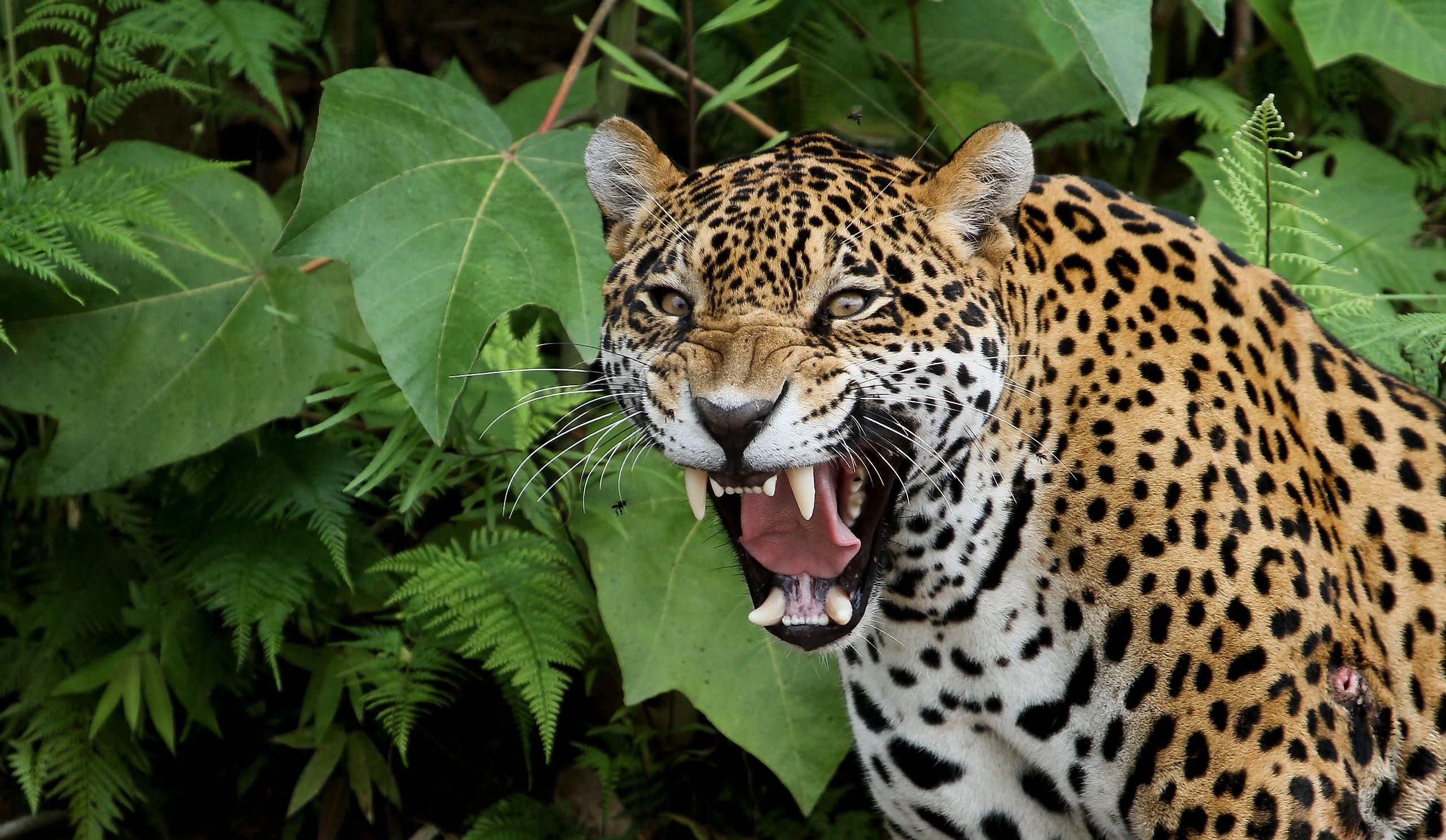
The jaguar (Panthera onca) has the strongest bite force relative to body size of any cat, capable of piercing the skulls and carapaces of its prey, and it routinely takes capybaras, peccaries, deer, caimans, and turtles. Adults range from about 56 to 96 kilograms, with males in the Pantanal reaching up to 158 kilograms and outsizing all but the largest Amazon individuals. The coat carries rosettes (broken rings with smaller spots inside), distinct from the leopard's solid-bordered rings and providing camouflage in dense riverside forest. Females raise litters of one to four cubs after a gestation of about 100 days, and home ranges run from 25 to over 1,000 square kilometers depending on prey density. The IUCN currently lists the jaguar as Near Threatened, with the Amazon basin holding the largest remaining population of an estimated 170,000 wild individuals.
Poison Dart Frog

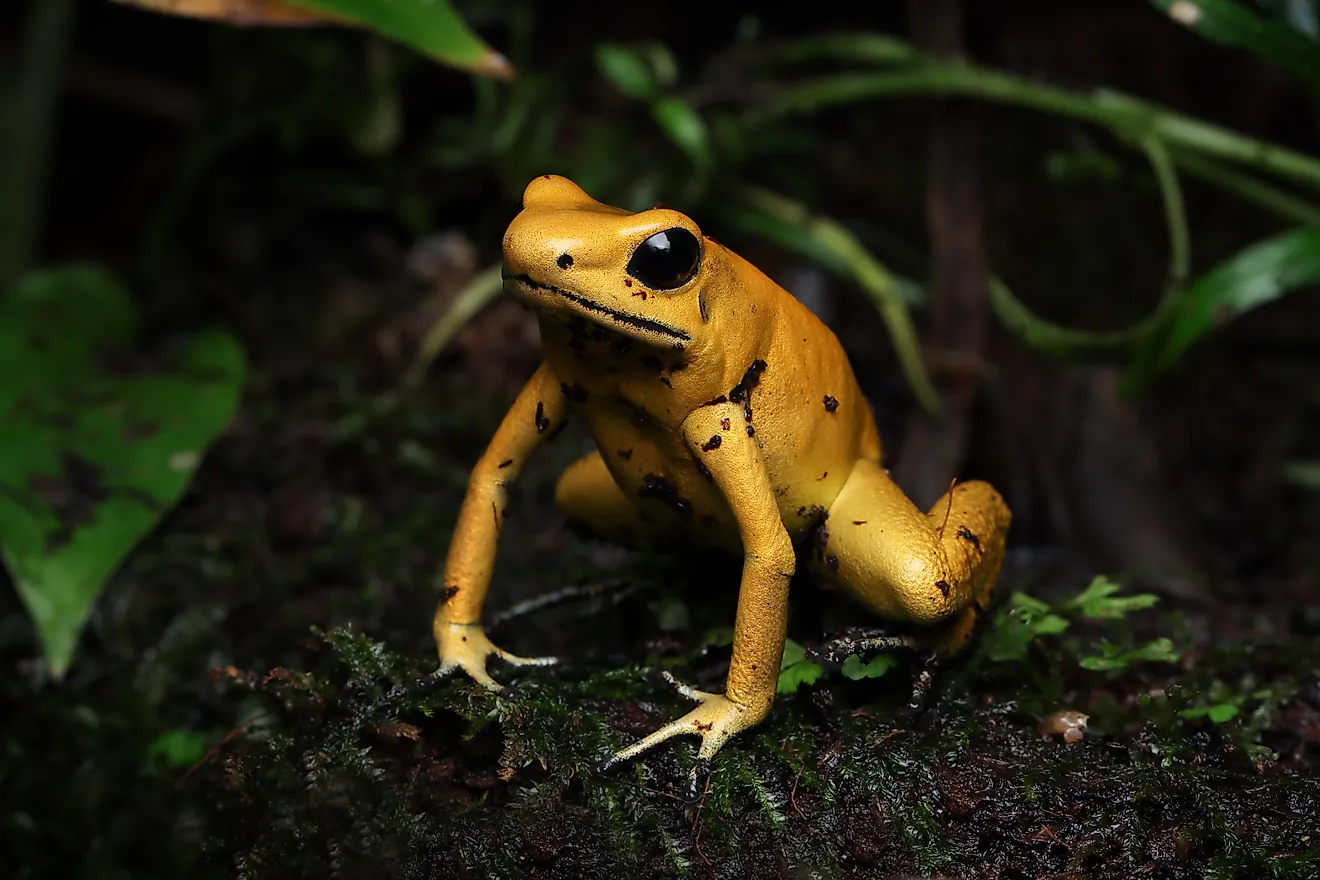
Poison dart frogs (family Dendrobatidae) get their toxicity from their diet rather than their own biology. The alkaloids come from ants and mites in the leaf litter, which the frogs sequester and concentrate in skin secretions. Captive-bred specimens fed standard insects lose their toxic punch, which is one reason dart frogs are popular in the terrarium trade. The bright coloration that runs across the family, including the red striped poison frog (Ranitomeya amazonica) pictured, is an aposematic warning to predators. Most species weigh under 5 grams and measure 1 to 5 centimeters in length. Reproduction is highly parental: females lay eggs on damp leaves above the ground, the male guards them through development, and once tadpoles hatch he carries them on his back to small pools of water, often inside bromeliads, where they finish growing. The toxin from a single golden poison frog (Phyllobates terribilis), the most toxic species, contains enough batrachotoxin to kill ten adult humans.
Black Caiman

The black caiman (Melanosuchus niger) is the largest predator in the Amazon basin, with verified individuals reaching 5 meters (16 ft) and 450 kilograms (1,000 lbs). Adults take fish, capybaras, smaller caimans, turtles, and the occasional large mammal that comes to drink. Females build nest mounds of vegetation along riverbanks and guard them through a 75 to 90 day incubation. The species was hunted nearly to commercial extinction for its hide between the 1950s and 1970s, with population estimates dropping by an estimated 99 percent in heavily harvested areas. Controlled-trade regulation and protected areas have allowed slow recovery since the 1990s, and the IUCN now lists the species as Conservation Dependent. Black caimans hold cultural weight for several indigenous Amazon groups, who often treat the animal as a spiritual symbol of strength and ferocity.
Electric Eel
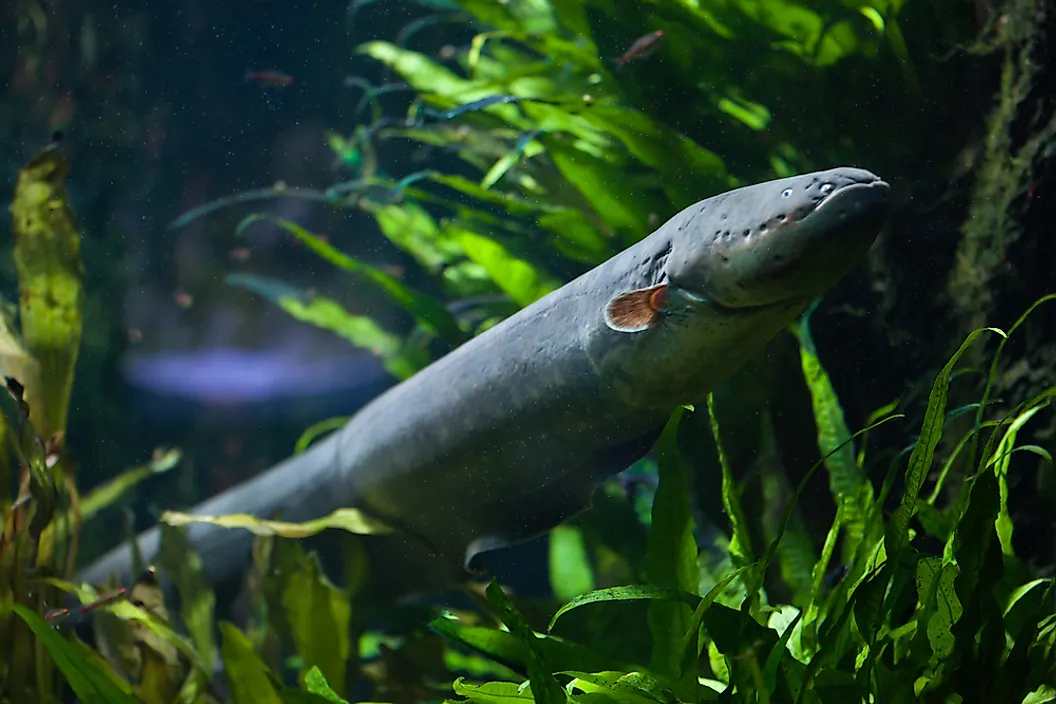
Electric eels are not eels at all but knifefish (family Gymnotidae), and as of 2019 the genus Electrophorus contains three recognized species rather than the single one assumed for 250 years. Electrophorus voltai, found in the highland tributaries of the Brazilian Shield, can deliver discharges of up to 860 volts, the strongest known bioelectric output from any animal; the other two species (E. electricus and E. varii) discharge at lower but still dangerous levels around 600 volts. Adults reach about 2.5 meters (8 ft) in length and up to 20 kilograms, with electric organs running most of the length of the body. The discharge stuns prey (mostly fish, with some small amphibians and reptiles) and deters predators. Males build foam nests during the dry season and guard the eggs and larvae. A 2021 paper documented coordinated group-hunting in E. voltai, the first such behavior recorded in any electric fish.
Bullet Ant

The bullet ant (Paraponera clavata) carries the most painful insect sting in the world by Justin Schmidt's pain index, which rates it 4.0 out of 4.0 and describes the sensation as "pure, intense, brilliant pain." The effects last up to 24 hours and can include uncontrollable shaking and partial paralysis at the site. Workers are about 2.5 centimeters long, dark and stout, and forage on the rainforest floor and lower canopy across tropical Central and South America. Colonies hold a few hundred ants centered on a single queen, with smaller workers handling internal labor and larger members foraging and defending the nest. The Sateré-Mawé people of the Brazilian Amazon use the species in a male initiation ritual: gloves woven with hundreds of live ants are worn for about ten minutes, and a boy must complete around twenty such sessions across years to be considered a full warrior.
Brazilian Wandering Spider

Brazilian wandering spiders (genus Phoneutria, with several species across the Amazon basin) do not build webs. They hunt on the forest floor at night, locating prey through vibration and sprinting to grab insects, amphibians, and small mammals, a method that earned them the alternate Portuguese name armadeira (armed spider). The venom is among the most potent of any spider's, containing the neurotoxin PhTx3 and capable of causing severe pain, hypertension, and, in rare cases without antivenom, death. Females reach about 5 centimeters in body length with a leg span around 15 centimeters, and the genus ranks among the largest spider groups by body size. Females guard their egg sacs and the spiderlings that emerge from them. The species sometimes finds its way into bananas being shipped abroad, which is the most common way Europeans and North Americans encounter the animal.
Harpy Eagle

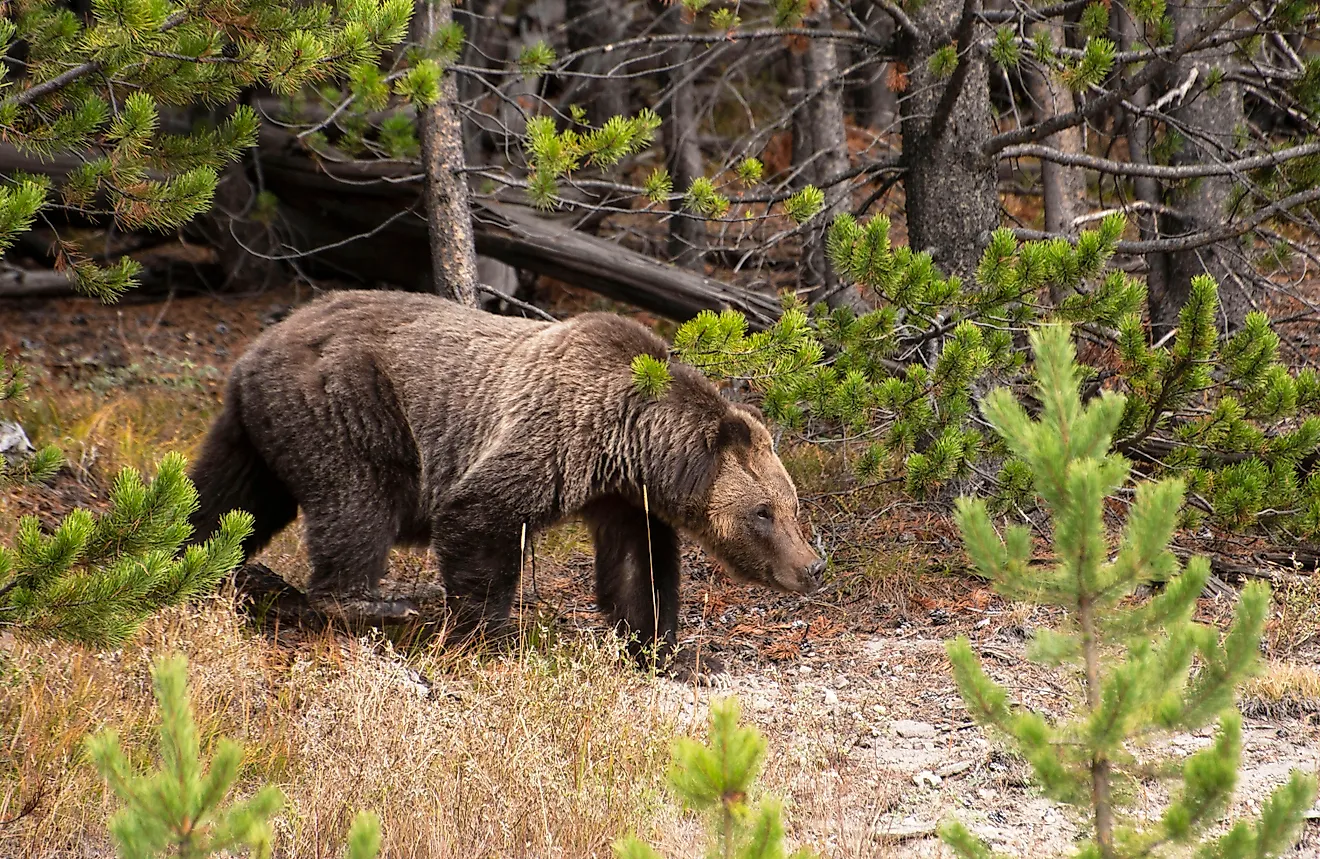
The harpy eagle (Harpia harpyja) carries talons that can exceed 12 centimeters in length, longer than a grizzly bear's claws, and uses them to snatch arboreal prey directly from the rainforest canopy. Adults weigh 5 to 9 kilograms with wingspans of 1.8 to 2.2 meters, ranking as the largest eagle by mass in the Americas. Monkeys (especially howlers and capuchins) and sloths make up the bulk of the diet, with the occasional young deer or large snake taken at ground level. Pairs build platform nests in emergent kapok or Brazil-nut trees and raise one chick at a time every two to three years. The IUCN lists the species as Vulnerable due to habitat loss across its range. Wild lifespans run 25 to 35 years, with captive individuals occasionally reaching 45.
Bushmaster Snake

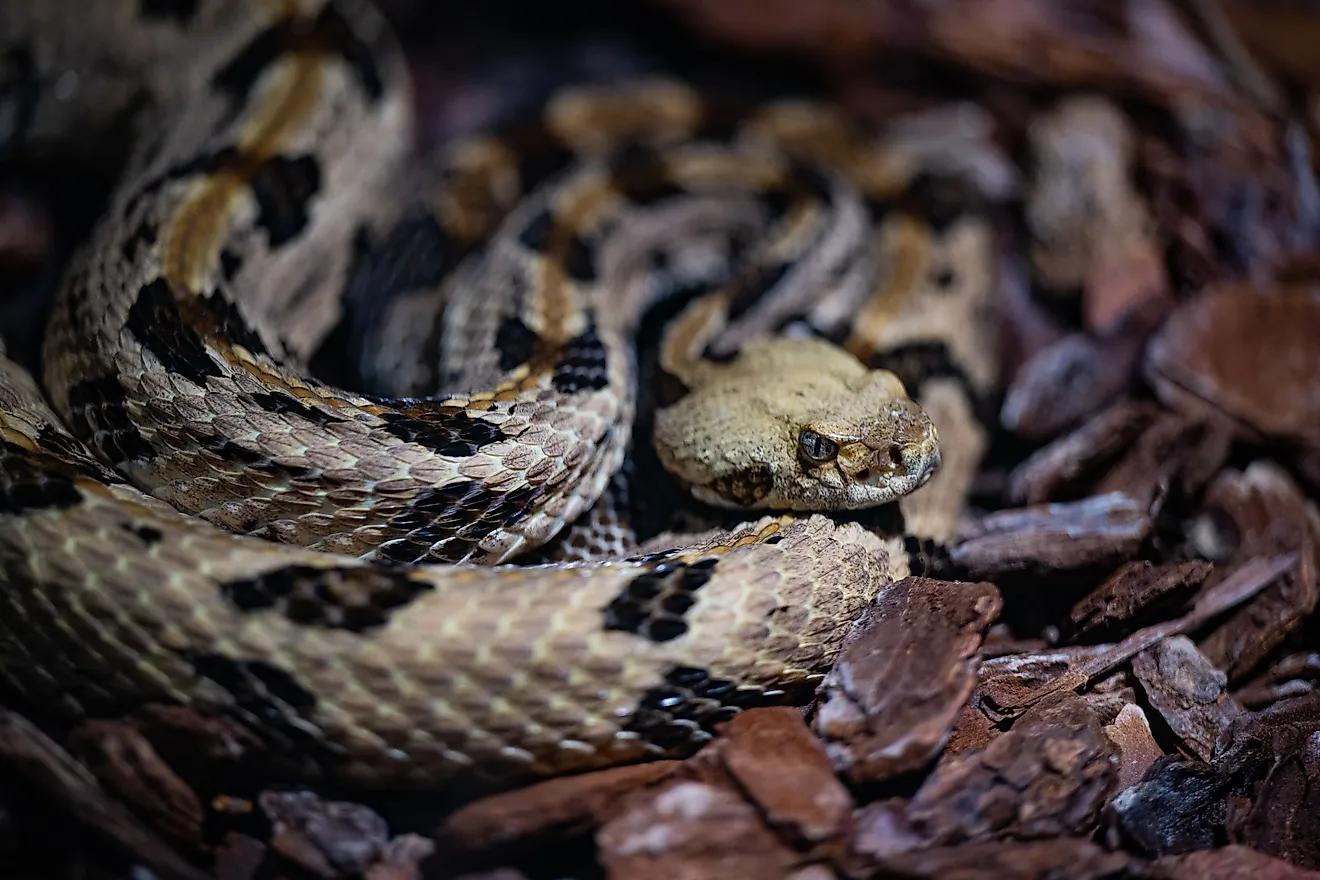
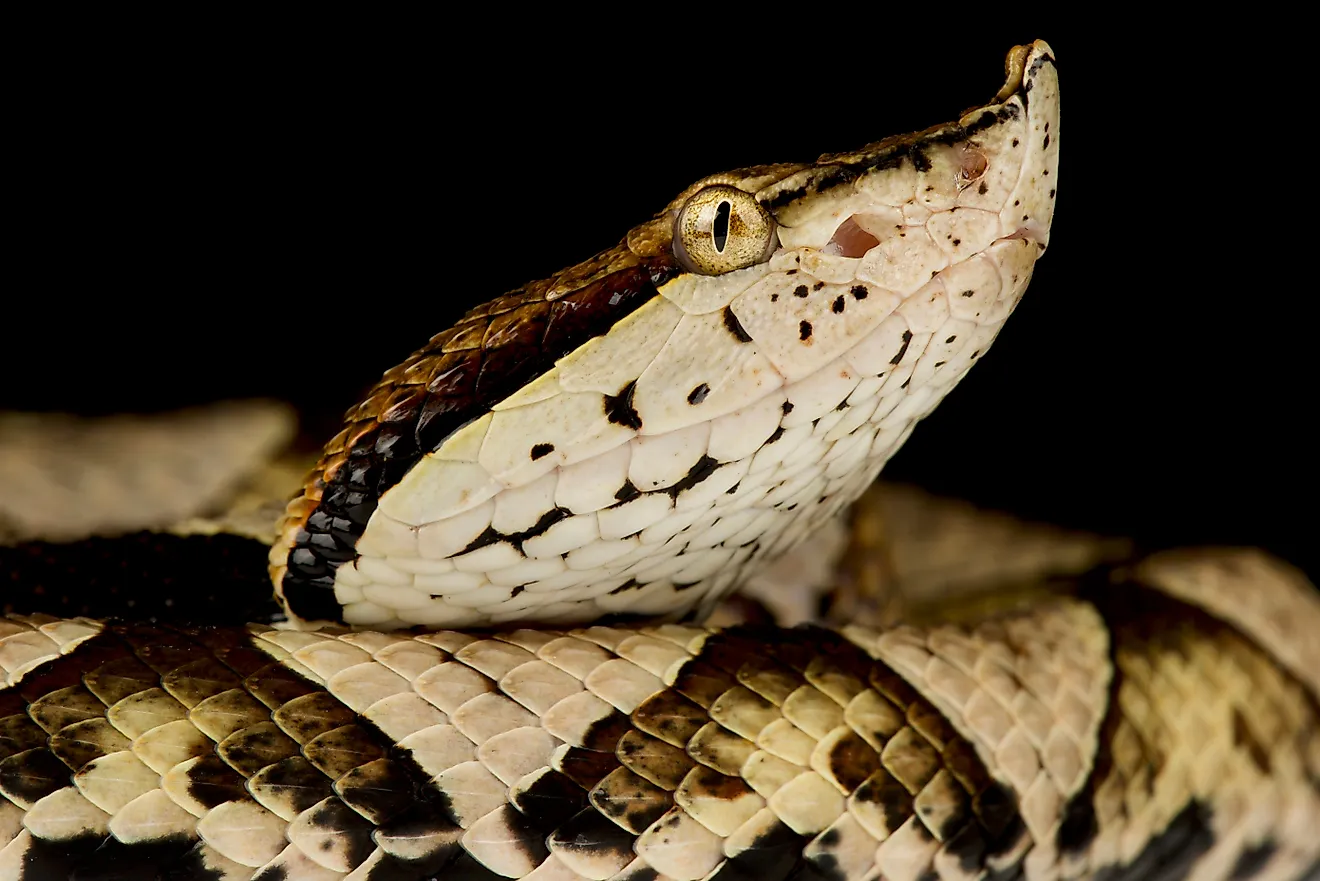
The South American bushmaster (Lachesis muta) is the longest viper in the world, with verified individuals reaching about 3.5 meters (11.5 ft), and one of the few pit vipers that lays eggs rather than giving live birth. The image above shows the closely related Central American bushmaster (Lachesis stenophrys), found from Costa Rica north. Both species hunt at night in mature lowland rainforest, ambushing rodents and other small mammals along game trails. The venom is hemotoxic and delivered in unusually large doses; bite envenomation requires immediate antivenom and remains often fatal in remote areas. Females coil around their clutches of 5 to 19 eggs through the 60 to 79 day incubation, one of the few examples of egg-guarding behavior in vipers.
Why the Amazon's Predators Stay Dangerous
What unifies these ten species is not just the weapon (venom, voltage, jaw force, constriction, talon, sting) but the depth of forest between a victim and treatment. Antivenom for the bushmaster and the Brazilian wandering spider is stocked only in regional centers, and the nearest hospital from much of the Amazon basin is hundreds of kilometers away. The indigenous communities who have shared that territory for thousands of years built knowledge systems around recognizing each animal, avoiding it, hunting it where possible, and in several cases incorporating it into rites of passage or spiritual practice. The animals remain at the top of their food chain in part because the rainforest stays remote enough to protect them, even as the larger species (jaguar, black caiman, harpy eagle) face increasing pressure from habitat loss.