The Most Decisive Ancient Naval Battles
In the ancient world, naval warfare was a struggle for control over trade routes, imperial expansion, and political legitimacy. Major powers like Rome and Greece relied on their navies to exert influence over the Mediterranean. Battles often altered the long-term balance of power across regions that relied on the sea. Each of the following battles redirected the fate of a major power at a turning point: the Greek resistance to Persia, Rome’s rise against Carthage, and the birth of the Roman Empire.
The Battle of Salamis (480 BCE)

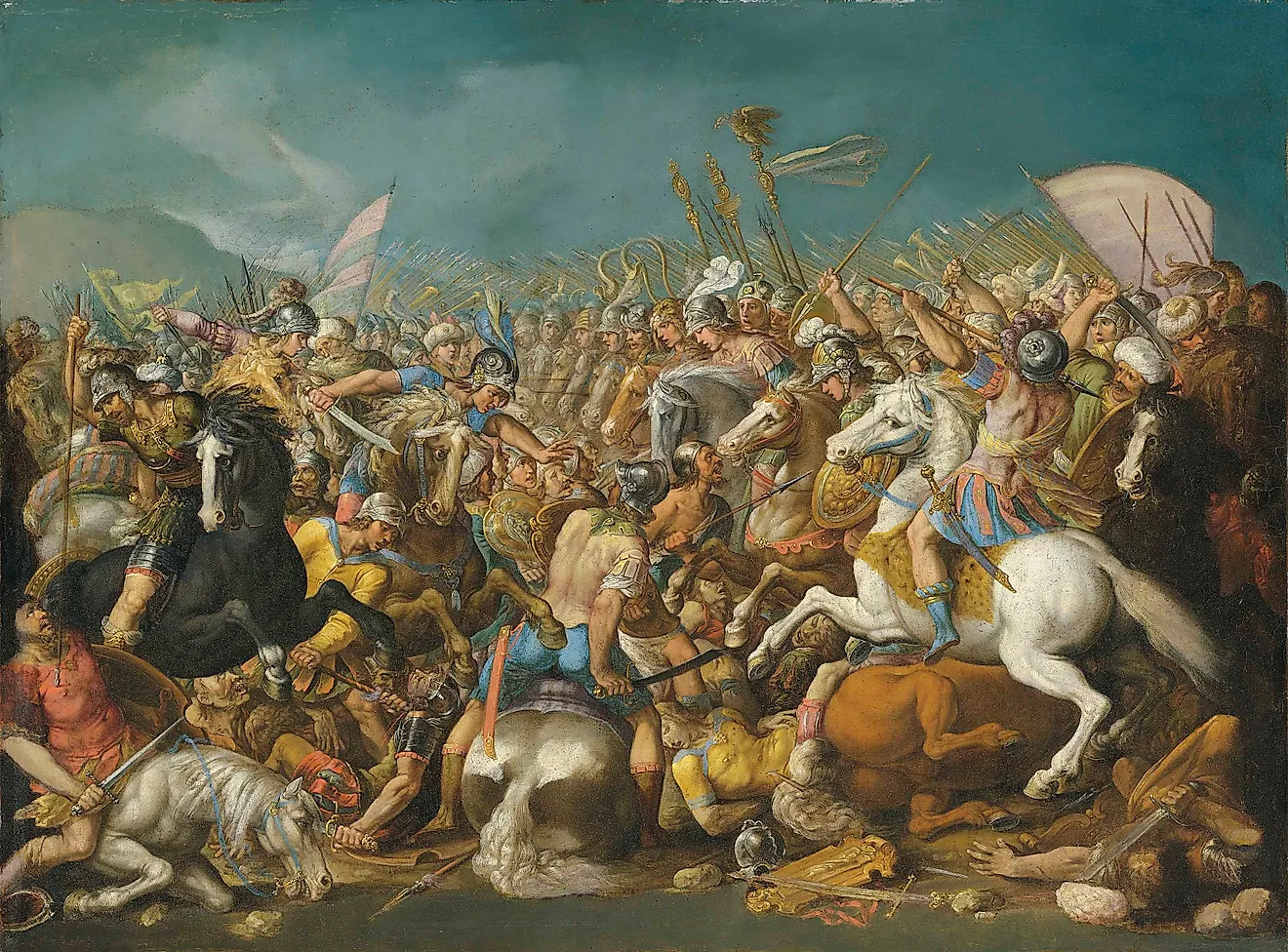
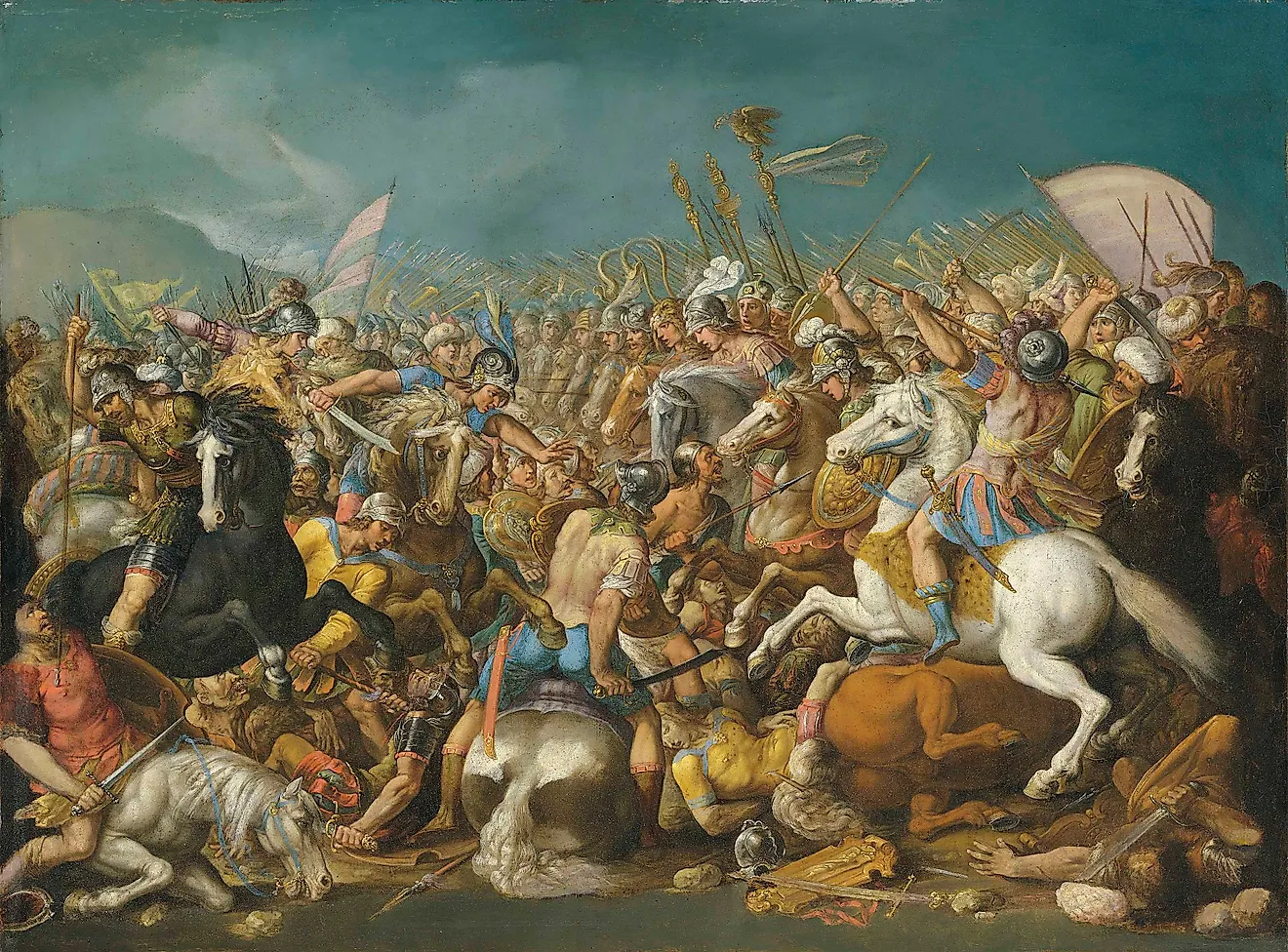
The Battle of Salamis took place at a moment when the Greek world stood on the brink of collapse. Xerxes' invasion had already overrun northern Greece, broken Spartan resistance at Thermopylae, and driven the Athenians into exile as the city was burned. The Greek fleet was fractured by political tension between Athens and the Peloponnesian states. Themistocles argued that only a naval campaign could stop the Persian advance. Aeschylus described the Greeks as confident and unified, while Herodotus emphasized hesitation and fear. Later, Diodorus Siculus portrayed the Greek alliance as more harmonious than Herodotus mentions. Modern reconstructions highlight the strategic realities of trireme warfare and the political stakes of a battle fought after Athens had already fallen.
The Battle of Salamis was the decisive turning point of the Persian Wars. The naval victory helped prevent Persian domination of southern Greece and created conditions in which Athens could later expand its naval power and cultural influence. Herodotus highlights the battle as the point at which Athens proved indispensable to Greek survival.
The immediate impact of the battle was the strategic retreat of Xerxes military forces. In a broader context, Herodotus suggests that their victory preserved the Greeks' survival and enabled Athens to rise as a naval power. Aeschylus' tragedy shows how the battle shaped Athenian identity and pride. Diodorus reflects how the battle evolved into a symbol of Greek unity. In modern terms, the survival of Athens helped the development of classical art, drama, philosophy, and democracy.
The Battle of Actium (31 BCE)

Actium occurred at the end of the Roman Republic's Civil Wars. It pitted Octavian against Mark Antony and Cleopatra, and was fought near the entrance to the Ambracian Gulf. A decisive confrontation in a long campaign for control over Rome's future, Actium was shaped by leaders and military tactics including rare female commanders such as Cleopatra VII.
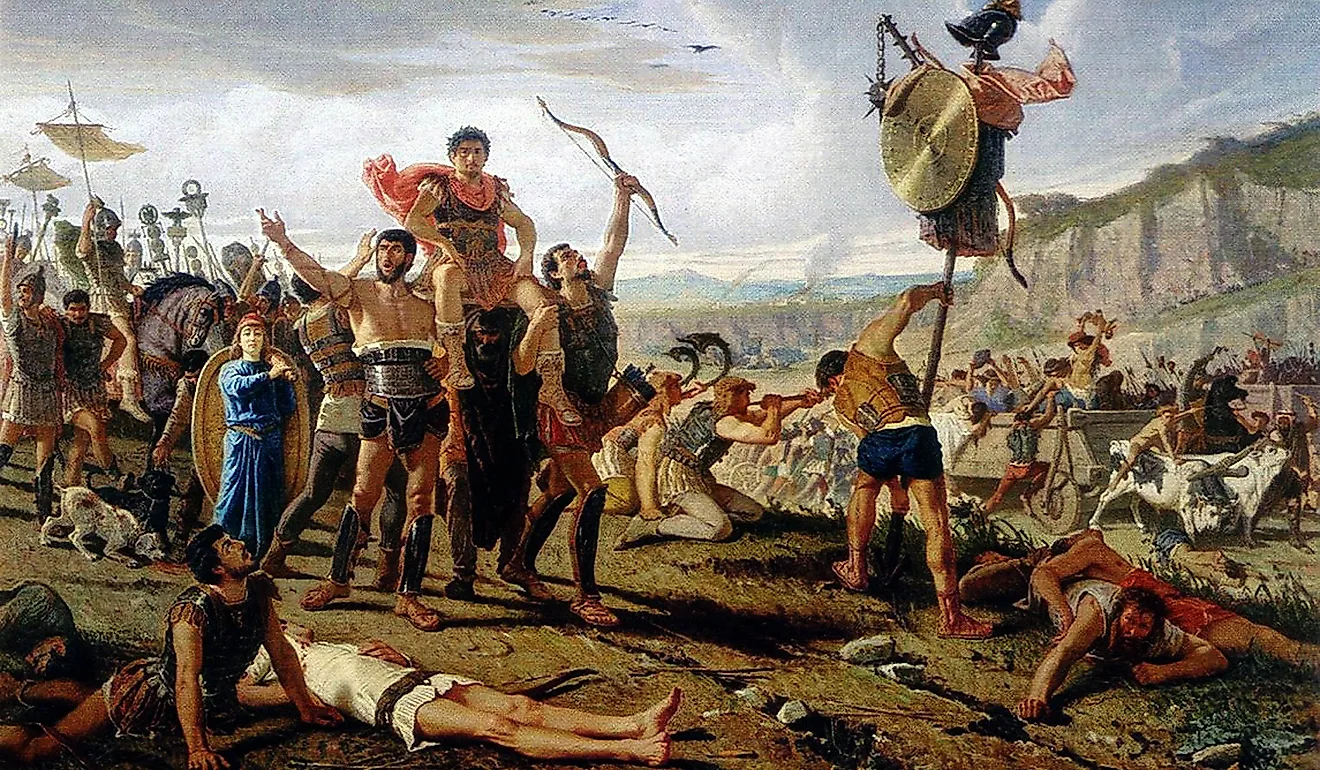
The Battle of Actium ended the last meaningful resistance to Octavian’s authority, clearing the way for his transformation into Augustus and the establishment of Rome’s first imperial regime. In the aftermath, the defeat of Antony and Cleopatra marked the symbolic and political end of the Hellenistic Age, closing the era of successor kingdoms that had dominated the eastern Mediterranean since Alexander. Actium also showcased the decisive effectiveness of Agrippa’s naval innovations, particularly his mastery of maneuver warfare, logistical control, and port‑denial strategies. Combined with Octavian’s patient long-term planning, Agrippa’s strategy ensured that the conflict was won not only on the water but also through months of positioning that left Antony and Cleopatra isolated and exhausted.

In the wake of Actium, Octavian consolidated his authority across the Mediterranean. His victory helped inaugurate the Pax Romana, a two-century span of relative stability that reshaped the political and economic landscape of the Roman world. Egypt's annexation as a Roman province brought an immense influx of wealth, especially through its grain supply, which became a cornerstone of Rome's urban provisioning and imperial finances. With his rivals eliminated and the Empire's resources firmly under control, Octavian oversaw the transformation of Rome's political system from a factional republic into an imperial power. It also established a system of governance that would define European and Mediterranean politics for centuries.
The Battle of Ecnomus (256 BCE)

Often overshadowed by the battles of Salamis and Actium, the Battle of Ecnomus was one of the largest naval battles in antiquity, and possibly in world history. Rome sought to invade North Africa to force a decisive end to the First Punic War. Carthage attempted to prevent the crossing, and by 256 BCE, the conflict had reached a stalemate. Rome had proven unexpectedly resilient at sea, while Carthage, traditionally the dominant naval power, struggled to contain Roman innovation and shipbuilding. The Roman senate, seeking a decisive victory in the war, approved an ambitious plan to invade North Africa and force Carthage into a negotiated settlement. This required assembling one of the largest fleets of antiquity. Hundreds of warships, thousands of rowers, and tens of thousands of marines were in the battle. Rome's ability to mobilize such resources reflects its emerging naval and imperial power. Earlier in the war, Rome had rapidly built a fleet, reportedly using a captured Carthaginian quinquereme as a model, and won a major victory at Mylae in 260 BCE. Carthage, recognizing the threat of Rome landing on African soil, deployed its fleet to intercept the invasion force near Cape Ecnomus on Sicily's southern coast.
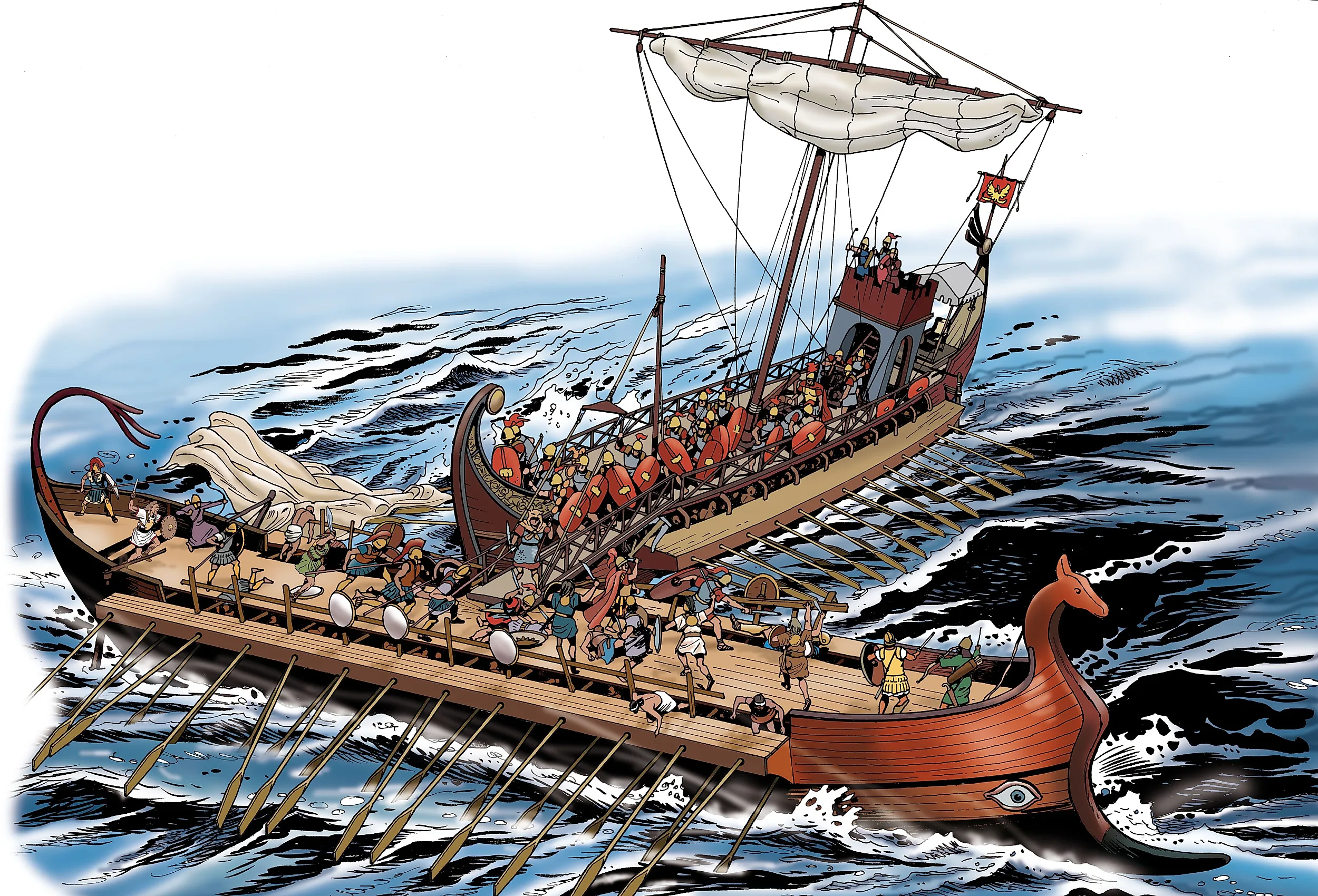
The Romans arranged their fleet in a distinctive wedge formation to protect the vulnerable transport ships. This formation demonstrated Rome's growing sophistication in naval command and contradicts the stereotype of Rome as a purely land-based power. The Carthaginian commanders attempted to combat the Roman formation, expecting to exploit their superior seamanship. This plan underestimated Roman discipline and the effectiveness of the corvus boarding device, which neutralized Carthaginians maneuverability. The battle marked a shift from traditional ramming tactics toward combined naval infantry operations, with Rome treating sea battles as extensions of land warfare.

With the Carthaginian fleet defeated, Rome successfully transported its army to North Africa. This escalation transformed the First Punic War from a regional conflict into a struggle for Carthage's survival. Although the African campaign ultimately faltered, the psychological and political impact of Roman troops landing on Carthaginian soil was enormous. It forced Carthage to divert resources and reorganize command structures to confront the reality of Roman naval might. Even after suffering catastrophic losses from storms later in the campaign, Rome rebuilt its fleet repeatedly. The battle did not end the war, but was a critical step in Rome's displacement of Carthage as the western Mediterranean's superior naval power.
The Legacy of Ancient Sea Battles
Before 500 AD, seas were highways of trade, war, and power. Whoever controlled them could change the course of history. The battles described above showed how maritime strategy could determine the survival of cities and the direction of empires. Each victory changed what became possible afterward: Greek resistance to Persia, Roman expansion against Carthage, and Augustus’s rise from civil war to imperial rule.