The Longest Sieges in Ancient History
In ancient warfare, the siege was a common tactic for invading armies to take on fortified cities, garrisons, castles, and fortresses. The military siege is, by design, a prolonged strategy, cutting off supplies, communication, and reinforcements to an enemy stronghold. In so doing, the invading army aims to force a surrender or make the enemy too weak to withstand a frontal assault. Sieges in warfare are not strictly confined to the ancient world. In later eras, invading armies continued to rely on the tactic to subdue the enemy, often with devastating results.
An invading army would surround a fortified stronghold, using methods such as bombardments, flaming arrows, and other aggressive tactics to instill terror, even if the fortification could not be breached immediately. By forcing the enemy to commit all its resources to defending the walls, through attrition, the invaders wear down the inhabitants, depriving them of any food beyond what was stored, and forcing the defenders to use their own military resources quickly.
Common Siege Tactics

Tactics used in the ancient world included isolating the target by surrounding it, building fires to prevent escape or reinforcements, all while attacking the fortification from a distance, often with siege engines of varying sophistication. This would be a battle of attrition, where the defenders exhaust their resources, food, water, and ammunition. The siege is designed as well to impact civilians who sought shelter in the fortification, and through starvation and fear, force the defenders to comply or face certain death over the long run. This form of psychological warfare has roots far back in human history. Fortifications were created to defend against constant raids. However, with fortifications, a defending force can become trapped if the invaders are sufficiently large in numbers.
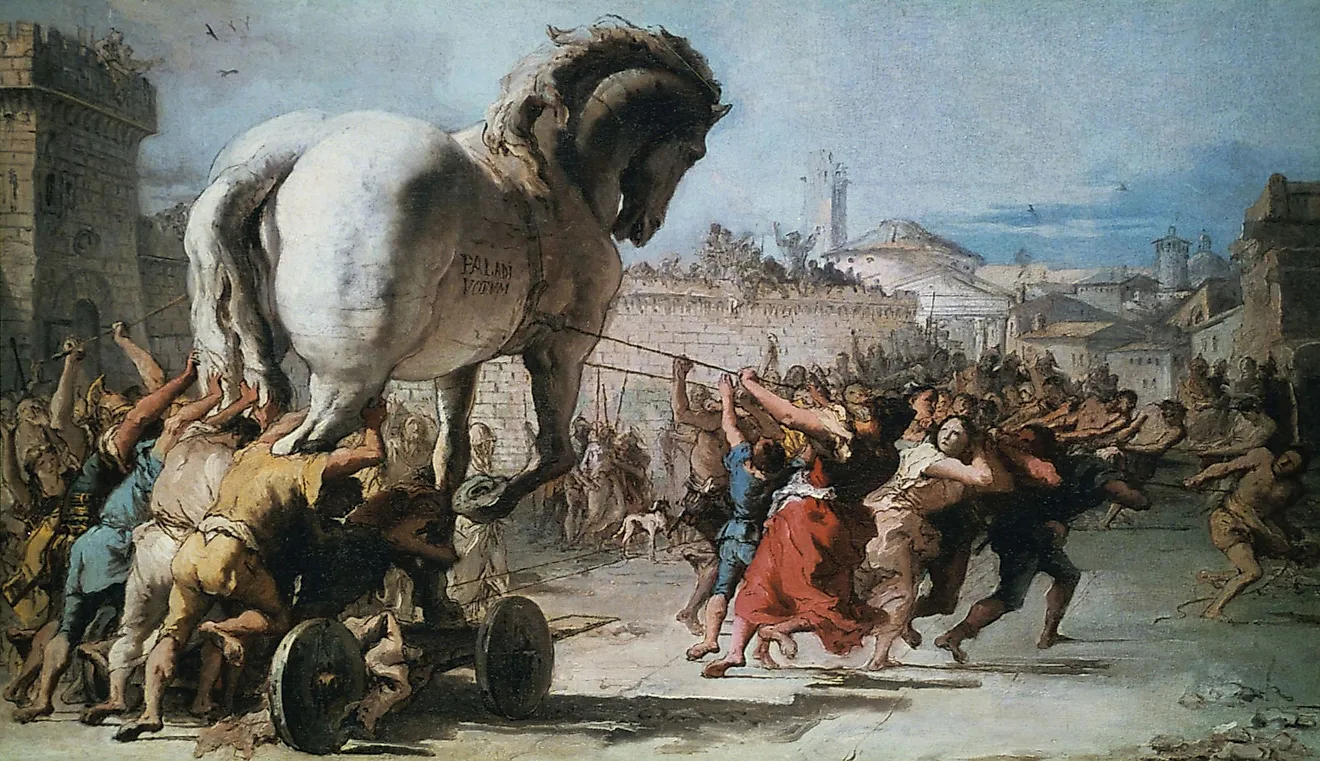
The word "siege" comes from the Latin sedere, to sit. It describes the patience required to outlast an enemy, with lengthy and often static campaigns. This is not two armies facing each other on the battlefield. With developments in fortifications, sieges became a defining feature of warfare in the ancient world, whether to defend an entire city or as a refuge for civilians. Within mythology, we already see the effects of siege warfare and the tactics used to breach a fortification, famously in the story of the Trojan Horse. However, sieges were a very real tactic in ancient warfare, and the practice has continued into the modern era. The Battle of Stalingrad in World War II is one modern example, where German and Soviet forces fought over the city for roughly five months from August 1942 to February 1943, with elements of siege warfare on both sides as the encirclement shifted from the city's defenders to the German 6th Army itself.
Ancient Siege Technology

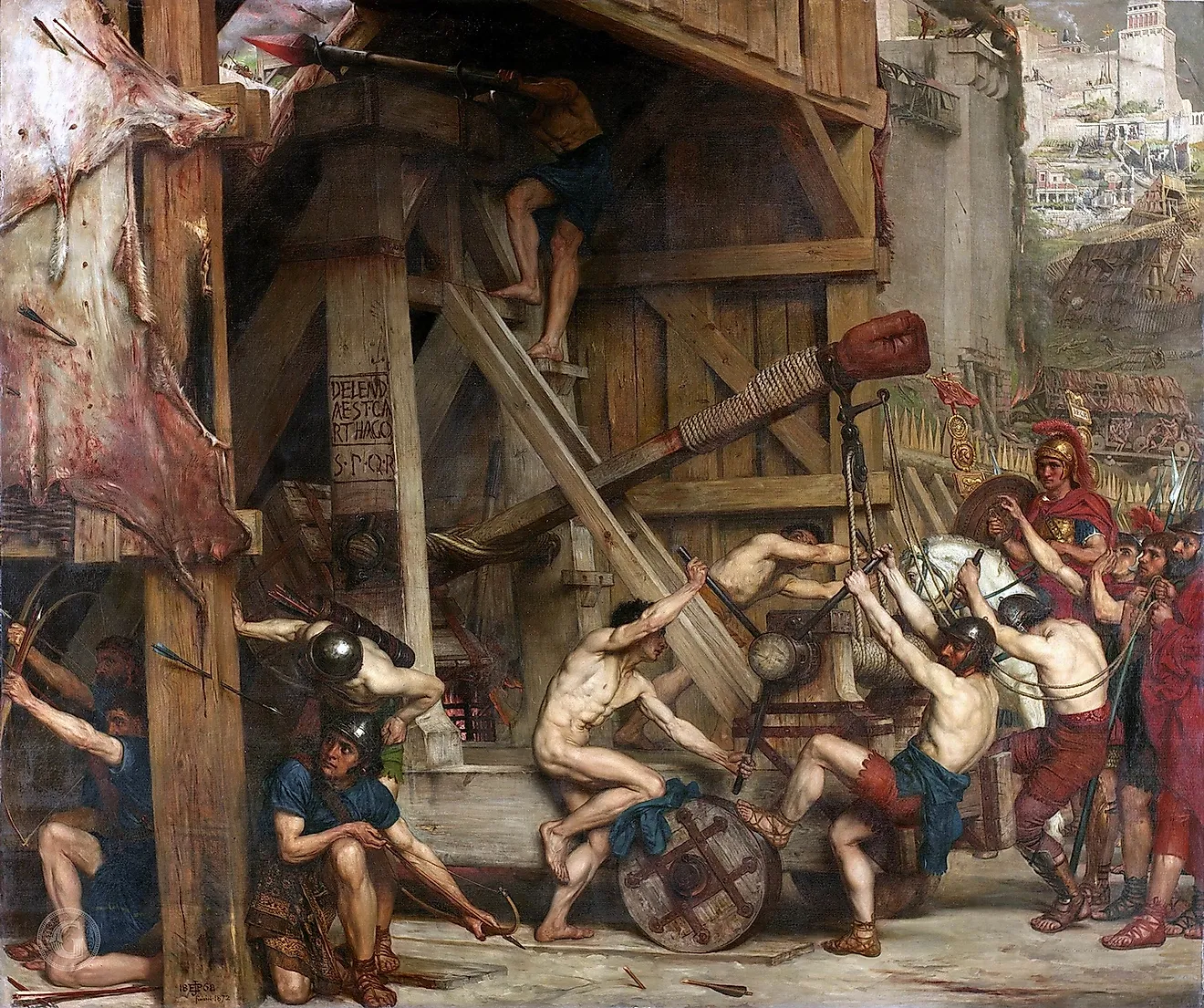
Ancient sieges relied on the military technology available to them at the time, and as is often the case, advancements in technology come about as a direct result of warfare, including advances in engineering. Both defenders and invaders rely on constantly improving technology. Defenders needed strong walls, fortified positions within those walls, with adequate sight lines for arrows, and developing new ways to build walls in such a way that it hampers the invaders' progress. This could also include the use of moats and mounds outside the walls. The invaders, on the other hand, would develop technology for projectiles, such as trebuchets, first developed in China in the 4th to 3rd centuries BCE. Mechanical catapults, known as the ballista and gastraphetes, were developed by the Greeks in the early 4th century BCE, and were torsion engines developed to launch stones and arrows. Other projectiles included fire and diseased animals.
The end of a siege could happen in many ways. A negotiated surrender may happen after many rounds of talks over the course of the siege. The invaders may, over time, breach the walls, forcing the defenders to capitulate or die. Reinforcements may actually arrive to take on the invaders, who, over the course of time, may have their own dwindling resources and fatigue. The length of sieges varied, with some lasting years and in a few cases over a decade. Here, we will look at some ancient examples of sieges that lasted over a year.
Siege of Lilybaeum (250-241 BCE) - 9 years

In 250 BCE, the Roman Republic attempted to capture what was the last Carthaginian stronghold on the island of Sicily. In the third century BCE, Rome and Carthage were the dominant powers in the Western Mediterranean. For over 23 years, the two powers fought for control of the Mediterranean in what was known as the First Punic War. Lilybaeum (modern-day Marsala) was a port city controlled by Carthage. It was well-fortified, and it provided for supplies and reinforcements to the Sicilian forces by sea. To cut off that supply line, the Romans launched a land and sea operation, with a force of over 100,000 men.
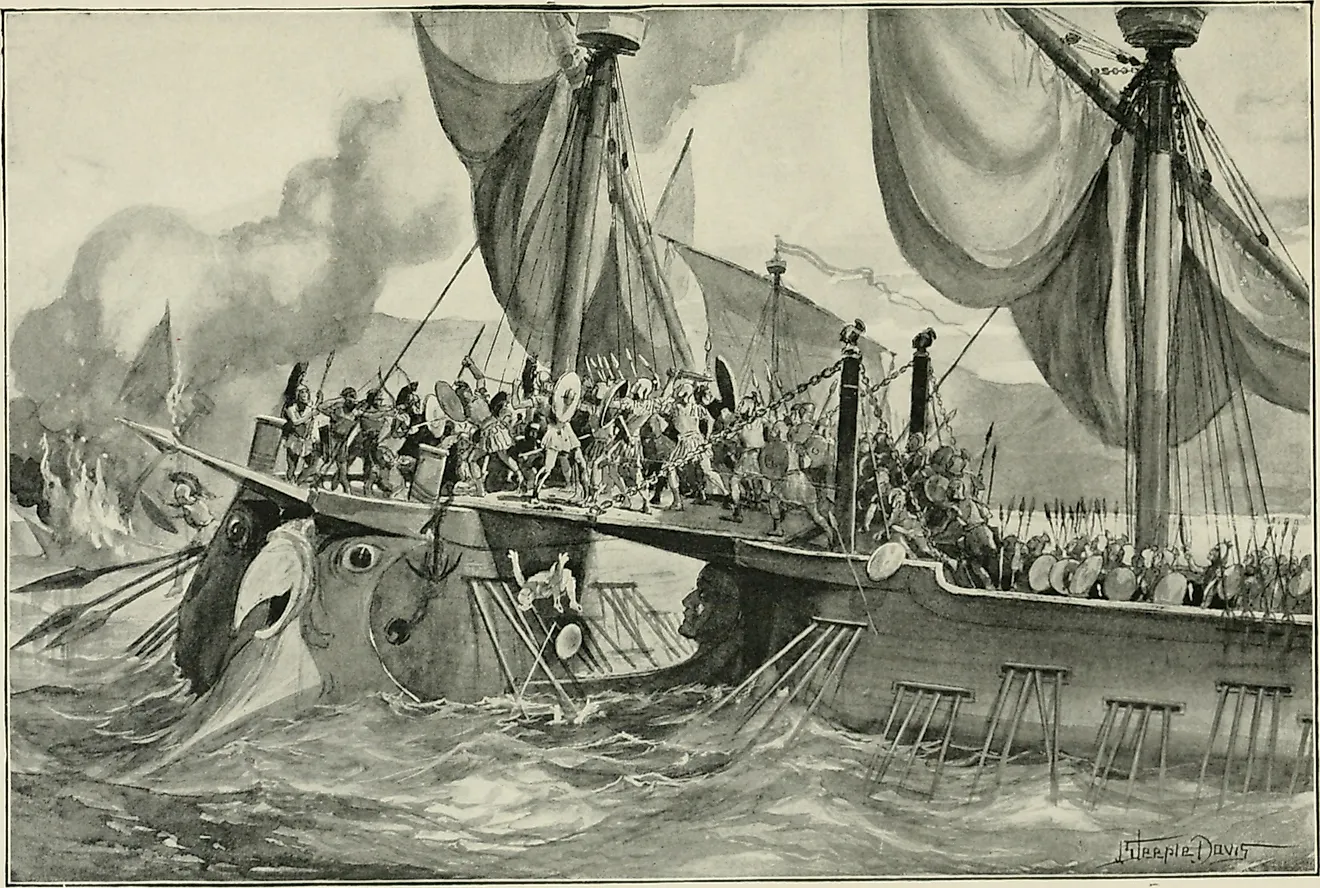
The Romans were able to develop and perfect many advanced siege tactics, such as towers, rams, and the use of tunnels, while setting up a naval blockade of Lilybaeum, including the use of a stone mole, a type of pier or breakwater, allowing the Romans to stop incoming ships. With their greater numbers and advanced siege tactics, the Romans were nevertheless not able to breach the city's defences. Carthage was able to slip ships through the blockades to deliver supplies. The stalemate was finally broken with a naval battle, the Battle of the Aegates Islands in 241 BCE, when Rome was able to defeat the Carthaginian navy. Lilybaeum was surrendered to Rome, ending not only the nine-year siege but also the First Punic War, and Sicily became Rome's first overseas province.
Siege of Veii (405-396 BCE) - 10 years

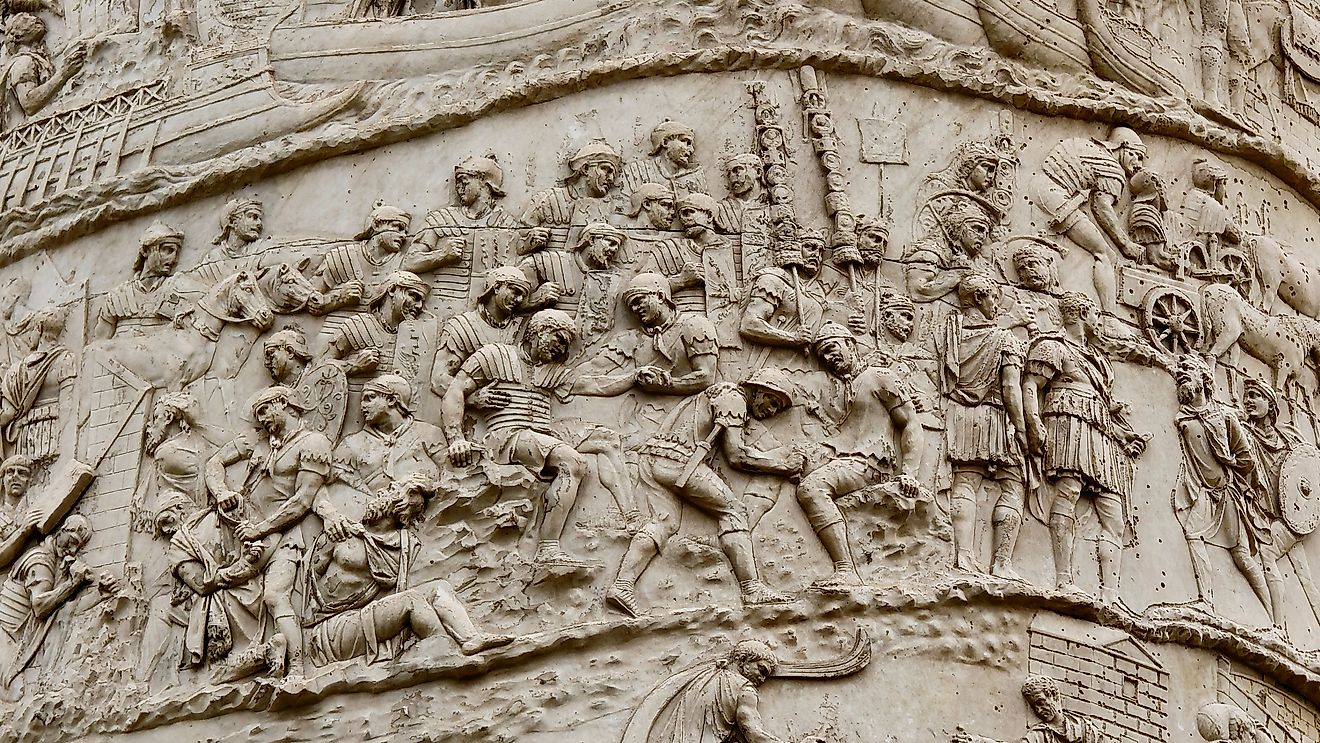
A military campaign taking place over 10 years in one location was unusual at the time. To maintain and sustain a force, the Roman Senate voted to pay soldiers (the stipendium) for the first time. Traditionally, compensation for soldiers was the share of war spoils, such as weapons, livestock, and slaves, with only a basic sustenance provided in a grain ration. As there was a stalemate and the siege was continuing longer than usual, no spoils of war were forthcoming, if any. Along with modernizing its army into a professional paid force, the Siege of Veii was important for the Romans, with advancements in engineering.
Veii was an Etruscan city, and the siege of the city was part of a Roman effort to expand their territory throughout the Italian Peninsula. The results of a Roman victory at Veii were the destruction of the city and the transformation of Rome from a local to a regional power. After years of stalemate, the Romans began to dig a tunnel through the rock. The Romans emerged from the Temple of Juno in the Veientine citadel, with the main Roman forces attacking the walls as a diversion. The fall of Veii signalled the end of the Etruscans as a power in central Italy. Veii was rebuilt as a Roman city and was named Municipium Augustum Veiens during the period of the Roman Empire.
Siege of Drepana (249-241 BCE) - 8 years

Sicily was a Carthaginian territory and had been well-fortified. The First Punic War, between Rome and Carthage, was mostly for control of Sicily. Drepana, today Trapani, was a fortified city, one of the last two remaining in Carthaginian Sicily, along with Lilybaeum. While the Siege of Lilybaeum started in 250 BCE, the Siege of Drepana started over a year later. Both cities fell to the Romans in 241 BCE, ending both Carthaginian control of Sicily and the First Punic War. A surprise Roman attack on the Carthaginian fleet in Drepana's harbor ended in disaster for the Romans. Pinned against the shore, the Romans lost 93 of their approximately 120 ships.
The Roman blockade was broken, and Carthage was able to supply its garrisons in Drepana. This resulted in a stalemate in the harbor while the Romans rebuilt their fleet. In 241, the Romans renewed their blockade of the harbor. A relief fleet was sent from Carthage, but it was intercepted at the Battle of the Aegates Islands. Drepana was now cut off from reinforcements and supply lines. Drepana had been the key base for Carthage, and its loss forced a negotiation for peace, ending the First Punic War.
Siege of Eryx (249-241 BCE) - 8 years
Fought at the same time as the Siege of Drepana, the Siege of Eryx was a long conflict with intense fighting. In 248 BCE, the Romans seized Eryx. It was used as a base, a threat to the Carthaginian naval base at Drepana. The Carthaginians launched an operation to take Eryx back in 244. The Carthaginians were able to retake the city, cornering the remaining Roman garrison in the Temple of Venus, a fortified position on the mountain. For two years, Carthage held the city while the Romans held the temple. This stalemate led to a war of attrition that only ended with the Roman victory at the Battle of the Aegates in 241 BCE.
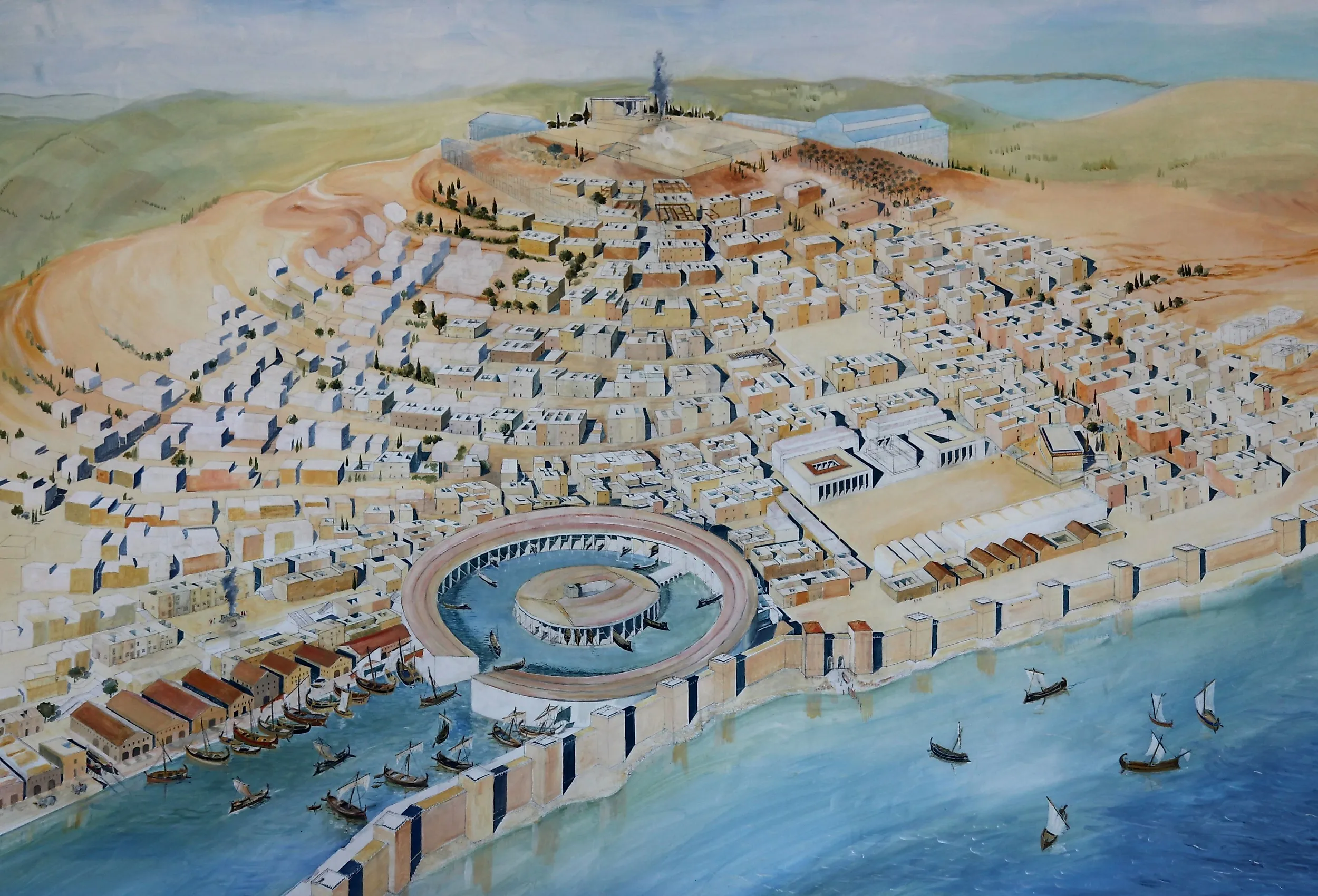
Siege of Carthage (149-146 BCE) - 3 years

The Siege of Carthage, which lasted three years, was the final conflict of the Third Punic War. The First Punic War (264-241 BCE) was a conflict between Carthage and Rome for control of Sicily, and ended with a Roman victory. The Second Punic War (218-201 BCE) was a 17-year conflict, also called the Hannibalic War. Hannibal, the legendary Carthaginian general, led the Carthaginian forces against Rome in an invasion of Italy. This ended in a decisive victory for Rome at the Battle of Zama. The Third Punic War (149-146 BCE) resulted in the destruction of Carthage and Rome's annexation of all Carthaginian territory.
The blockade of the city was tightened, cutting off food supplies. A massive earthwork was established in the harbor, ensuring no food would enter the city. Roman forces broke through in 146 BCE, but street fighting slowed their progress. Buildings were burned, but 900 Carthaginians fought to the death in a final stand against Rome. The city of Carthage was completely destroyed, and all Carthaginian territory became the Roman Province of Africa. With Carthage destroyed, Carthaginian culture was effectively erased. Stories later emerged of Romans salting the earth around Carthage to prevent anything from growing there again. This, however, is considered a later fabrication by modern historians, although the Romans did regard the area around the former city as cursed.
Siege of Syracuse (213-212 BCE) - 2 years

The Second Punic War lasted about 17 years and was launched by Carthage against the Italian Peninsula in an attempt to defeat Rome in its homeland. The Siege of Syracuse was a Roman operation to capture the strategically vital city of Syracuse on Sicily. The Kingdom of Syracuse was a Greek city-state that, by the time of the Punic Wars, was under Carthaginian control. The city of Syracuse was protected by the Carthaginian contingent and pro-Carthaginian Greeks.
The Greek mathematician, physicist, and engineer Archimedes lived in Syracuse, and his technical know-how contributed to the Syracuse defence. Although many of Archimedes' inventions are strictly part of legend, contemporary historical accounts do state the veracity of such contraptions as the Claw of Archimedes, a crane-like device to lift Roman boats out of the water and drop them. However, what is known with more certainty is that Archimedes improved artillery, building more accurate catapults and ballistae capable of great distances. Initial Roman assaults failed, so the Romans settled into a blockade to starve the city. During a festival for the goddess Artemis in Syracuse, an elite Roman squad was able to scale the walls at night, leading to the city's capture. Roman leadership insisted that Archimedes be spared, but he was killed by a Roman soldier during the final attack. With this victory, Rome controlled all of Sicily, which hindered Hannibal's efforts in the invasion of Italy.